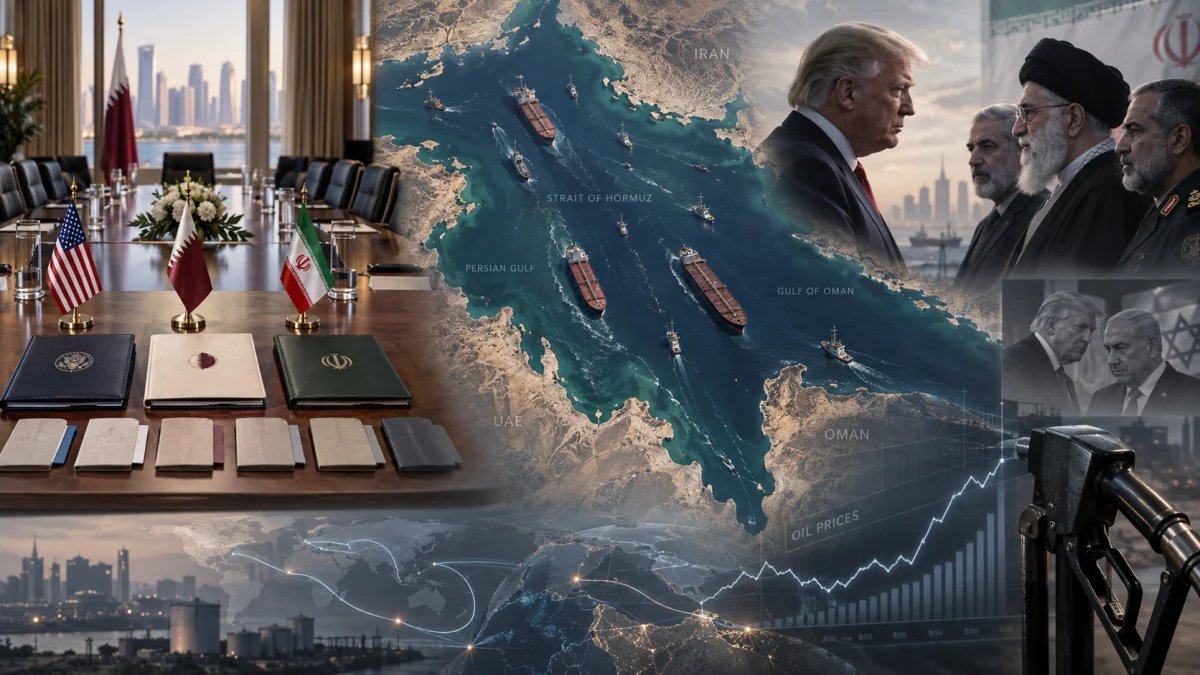
Iran really has sent Washington a new set of conditions aimed at ending the war and restarting negotiations. Iran also really has a senior adviser to its supreme leader who said the Strait of Hormuz should remain closed until President Donald Trump and Israeli Prime Minister Benjamin Netanyahu are removed from power.
Those two things are both real.
They are not, however, the same thing.
Iran’s current national-security chief, Mohsen Rezaei, says Tehran has transmitted seven conditions to the United States through Qatar. In a detailed interview, he publicly identified demands including an end to the war on all fronts, release of frozen Iranian funds, an end to the U.S. naval blockade, an end to attacks on Iranian territory and changes in U.S. involvement in Iranian internal affairs. The complete seven-item package has not been publicly released.
Separately, Mohammad Bagher Zolghadr, who ran Iran’s Supreme National Security Council until August and now serves as political adviser to Supreme Leader Mojtaba Khamenei, said on September 17 that Iranian fighters would not reopen Hormuz until Trump and Netanyahu were brought “down from the seat of power.”
So the simplified version circulating online — Iran offered to end the war if Trump immediately leaves office — takes a real Iranian statement and combines it with a separate negotiating process.
The underlying diplomatic development is nevertheless significant. Iran and the United States remain at war, the Strait of Hormuz remains severely disrupted, energy prices have risen sharply, and both military escalation and renewed negotiations are still openly on the table. As of September 21, Iranian Foreign Minister Abbas Araghchi was stopping in Doha to consult with Qatar before traveling to the United Nations General Assembly, while Iranian President Masoud Pezeshkian was preparing to travel to New York.
The Short Answer
| Question | What the evidence currently shows |
|---|---|
| Has Iran offered terms for ending the war? | Yes. Iran says its terms were transmitted to Washington through Qatar. |
| How many conditions are there? | Rezaei says seven. Only six distinct conditions have been publicly identified in his detailed interview. |
| Is Trump leaving office Iran’s only condition? | No. Multiple other conditions have been publicly stated. |
| Did an Iranian official actually say Trump must be removed from power? | Yes. Zolghadr said Hormuz should remain closed until Trump and Netanyahu are removed from power. |
| Was Zolghadr speaking as Iran’s current national-security chief? | No. He left that position in August and is now an adviser to the supreme leader. |
| Is reopening Hormuz connected to a deal? | Yes. Iranian officials have repeatedly connected reopening or normalizing the strait to U.S. concessions and an end to hostilities. |
| Would a deal lower oil and gasoline prices? | It could lower the geopolitical and supply premium on oil, potentially quickly. Retail gasoline normally adjusts over days and weeks, not instantaneously. |
| Has Trump rejected the Iranian package? | No formal U.S. acceptance or rejection has been announced. Trump says he is considering military escalation, continued economic pressure or a deal. |
What Did Iran Actually Offer the United States?
The clearest current description comes from Mohsen Rezaei, secretary of Iran’s Supreme National Security Council.
In his September 19 interview with Al Jazeera, Rezaei said Iran remained in contact with Qatar, that Qatar had transmitted Tehran’s conditions to Washington, and that Iran was waiting for Trump’s response.
Rezaei separately announced that Iran had communicated seven conditions for beginning negotiations. Iran’s state news agency IRNA subsequently reported the seven-condition announcement, although neither Rezaei’s social-media statement nor the IRNA report enumerated all seven.
His longer interview publicly identified six distinct demands:
| Publicly identified condition | What it means |
|---|---|
| End the war on all fronts | Rezaei specifically included Lebanon, making the demand broader than a bilateral U.S.-Iran ceasefire. |
| Release frozen Iranian funds | Iran wants access restored to billions of dollars currently blocked abroad. |
| End the U.S. naval blockade | Washington has been restricting maritime trade into and out of Iranian ports. |
| End U.S. interference in Iranian internal affairs | A broad political condition whose practical scope would require negotiation. |
| End U.S. cooperation with opponents of Iran’s government | Rezaei referred to cooperation with “opponents of our revolution.” |
| End U.S. attacks on Iranian territory | Iran wants an end to direct American military strikes. |
| Seventh condition | Rezaei says seven were delivered, but the seventh has not been clearly identified in the public record reviewed for this article. |
The distinction between what Iran says it privately transmitted and what Iran has publicly disclosed matters. Rezaei says Washington received seven conditions. The detailed public account currently provides six identifiable conditions. It would be misleading to invent the seventh simply to make the numbers line up.
There is another important distinction. Some reporting compresses the proposal into three principal demands: ending the war, releasing frozen funds and ending the blockade. Those are the three Rezaei emphasized when summarizing the package, but his fuller interview contains additional demands concerning U.S. attacks, internal interference and cooperation with opponents of Iran’s government.
Did Iran Really Demand That Trump Leave Office?
Yes, but the wording and the speaker’s role matter.
On September 17, Mohammad Bagher Zolghadr said that Iranian fighters would not reopen the Strait of Hormuz until Trump and Netanyahu were removed from power. CBS News reported the statement from Iran’s state broadcaster IRNA.
That is not an invented social-media quotation.
But it is also not equivalent to:
Trump resigns today, Iran ends the war tomorrow.
Zolghadr’s statement tied reopening Hormuz to Trump and Netanyahu leaving power. It did not publicly describe a legal mechanism, a deadline for resignation, or a one-condition peace treaty under which Trump’s departure alone would end every front of the war.
And crucially, the formal negotiating conditions now being transmitted through Qatar are being described publicly by Mohsen Rezaei, not Zolghadr.
Who Is Mohammad Bagher Zolghadr, and Why Does His Statement Still Matter?
Zolghadr should not be dismissed as an irrelevant commentator.
Until August 10, he was secretary of Iran’s Supreme National Security Council, one of the central institutions coordinating Iranian security and foreign policy. He was replaced by former Islamic Revolutionary Guard Corps commander Mohsen Rezaei and immediately appointed political adviser to Supreme Leader Mojtaba Khamenei.
That makes his September 17 statement politically important.
It does not, however, make every statement he makes identical to an official negotiating document issued by the current security council.
The cleanest way to understand the distinction is:
Zolghadr’s statement is a real expression of a senior Iranian position. Rezaei’s Qatar-mediated package is the current formal negotiating track.
Those positions may overlap. They should not be automatically collapsed into each other without evidence.
Iran’s Current Offer Did Not Appear Out of Nowhere
The September proposal is part of an evolving series of negotiations over the war, sanctions, maritime access and the Strait of Hormuz.
The sequence matters because Iran’s demands have changed.
June 2026: A temporary memorandum
A June 17 memorandum between Iran and the United States included an end to fighting on multiple fronts, noninterference in internal affairs, an end to naval blockades, release of frozen Iranian funds and Iranian commitments concerning nuclear weapons and safe maritime passage through Hormuz. It also contemplated U.S.-backed reconstruction funding, oil-export waivers, no new sanctions and limits on additional U.S. force deployments. That temporary arrangement later collapsed.
August 9: Zolghadr expands the demands
While still security-council secretary, Zolghadr set out six conditions for fully reopening Hormuz: an end to U.S. threats, a permanent end to attacks against Iran and regional allies, lifting the blockade and withdrawing U.S. naval and air forces, compensation for war damage, lifting sanctions and releasing frozen Iranian assets.
August 10: Rezaei takes over
The next day, Rezaei replaced Zolghadr as secretary of the Supreme National Security Council. Zolghadr moved to the supreme leader’s office as political adviser.
August 12: Rezaei ties Hormuz directly to a regional settlement
Rezaei said Hormuz would remain closed until Washington ended the war and blockade, released frozen assets and accepted a broader regional ceasefire.
September 17: Zolghadr invokes Trump and Netanyahu
Now serving as political adviser, Zolghadr said Hormuz would not reopen until Trump and Netanyahu were removed from power.
September 19-20: Iran sends its current conditions through Qatar
Rezaei said Qatar had conveyed Iran’s current conditions to Washington. He then publicly stated that Iran had communicated seven conditions for beginning negotiations. Iran’s parliament speaker and chief negotiator, Mohammad Bagher Ghalibaf, separately confirmed that Iran’s conditions had been conveyed through mediators and said Hormuz could not return to its previous open status until they were fulfilled.
This chronology is why the viral version is so easy to believe.
There are several genuine Iranian demands circulating at once, expressed by senior officials whose roles have changed in the middle of the war. A sentence from one channel can easily be attached to a negotiating proposal from another.
Why the Strait of Hormuz Is at the Center of the Deal
The Strait of Hormuz is not merely another bargaining point.
It is one of the most economically consequential maritime passages in the world.
Before the current conflict, the U.S. Energy Information Administration estimated that approximately 21.6 million barrels per day of crude oil and petroleum liquids passed through Hormuz in the fourth quarter of 2025. By the second quarter of 2026, that had fallen to about 4.9 million barrels per day.
Those missing barrels do not simply disappear from a spreadsheet.
Exporters shut production, draw inventories, reroute cargoes where possible or use alternative pipelines. Importers search for substitute crude. Tanker rates and insurance costs rise. Refineries compete for replacement supplies. Eventually those effects reach diesel, gasoline, jet fuel, freight costs and consumer prices.
The world has already adapted in several ways. For example, petroleum traffic through Bab el-Mandeb rose substantially as some Middle Eastern exports shifted toward western routes. That is why the fighting in Yemen and control of the Red Sea chokepoint now matter more to global energy security than they otherwise would.
For a deeper explanation of that second chokepoint, see sherafy.com’s analysis of what happens if Bab el-Mandeb closes and why Houthi control near the strait matters.
The economic adjustment has also been much less catastrophic than some early scenarios predicted because major consumers changed behavior. sherafy.com previously examined how China reduced its crude demand and used inventories to blunt part of the Iran war’s global oil shock.
Would Reopening Hormuz Really Lower Gas Prices?
A credible agreement that restored much larger and safer oil flows through Hormuz would likely put downward pressure on global oil prices, all else equal.
But “gas prices would drop instantly” mixes two different markets.
Oil futures can move almost instantly. Gasoline pumps usually do not.
Traders can reprice crude within minutes if they believe geopolitical risk or future supply disruption has materially changed. Physical fuel has to move through refining, wholesale and retail systems.
EIA analysis has historically found that about half of a sustained crude-oil price change generally passes through to U.S. retail gasoline within approximately two weeks, and roughly 80% within four weeks. A sustained $1-per-barrel change in crude corresponds to about 2.4 cents per gallon of gasoline if ultimately passed through, although refinery margins, inventories and regional market conditions can change the result.
So if a credible peace agreement caused crude prices to fall sharply, financial markets could react immediately and pump prices could begin following.
That is different from saying every gas station would immediately cut prices the moment Hormuz reopened.
The broader economic stakes are substantial. The Congressional Budget Office estimates that U.S. combat operations against Iran had cost the Defense Department roughly $38 billion through August 1. CBO also concluded that disruption to oil, natural gas and shipping through Hormuz and the Red Sea had materially increased U.S. inflation. It estimated the direct energy effect added about 2.3 percentage points to the annualized PCE inflation rate in the second quarter of 2026.
That is why the Hormuz negotiations matter even to Americans who pay little attention to foreign policy.
For the broader domestic transmission mechanism, sherafy.com has separately examined why high diesel prices and disrupted Middle East shipping can raise freight and consumer costs without automatically causing nationwide shortages and why the United States can produce more oil than any other country while still being exposed to global crude prices.
Has Trump Rejected Iran’s Offer?
Not publicly.
As of September 21, there was no announced U.S. acceptance or formal rejection of the current Iranian package.
What Trump has publicly described is a set of very different possible paths.
On September 17, Trump told Axios that he faced a decision over whether to restart major military attacks, saying he was considering whether to “annihilate” Iran’s government. He was also preparing to meet Gulf leaders during U.N. General Assembly week before deciding his next steps.
On September 20, Fox News correspondent Trey Yingst reported that Trump described his choices as military destruction, continued economic pressure or reaching a deal. Trump also used the phrase “blow the entire nation up” while discussing military escalation and said he would probably be open to meeting Iranian President Masoud Pezeshkian in New York.
Those comments are plainly escalatory.
But chronology matters.
The available public record does not establish the cleaner social-media storyline that Iran made a one-condition offer requiring Trump’s resignation and Trump directly answered that offer by threatening to destroy Iran.
Instead, Washington is receiving Iranian conditions through intermediaries while Trump is simultaneously discussing military escalation, economic pressure and negotiation.
That ambiguity remains important as long as no formal U.S. response has been released.
The Diplomatic Channel Is Still Active
The strongest September 21 update is that the diplomatic track remains open.
Iranian Foreign Minister Abbas Araghchi left Tehran ahead of President Pezeshkian’s U.N. trip and was scheduled to stop in Doha to consult Qatari officials before continuing to New York. Qatar is one of the principal intermediaries carrying messages between Washington and Tehran. Pezeshkian is scheduled to travel to New York on September 22.
The Trump administration has also granted visas to Pezeshkian, Araghchi and a smaller core Iranian delegation for the U.N. meetings despite the two countries remaining at war. Reuters reported that Washington and Tehran have continued intermittent efforts aimed at ending the conflict.
Trump says he would probably be open to meeting Pezeshkian.
That does not mean a meeting will happen.
It does mean diplomacy is not merely a theoretical alternative being discussed by commentators. Iranian conditions are in Washington, Qatar remains involved, senior Iranian officials are traveling through Doha and New York, and both governments will have senior personnel in the same city during a highly consequential week.
At the same time, neither side is behaving as though a settlement is assured.
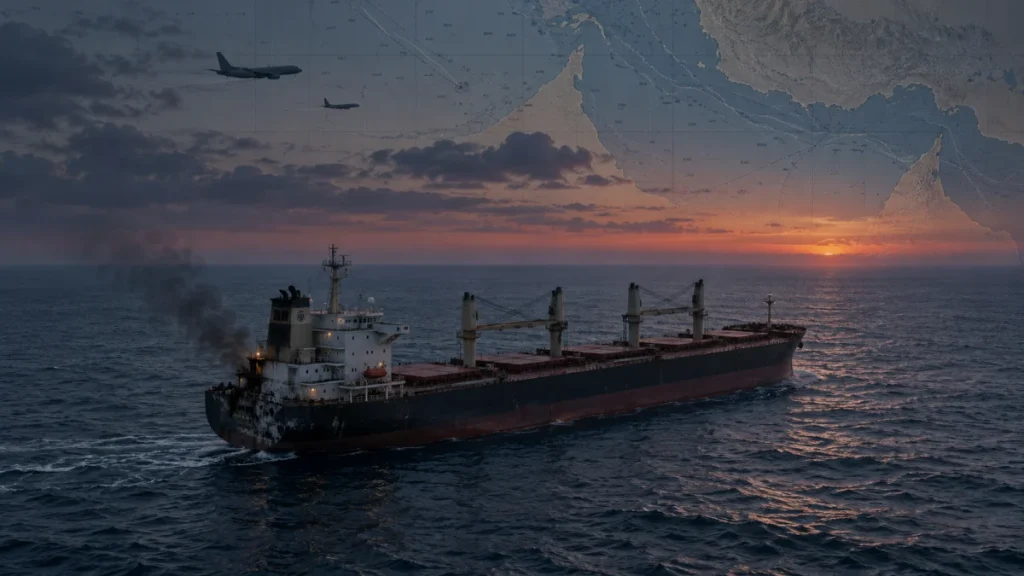
On September 21, Iran’s Revolutionary Guard warned that renewed American escalation could lead it to change the “geography of the war,” introduce new weapons and strike new categories of targets. The same day, an unknown projectile struck another tanker entering Hormuz, injuring two crew members.
Diplomacy and preparation for escalation are happening simultaneously.
What About Saudi Arabia and the Houthis?
This is where the broader regional picture becomes important without turning every conflict into one giant war between two fixed blocs.
The conflict in Yemen has intensified again, with the Houthis attacking Saudi targets and Saudi-backed forces fighting to regain territory. On September 21, Britain announced limited military support to Saudi Arabia in the form of aerial refueling, while the United States had so far declined direct participation in Saudi counterstrikes.
That matters to the Iran negotiations because the Red Sea has become more important as Hormuz has become less reliable.
It does not follow that every Houthi operation is directly controlled by Tehran. Rezaei himself denied Iranian control of the Yemen war and specifically described Bab el-Mandeb as a Yemeni issue. That claim comes from an interested Iranian official and should not be treated as independent proof of the Houthis’ autonomy, but it illustrates why the relationship cannot simply be reduced to “Iran orders, Houthis obey.”
sherafy.com has a separate deep dive on why the Houthis became powerful enough to challenge Saudi-backed forces and threaten regional shipping, including the movement’s indigenous Yemeni roots, domestic power base and increasing Iranian support.
Does This Mean World War III Has Started?
The Iran war now intersects with fighting in Yemen, Israeli operations across several fronts, U.S. military deployments, Gulf-state security concerns, Russian and Chinese strategic interests and a separate major war between Russia and Ukraine.
That is a dangerous international environment.
It does not automatically turn those conflicts into a single two-team war.
Saudi Arabia, Qatar and the United Arab Emirates are U.S. security partners, for example, but Gulf governments have also repeatedly pushed Washington away from escalatory choices that they fear could trigger Iranian retaliation against their territory and energy infrastructure. Trump told Axios that concerns raised by Saudi Arabia and Qatar had previously influenced his decision not to escalate attacks.
Likewise, Russia’s relationship with Iran, U.S. support for Ukraine and U.S.-Israeli military cooperation do not by themselves establish one unified Russia-Iran-versus-America-Israel-Ukraine battlefield.
The better question is whether normally separate conflicts are beginning to activate the military commitments, logistical preparations and cross-theater escalation that would make them function as one larger war.
We examined that question separately in sherafy.com’s analysis of the actual warning signs that would indicate a much broader world war.
Iran itself is also mobilizing substantial civilian and military resources, although some viral numbers dramatically overstate what has actually been documented. See sherafy.com’s investigation of Iran’s Jan-Fada mobilization and the claim that 31 million people signed up to fight the United States.
What Are the Biggest Obstacles to a U.S.-Iran Deal?
The public positions show why simply calling the Iranian proposal a “great deal” or an “impossible deal” skips the difficult part.
| Issue | Iran’s publicly stated position | Unresolved problem |
|---|---|---|
| War on multiple fronts | Iran wants hostilities ended broadly, including Lebanon. | A settlement may therefore depend on actors beyond Washington and Tehran. |
| Strait of Hormuz | Iran connects reopening to satisfaction of its political and security conditions. | Washington disputes Iran’s claimed authority over international passage and is using military power to protect shipping. |
| U.S. naval blockade | Iran wants it ended. | Washington is using the blockade as economic and military leverage. |
| Frozen Iranian funds | Iran wants them released. | That requires changes to sanctions and financial restrictions. |
| Iranian internal politics | Iran demands an end to U.S. support for opponents of its government. | The scope of such a commitment is unclear. |
| Regional conflicts | Iran wants the agreement to cover more than direct U.S.-Iran fighting. | A multi-front settlement is substantially harder than a bilateral ceasefire. |
| Nuclear program | Rezaei’s current public list places less emphasis on it than earlier agreements did. | Washington has historically treated Iran’s nuclear program as a central issue. |
| Trump/Netanyahu removal statement | Zolghadr publicly tied Hormuz to both leaders leaving power. | It has not been established as the sole or definitive condition in the current Qatar-mediated package. |
There are signs of movement.
Rezaei’s current public conditions notably do not emphasize the war-reparations demand Iran made in August. Al Jazeera reported that analysts saw dropping reparations as one possible indication of negotiating flexibility.
But there are still major substantive differences.
Calling the proposal a pathway to negotiations is justified.
Calling it an agreement that could be signed immediately if Trump simply resigned is not.
So What Did Iran Actually Offer Trump?
Iran has offered Washington a route back toward negotiation that it says could end the war.
The known conditions are substantial: a wider cessation of hostilities, release of frozen Iranian funds, removal of the American naval blockade, an end to attacks on Iran and changes in U.S. policy toward Iran’s internal opposition.
Iran says there are seven conditions. The full seven-condition document is not public.
Separately, a senior adviser to Iran’s supreme leader — and the man who ran the country’s Supreme National Security Council until August — has said Iran should keep the Strait of Hormuz closed until Trump and Netanyahu are out of power.
That statement is genuine and politically significant.
What the available evidence does not show is a formal Iranian offer saying:
Trump leaves office immediately, Iran ends the war, Hormuz fully opens and American gasoline prices instantly fall.
The real situation is more complicated and, in practical terms, more important.
Iran and the United States are negotiating over an arrangement that could affect one of the most important energy corridors on Earth. Trump is publicly weighing a deal against continued economic pressure and renewed military escalation. Qatar is still carrying messages. Iran’s foreign minister is stopping in Doha on his way to New York. And the economic effects of the war are already large enough to show up in U.S. inflation, fuel prices and federal military spending.
If the negotiations succeed and reliable Hormuz traffic is substantially restored, oil markets could respond quickly and the consequences could reach consumers well beyond the Middle East.
If they fail, both sides are openly signaling that escalation remains possible.
That is the story worth watching.
Frequently Asked Questions
Did Iran ask Trump to resign?
A senior Iranian adviser, Mohammad Bagher Zolghadr, said on September 17 that Hormuz should remain closed until Trump and Netanyahu are removed from power. The statement is real. It has not been established as the sole condition of Iran’s current formal negotiating package.
What are Iran’s seven conditions?
Mohsen Rezaei says seven conditions were transmitted to Washington. His detailed public interview identifies six distinct demands: ending the war on all fronts, releasing frozen funds, ending the naval blockade, ending U.S. interference in Iranian internal affairs, ending cooperation with opponents of Iran’s government and ending U.S. attacks on Iranian territory. The seventh condition has not been clearly identified publicly.
Who is Mohsen Rezaei?
Rezaei is the current secretary of Iran’s Supreme National Security Council and a former commander of the Islamic Revolutionary Guard Corps. He took over the security-council position in August 2026 and is now one of the senior Iranian officials publicly describing Tehran’s negotiating terms.
Who is Mohammad Bagher Zolghadr?
Zolghadr is Rezaei’s predecessor as security-council secretary. After leaving that position in August, he was appointed political adviser to Iran’s supreme leader. His role makes his Hormuz statement consequential, but it is distinct from Rezaei’s current formal negotiating role.
Will Iran reopen the Strait of Hormuz?
Iranian officials repeatedly say reopening or normalizing Hormuz depends on U.S. concessions and fulfillment of Iranian conditions. Some tanker traffic has resumed, but AP reported on September 21 that traffic remained below normal levels and that attacks around the strait were continuing.
Would reopening Hormuz lower U.S. gas prices?
A durable reopening that increases global oil supply and reduces geopolitical risk would generally put downward pressure on crude prices. Oil markets can react immediately, while retail gasoline tends to adjust over subsequent weeks. EIA estimates about half of a crude-price change generally passes through to gasoline within two weeks and about 80% within four weeks.
Has Trump rejected Iran’s offer?
No formal rejection of the current package had been announced as of September 21. Trump has publicly described three broad paths: a deal, continued economic pressure or major military escalation, and has said he would probably be open to meeting Iranian President Masoud Pezeshkian during U.N. General Assembly week.
References and Further Reading
Iranian Negotiating Positions and Diplomatic Developments
Iran Says Conditions to Re-Engage in Talks, End War Sent to U.S. via Qatar — Al Jazeera, September 19, 2026
The primary detailed interview with Supreme National Security Council Secretary Mohsen Rezaei in which he explains the Qatar channel, Iran’s principal demands, Hormuz and Iran’s current negotiating posture.
What Are Iran’s Latest Conditions to End Its War With the U.S.? — Al Jazeera, September 20, 2026
Provides the most complete public enumeration currently available of Rezaei’s demands and compares them with the June memorandum.
Major General Rezaei: Iran Has Announced Seven Conditions to U.S. for Resuming Talks — IRNA report archived by GlobalSecurity.org
Confirms Rezaei’s separate statement that seven conditions were formally communicated, without publicly enumerating the full seven.
Iran President Pezeshkian to Address U.N. General Assembly in New York — IranWire, September 21, 2026
Documents the latest diplomatic movement, including Foreign Minister Abbas Araghchi’s stop in Doha and Pezeshkian’s planned U.N. trip.
Hormuz and the Trump/Netanyahu Statement
CBS News Iran War Updates, September 17-18, 2026
Records Mohammad Bagher Zolghadr’s statement that Hormuz should remain closed until Trump and Netanyahu are removed from power, citing Iranian state media.
How Significant Is Mohsen Rezaei’s Appointment as Iran’s Security Chief? — Al Jazeera, August 10, 2026
Explains Rezaei’s appointment, Zolghadr’s move to the supreme leader’s office and the institutional role of Iran’s Supreme National Security Council.
Iran Issues New Demands as Pezeshkian Seeks Deal — Al Jazeera, August 9, 2026
Documents the six conditions Zolghadr announced immediately before leaving the security-council post and shows how Iran’s demands have evolved.
U.S. Position and Current Escalation
Trump Tells Axios He’s Approaching Major Crossroads in Iran War — Axios, September 17, 2026
Documents Trump’s discussion of renewed large-scale military action and his planned consultations with Gulf leaders.
Iran Warns “Geography of the War” Would Expand — Associated Press, September 21, 2026
Current reporting on Iranian escalation warnings, the latest tanker incident and continuing regional conflict.
Trump in “Deciding Mode” on Iran — Fox News, September 20, 2026
The originating Fox News segment reporting Trump’s current framing of his options, including negotiation, economic pressure and military escalation.
Energy and Economic Effects
EIA Short-Term Energy Outlook: Middle East Maritime Chokepoints
Primary U.S. government data showing the collapse in petroleum flows through Hormuz and increased use of alternative maritime routes.
Estimating the Cost of Combat Operations Against Iran — Congressional Budget Office, September 15, 2026
Provides CBO’s estimate of approximately $38 billion in Defense Department costs through August 1 and analyzes the conflict’s effects on U.S. inflation and energy prices.
EIA Analysis of Crude-Oil Price Pass-Through to Gasoline
Explains why crude markets can react immediately while retail gasoline prices typically adjust over a period of weeks.
Related sherafy.com Research
How China Blunted the Iran War’s Global Oil Shock — sherafy.com
Explains how Chinese inventories, lower refinery activity and reduced crude demand helped prevent the early Hormuz disruption from producing an even larger global oil shock.
What Happens if Bab el-Mandeb Closes? Houthi Threat Explained — sherafy.com
Examines the second major maritime chokepoint now affecting Middle Eastern oil exports and why Yemen has become more consequential as Hormuz remains impaired.
Why Are the Houthis So Powerful in Yemen? — sherafy.com
Provides the deeper historical and military context for Ansar Allah, Saudi Arabia, Iran and the renewed Yemen war.
Did Iran Really Mobilize 31 Million People to Fight the U.S.? — sherafy.com
Separates Iran’s documented Jan-Fada civilian and military mobilization from exaggerated claims about tens of millions of people entering combat service.
Are U.S. Supply Shortages Coming? — sherafy.com
Explains how Hormuz disruption, expensive diesel and tighter freight markets can affect U.S. households without assuming that nationwide physical shortages are inevitable.
Editorial Currency Note
This is a rapidly developing diplomatic and military situation. The article reflects information verified through September 21, 2026. Iran’s full seven-condition negotiating document has not been made public, and no completed U.S.-Iran agreement or formal U.S. response to the latest Iranian package had been announced at the time of publication. Any subsequent direct talks, publication of the seventh condition, change in Hormuz access or new military escalation could materially change parts of this article.