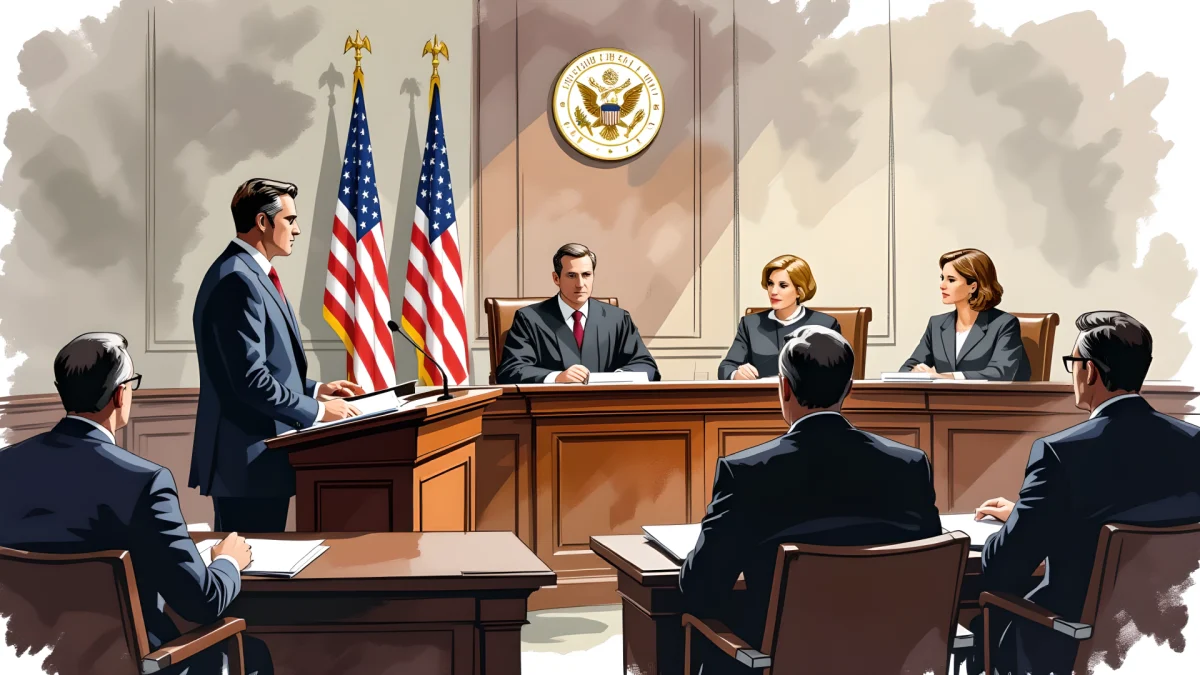
When a lawyer asks a judge for permission to “treat the witness as hostile,” they are usually asking to question their own witness more like an opposing witness — most importantly, by using leading questions.
“Hostile” does not mean the witness is angry, dangerous, under arrest, or in trouble with the court. In evidence law, the issue is whether the witness is sufficiently adverse, unwilling, biased, or uncooperative that the normal rules for questioning a witness no longer make sense.
Under Federal Rule of Evidence 611(c), leading questions ordinarily should not be used during direct examination, but they are ordinarily allowed on cross-examination. The rule also specifically permits them when a party calls a hostile witness, an adverse party, or a witness identified with an adverse party. (Legal Information Institute)
That is the real legal mechanism behind the familiar courtroom line:
“Your Honor, permission to treat the witness as hostile?”
Why Does Being “Hostile” Matter?
Normally, a lawyer is expected to let a witness they called tell the story rather than feeding the witness the desired answers.
A typical question on direct examination might be:
“What did you see when you entered the building?”
A leading version might be:
“You saw the defendant standing beside the door when you entered, correct?”
The second question strongly suggests the answer the lawyer wants.
That is generally acceptable during cross-examination because the witness was called by the opposing side. But allowing a lawyer to routinely lead their own cooperative witnesses could make testimony look more like the lawyer’s narrative than the witness’s independent recollection.
A hostile witness changes that calculation.
If the witness is resisting the examination, displaying bias, refusing to cooperate, or otherwise behaving adversely to the party that called them, the judge may allow the attorney to use the more controlled questioning normally associated with cross-examination. The advisory history to Rule 611 specifically discusses witnesses who are hostile, unwilling, or biased. (Legal Information Institute)
What Does “Permission to Treat the Witness as Hostile” Actually Do?
The television version can make it sound as though a judge presses a procedural button and officially converts the witness to the other side.
That is not quite what happens.
The important practical consequence is usually that the lawyer may begin asking leading questions even though the lawyer called the witness.
Suppose a prosecutor calls a witness who previously told investigators that she saw a suspect leave a building at 10 p.m. On the stand, the witness suddenly becomes evasive:
Lawyer: “Who did you see leave the building?”
Witness: “I don’t really remember.”
If the circumstances justify treating the witness as hostile, the questioning might become much more pointed:
Lawyer: “You told Detective Smith that you saw the defendant leave at approximately 10 p.m., correct?”
That is much closer to the style of questioning viewers associate with cross-examination.
But the ruling does not suspend the normal rules of evidence. The lawyer still cannot ask otherwise improper questions simply because the witness is hostile.
Does a Witness Have to Contradict the Lawyer to Become Hostile?
Not necessarily.
A surprising answer and a hostile witness are not the same thing.
A witness might sincerely remember an event differently than expected. That alone does not mean the witness is hostile. What matters is the circumstances surrounding the examination — including whether the witness appears unwilling, biased, evasive, or aligned against the party attempting to question them.
Rule 611 gives the trial judge substantial control over how witnesses are examined, including the form and order of questioning. (Legal Information Institute)
That is why the Hollywood formulation is somewhat misleading. There is no magic sentence that automatically turns an inconvenient witness into a hostile one.
“Permission to treat the witness as hostile” is essentially a request for the judge to allow a different form of questioning.
Can a Lawyer Attack the Credibility of Their Own Witness?
Yes — and this is where another common misconception appears.
Under Federal Rule of Evidence 607, any party may attack a witness’s credibility, including the party that called the witness. (Legal Information Institute)
So, under the federal rules, declaring or treating a witness as hostile is not what gives a lawyer the basic right to challenge their own witness’s credibility.
Hostility primarily matters here because of how the lawyer may question the witness, particularly the use of leading questions.
Whether a previous statement can actually be introduced as evidence — and whether a jury can consider it only when judging credibility or also as proof that the statement itself was true — raises separate evidence questions.
Why Would a Lawyer Call a Witness Who Might Be Hostile?
Sometimes there is little practical alternative.
A witness may be:
- the only person who saw an important event;
- someone whose testimony is necessary to establish part of the case;
- an opposing party or someone closely associated with one;
- a witness compelled to appear;
- someone who previously cooperated but changed their position before or during trial.
A witness can therefore be important to a case without being enthusiastic about helping the lawyer who called them.
The federal rule expressly anticipates this problem. It separately identifies a hostile witness, an adverse party, and a witness identified with an adverse party as situations in which leading questions may be appropriate. (Legal Information Institute)
Is a Hostile Witness the Same as an Adverse Witness?
The terms are sometimes used loosely as though they mean the same thing, but the federal rule actually lists the categories separately.
A witness can be hostile in fact because of the way they are behaving toward the examining party — for example, because they are unwilling or biased.
An adverse party, by contrast, is literally someone on the opposing side of the lawsuit. Rule 611 also covers witnesses sufficiently identified with an adverse party.
The distinction matters because a lawyer calling the opposing party does not necessarily have to wait for that person to become visibly combative before using leading questions. The relationship itself can justify that form of examination under the rule. (Legal Information Institute)
Does “Hostile” Mean the Judge Thinks the Witness Is Lying?
No.
Allowing hostile-witness questioning is not a finding that the witness committed perjury, lied under oath, or did anything illegal.
It is primarily a decision about the appropriate method of questioning the witness.
A witness could be truthful but openly adverse to the lawyer examining them. Conversely, a cooperative witness could give testimony that later proves inaccurate without ever becoming a “hostile witness.”
Those are different questions.
So, Is the Phrase Used on TV Actually Real?
Yes. The underlying concept is real.
What television tends to exaggerate is the significance of the moment.
When an attorney says something like “Your Honor, permission to treat the witness as hostile,” the important issue is not that the witness has suddenly acquired a special legal status. The attorney is effectively telling the judge:
This is my witness, but ordinary direct examination is no longer workable. May I question them using leading questions?
Under federal evidence law, that is a legitimate request.
The dramatic courtroom line is therefore based on real procedure. It just sounds considerably more sinister than what the rule actually does.
References and Further Reading
Federal Rules and Primary Authority
Federal Rules of Evidence — U.S. Courts — The federal judiciary’s current Federal Rules of Evidence page. The rules govern evidence in most proceedings in federal courts. (United States Courts)
Federal Rule of Evidence 611: Mode and Order of Examining Witnesses and Presenting Evidence — The central rule governing leading questions, cross-examination, hostile witnesses, adverse parties, and witnesses identified with adverse parties. Its advisory notes also explain the treatment of unwilling and biased witnesses. (Legal Information Institute)
Federal Rule of Evidence 607: Who May Impeach a Witness — Establishes that a party may attack a witness’s credibility even when that party called the witness. (Legal Information Institute)
Additional Legal Reference
Cornell Legal Information Institute: Hostile Witness — A concise legal-reference definition of the term and its connection to leading questions. (Legal Information Institute)
Editorial note: This article explains the federal evidence rule. State courts may use similar but not identical evidentiary rules and procedures. The federal rules were reviewed for currency on September 16, 2026; the U.S. Courts currently lists the Federal Rules of Evidence as last amended in 2024. (United States Courts)