China has delivered another 5,000 solar-and-battery systems to Cuba during one of the island’s worst energy crises. The shipment will power rural homes, medical facilities and other essential services. At nearly the same time, U.S. policy has increased pressure on countries supplying Cuba with oil. The contrast is difficult to ignore.
Cuba desperately needs energy.
Hospitals need electricity. Water systems need pumps. Refrigerators need to keep medicine and food cold. Ambulances need fuel. Families need lights, fans and basic appliances.
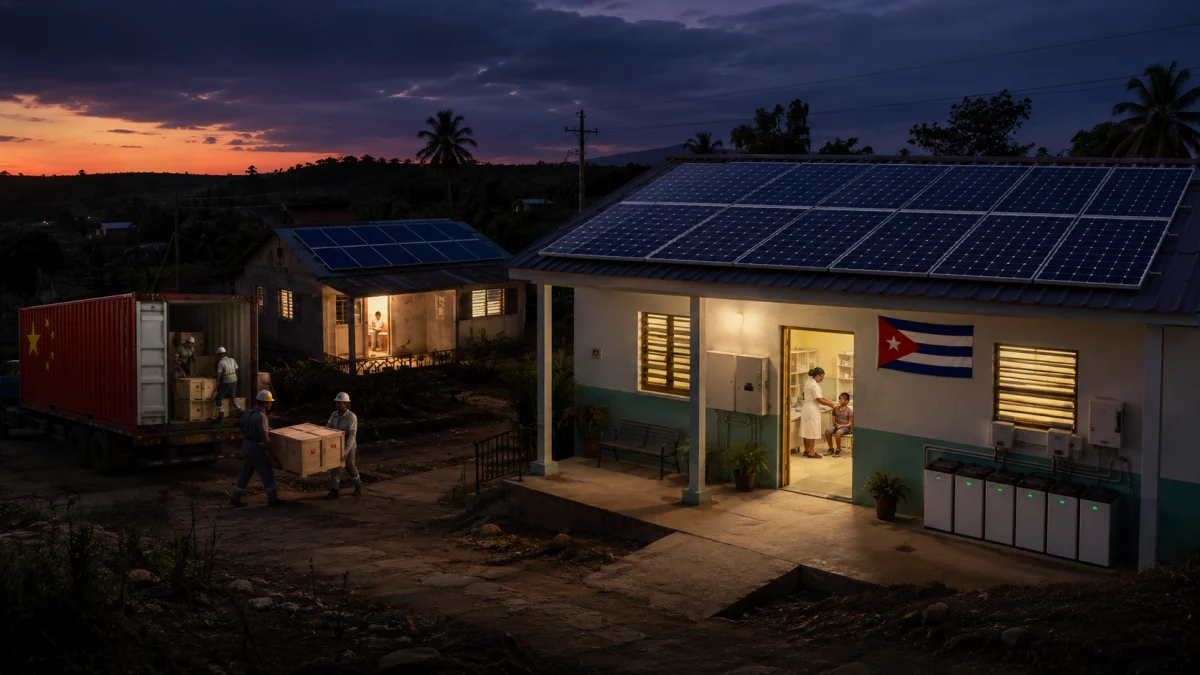
On August 7, 2026, China responded to that need in an unusually tangible way: 5,000 complete photovoltaic systems equipped with battery storage arrived in Cuba as a government donation.
It was China’s second such donation in less than a year.
The systems are intended for isolated rural homes as well as health centers, emergency medical facilities, childcare centers, homes for children without parental care and other institutions providing essential services.
Meanwhile, the United States has taken a very different approach to Cuba’s underlying energy shortage.
In January, President Donald Trump signed an executive order establishing a mechanism for imposing additional tariffs on countries that directly or indirectly sell or provide oil to Cuba.
The United States is also providing humanitarian assistance to Cubans, an important fact that should not be omitted. But taken together, the policies produce a striking picture:
China is helping Cuba generate electricity without fuel while Washington is simultaneously trying to discourage other countries from supplying Cuba with that fuel.
That does not make China’s foreign policy altruistic, nor does it erase Cuba’s own responsibility for decades of economic and infrastructure problems.
But for a Cuban clinic trying to keep its lights on, geopolitical motivations are considerably less important than whether the electricity works.
What exactly did China send to Cuba?
This was not simply a shipment of loose solar panels.
Cuban authorities describe the August donation as 5,000 photovoltaic systems, each incorporating solar generation and battery storage.
The Cuban Foreign Ministry reported approximately 3.6 kW of generating capacity and 14.3 kWh of battery storage per system. The government’s original announcement appears to incorrectly describe the generating capacity in kilowatt-hours rather than kilowatts; photovoltaic industry publication pv magazine independently noted the unit discrepancy.
If the reported 3.6 kW rating is correct, the 5,000 systems collectively represent roughly:
- 18 MW of distributed solar generating capacity
- 71.5 MWh of battery storage
The batteries matter.
Solar panels alone produce electricity when the sun is available. Battery storage means some of that electricity can continue powering essential equipment after sunset or during a grid failure—particularly valuable in a country experiencing prolonged blackouts.
This is China’s second 5,000-system donation
China had already delivered 5,000 smaller 2 kW systems in November 2025.
By March 2026, Cuba’s electrical utility was installing those systems around the country.
Of the first 5,000 units, Cuban authorities said:
- 2,671 went to facilities considered essential
- 2,329 were designated for isolated homes
- some recipients were households that had previously never had electrical service at all.
China’s Foreign Ministry subsequently reported that installations at community medical clinics and an elder-care facility were already being used to maintain services during Cuba’s electricity shortages.
The new August shipment therefore brings the two donations to 10,000 distributed photovoltaic systems.
And those household-scale systems are only one part of China’s rapidly growing role in Cuba’s solar expansion.
Independent reporting cited Chinese customs data showing Cuban imports of Chinese solar equipment reaching approximately $117 million in 2025, up from roughly $3 million in 2023. Cuba has also been constructing dozens of larger solar parks using Chinese technology.
Why Cuba needs the electricity so badly
It would be misleading to explain Cuba’s energy crisis with a single cause.
The island suffers from aging generating plants, deteriorated infrastructure, insufficient investment, economic dysfunction, declining access to imported petroleum and longstanding inefficiencies in its electrical system.
Those domestic problems are real.
So are external constraints.
The latest U.S. policy explicitly targets Cuba’s access to petroleum. The January 29 White House order established a system under which the United States can impose additional tariffs on imports from countries that provide oil to Cuba. The administration says the measures are intended to pressure Cuba’s government over national-security, political and human-rights concerns.
Whatever one thinks of that objective, oil shortages do not remain confined to government ministries.
Energy runs civilian society.
In May, Francisco Pichón, the United Nations resident coordinator in Cuba, described a cascading humanitarian emergency in which hospitals were scaling back operations, surgeries were being postponed, water pumping was being disrupted and medically vulnerable people were facing increasing danger as fuel and electricity became scarce.
The UN’s warning gets at the fundamental problem with using energy deprivation as political leverage:
A government can be the intended target while ordinary people absorb much of the immediate impact.
The United States is helping Cubans too
There is an important complication to the comparison.
The United States has not simply abandoned humanitarian assistance to Cuba.
In May, the State Department announced an additional $100 million humanitarian assistance commitment intended to reach Cubans through the Catholic Church and independent organizations rather than through the Cuban government.
On July 21, the first flight associated with that commitment departed Miami carrying packaged food and hygiene supplies for as many as 700 Cuban families, through a partnership with Catholic Relief Services and Caritas Cuba. The State Department said that program followed approximately $9 million in assistance after Hurricane Melissa.
That assistance is real and should be credited as such.
But it also produces a peculiar policy contradiction.
The United States is spending money to alleviate humanitarian suffering among Cubans while simultaneously maintaining measures designed to reduce the flow of one of the commodities most necessary to operate hospitals, transportation networks, water systems and electricity generation.
China’s approach does something structurally different.
A food package gets consumed.
A hygiene kit gets used.
A solar system keeps producing electricity.
For a rural household or medical clinic, distributed generation can reduce dependence on both Cuba’s unreliable national grid and the international petroleum supply altogether.
China is not "saving" Cuba—but the assistance is significant
There is a temptation to turn the story into something larger than the numbers justify.
Five thousand solar systems will not fix Cuba’s electrical grid.
Even 10,000 systems will not eliminate national blackouts.
Cuba still needs functioning power plants, transmission infrastructure, grid modernization, fuel, maintenance, investment and substantial economic reforms.
Solar power also has limitations, particularly when adequate storage and grid infrastructure are missing. Independent reporting indicates that Cuba continues to struggle to fully utilize its growing solar capacity because the wider electrical system remains badly degraded.
So saying "China saved Cuba" would be an exaggeration.
Saying China is providing meaningful energy infrastructure to Cubans during a severe humanitarian emergency is not.
For someone living in a previously unelectrified rural home, 3.6 kW and a battery are not symbolic geopolitics.
They can mean refrigeration.
A fan.
A charged phone.
Lighting after dark.
For a clinic, electricity can mean medical refrigeration, communications and continued treatment when the surrounding grid fails.
That is why the humanitarian significance of the donation is substantially larger than the raw megawatt number suggests.
There is also a much bigger energy story behind this
China’s response to Cuba becomes even more interesting when placed alongside what has happened to global energy markets in 2026.
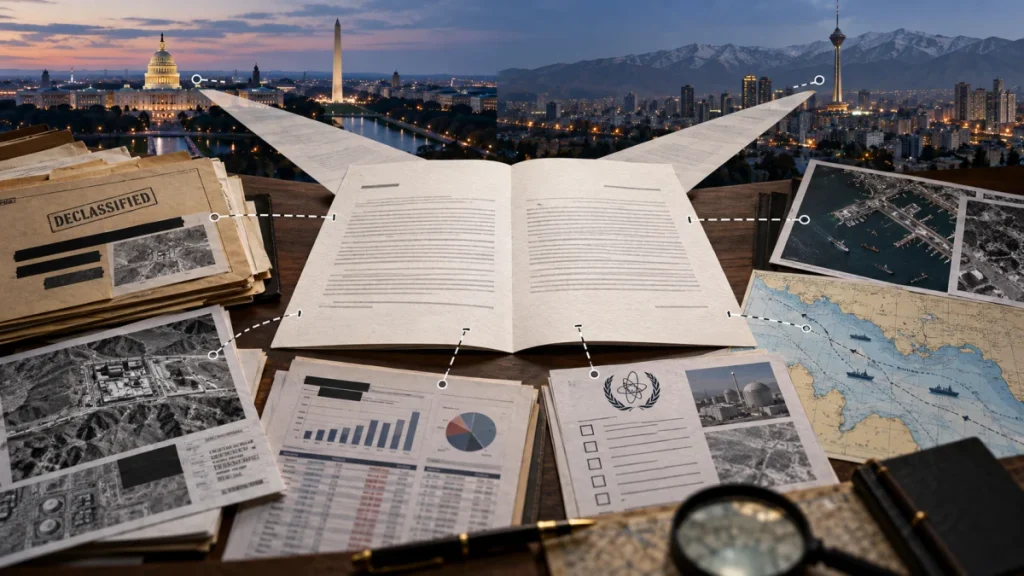
The United States is currently involved in a war with Iran that has badly disrupted petroleum flows through the Middle East.
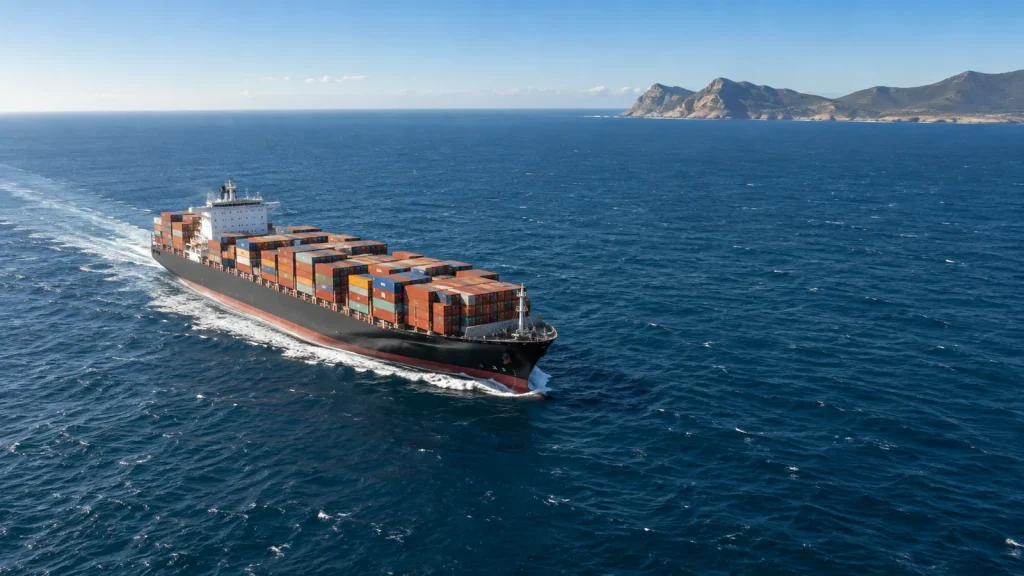
The International Energy Agency reported on August 12 that the effective closure of the Strait of Hormuz and renewed hostilities had left global oil supply 6.3 million barrels per day below year-earlier levels in July, with millions of barrels of Gulf production still shut in.
The conflict is also deeply unpopular in the United States.
A July AP-NORC survey found that 64% of Americans said the Iran war had not been worth fighting, compared with 33% who believed it had. Only 23% said U.S. military action should continue, while others favored a pause for negotiations, an end to military action or were unsure.
Against that backdrop, one of China’s most consequential energy achievements suddenly looks less like environmental policy and more like national—and global—energy security.
China’s electric vehicles are already eliminating enormous amounts of oil demand
China spent years aggressively electrifying transportation while much of the world debated whether the transition was happening too quickly.
The result is now measurable.
According to the International Energy Agency’s Global EV Outlook 2026, China’s electric-vehicle fleet displaced approximately 1 million barrels of oil demand every day in 2025.
For comparison, the world’s entire EV fleet displaced about 1.7 million barrels per day.
That means China alone accounted for a remarkably large portion of petroleum demand avoided through vehicle electrification.
By 2030, the IEA projects Chinese EVs could displace approximately 2.7 million barrels per day.
China did not electrify its transportation system in anticipation of the 2026 Iran war.
But the strategic payoff is now obvious.
Every electric vehicle that does not require gasoline reduces exposure to disrupted tanker routes, unstable oil-producing regions and geopolitical shocks.
And every solar system installed on a Cuban clinic reduces dependence on exactly the same petroleum system.
These are very different projects occurring at very different scales, but they share the same underlying principle:
The less essential infrastructure depends on imported fossil fuels, the harder it is for an energy crisis somewhere else in the world to shut that infrastructure down.
The humanitarian question is simpler than the geopolitics
There are legitimate reasons to scrutinize China’s relationship with Cuba.
China gains diplomatic influence from helping the island. Cuba is strategically located only about 90 miles from Florida. Beijing has commercial, political and geopolitical interests throughout Latin America and the Caribbean.
Foreign aid is rarely devoid of national interest.
The same applies to American assistance.
But none of that changes what the equipment does after it is installed.
A solar panel does not ask whether the person receiving its electricity supports the Communist Party.
A battery does not distinguish between a government official and a sick child.
And a rural medical clinic does not become less deserving of reliable electricity because Washington has profound disagreements with Havana.
That is what makes this particular comparison uncomfortable.
The United States says its pressure is directed at Cuba’s government, not the Cuban people. It is simultaneously spending substantial money on humanitarian assistance intended to demonstrate that distinction.
China, meanwhile, has handed Cuba thousands of small pieces of infrastructure capable of making individual households and essential institutions less dependent on both Havana’s failing electrical system and imported petroleum.
Readers can decide for themselves which approach they believe is wiser.
But the physical results are unusually easy to understand.
One policy attempts to influence Cuba by restricting energy.
The other is putting energy systems on Cuban roofs.
And when the lights go out, that difference stops being theoretical.
References and Further Reading
China’s Solar Assistance to Cuba
Cuban Ministry of Foreign Affairs — Entregó China nuevo donativo de sistemas fotovoltaicos Cuba’s official August 2026 announcement of China’s second donation of 5,000 photovoltaic systems. It identifies the intended recipients—including isolated rural homes, health centers, emergency medical facilities and childcare institutions—and reports 14.3 kWh of battery storage per system.
Cuban Ministry of Foreign Affairs — China dona a Cuba 5 000 sistemas fotovoltaicos para electrificar viviendas rurales aisladas Official documentation of the previous 5,000-system donation delivered in November 2025. The earlier systems were rated at 2 kW and were intended primarily for isolated rural households and communities affected by Hurricane Melissa.
Ministry of Foreign Affairs of the People’s Republic of China — Chinese Ambassador Hua Xin Inspects Sites Using China-Aided Household Solar Equipment Chinese government documentation showing donated solar equipment installed at community medical clinics and an elder-care facility in Cuba in March 2026.
Ministry of Foreign Affairs of the People’s Republic of China — China and Cuba Sign Project Agreement for 35 MW of Solar Photovoltaic Power Stations Primary-source background on the broader Chinese-supported solar buildout in Cuba. The project covers seven photovoltaic plants in six Cuban provinces and was projected to reduce Cuba’s annual fuel requirements.
U.S. Policy Toward Cuba’s Oil Supply
The White House — Addressing Threats to the United States by the Government of Cuba Executive Order 14380, signed January 29, 2026. It created a mechanism allowing additional tariffs on goods from countries determined to be directly or indirectly supplying oil to Cuba.
The White House — Ending Certain Tariff Actions Executive Order 14389, signed February 20, 2026. This order ended the additional IEEPA tariffs imposed or authorized under several previous executive orders, including Executive Order 14380 concerning countries supplying oil to Cuba. The underlying national emergency regarding Cuba remained in effect.
U.S. Humanitarian Assistance to Cuba
U.S. Department of State — The United States is Ready to Provide $100 Million in Direct Assistance to the Cuban People, If the Cuban Regime Will Permit It The State Department’s May 2026 announcement of an additional $100 million humanitarian-assistance offer, intended for distribution through the Catholic Church and other independent humanitarian organizations rather than the Cuban government.
U.S. Department of State — United States and Catholic Relief Services Send First Humanitarian Flight to Cuba Under Secretary Rubio’s New $100 Million Assistance Commitment Official July 21, 2026 documentation of the first humanitarian flight under the program. The shipment contained food and hygiene supplies for as many as 700 families and followed approximately $9 million in earlier U.S. assistance after Hurricane Melissa.
Cuba’s Humanitarian and Energy Crisis
United Nations Sustainable Development Group — Cuba Is Running Out of Time. We Need Fuel Now to Save Lives A May 2026 account by UN Resident Coordinator Francisco Pichón describing how Cuba’s energy shortage is affecting hospitals, water pumping, transportation, food systems and humanitarian operations. Particularly useful for understanding why an energy shortage rapidly becomes a broader humanitarian emergency.
China, Electrification and the Global Oil Market
International Energy Agency — Global EV Outlook 2026 The IEA’s annual assessment of global electric transportation. Its 2026 edition estimates that China’s EV fleet displaced roughly 1 million barrels per day of potential oil consumption in 2025 and projects approximately 2.7 million barrels per day of displacement by 2030.
International Energy Agency — Executive Summary: Global EV Outlook 2026 The most concise primary source for the article’s specific oil-displacement figures and the relationship between China’s electrification, petroleum demand and energy security.
International Energy Agency — Oil Market Report — August 2026 Current IEA analysis of the global oil disruption associated with the Iran conflict and the Strait of Hormuz. The August report documents sharply reduced Gulf production, disrupted exports and continuing effects on global oil prices and consumption.
U.S. Public Opinion on the Iran War
AP-NORC Center for Public Affairs Research — Most Say the War With Iran Is Not Worth Fighting July 2026 national polling on American attitudes toward the Iran war. Useful for grounding the article’s characterization of the conflict as unpopular rather than relying on anecdotal political commentary.
Independent Reporting and Technical Context
PV Magazine — Cuba Receives Another 5,000 Solar Systems From China, Expands Renewable Energy Incentives Independent solar-industry reporting on the August shipment. It clarifies an apparent unit error in Cuba’s announcement, reports approximately 3.6 kW of generating capacity and 14.3 kWh of storage per system, and calculates roughly 18 MW of combined distributed photovoltaic capacity and 71.5 MWh of storage.
The Wall Street Journal — Cuba Is Low on Oil. Now, It’s Counting on Solar, With China’s Help. Broader reporting on Cuba’s accelerating shift toward Chinese solar technology, including the growth of Chinese solar exports to the island and the continuing limitations created by Cuba’s aging electrical grid.
Editorial Note
This article concerns rapidly changing energy, sanctions, humanitarian and military developments. The January 29, 2026 U.S. mechanism threatening tariffs against countries supplying oil to Cuba was subsequently affected by Executive Order 14389 on February 20, 2026, which ended the additional IEEPA tariff actions authorized under Executive Order 14380. Any discussion of current U.S. pressure on Cuba’s fuel supply should therefore distinguish that terminated tariff mechanism from other U.S. sanctions, restrictions and policies that remain in effect.
Oil-market conditions surrounding the Iran conflict, Cuba’s electricity situation and international assistance programs may also change quickly. Current-status claims should be rechecked when this article is materially updated.