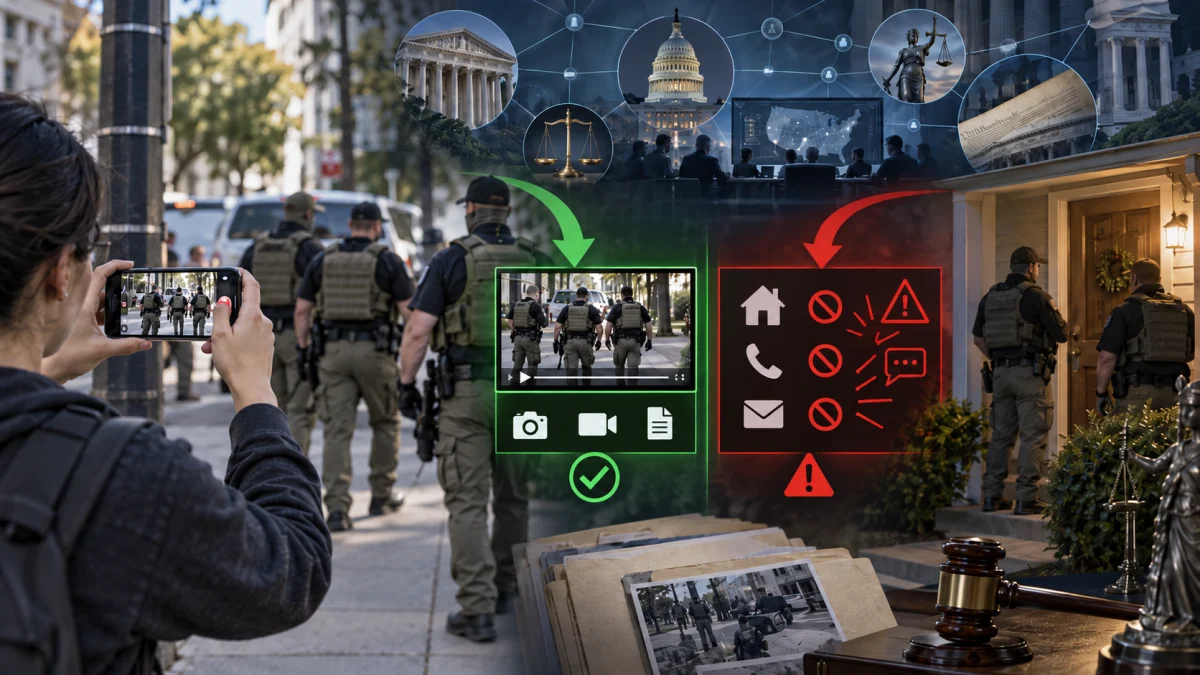
In most circumstances, filming ICE or other federal law-enforcement officers performing their duties from a lawful public location is constitutionally protected. Posting an officer’s face or an ordinary recording of public conduct is also not, by itself, the federal crime prosecutors sometimes describe as “doxxing.”
Federal law draws a much narrower line.
Under 18 U.S.C. §119, one federal statute used in cases involving the personal information of federal employees, prosecutors must establish publication of specifically defined private information—such as a home address, personal phone number or personal email—together with the required intent involving threats, intimidation or facilitating a crime of violence. An officer’s face or photograph is not included in that statute’s definition of “restricted personal information.”
There are limits. A person who follows an agent home, publishes a home address, threatens violence, obstructs an arrest or engages in stalking is in a fundamentally different legal position from someone who records an officer performing public duties.
President Donald Trump’s National Security Presidential Memorandum 7, or NSPM-7, makes this distinction more important because it directs federal agencies to prioritize investigations into political violence, threats, “organized doxing” and the networks that allegedly support such conduct. But NSPM-7 is an executive policy directive, not a new criminal statute. It did not make anti-ICE speech, anti-capitalism, antifascism or criticism of the government federal crimes.
The harder question is what happens before anyone is charged with a crime: how broadly federal agencies may investigate people whose protected speech or recording activity overlaps with the behaviors NSPM-7 tells investigators to scrutinize.
That question is no longer theoretical. Federal courts are already dealing with cases in which people say immigration agents investigated, photographed, warned or threatened them after they recorded enforcement operations or harshly criticized ICE.
Why This Question Is Suddenly Getting Attention
Korean American creator Ed Choi said in an Instagram reel posted under @etchaskej that two federal agents came to his home, knocked for roughly 20 minutes and later waited nearby.
Choi said his attorney subsequently learned that the agents’ interest related to NSPM-7. He also said he believed the issue involved federal “doxxing” law and his practice of publishing images of ICE personnel.
There is an important evidentiary limit here.
SHERAFY.com has not independently verified that the people Choi described were federal agents, what agency they represented, what they told his attorney, or whether Choi is formally under investigation pursuant to NSPM-7. We found no public charging document, court filing or government statement confirming those parts of his account as of September 16, 2026.
His story should therefore be treated as his account of an encounter, not evidence that the FBI has formally classified him as a domestic-terrorism subject or concluded that he violated federal law.
But the broader system he describes is real, operational and considerably more developed than the viral video alone explains.
What NSPM-7 Actually Does
Trump signed NSPM-7, “Countering Domestic Terrorism and Organized Political Violence,” on September 25, 2025.
The memorandum directs the FBI’s Joint Terrorism Task Forces to coordinate a national strategy for investigating and disrupting what the administration describes as organized political violence and intimidation.
It specifically identifies organized doxxing campaigns among the behaviors of concern. The memorandum describes these campaigns as exposing private or identifying information—giving home addresses and phone numbers as examples—with an explicit intent to encourage harassment, intimidation or violent assault.
NSPM-7 also tells investigators to examine potential funders, organizers, recruiters and other people or organizations connected to criminal political violence, and directs agencies to use existing federal statutes involving such conduct as threats, assaults on federal officers, conspiracy, money laundering and material support where their legal requirements are met.
The memorandum contains another feature that has generated substantial First Amendment concern: it identifies ideological themes that the administration says recur as motivations or “indicia” of political violence. These include anti-Americanism, anti-capitalism, anti-Christianity and what the memorandum calls extremism concerning migration, race and gender.
That wording should not be confused with criminal law.
Being anti-capitalist is not a federal crime. Opposing immigration enforcement is not a federal crime. Calling oneself antifascist is not a federal crime. Criticizing Christianity is not a federal crime.
The memorandum describes those beliefs as potential indicators associated with the violent conduct it is targeting. Whether agencies can use ideological information without allowing protected viewpoints to become a proxy for suspicion is one of the central constitutional questions surrounding the policy.
Attorney General Pam Bondi’s December 2025 implementing memorandum expressly acknowledges that limit. A publicly released copy of the Bondi memorandum states that investigations cannot be opened solely because someone engaged in First Amendment-protected activity or otherwise lawfully exercised constitutional rights. The same memorandum has since appeared as an exhibit in federal litigation over immigration-enforcement surveillance.
The tension is therefore built into the policy itself: investigators are being told to look for ideological and organizational patterns around political violence while also being told not to investigate Americans merely because they hold or express those beliefs.
NSPM-7 Did Not Create a New Crime Called “Domestic Terrorism”
This distinction gets lost surprisingly often.
The current federal definition in 18 U.S.C. §2331(5) describes domestic terrorism as conduct that involves acts dangerous to human life that violate criminal law, occurs primarily inside the United States and appears intended to intimidate or coerce civilians or influence government through specified coercive means.
The first requirement matters enormously:
There must already be criminal conduct.
A political belief alone does not satisfy §2331(5).
DOJ’s own Journal of Federal Law and Practice has explained that §2331(5) is a definition rather than a freestanding domestic-terrorism criminal offense. Federal prosecutors generally charge the underlying crimes instead.
That is exactly what can be seen in cases the Justice Department itself now identifies as part of the NSPM-7 initiative.
For example, a federal defendant in Indiana was sentenced in September 2026 after pleading guilty to transmitting online threats against ICE agents, including calls to kill them. DOJ explicitly described the prosecution as part of the nationwide NSPM-7 initiative. The crime was the threat—not the defendant’s political viewpoint.
The FBI’s implementation has also become institutional rather than theoretical. The Bureau’s FY2027 materials say it created an NSPM-7 Joint Mission Center involving personnel from 10 agencies, integrating intelligence, financial analysis and operational support. The Government Accountability Office separately reported that the FBI has provided NSPM-7-related training to FBI personnel and briefings to state and local law-enforcement leaders.
So NSPM-7 matters. But it matters primarily because of how the federal government prioritizes and organizes investigations, not because the memorandum independently created a catalog of new political crimes.
What Does “Doxxing” Actually Mean Under Federal Law?
“Doxxing” is an internet term with a much broader everyday meaning than any single federal statute.
Someone might colloquially call the publication of a person’s name, photograph, employer, license plate or social-media profile “doxxing.”
Federal criminal law is more specific.
One particularly important statute in cases involving federal officers is 18 U.S.C. §119, Protection of individuals performing certain official duties.
For that statute, “restricted personal information” means:
Social Security number, home address, home telephone number, mobile telephone number, personal email address or home fax number.
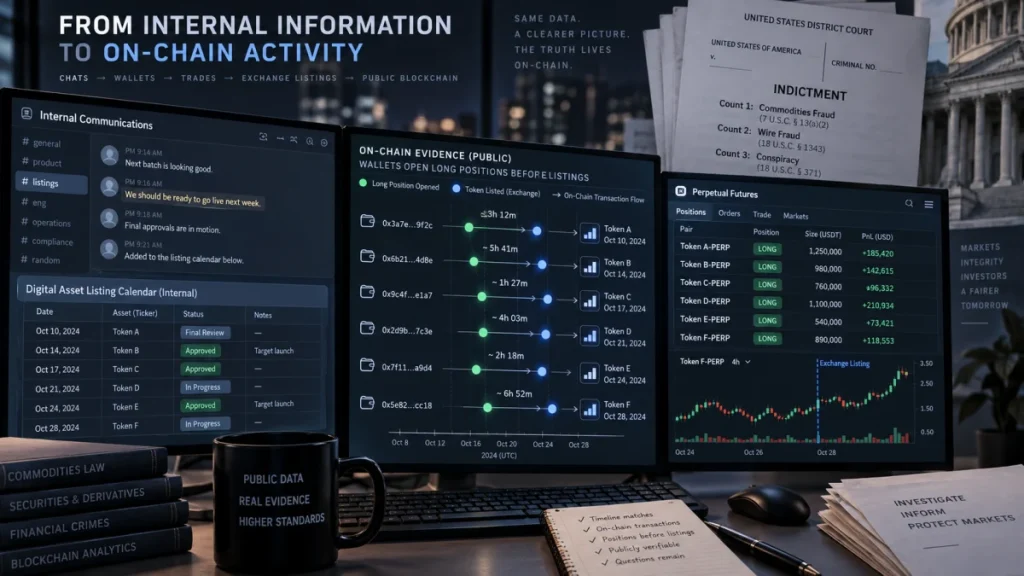
The statute additionally requires the government to prove the relevant intent: either an intent to threaten, intimidate or incite a crime of violence, or intent and knowledge that the information will be used to threaten, intimidate or facilitate one.
That is much narrower than:
“Someone posted my face on the internet.”
A photograph of an ICE officer performing public duties is not one of the categories of restricted information listed in §119.
Neither, by itself, is the simple act of identifying an officer by name.
That does not mean every possible campaign to identify or publicize information about an officer is lawful. Threat statutes, stalking laws, obstruction statutes and other criminal laws can apply depending on what someone actually does. How information was obtained can also matter.
But if the allegation is specifically a violation of §119, the elements of §119 still have to be satisfied.
A Real Federal Doxxing Case Shows the Difference
A recent California prosecution provides an unusually clear example.
In June 2026, Gregory Curcio pleaded guilty in federal court to violating §119 after publishing an ICE attorney’s home address and directing people to “swat” her.
That case contained both components missing from ordinary public recording:
private residential information and conduct explicitly connected to creating a potentially dangerous confrontation at the person’s home.
Another California case illustrates why even conduct that looks like “doxxing” in ordinary language does not automatically prove a §119 offense.
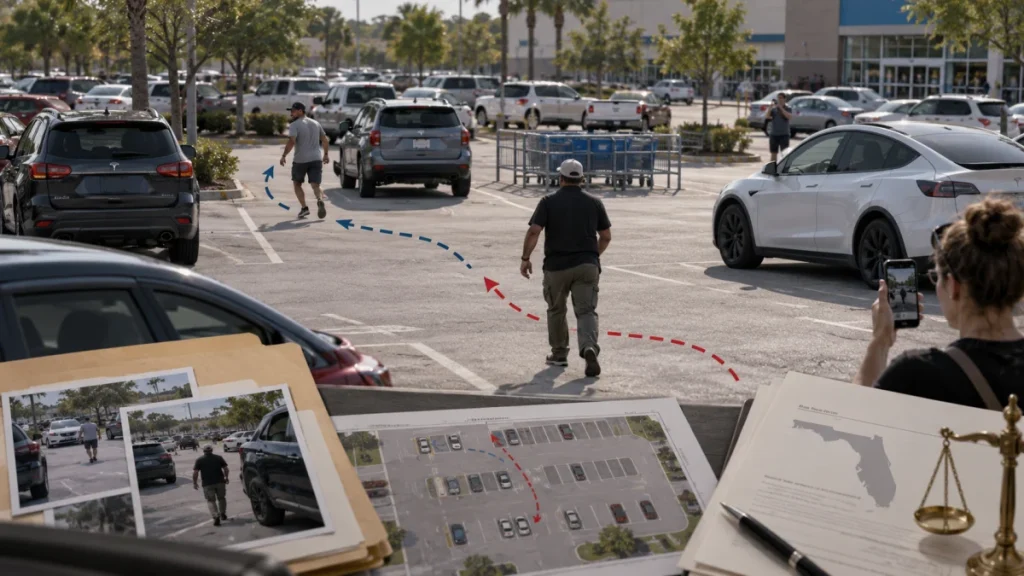
Three women were prosecuted after allegedly following an ICE officer from work to his residence and livestreaming the pursuit. Prosecutors said an address near his home was broadcast and viewers were invited to come to the area.
In March 2026, a jury convicted two defendants of stalking but acquitted them of the separate conspiracy charge involving disclosure of the officer’s personal information. A third defendant was acquitted of both charges.
The distinction is useful: criminal liability turns on the elements the government can actually prove, not on whether conduct can casually be described online as “doxxing.”
Is It Legal to Film ICE Agents in Public?
Generally, yes, when you are lawfully present and are not interfering with the officers’ work.
In California and the rest of the Ninth Circuit, the rule is particularly clear.
In Askins v. U.S. Department of Homeland Security, the Ninth Circuit held that the First Amendment protects photographing and recording matters of public interest, including law-enforcement officers performing their official duties in public places. The case itself involved people documenting Customs and Border Protection activity.
The protection is not unique to the Ninth Circuit.
In August 2026, the Second Circuit joined eight other federal appeals courts in recognizing a First Amendment right to record law enforcement in public. Massimino v. Benoit brought the number of federal circuits expressly recognizing that right to nine.
That still does not create an unlimited license to stand anywhere or do anything while holding a camera.
Restrictions can depend on whether the location is actually open to the public, whether a person physically interferes with officers, legitimate safety concerns and reasonable time, place and manner rules. A courthouse detention area, secure federal facility or active crime scene is not constitutionally identical to a public sidewalk.
But recording from a lawful public position and obstruction are separate acts. The existence of a camera does not itself turn observation into interference.
What About Posting the Recording Online?
Publication also receives substantial First Amendment protection, particularly where lawfully obtained information concerns public affairs.
The Supreme Court has repeatedly recognized strong constitutional protection for publishing truthful, lawfully obtained information about matters of public significance. In Bartnicki v. Vopper, the Court emphasized the constitutional protection surrounding publication on matters of public concern while carefully refusing to create an unlimited rule covering every privacy conflict.
That is important because recording an officer and publishing the recording are related but analytically separate acts.
A video showing an ICE officer conducting an arrest in public may document government activity of obvious public interest.
Publishing the officer’s private home address with a violent purpose is different.
The law is much easier to understand once those things stop being collapsed into the single word “doxxing.”
The Constitutional Problem Is Often the Investigation, Not the Prosecution
This is where NSPM-7 becomes more complicated.
It is easy to say that protected political speech cannot itself produce a criminal conviction. The more difficult question is whether protected activity can expose someone to federal surveillance, doorstep interviews or intimidating warnings while investigators look for something else.
Several 2026 cases are testing that boundary.
A Federal Court Just Restricted DHS After an ICE Critic Was Warned at Home
David Streever sent a harsh email criticizing then-acting ICE Director Todd Lyons.
Federal investigators later went to Streever’s home and delivered a warning notice suggesting that he could be violating federal law. Streever sued.
On September 15, 2026, U.S. District Judge Rudolph Contreras granted Streever part of the preliminary relief he requested. The judge concluded that the email was protected political expression and that Streever was likely to succeed on his claim that the government’s warning had impermissibly chilled his speech.
The injunction temporarily prevents DHS and ICE from relying on that warning notice or issuing substantially similar threats aimed at his protected expression while the litigation continues.
DHS disputes the broader accusation that it is suppressing criticism. A department spokesperson told Bloomberg Law that claims DHS was attempting to suppress free speech were false and said ICE investigates credible threats against its employees and officers.
Both facts matter.
Law enforcement can investigate communications that reasonably raise concern about threats. But an investigation does not erase the First Amendment, and a government warning cannot lawfully convert nonthreatening political criticism into prohibited speech simply because the criticism is aggressive or offensive.
Streever’s case is still ongoing, and the September ruling is preliminary rather than a final judgment.
Maine Residents Say Agents Threatened a “Domestic Terrorist Watchlist”
A second case is even closer to the question of recording immigration agents.
In Hilton v. Noem, two Maine residents allege that federal immigration agents photographed or collected information about them while they peacefully recorded immigration-enforcement operations.
According to the complaint, agents told one plaintiff that she was now considered a domestic terrorist and told another that continued observation could put her on a domestic-terrorist watchlist.
Those are allegations, not established findings.
The government’s response is important. ICE and Homeland Security Investigations told the court that searches of their databases found that the plaintiffs had not been added to the alleged database and were not under investigation because of the encounters. Government declarations also pointed to DHS policy restricting the collection of records based solely on First Amendment activity.
The judge denied the plaintiffs’ request for immediate emergency relief in March, finding the factual record insufficient and their proposed injunction too broad. But he did not dismiss the constitutional concern. The court said the lawsuit raises “serious constitutional issues” that should be resolved through ordinary litigation rather than an emergency order.
The case remains unresolved.
The significance is not that it proves the federal government is placing people on terrorism watchlists for filming ICE. It does not.
Its significance is that remarkably similar allegations are already being litigated in federal court, and the government itself has had to draw a formal distinction between legitimate law-enforcement investigations and collecting information merely because someone exercised First Amendment rights.
Another Court Recently Protected an “ICE Watcher”
There is also a rapidly developing Ohio case.
Sean Moorman describes himself as an “ICE watcher” who records federal immigration activity in Springfield, Ohio.
On September 4, 2026, a federal district judge entered a temporary restraining order prohibiting ICE officers from taking further threatening, intimidating or retaliatory action against Moorman because of his First Amendment activity unless there is a legitimate law-enforcement purpose.
The order is especially important to interpret correctly. The judge expressly said the factual determinations at the emergency stage were not findings on the ultimate merits. The government remained free to contest Moorman’s factual allegations as the case developed.
That is exactly the level of distinction these cases require.
A preliminary order can indicate that a court sees a serious constitutional claim without proving every allegation in the lawsuit.
NSPM-7’s Real First Amendment Test
Put all of this together and the constitutional problem becomes clearer.
There are at least three different stages:
Protected activity: criticizing ICE, opposing administration policy, filming agents in public or expressing an ideological belief.
Investigation: federal agents may have information that causes them to examine whether protected activity is connected to threats, violence, stalking, obstruction or another crime.
Prosecution: the government must ultimately establish the elements of an actual criminal offense.
The first does not automatically justify the third.
The difficult territory is the second.
Law enforcement does not have to wait until after a violent act to investigate a credible threat. At the same time, government investigation, warnings or surveillance can themselves implicate the First Amendment if they are used to punish or chill lawful political activity.
NSPM-7 makes that line especially consequential because it creates an organized federal system for connecting conduct, ideology, organizations, financing and suspected networks.
The administration says this approach is necessary to identify organized political violence before additional crimes occur. Its own implementation materials also expressly acknowledge First Amendment limits.
Critics argue that including political viewpoints among investigative “indicia” creates a risk that protected ideology will become a pathway to scrutiny even where evidence of criminal conduct is weak.
Those are competing legal claims about how the policy is administered. The growing body of litigation should eventually provide more evidence about how the government’s stated safeguards operate in practice.
If Federal Agents Knock on Your Door, Do You Have to Open It?
One part of Choi’s advice is broadly correct: a person normally does not have to open the door and voluntarily talk to federal agents simply because they knock.
The Supreme Court explained in Kentucky v. King that when officers without a warrant knock at a home, an occupant has no obligation to open the door or speak with them. Even after opening the door, a person does not automatically have to let officers inside or answer voluntary questions.
But the viral advice becomes too absolute once a warrant enters the picture.
Agents Do Not Always Have to “Slide the Warrant Under the Door”
Asking officers to let you inspect a claimed warrant is sensible.
It is not, however, a universal legal rule that federal officers must slide a warrant under the door and wait for the occupant to approve it before entering.
For a federal search warrant, Federal Rule of Criminal Procedure 41 generally requires the executing officer to give a copy of the warrant and a receipt to the person whose premises were searched or to leave them at the location. It does not condition the warrant’s authority on the resident first receiving it through the door.
A valid search warrant can authorize entry regardless of whether the resident wants the search to occur.
The type of warrant also matters.
Under Payton v. New York, an arrest warrant can carry limited authority to enter the suspect’s own residence when officers have reason to believe the suspect is inside. By contrast, Steagald v. United States held that an arrest warrant for somebody else generally does not authorize police to search a third person’s home for that suspect without a search warrant, consent or an applicable exception.
ICE also uses administrative immigration warrants, which should not casually be treated as identical to a judicial search warrant signed by a federal judge or magistrate. Federal immigration regulations themselves impose warrant-and-consent rules for entry into nonpublic portions of residences in specified enforcement circumstances.
The safest general principle is therefore not “never open the door no matter what” or “a warrant means officers can do anything.”
It is:
Do not consent to an entry you do not intend to consent to; determine what document the officers claim authorizes them to enter; do not physically obstruct agents who execute a warrant; and contact an attorney as quickly as practical.
You Can Decline a Voluntary Interview—But Do Not Lie
Another useful distinction is between not answering and giving a false answer.
A person approached for a voluntary federal interview can generally decline to participate.
But 18 U.S.C. §1001 makes materially false statements in matters within federal jurisdiction potentially criminal. The Supreme Court has rejected a general rule that a simple false denial is automatically exempt from that statute.
That is why “I don’t want to answer questions without speaking with an attorney” is legally very different from inventing an explanation.
The familiar Miranda right to remain silent and to consult counsel specifically concerns custodial interrogation. Someone standing inside a home while agents ask for a voluntary conversation is not necessarily in Miranda custody simply because the agents are federal officers.
You can still decline a voluntary interview and contact an attorney. The legal basis is simply more nuanced than the viral formulation that everyone must utter a particular phrase whenever an officer knocks.
Can Federal Agents Lie to You?
Choi is also broadly correct that law-enforcement officers can sometimes use deception during investigations.
The Supreme Court has long held that some investigative deception does not automatically make a statement involuntary. But deception is not unlimited: courts evaluate the totality of the circumstances, and coercive tactics can make a confession constitutionally inadmissible.
The practical lesson is simpler than the doctrine.
A friendly tone, a claim that an interview is “just clearing something up,” or the absence of an arrest does not create an obligation to answer voluntary questions.
Nor does the fact that an officer shares someone’s ethnicity prove that the officer was deliberately selected as a psychological tactic. Choi speculates about that possibility in his video, but there is presently no evidence establishing why the particular agents he encountered were assigned.
Do ICE Agents Have to Show Their Faces?
This is the clearest factual problem in Choi’s video.
He says that he publishes agents’ faces because courts have mandated that ICE agents are not allowed to be masked.
There is no nationwide federal court ruling imposing such a blanket rule.
In fact, litigation in California has recently gone in the opposite direction.
California enacted legislation restricting law-enforcement officers’ use of facial coverings. In February 2026, a federal district court preliminarily blocked California from enforcing the mask prohibition against federal law-enforcement officers.
A related California law sought to require nonuniformed federal officers to visibly display their agency and a name or badge number while performing enforcement duties. The district court initially allowed much of that requirement to stand, but in April the Ninth Circuit enjoined enforcement of the identification provision against federal officers while the appeal proceeds, concluding that the federal government was likely to prevail on its Supremacy Clause argument.
That does not mean immigration officers have no identification obligations.
Federal immigration regulations provide that, when making an arrest, a designated immigration officer must identify themselves as an immigration officer authorized to make the arrest as soon as doing so is practical and safe and state that the person is under arrest and why.
But an obligation to identify oneself as an immigration officer during an arrest is not the same as a judicial rule requiring every ICE agent to keep their face uncovered at all times.
The latter claim is inaccurate as of September 2026.
So Is Posting an ICE Agent’s Face “Doxxing”?
Under the federal §119 offense discussed above, not by itself.
The statute specifies private information such as home addresses and private contact details. A public-duty photograph is not on that list.
That does not establish that every conceivable social-media post featuring an officer is protected regardless of context.
Consider how quickly the legal analysis changes:
A video of an arrest filmed from a public sidewalk is one thing.
Following the officer home is another.
Posting an officer’s residence is another.
Calling for people to confront the officer at that residence is another.
Making a true threat is another.
Physically obstructing an operation is another.
The Constitution strongly protects observation, political criticism and publication about governmental activity. It does not create immunity for independently criminal conduct simply because that conduct occurs in connection with a protest or a political cause.
Conversely, federal law does not allow otherwise protected recording or criticism to be reclassified as criminal merely by calling it “doxxing.”
The facts and the statutory elements matter.
What Ed Choi’s Video Gets Right—and What It Doesn’t Establish
The reel contains a legitimate warning surrounded by several claims that require more precision.
It is true that a person ordinarily can decline a voluntary doorstep interview.
It is true that law-enforcement officers may sometimes use deception in investigations.
It is true that publishing certain private information about federal employees with the required threatening or violent intent can be a federal crime.
It is also true that NSPM-7 has created a substantial interagency effort focused on political violence, threats, organized doxxing and related networks.
But the available evidence does not establish that Choi violated any law.
It does not independently establish that he is formally being investigated under NSPM-7.
It does not establish that photographing or identifying ICE officers in public is automatically federal doxxing.
And his assertion that courts have prohibited ICE officers from wearing masks is inaccurate as a general statement of current law.
Those distinctions do not make his underlying concern meaningless. They are what make the story worth examining carefully.
The Bigger Story Is Where Protected Speech Meets Federal Investigation
The most consequential part of NSPM-7 may ultimately be neither its political language nor any single prosecution.
It may be the infrastructure between them.
The FBI now has an NSPM-7 Joint Mission Center involving roughly 10 agencies. Investigators are being directed to examine networks, funding relationships, threats, organized doxxing and potential precursors to political violence. Federal agencies are simultaneously promising that protected First Amendment activity alone will not trigger investigations.
Those propositions are not inherently incompatible. Investigators have always had to distinguish protected speech from evidence of criminal intent.
But NSPM-7 increases the importance of getting that distinction right because the memorandum itself instructs the government to examine political and ideological context.
The emerging court cases therefore deserve more attention than isolated viral anecdotes.
If courts repeatedly find that federal officers investigated or threatened people because they lawfully recorded ICE or criticized its leadership, that would be evidence that the constitutional safeguard is failing in practice.
If the record instead shows that investigations consistently require independent evidence of threats, stalking, violence or other criminal conduct, that would support the government’s stated distinction between protected dissent and criminal activity.
At this point, the evidence is more mixed and still developing.
There are documented NSPM-7 prosecutions involving actual threats and other underlying crimes. There are also active federal lawsuits alleging that immigration enforcement crossed into retaliation against protected speech—and at least one court has already found a plaintiff likely to succeed on such a First Amendment claim.
That is a more important story than whether one viral creator’s summary of the law was completely right.
It is a live test of where the United States draws the boundary between watching the government, criticizing the government and becoming the subject of a government investigation.
This article explains general federal law and current litigation; it is not individualized legal advice. Facts involving a particular warrant, immigration status, detention or investigation can materially change the legal analysis.
References and Further Reading
Primary Law and Federal Policy
National Security Presidential Memorandum 7: Countering Domestic Terrorism and Organized Political Violence — The White House, September 25, 2025. Primary text establishing the administration’s policy, the role of Joint Terrorism Task Forces, its treatment of organized doxxing and the ideological “indicia” discussed in this article.
18 U.S.C. §2331 — Definitions, including “domestic terrorism” — Current federal statutory definition. Important because it requires dangerous conduct that violates criminal law rather than political ideology alone.
18 U.S.C. §119 — Protection of individuals performing certain official duties — Federal statute defining the restricted personal information and intent required for this particular federal disclosure offense.
FBI FY2027 budget materials describing the NSPM-7 Joint Mission Center — FBI/Department of Justice documentation confirming the operational Joint Mission Center and its multi-agency structure.
GAO: Domestic Terrorism — Additional Actions Needed to Implement an Effective National Strategy — Independent federal oversight source documenting the development of the NSPM-7 Joint Mission Center, participation by approximately 10 agencies and training provided to federal, state and local law enforcement.
Attorney General implementation memorandum for NSPM-7 — Publicly available copy of Attorney General Pam Bondi’s December 4, 2025 implementation directive. Particularly relevant for its express statement that an investigation may not be opened solely on the basis of protected First Amendment activity.
8 C.F.R. §287.8 — Standards for immigration enforcement activities — Federal regulation covering questioning, arrests, officer identification and entry into nonpublic portions of residences and other premises.
Recording, Publication and Home Entry
Askins v. U.S. Department of Homeland Security — Ninth Circuit, 2018. Particularly relevant in California because the court expressly recognized First Amendment protection for recording law-enforcement officers performing public duties.
Massimino v. Benoit — Second Circuit, August 17, 2026. The court joined eight sister circuits recognizing a First Amendment right to record public law-enforcement activity.
Bartnicki v. Vopper — U.S. Supreme Court decision addressing First Amendment protection for publication of lawfully obtained information concerning matters of public importance while recognizing that the doctrine is context-dependent rather than unlimited.
Kentucky v. King — U.S. Supreme Court decision explaining that a resident ordinarily has no obligation to open the door or speak with officers who conduct a warrantless knock-and-talk.
Payton v. New York — U.S. Supreme Court decision establishing the strong Fourth Amendment protection of the home while recognizing limited authority to enter a suspect’s residence pursuant to an arrest warrant when the suspect is reasonably believed to be inside.
Steagald v. United States — U.S. Supreme Court decision explaining why an arrest warrant for one person generally does not authorize officers to search somebody else’s home for that person without additional authority.
Current Litigation Over Immigration Enforcement and Speech
Hilton v. Noem — March 2026 temporary-restraining-order decision — Federal District of Maine decision documenting plaintiffs’ allegations that agents threatened immigration observers with terrorism-watchlist placement, the government’s response denying that the plaintiffs were entered into such a database, and the court’s conclusion that the case presents serious constitutional questions.
Streever v. Mullin — current federal docket — Litigation arising from a federal warning delivered after David Streever sent a harshly critical email to ICE leadership. On September 15, 2026, the court granted preliminary relief in part.
Bloomberg Law report on the September 15 Streever preliminary injunction — Current reporting on the ruling and DHS’s response, useful for understanding both the court’s First Amendment reasoning and the government’s stated position.
Moorman v. Doe — September 4, 2026 temporary restraining order — Federal Ohio order involving a self-described ICE observer. The court temporarily prohibited retaliation lacking a legitimate law-enforcement purpose while expressly noting that its emergency-stage factual findings were not final findings on the merits.
Federal Doxxing and Stalking Cases
DOJ: Santa Monica man pleads guilty to doxxing ICE lawyer — June 2026 prosecution under §119 involving publication of the victim’s home address combined with instructions to have her “swatted.” A useful concrete example of conduct materially different from ordinary public recording.
DOJ: Jury verdict in ICE-officer stalking and disclosure case — March 2026 case in which two defendants were convicted of stalking but acquitted of the separate personal-information conspiracy count and a third defendant was acquitted entirely, illustrating why the elements of each offense matter.
DOJ: Indiana man sentenced for online threats against ICE agents under NSPM-7 initiative — September 2026 example of a prosecution DOJ expressly identifies with NSPM-7 that involved an underlying criminal threat offense.
ICE Masks and Identification
United States v. California — federal district court order concerning California’s federal-agent mask prohibition — February 2026 preliminary ruling blocking California’s mask restriction as applied to federal officers.
United States v. California — Ninth Circuit identification ruling — April 2026 order enjoining California’s separate federal-officer identification requirement pending appeal, based on the federal government’s likelihood of success under the Supremacy Clause.
Editorial currency note: This article reflects federal law, agency policy and litigation available through September 16, 2026. Several cases discussed here are ongoing, and preliminary injunctions and temporary restraining orders are not final decisions on the merits. The status of NSPM-7 implementation, ICE identification requirements and related constitutional litigation may change.