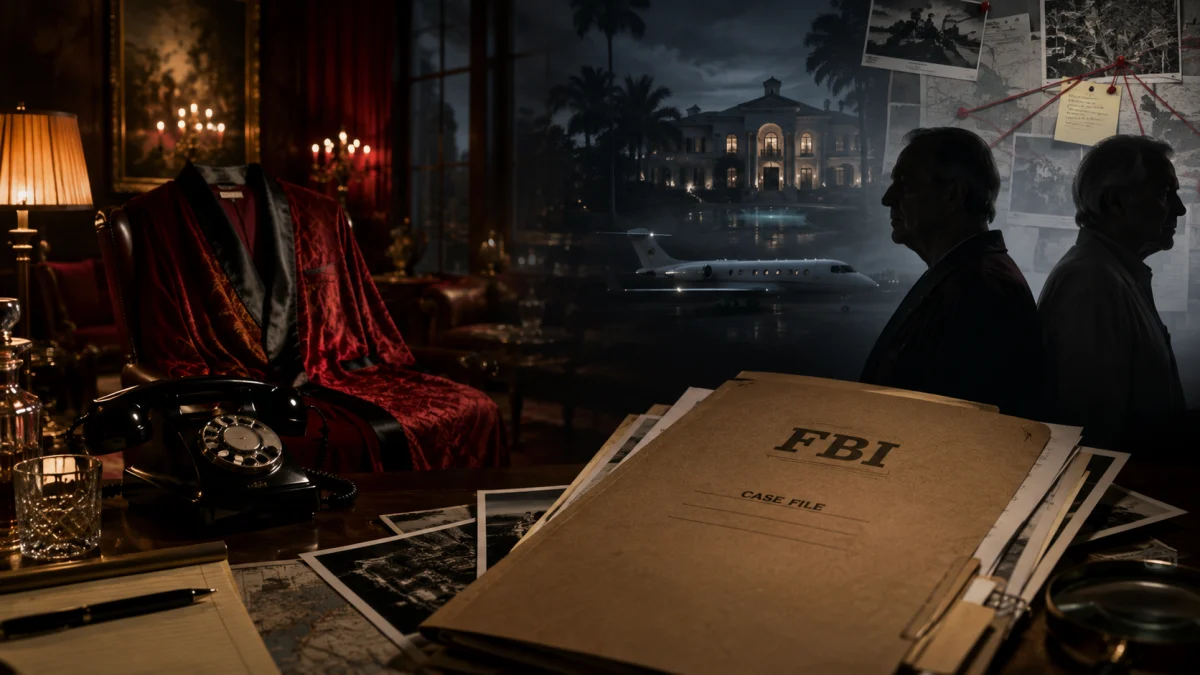
One of the stranger details to emerge from the continuing examination of Jeffrey Epstein’s history is that Hugh Hefner reportedly tried to get the FBI involved years before Epstein’s 2019 federal arrest.
According to allegations now contained in federal litigation, former Playboy Playmate Audra Lynn Christiansen told Hefner in 2005 that Jeffrey Epstein had raped and trafficked her. Christiansen allegedly asked Hefner to contact federal authorities because she believed the Playboy founder had enough influence and law-enforcement connections to make the FBI take her seriously.
Hefner then called the FBI multiple times on her behalf, according to the amended complaint. Christiansen says meaningful FBI follow-up did not come until October 2020, about 15 years later. Investigative journalist Julie K. Brown brought renewed attention to the episode in August 2026.
That would be notable regardless of who made the calls.
But the fact that the person reportedly making them was Hugh Hefner gives the story an unusual historical context.
Hefner was not a conventional moralist. Playboy was deliberately built around challenging traditional American attitudes toward sex. The Playboy Mansion became one of the most recognizable symbols of sexual permissiveness in modern American culture.
And Hefner’s legacy has since become considerably darker and more complicated. Former Playmates, girlfriends and employees have publicly alleged coercive sexual dynamics, drug abuse, manipulation and other misconduct inside the Playboy world. A&E’s Secrets of Playboy documentary series described allegations that sexual assault and drug abuse flourished within parts of that environment. Those allegations are not equivalent to adjudicated findings against Hefner, who died in 2017, but they form an important part of the historical record surrounding Playboy.
So there is an unavoidable irony here:
A woman living within Hugh Hefner’s Playboy world reportedly described Jeffrey Epstein’s conduct to Hefner — and Hefner apparently considered the allegations serious enough to repeatedly involve federal law enforcement.
That does not tell us exactly what Hefner thought.
But it makes the episode difficult to dismiss as merely another celebrity connection in the Epstein story.
What Hugh Hefner Reportedly Did
Audra Lynn Christiansen was Playboy’s Miss October 2003.
According to the allegations, she was introduced to Epstein through modeling connections and later told Hefner that Epstein had raped and trafficked her. She reportedly turned to Hefner because she believed his celebrity, influence and connections could accomplish something she feared she could not accomplish alone.
The lawsuit says:
“Mr. Hefner called the FBI multiple times on behalf of Ms. Christiansen to report Jeffrey Epstein.”
Christiansen’s account became part of litigation brought against the United States by Epstein survivors alleging that the FBI repeatedly failed to act adequately on information concerning Epstein. A March 2026 declaration from Christiansen is also specifically identified in the federal court record.
Importantly, this was apparently not Hefner independently discovering Epstein’s conduct and spontaneously reporting him.
Christiansen says she went to Hefner for help and asked him to use his influence.
That distinction makes the story more accurate — but hardly less interesting.
The Playboy Context Is What Makes the Story So Unusual
It would be easy to turn this into a simplistic story about Hugh Hefner unexpectedly becoming the moral authority in the Jeffrey Epstein saga.
That would go too far.
Hefner’s own legacy is heavily disputed.
He marketed Playboy as a philosophy of sexual liberation, freedom of expression and rejection of traditional sexual taboos. A&E’s retrospective on the Playboy empire credits Hefner with helping define the sexual revolution while simultaneously documenting former insiders’ allegations that the same environment could become controlling, exploitative and dangerous.
Those two histories can coexist.
And they make Christiansen’s account more striking.
The meaningful distinction is not simply between “a lot of sex” and “too much sex.”
It is between consensual sexual activity and allegations of rape, coercion and trafficking.
Playboy’s public philosophy revolved around sexual freedom. Whatever one thinks of how faithfully Hefner himself lived up to that ideal, trafficking and rape are fundamentally different from sexual permissiveness because they remove the very thing that makes sexual freedom possible: consent.
So the responsible conclusion is not:
“Even Hugh Hefner thought Epstein was too sexually extreme.”
We do not know that.
The stronger, supportable observation is:
A woman reportedly described conduct she characterized as rape and trafficking to one of the most famously sexually permissive men in America, and his response was allegedly to repeatedly contact the FBI.
That is remarkable without needing to invent Hefner’s thoughts.
Does This Mean Jeffrey Epstein Crossed Hugh Hefner’s Personal “Line”?
Possibly — but that cannot currently be established.
There is no known recording or contemporaneous statement from Hefner explaining precisely what he believed about Epstein.
Hefner died in 2017.
Epstein died in 2019.
What survives is Christiansen’s account and the surrounding court record.
It would therefore be speculation to say Hefner concluded that Epstein was worse than anything occurring within Playboy or that Epstein violated some particular personal moral code.
What can be said is much narrower:
Christiansen reportedly trusted Hefner with an allegation of rape and trafficking, asked him to intervene, and Hefner allegedly made multiple attempts to involve federal authorities.
The irony comes from the historical context, not from pretending we know what was inside Hefner’s head.
The 2005 Date May Be Even More Important Than Hefner’s Name
The celebrity element attracts attention, but the date may ultimately matter more.
The Justice Department’s own review of the Epstein case says the Palm Beach Police Department began investigating Epstein in 2005, after the parents of a 14-year-old girl reported that Epstein had paid her for a massage.
Local police eventually became dissatisfied with the prosecution of the case and referred it to the FBI in West Palm Beach in 2006.
Federal investigators subsequently found additional alleged victims.
By May 2007, an assistant U.S. attorney had prepared a proposed 60-count federal indictment against Epstein.
The government instead negotiated the now-infamous non-prosecution agreement. Epstein eventually pleaded guilty to state charges in 2008 and served less than 13 months in custody, much of it under unusually permissive work-release conditions.
That timeline gives the Hefner allegation added significance.
If Hefner contacted the FBI in 2005 as alleged, his calls would have occurred at roughly the same time Palm Beach police were independently beginning to uncover Epstein’s conduct and before the federal investigation normally associated with the Palm Beach case was formally developed.
That raises an obvious factual question:
What happened to Hefner’s reported calls?
Why Did It Allegedly Take 15 Years to Interview Christiansen?
Christiansen says the FBI did not follow up substantively with her until October 2020.
By then, the landscape had changed completely.
Epstein had been arrested again in July 2019 on federal sex-trafficking charges alleging that he had sexually exploited underage girls between 2002 and 2005. He died in federal custody the following month.
Hefner had already been dead for nearly three years.
According to Christiansen’s account, therefore, the person who allegedly made the original reports and the man being reported were both dead before she was finally interviewed.
That does not yet prove that FBI officials intentionally suppressed Hefner’s calls.
There could be missing records, routing failures, investigative decisions or other explanations that have not become public.
And the United States has contested the survivors’ broader legal theory, arguing in the litigation that decisions about how the FBI evaluates and investigates complaints generally involve law-enforcement discretion.
But a reported 15-year gap is plainly something worth explaining.
This Is Part of a Much Larger Question About Missed Warnings
Hefner’s alleged calls do not exist in isolation.
The broader Epstein record contains repeated disputes over when authorities first received information about his conduct, what information they possessed, what they investigated and why earlier interventions failed to stop him.
The Justice Department itself concluded that federal prosecutors exercised “poor judgment” in resolving the 2006–2008 investigation through the non-prosecution agreement, although its Office of Professional Responsibility did not find professional misconduct under the standards it applied. The DOJ review confirms that investigators had identified additional victims and that prosecutors had developed a proposed 60-count indictment before the agreement was reached.
In 2019, Epstein was again federally charged, this time in New York, with sex trafficking of minors and conspiracy. Prosecutors alleged conduct extending from 2002 through 2005.
The Christiansen/Hefner allegation potentially adds another piece to that chronology.
The question is no longer simply whether authorities eventually learned what Epstein was doing.
They clearly did.
The harder historical question is how early they were receiving credible warnings and what happened after those warnings arrived.
The Story Does Not Vindicate Hugh Hefner — and It Does Not Need To
There is another trap worth avoiding.
Reporting that Hefner apparently tried to help Christiansen should not become an attempt to rehabilitate his entire legacy.
The accusations surrounding Playboy remain what they are.
Former insiders have described experiences ranging from genuinely positive participation in Playboy to controlling relationships, sexual pressure and serious allegations of abuse. Even Holly Madison, one of Hefner’s best-known former girlfriends and critics, has described her experience as multifaceted — distinguishing aspects of Playboy she enjoyed from relationship and sexual dynamics she says she did not.
History does not require people to fit neatly into categories of hero or villain.
Someone capable of harmful or questionable behavior can still do something helpful in another circumstance.
Likewise, helping one woman report an alleged crime does not erase other allegations.
The Hefner-Epstein episode is interesting precisely because it complicates the easy narratives.
So, Did Hugh Hefner Report Jeffrey Epstein to the FBI?
According to Christiansen’s account and allegations now contained in federal litigation, yes.
She says that in 2005 she told Hefner she had been raped and trafficked by Jeffrey Epstein and asked Hefner to contact the FBI because she believed authorities would take him more seriously.
Hefner allegedly called the FBI multiple times.
Christiansen says she did not receive substantive FBI follow-up until approximately 15 years later. Her declaration has appeared in the federal litigation over the FBI’s handling of Epstein-related reports.
Those claims have not been finally adjudicated, and the public record does not yet establish what individual FBI employees received Hefner’s calls or exactly what happened to the information afterward.
But the central allegation is extraordinary enough without embellishment.
Hugh Hefner spent decades as perhaps America’s most famous symbol of sexual permissiveness. His own Playboy empire is now the subject of serious allegations about coercion, power and abuse.
And yet when one Playmate reportedly came to him saying Jeffrey Epstein had raped and trafficked her, Hefner allegedly picked up the phone and called the FBI — more than once.
The responsible interpretation is not that Hefner suddenly became America’s moral compass.
It is something more interesting:
Whatever else Playboy represented, Christiansen described Epstein’s alleged conduct as something requiring law enforcement — and Hefner apparently agreed to help her report it.
The unanswered question is why, according to Christiansen, it took another 15 years for federal investigators to seriously follow up with her.
Frequently Asked Questions
Did Hugh Hefner know Jeffrey Epstein?
The currently public allegation concerns Hefner helping Audra Lynn Christiansen report Epstein. It should not be transformed into evidence of a close Hefner-Epstein friendship or partnership without separate evidence establishing such a relationship.
Did Hugh Hefner report Jeffrey Epstein to the FBI?
According to Christiansen’s account in federal litigation, Hefner contacted the FBI multiple times in 2005 on her behalf after she alleged that Epstein had raped and trafficked her.
Why did Christiansen ask Hugh Hefner to call?
She reportedly believed Hefner had sufficient influence and law-enforcement connections that authorities would take her allegations seriously if he contacted them.
Did the FBI ignore Hugh Hefner?
The litigation alleges that Christiansen did not receive meaningful follow-up until 2020. That makes the handling of the reported calls an important unresolved question, but the available evidence does not yet establish that individual FBI officials deliberately suppressed or ignored Hefner’s information.
Was Epstein already under investigation in 2005?
Palm Beach police began investigating Epstein in 2005. The matter was later referred to the FBI, whose agents worked with federal prosecutors to develop a case that eventually produced a proposed 60-count indictment in 2007.
Does this clear Hugh Hefner of allegations surrounding Playboy?
No. Hefner’s reported assistance to Christiansen is a separate issue from allegations concerning his own conduct and the culture of the Playboy Mansion.
References and Further Reading
Federal and Court Records
U.S. Department of Justice Office of Professional Responsibility — Executive Summary of the Investigation into the U.S. Attorney’s Office for the Southern District of Florida’s Resolution of Its 2006–2008 Federal Criminal Investigation of Jeffrey Epstein The Justice Department’s official reconstruction of the Palm Beach investigation, FBI referral, proposed 60-count federal indictment, non-prosecution agreement and treatment of Epstein’s victims.
Doe 1 v. United States — April 2026 Order, U.S. District Court for the Southern District of Florida The federal ruling addressing the survivors’ negligence claims against the United States. The order specifically references Audra Lynn Christiansen’s March 11, 2026 declaration and discusses the plaintiffs’ allegations concerning FBI investigative failures.
Doe 1 et al. v. United States of America — Federal Docket The docket for the continuing Southern District of Florida litigation involving Epstein survivors’ claims against the federal government.
Original Investigative Reporting
Julie K. Brown — “The time Hugh Hefner told the FBI about Jeffrey Epstein” Brown’s August 11, 2026 report brought the Hefner-Christiansen allegation to broader public attention and connects it to the larger history of reported warnings about Epstein.
Playboy and Hugh Hefner Context
A&E — “Secrets of Playboy” and the History Behind the Playboy Empire A&E’s description of its extensive documentary investigation, based on interviews with former Playmates, girlfriends, employees and members of Hefner’s inner circle. It summarizes both Playboy’s role in the sexual revolution and allegations of exploitation, sexual assault and drug abuse within the Playboy environment.
Editorial Note
The Hefner-Christiansen account is part of active federal litigation. Allegations contained in complaints and declarations are not automatically established facts, and additional records could clarify or contradict portions of the present account. This article distinguishes documented government history from allegations that remain unresolved and should be updated if new FBI records or court findings become public.