DNA Is Powerful—But Not Infallible: The Real Reliability of Forensic Science
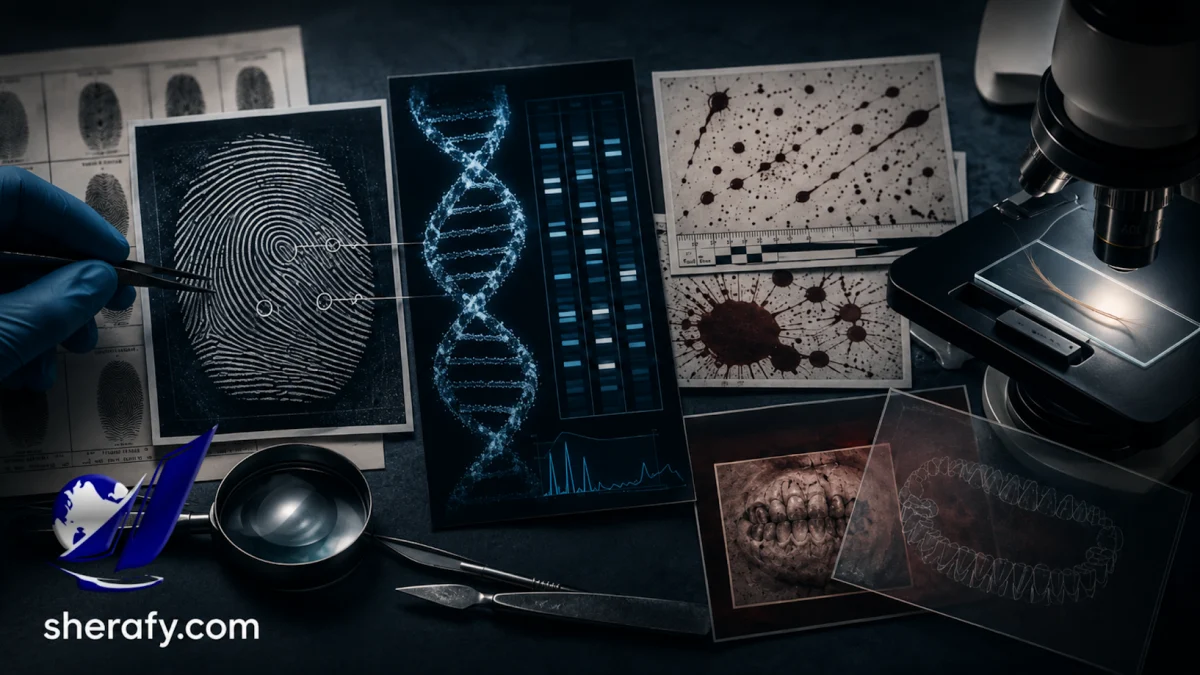
Forensic science is neither uniformly reliable nor uniformly flawed. High-quality, single-source nuclear DNA is the strongest widely used method for associating biological material with a person. Latent fingerprints can also provide powerful evidence, but comparing partial crime-scene marks involves human judgment and measurable error. Bloodstain-pattern analysis is more defensible when it establishes broad physical constraints than when it reconstructs a precise sequence of events. Microscopic hair comparison can exclude a possible source or support a broad class association, but it cannot identify one person. Bite-mark comparison on human skin lacks sufficient scientific support for identifying who made the mark. (NIST)
The essential question is therefore not simply, “Is forensic science accurate?” It is: Was this particular method validated for this particular task, was the evidence suitable for analysis, and did the expert state the conclusion within the limits of the science?
Forensic Science Is Not One Science
The term forensic science covers an enormous range of activities. A toxicologist measuring alcohol in blood, a pathologist determining a cause of death, a laboratory analyst interpreting a DNA profile, and an examiner comparing two partial fingerprints are all doing forensic work. Yet their methods may have very different levels of objectivity, validation, measurement uncertainty, and dependence on human judgment.
That makes a single accuracy ranking misleading. A DNA profile from a large, uncontaminated bloodstain is not equivalent to a faint DNA mixture recovered from a commonly handled object. A clear fingerprint with extensive ridge detail is not equivalent to a smudged fragment containing only a few visible features. Even a scientifically valid method can produce unreliable evidence when the sample is poor, the procedure is misapplied, or the conclusion goes beyond what the data can support.
The broad evidence picture looks like this:
| Forensic method | Best-supported use | Central limitation | Overall scientific position |
|---|---|---|---|
| Nuclear DNA analysis | Associating a high-quality biological sample with a possible source | Transfer, contamination, mixtures, degradation and confusion between source and activity | Extremely powerful for suitable single-source samples; increasingly difficult as samples become mixed or trace-level |
| Latent fingerprint comparison | Comparing a sufficiently detailed friction-ridge impression with known prints | Partial and distorted marks require subjective interpretation; errors are possible | Strong and useful under favorable conditions, but not infallible |
| Bloodstain-pattern analysis | Describing stains, testing broad mechanisms and constraining possible events | Different mechanisms can produce similar patterns; analyst disagreement and modeling assumptions matter | Potentially useful as supporting reconstruction evidence, but detailed narratives require caution |
| Microscopic hair comparison | Excluding hairs or describing broad similarities and characteristics | Similar-looking hairs cannot be attributed to one person through microscopy | Limited class-association evidence; should not be presented as individual identification |
| Bite-mark comparison on skin | Photographing and documenting a patterned injury | Teeth are incompletely represented, skin distorts, and examiners may disagree about the mark itself | Attribution to a particular person lacks a sufficient scientific foundation |
These assessments reflect major scientific reviews and controlled studies, not a judgment that every laboratory or examiner produces the same quality of work. (NIST Publications)
What Makes a Forensic Method Scientifically Valid?
Three separate questions determine whether forensic evidence deserves trust.
1. Does the method work in principle?
A method has foundational validity when appropriately designed empirical studies show that it can produce reliable results for the task it claims to perform. For subjective comparison methods, this normally requires “black-box” studies in which examiners analyze samples with known answers but are not told those answers. The studies should measure false positives, false negatives, inconclusive results and differences among examiners.
Peer review, professional acceptance and years of experience may be relevant, but they do not replace controlled testing. Nor does laboratory accreditation prove that every method used inside the accredited laboratory is scientifically valid. Accreditation can show that procedures and quality systems exist; it cannot establish an unsupported identification technique as reliable.
2. Was the method applied properly in this case?
A generally valid method can still fail because of contamination, inadequate documentation, unsuitable evidence, software problems, analytical mistakes or conclusions made outside the method’s validated range.
A DNA laboratory may be excellent at analyzing clean, single-source samples but encounter greater uncertainty with a weak four-person mixture. A fingerprint examiner may perform reliably on clear impressions while facing much more ambiguity in a small, distorted mark. Reliability must therefore be demonstrated not only for a discipline in general, but for evidence resembling the material actually found in the case. (NIST Publications)
3. What does the result actually establish?
This is often the most neglected question.
Finding someone’s DNA on an object does not automatically establish when it arrived, how it arrived or what the person was doing. A fingerprint on a window may show that someone touched the window at some point, but not necessarily that the person entered through it during a burglary. Similar hair does not establish that the hair came from the defendant. A bloodstain pattern may be consistent with one event while also being consistent with other events.
Scientific reliability and legal relevance are connected, but they are not identical. A technically accurate result can still be misleading when it is used to answer a question the method cannot resolve.
The Scientific Reckoning in Forensic Evidence
In 2009, the National Research Council published Strengthening Forensic Science in the United States: A Path Forward. The report did not declare forensic science useless. It recognized that forensic laboratories perform important public work. But it found serious weaknesses in research, standards, terminology, laboratory structures and the scientific support behind many source-attribution claims. Nuclear DNA analysis stood apart as having a substantially stronger empirical and statistical foundation than most traditional pattern-comparison disciplines. (National Academies)
A 2016 report from the President’s Council of Advisors on Science and Technology sharpened the distinction between experience and experimental validation. It concluded that feature-comparison methods should be tested through appropriately designed studies that measure how often examiners reach correct, incorrect or inconclusive decisions. The report found stronger evidence for some applications of DNA and latent fingerprints, but serious foundational problems with bite-mark analysis and individualizing claims based on microscopic hair comparison.
These reports exposed a central historical problem: some forensic practices entered courtrooms before their accuracy had been established through the kinds of controlled studies expected in medicine, engineering or laboratory measurement science. Once courts had accepted them repeatedly, legal precedent sometimes moved faster than scientific scrutiny.
That does not mean every conclusion from those disciplines was wrong. It means that the confidence attached to them often exceeded the available evidence.
DNA Evidence: The Strongest Method, but Not a Recording of the Crime
Why DNA can be so powerful
Most conventional forensic DNA profiling examines short tandem repeats, or STRs. These are locations in the genome where short sequences of genetic material repeat a variable number of times. People commonly inherit one version at each location from each biological parent.
In the United States, profiles stored for standard forensic STR comparison in the national CODIS system contain one or two alleles at 20 core locations. When a complete profile from a high-quality, single-source sample agrees with a person’s profile across many independent locations, the resulting random-match probability can be extremely small. The actual statistic depends on the profile, the relevant population data and the method used to calculate it. (FBI)
This makes nuclear DNA exceptionally effective for answering a source-level question:
Could this biological material have originated from this person rather than an unrelated person?
It is especially powerful when the sample contains abundant DNA from one contributor, the chain of custody is sound, contamination controls are effective and the profile is interpreted with an appropriate statistical model.
What a DNA match does not prove
A DNA result does not independently prove that a person committed a crime. It may establish a strong association between a person and biological material, but the importance of that association depends on where the material was found and how it could have arrived there.
DNA can be deposited directly, transferred through another person or object, introduced accidentally during evidence handling, or left behind during an innocent earlier interaction. Modern methods can sometimes generate profiles from only a small number of skin cells. That sensitivity increases the ability to detect evidence, but it also increases the likelihood of recovering background DNA, incidental contact and complex mixtures. (NIST)
This creates a critical distinction:
- A source-level conclusion asks whose DNA may be present.
- An activity-level conclusion asks how, when or through what action it was deposited.
The laboratory may be able to answer the first question strongly while having limited information about the second. A large amount of a person’s blood in a freshly created stain has a different meaning from a small quantity of that person’s skin-cell DNA on a frequently handled surface.
Why DNA mixtures are harder to interpret
A single-source profile normally presents a manageable set of alleles. A mixture may contain DNA from two, three, four or more people whose genetic signals overlap at different strengths. Contributors may share alleles, contribute unequal amounts of DNA or leave material that has degraded. Very small contributions may also be affected by stochastic effects, meaning that parts of the profile appear inconsistently during amplification.
NIST’s 2024 scientific foundation review concluded that DNA mixtures are inherently more difficult to interpret than high-quality single-source samples. The complexity increases with factors such as the number of contributors, the amount contributed by each person, degradation, allele sharing and the quality of the overall signal. (NIST)
The NIST MIX13 interlaboratory exercise illustrates the problem without providing a universal error rate. In that study, 108 laboratories interpreted the same data from scenarios involving mixtures of two, three or four contributors. The results revealed substantial variation in the approaches and conclusions produced by different laboratories. But the exercise was not designed to calculate a single real-world error rate for all DNA-mixture casework, so claims that a fixed percentage of laboratories simply “got DNA wrong” overstate what the study established. (NIST)
Does probabilistic genotyping solve the mixture problem?
Probabilistic genotyping software uses biological and statistical models to consider many possible contributor combinations. Instead of forcing an analyst to assign every peak manually, the software can evaluate competing propositions and produce a likelihood ratio.
A likelihood ratio might compare:
- the probability of the observed DNA results if the person of interest contributed to the mixture, with
- the probability of those results if an unknown, unrelated person contributed instead.
This is a major improvement over crude inclusion-or-exclusion approaches for many complex samples. But the software does not reveal an objective number hidden inside the evidence. NIST emphasizes that likelihood ratios are assigned using models, assumptions, propositions and input data; they are not directly measured physical properties. Different systems or analysts may produce different values, especially as samples become more complex. (NIST Publications)
Probabilistic genotyping is therefore best understood as a powerful analytical tool, not an automatic truth machine. Its reliability depends on validation using case-relevant samples, accurate input assumptions, software quality controls, transparent reporting and analysts who understand the model’s limits.
The prosecutor’s fallacy
A random-match probability of one in a billion does not mean there is a one-in-a-billion chance that the defendant is innocent.
The first statement concerns the probability of observing a genetic profile under a specified hypothesis about an unrelated person. The second concerns the probability of guilt or innocence after considering all evidence in the case. Reversing those probabilities is a logical error commonly called the prosecutor’s fallacy.
DNA can provide overwhelming source evidence. It cannot calculate guilt by itself.
Fingerprint Evidence: Highly Useful, but Not Infallible
Why fingerprints are valuable
The friction-ridge patterns on fingers contain loops, ridge endings, bifurcations and other features that can provide highly discriminating information. Fingerprints also remain relatively stable through a person’s life unless the underlying skin is deeply damaged.
But a fingerprint taken under controlled conditions is very different from a latent print recovered from a crime scene. Latent impressions may be partial, smudged, stretched, overlaid with other marks or affected by the surface on which they were deposited. The forensic problem is not simply whether human fingerprints vary. It is whether a particular recovered mark contains enough reliable information to support the conclusion being offered.
Automated fingerprint systems can search databases and produce possible candidates, but the final comparison is generally performed by human examiners. Feature selection, print quality and the threshold for declaring an identification, exclusion or inconclusive result therefore involve judgment.
What controlled studies found
A major 2011 black-box study examined the decisions of 169 latent-print examiners. Participants evaluated approximately 100 comparisons each from a pool of 744 latent-to-known-print pairs. The researchers observed a false-positive rate of approximately 0.1% and a false-negative rate of approximately 7.5% among the decisions evaluated. False negatives were more common than false identifications, and examiner decisions were not perfectly consistent. (NIST)
Those figures should not be converted into a universal fingerprint error rate. The study used a particular set of examiners, images and procedures. Real laboratories may add independent verification, access to original evidence, multiple known impressions and other quality controls. Casework also varies substantially in difficulty.
The defensible conclusion is not that fingerprint evidence is unreliable. It is that its accuracy is high under favorable conditions but not absolute, and that the weight of a conclusion should reflect print quality, documented examination, validation studies and verification procedures.
The Brandon Mayfield misidentification
The limits became internationally visible after the 2004 Madrid train bombings. The FBI mistakenly identified Oregon attorney Brandon Mayfield as the source of a latent fingerprint associated with the investigation. Spanish authorities later attributed the print to another person.
The Justice Department’s inspector general found that the error involved several interacting factors: an initial misinterpretation of ambiguous features, the influence of an automated database candidate, similarities in portions of the prints, the high-profile nature of the investigation and subsequent examiners’ exposure to the original identification. Even a defense examiner agreed with the incorrect conclusion. The review found no deliberate misconduct, but it showed how contextual pressure and knowledge of another examiner’s decision can reinforce an error. (DOJ Inspector General)
The lesson is larger than one case. Verification is weakest when the second examiner already knows what the first examiner concluded. Independent or blind verification is more capable of detecting mistakes because it reduces pressure to conform.
Bloodstain-Pattern Analysis: Useful Physics, Difficult Inference
Bloodstain-pattern analysis attempts to interpret the size, shape, distribution and location of bloodstains. Analysts may examine whether stains resulted from passive dripping, projected blood, impact, transfer between surfaces or other mechanisms. Directionality and spatial relationships may also help test whether a proposed account is physically plausible.
There is real physics in the movement and breakup of liquid droplets. But the existence of relevant physics does not guarantee that a scene contains enough information to reconstruct a unique event. Different actions may create visually similar patterns. Surfaces absorb and distort stains differently. Blood properties vary, objects may move, stains may overlap, and scenes may be altered before documentation.
A 2021 black-box study asked 75 practicing bloodstain-pattern analysts to evaluate 193 patterns selected to resemble operational casework. Across prompts for which the cause was known, 11.2% of responses were erroneous. The researchers also found that 7.8% of responses contradicted conclusions reached by other analysts. Some disagreements reflected terminology, while others represented genuinely different interpretations of the same pattern. (Office of Justice Programs)
These are study-specific response rates, not a permanent error rate for every bloodstain examination. But they demonstrate that analyst interpretation has meaningful limits and that apparently confident reconstructions may not be reproducible.
Bloodstain-pattern evidence is generally most defensible when it:
- accurately documents the physical scene;
- identifies broad characteristics supported by experimental research;
- tests whether a proposed event is physically possible or inconsistent with the stains; and
- acknowledges alternative mechanisms that could produce similar results.
It becomes more vulnerable when an analyst turns ambiguous stains into a detailed narrative about exact body position, number of blows, sequence of movements or intent without sufficient empirical support.
Computer modeling and fluid-dynamics software can improve calculations, but software cannot recover information that the scene never preserved. A sophisticated model may still produce an unjustifiably precise answer when its assumptions about droplet formation, drag, gravity, surface interaction or original position are uncertain.
Microscopic Hair Comparison: The Difference Between Similarity and Identity
A hair shaft contains observable features such as color, pigment distribution, diameter, medullary characteristics, treatment and damage. Under a microscope, an examiner can compare a questioned hair with known samples and sometimes determine that they are dissimilar.
That gives microscopic hair analysis legitimate but limited uses. It may help exclude a possible source, distinguish human from some animal hairs, describe characteristics or determine whether additional DNA testing is worthwhile.
What microscopy cannot do is identify one individual as the source of a hair. Multiple people can have hairs that appear microscopically similar, and hairs from different areas of the same person’s body can vary.
What the FBI review actually found
The FBI’s review of historical hair testimony found erroneous statements in 257 of 268 trial cases examined—approximately 96%. Twenty-six of 28 FBI examiners had provided testimony or reports containing errors. Among 35 reviewed cases in which defendants received death sentences, erroneous statements were identified in 33; nine of those defendants had already been executed by the time of the announcement. (FBI)
That 96% figure is frequently misunderstood. It does not mean DNA testing proved that 96% of the hairs came from different people. It also does not establish that 96% of the convictions were wrongful or that hair evidence alone caused the outcomes.
The review evaluated whether examiners’ reports and testimony exceeded what microscopic comparison could scientifically support. Common problems included implying that a hair could be individualized to one person, suggesting unsupported numerical probabilities or describing similarities with a degree of certainty unavailable from the method.
That distinction matters. The scandal was not simply that examiners made occasional classification mistakes. It was that limited similarity evidence was repeatedly communicated as though it were powerful identification evidence.
Can DNA testing make hair evidence stronger?
Sometimes.
A hair root containing suitable tissue may provide nuclear DNA, which can be highly discriminating. Hair shafts may also yield mitochondrial DNA. Mitochondrial DNA can exclude people and support an association, but it is inherited through the maternal line, so people from the same maternal lineage may share the same mitochondrial profile.
Microscopic comparison can therefore serve as a screening or descriptive step, but an examiner should not tell a jury that a microscopically similar hair came from one person “to the exclusion of all others.”
Bite-Mark Evidence: A Technique Without a Sufficient Foundation
Bite-mark analysis is sometimes confused with the established use of dental records to identify human remains. These are not equivalent procedures.
Postmortem dental identification may compare restorations, missing teeth, root structures, X-rays and other information from a person’s full dentition with antemortem records. Bite-mark attribution usually attempts to compare a patterned injury—often on elastic, curved and living skin—with the front teeth of a suspected person.
NIST’s 2023 scientific foundation review examined the premises required for bite-mark source attribution:
- that anterior dental patterns are sufficiently distinctive at the individual level;
- that skin reliably records those distinctions; and
- that examiners can recover and interpret the recorded features accurately.
NIST concluded that the available data did not adequately support those premises. Human skin can stretch, swell, bruise and change over time. The victim or alleged biter may move. Only part of the dentition may be represented. Researchers have also found disagreement among examiners about whether an injury is a bite mark and whether a person should be excluded or not excluded. (NIST Publications)
The 2016 PCAST review similarly concluded that bite-mark analysis lacked a scientific foundation for reliably identifying a source.
The scientifically defensible line is clear: clinicians and investigators may photograph, measure and document a patterned injury. They may investigate whether biting is one plausible explanation. But the appearance of a mark on skin should not be used to identify a particular person’s teeth as its source.
Calling the broader field of forensic dentistry invalid would be inaccurate. The unsupported claim is much narrower and more consequential: that a distorted mark on skin can reliably be individualized to one mouth.
The Human Examiner Is Part of the Measurement System
Forensic errors are often described as though they result from either corrupt experts or defective technology. Most are more complicated.
Human perception is influenced by expectations, context and prior information. These effects do not require dishonesty. They are ordinary properties of cognition, especially when a task involves ambiguous visual material.
An examiner who knows that a suspect confessed, has a criminal record or was identified by another analyst may unconsciously interpret unclear features in a way that supports that information. A verifier who is shown the first examiner’s conclusion is not performing a fully independent assessment. A laboratory employee who knows that investigators urgently need a match may experience pressure even when no one explicitly asks for a particular result.
NIST human-factors reviews have recommended treating forensic analysis as a complete system involving evidence collection, laboratory procedures, working conditions, information flow, documentation, reporting, software and testimony. Error prevention cannot depend on telling individual examiners to “be objective.” The surrounding process must be designed to reduce avoidable influence. (NIST)
Important safeguards include:
- giving analysts only information relevant to the scientific task;
- documenting observations before revealing a suspect’s known sample where practical;
- using independent or blind verification;
- separating investigative theories from laboratory interpretation;
- preserving analytical notes and intermediate decisions;
- using nonpunitive systems for reporting and studying errors; and
- testing examiners with realistic samples whose answers are unknown to them.
Experience remains valuable, but experience without feedback can reinforce mistakes. An examiner cannot learn an accurate personal error rate merely from courtroom outcomes, because convictions do not reveal whether every laboratory conclusion was correct.
Why Forensic Language Can Mislead a Jury
The words used to describe forensic evidence can carry more certainty than the underlying science.
“Match”
A match means that compared features satisfy a method’s criteria for agreement. It does not automatically mean the evidence came from the defendant, that no one else could share the features or that the defendant committed the crime.
The strength of the word depends on the discipline. A full DNA-profile match accompanied by a valid statistical calculation can be extraordinarily strong. Two hairs being described as microscopically similar is far weaker.
“Cannot be excluded”
This means the observed evidence is compatible with the person or object being considered. It does not tell the listener how many other people or objects would also be compatible.
A conclusion can be scientifically correct but nearly meaningless if a large portion of the relevant population could not be excluded.
“Identification”
Historically, some feature-comparison disciplines used “identification” to imply that one person or object was the source to the exclusion of all others. That kind of absolute individualization is difficult to justify when a method does not have a validated statistical basis or empirically established zero-error process.
“To a reasonable degree of scientific certainty”
This traditional courtroom phrase does not supply a probability, confidence interval or measured error rate. It can make a subjective conclusion sound more quantified than it is. Scientific communication is stronger when experts state what was observed, the proposition evaluated, the method’s empirical support, known limitations and the actual strength of the result.
An expert should not become more certain merely because a lawyer asks for a yes-or-no answer.
Why Questionable Methods Can Remain Admissible in Court
Science and law ask different questions.
Science treats conclusions as provisional. Methods are expected to change as stronger evidence emerges. Replication, measurement uncertainty and falsification are central.
Courts must resolve individual disputes on a schedule. They rely on procedural rules, precedent, judicial gatekeeping, expert testimony and adversarial challenge. Once a method has been admitted repeatedly, later courts may treat earlier acceptance as evidence of reliability—even when the original decisions predated modern validation studies.
In federal court, Rule 702 of the Federal Rules of Evidence requires the party offering expert testimony to demonstrate that it is more likely than not that the testimony rests on sufficient facts or data, uses reliable principles and methods, and reflects a reliable application of those methods to the case. The rule places the trial judge in a gatekeeping role rather than treating every weakness as something for the jury to sort out after admission. State evidentiary standards and their application vary. (Legal Information Institute)
Admissibility, however, does not certify a method as scientifically infallible. A judge may admit evidence but limit the language an expert may use. Evidence may also satisfy a threshold for admission while still deserving little weight.
The most important legal question is often not whether the jury may hear that an examination occurred, but whether the expert may transform a limited observation into a claim of individual identification.
How Reliable Forensic Evidence Should Be Evaluated
Anyone assessing forensic evidence—whether a judge, lawyer, journalist, juror or member of the public—should ask seven questions.
1. What exact proposition is the expert evaluating?
Is the expert determining whose biological material may be present, how it was deposited, whether two patterns are similar, or whether a particular event occurred? Vague language can blur very different questions.
2. Has the method been tested on evidence resembling this sample?
A study involving clear fingerprints may say little about a severely smudged mark. Validation on two-person DNA mixtures may not establish reliability for weak four-person mixtures.
3. What do black-box studies show?
The most useful studies give realistic evidence to practitioners, conceal the correct answers and measure false positives, false negatives, inconclusive decisions and disagreement.
4. How much information did the sample preserve?
A method cannot overcome missing data. Analysts should describe degradation, distortion, mixture complexity, incomplete features and other quality limitations.
5. Was irrelevant contextual information controlled?
The analyst should not receive a complete investigative narrative simply because it is available. Information should be provided in a sequence that minimizes bias while preserving what is genuinely necessary for the examination.
6. Was the conclusion independently verified?
Verification should be more than agreement by a colleague who already knows the expected answer. The strongest verification is independent and documented.
7. Does the language exceed the evidence?
The expert should disclose alternatives, limitations and study-specific error information. Claims of zero error, perfect certainty or individualization should not be accepted unless the method can actually support them.
These questions reflect the larger movement toward empirically validated methods, case-relevant performance testing, context management and calibrated expert testimony.
What Forensic Reform Should Look Like
The answer is not to abandon forensic science. Physical evidence can expose false accusations, connect crimes, identify unknown victims, exclude innocent people and reconstruct events that would otherwise remain unknowable.
The goal should be to make the weight given to each conclusion proportional to the evidence supporting it.
That requires several reforms.
First, forensic methods should be validated before they are used to make high-stakes source claims. Research should involve representative evidence and enough practitioners to estimate error and variation meaningfully.
Second, laboratories should report uncertainty directly. A discipline should not hide behind categorical words when the underlying conclusion is probabilistic or subjective.
Third, forensic scientists should be insulated from irrelevant investigative information. Case managers or staged disclosure systems can provide necessary facts without exposing analysts to the entire theory of guilt.
Fourth, verification should be independent whenever practical. Blind reanalysis is especially important after a surprising or case-defining result.
Fifth, laboratories and software providers should preserve the information needed for independent review. That includes raw data, analytical notes, thresholds, model assumptions, validation materials and software versions.
Sixth, courts should distinguish source evidence from activity evidence. Establishing that biological material may have originated from a person is not the same as establishing what that person did.
Finally, when a method or form of testimony is found to have exceeded scientific limits, justice systems should review earlier cases in which the same language may have materially affected a verdict. The FBI’s microscopic-hair review demonstrates why correcting current practice alone is insufficient when older testimony remains embedded in convictions. (FBI)
Conclusion: Forensic Evidence Must Earn Its Authority
Forensic science is most dangerous when its authority is treated as automatic. A laboratory setting, technical vocabulary and confident expert do not turn an assumption into a validated measurement.
But skepticism should be precise. High-quality nuclear DNA evidence is not scientifically equivalent to bite-mark attribution. A clear fingerprint is not equivalent to a few similar hairs. Bloodstain analysis used to test broad physical possibilities is not equivalent to an examiner claiming to know the exact choreography of a violent encounter.
The most responsible position is neither blind faith nor blanket rejection. It is disciplined, method-by-method scrutiny.
A forensic conclusion should be trusted only to the extent that the method has been empirically validated, the evidence is suitable, the analysis is protected from avoidable bias, and the expert’s language stays within demonstrated limits.
Forensic science does not fail because it contains uncertainty. It fails when uncertainty is concealed, minimized or presented to a jury as certainty.
Key Takeaways
- Forensic science has no single accuracy rate. Reliability depends on the method, the quality of the evidence, the question being asked and how the conclusion is communicated.
- High-quality, single-source nuclear DNA is the strongest common identification evidence, but DNA presence does not by itself establish when, how or why the material was deposited.
- Latent fingerprints can be highly valuable but are not infallible. Partial or distorted impressions require subjective judgment and controlled studies have documented nonzero false-positive and false-negative decisions.
- Bloodstain-pattern analysis can help test broad physical explanations, but detailed reconstructions may exceed what ambiguous patterns can reliably establish.
- Microscopic hair comparison cannot identify one person. The FBI’s widely cited 96% figure concerned scientifically erroneous testimony, not proof that 96% of the compared hairs came from different people.
- Bite-mark attribution on human skin lacks a sufficient scientific foundation and should not be used to identify a particular person as the biter.
References and Further Reading
Foundational Scientific Reviews
- Strengthening Forensic Science in the United States: A Path Forward — National Research Council, National Academies Press, 2009. (National Academies)
- Forensic Science in Criminal Courts: Ensuring Scientific Validity of Feature-Comparison Methods — President’s Council of Advisors on Science and Technology, 2016.
- DNA Mixture Interpretation: A NIST Scientific Foundation Review — John Butler, Hariharan Iyer, Richard Press, Melissa Taylor, Peter Vallone and Sheila Willis, National Institute of Standards and Technology, 2024. (NIST)
- Bitemark Analysis: A NIST Scientific Foundation Review — Kelly Sauerwein, John Butler, Karen Reczek and Christina Reed, National Institute of Standards and Technology, 2023. (NIST)
Primary Research
- Accuracy and Reliability of Forensic Latent Fingerprint Decisions — Bradford T. Ulery, R. Austin Hicklin, JoAnn Buscaglia and Maria Antonia Roberts, Proceedings of the National Academy of Sciences, 2011. (NIST)
- Black Box Evaluation of Bloodstain Pattern Analysis Conclusions — R. Austin Hicklin and colleagues, National Institute of Justice-sponsored research, 2021. (Office of Justice Programs)
- NIST Interlaboratory Studies Involving DNA Mixtures: Variation Observed and Lessons Learned — John M. Butler, Margaret C. Kline and Michael D. Coble, Forensic Science International: Genetics, 2018. (NIST)
- DNA Transfer: Review and Implications for Casework — Georgina E. Meakin and Allan Jamieson, Forensic Science International: Genetics, 2013. (PubMed)
Human Factors and Quality Control
- Forensic DNA Interpretation and Human Factors: Improving the Practice Through a Systems Approach — Melissa Taylor, Erica Romsos, Kaye Ballantyne, Dawn Moore Boswell and Thomas Busey, NIST, 2024. (NIST)
- Latent Print Examination and Human Factors: Improving the Practice Through a Systems Approach — Expert Working Group on Human Factors in Latent Print Analysis, NIST and National Institute of Justice, 2012. (NIST)
- A Review of the FBI’s Handling of the Brandon Mayfield Case — Office of the Inspector General, U.S. Department of Justice, 2006. (DOJ Inspector General)
Hair Comparison and Historical Case Review
- FBI Testimony on Microscopic Hair Analysis Contained Errors in at Least 90 Percent of Cases in Ongoing Review — Federal Bureau of Investigation, Department of Justice, Innocence Project and National Association of Criminal Defense Lawyers, 2015. (FBI)
- FBI/DOJ Microscopic Hair Comparison Analysis Review — Federal Bureau of Investigation and U.S. Department of Justice. (FBI)
Legal Standards
- Federal Rule of Evidence 702: Testimony by Expert Witnesses — Legal Information Institute, Cornell Law School. (Legal Information Institute)