No, the new study does not show that people literally became biologically younger after eating vegan for one month.
What it does show is more interesting—and more complicated.
In a randomized trial of 48 healthy adults, researchers found that four weeks on a vegan diet changed patterns of DNA methylation in blood. Two epigenetic “aging clocks” associated with health and mortality moved in a younger direction. But a third clock, designed primarily to predict chronological age, moved in the opposite direction.
The largest reported change was a roughly 1.7-year reduction in the PhenoAge estimate among people assigned to the vegan diet. That does not mean they erased 1.7 years of physical aging in four weeks. It means a mathematical model built from DNA methylation patterns produced an age estimate about 1.7 years lower after the intervention.
The distinction matters.
The study, published August 3, 2026 in MedComm, provides credible evidence that changing diet can alter aging-related molecular biomarkers surprisingly quickly. It does not demonstrate that veganism reverses human aging, extends lifespan, prevents cancer, or makes every organ in the body younger.
What did the study actually do?
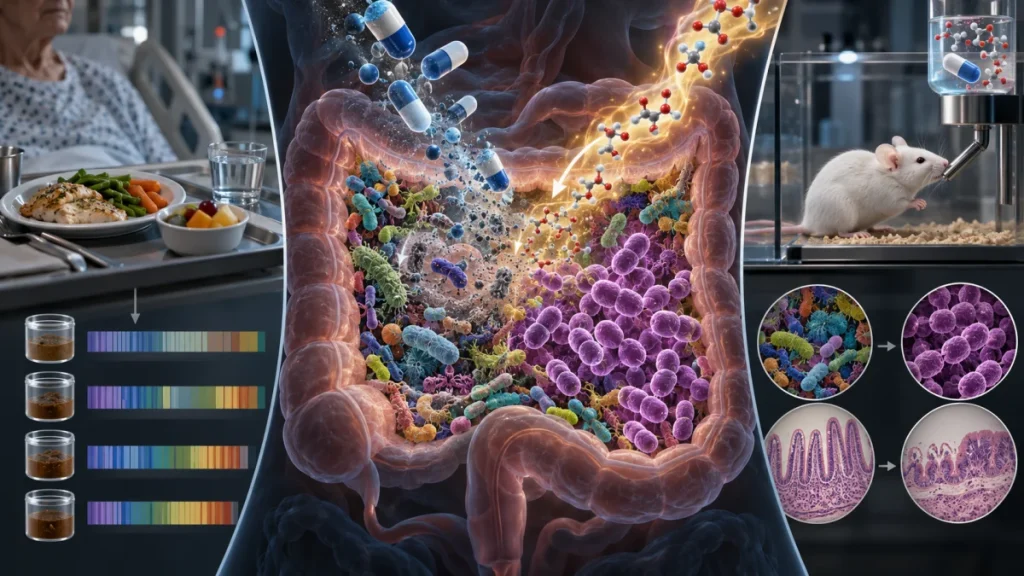
Researchers analyzed blood samples from 48 healthy adults, divided evenly between two diets:
| Group | Participants | Diet |
|---|---|---|
| Vegan | 24 | No animal products |
| Meat-rich | 24 | Meat-rich omnivorous diet |
Participants first completed a one-week standardized dietary period. They were then randomized to their assigned diet for another four weeks.
The participants were relatively young: median ages were approximately 29 in the vegan group and 26 in the meat-rich group. Researchers collected blood before and after the intervention and analyzed DNA methylation across more than 800,000 locations in the genome.
Importantly, this was not simply a vegan-versus-normal-diet comparison.
The comparison group was specifically instructed to eat a meat-rich diet. In the underlying trial, that meant more than 150 grams of meat per day. Participants in both groups selected their own foods rather than receiving every meal from a metabolic kitchen.
The newly published epigenetic analysis therefore tells us about a short-term vegan diet versus a deliberately meat-rich diet under these experimental conditions, not necessarily veganism versus every reasonable omnivorous, Mediterranean, pescatarian, or flexitarian diet.
So how much did “biological age” actually change?
This is where the viral version becomes misleading.
The researchers tested several DNA methylation clocks. They did not all agree.
| Epigenetic clock | Vegan group after 4 weeks | Meat-rich group | What happened? |
|---|---|---|---|
| PhenoAge | −1.69 years | +0.56 years | Vegan group moved younger |
| GrimAge | −0.54 years | +0.02 years | Vegan group moved younger |
| Blood & Skin clock | +0.61 years | −0.61 years | Vegan group moved older |
Those numbers need statistical context.
For PhenoAge, the diet-by-time interaction reached statistical significance at p = 0.045. The estimated change in the vegan group was −1.69 years, with a 95% confidence interval from −3.25 to −0.13 years.
However, when the researchers directly compared the baseline-corrected PhenoAge changes between the two groups, that comparison did not reach conventional statistical significance (p = 0.14).
For GrimAge, the vegan group’s estimated score fell 0.54 years. But the diet-by-time interaction was not statistically significant (p = 0.12), nor was the direct comparison between groups (p = 0.27).
And then there was the Blood & Skin clock.
That clock estimated that the vegan participants became approximately 0.61 years older, while the meat-rich group became approximately 0.61 years younger. The between-diet divergence was statistically significant, including a direct baseline-corrected comparison of p = 0.0059.
That makes “a vegan diet reversed biological age” an incomplete description of the evidence.
A much more accurate statement would be:
One month on a vegan diet lowered two health-related epigenetic age estimates, while a different DNA methylation clock estimated an increase in age.
What is an epigenetic clock actually measuring?
Epigenetic clocks do not examine a person and independently determine how old their body “really” is.
They are statistical models.
As humans age, methyl groups—small chemical modifications attached to DNA—change in partially predictable patterns. Researchers can measure methylation at selected locations called CpG sites and construct algorithms that associate those patterns with age, disease, mortality, or other outcomes.
The resulting number can be expressed in “years,” but those years are model outputs, not literal years removed from or added to a person’s life.
Different clocks are also trained to answer different questions.
PhenoAge
PhenoAge was specifically designed to capture aspects of healthspan and mortality risk, rather than merely reproduce the date on someone’s birth certificate.
Its development incorporated clinical measures associated with aging and mortality before researchers created a DNA-methylation version of that phenotype. Higher PhenoAge relative to chronological age has been associated with mortality, cancer, reduced physical functioning and other aging-related outcomes.
A lower PhenoAge score is therefore potentially encouraging.
But a one-month reduction in PhenoAge is still a change in a risk-associated biomarker. It does not establish that 1.69 years of accumulated cellular damage disappeared.
GrimAge
GrimAge was developed even more explicitly around health outcomes.
It combines DNA-methylation surrogates for factors including smoking exposure and several plasma proteins to predict mortality and healthspan. It has been unusually strong among epigenetic clocks at predicting future disease and death in large observational datasets.
The vegan group moving approximately half a year younger on GrimAge is therefore potentially meaningful.
But because the randomized between-diet effect did not reach statistical significance in this small study, it should be considered suggestive rather than definitive.
Blood & Skin clock
The Blood & Skin clock was primarily optimized to accurately predict chronological age from DNA methylation in blood and skin tissues.
In this experiment it moved toward an older predicted age in the vegan group.
The researchers argue that PhenoAge and GrimAge may be more relevant when asking about health because those clocks were trained against health and mortality outcomes, whereas Blood & Skin was designed primarily to reproduce chronological age.
That is a reasonable interpretation.
It is not, however, permission to simply discard the clock that moved in the inconvenient direction.
The disagreement is itself an important result.
Why did the aging clocks give different answers?
Because there is no single universally measured object called “biological age.”
Each clock selects different methylation sites, weights them differently and was trained against different outcomes.
Imagine three algorithms examining the same person:
One is optimized to estimate their calendar age.
Another is optimized to identify patterns associated with poor health.
A third is optimized to predict mortality.
A short-term dietary intervention could alter inflammation, immune-cell proportions or metabolic signaling enough to move the health-related models while simultaneously changing age-correlated methylation sites in a direction interpreted differently by the chronological-age model.
That appears to be broadly consistent with what happened here.
There is another possibility that should not be ignored: noise.
There were only 24 participants in each group.
When multiple biological measurements are tested in a small sample, some apparent effects can occur by chance. Replication in substantially larger cohorts is therefore essential before interpreting individual clock movements as genuine rejuvenation.
Could the clocks simply be measuring changes in inflammation?
At least partly, possibly.
The study found that the vegan diet was associated with changes in the estimated composition of circulating immune cells, including fewer neutrophils and more CD4+ T cells. These methylation-derived estimates aligned reasonably well with actual blood-cell measurements from the underlying clinical trial.
That supports the idea that the diet caused real physiological changes rather than merely producing a computational artifact.
But it also illustrates the problem with translating a blood-based epigenetic clock into the phrase “your body became younger.”
If diet rapidly changes inflammation and the proportions of different blood cells, the methylation profile of the blood can change as well.
That may be genuinely beneficial.
It still does not necessarily mean the brain, heart, arteries, kidneys, muscles and other tissues all became 1.7 years younger during the same month.
Were calories and weight loss controlled?
Yes—and this is one of the strongest features of this particular study.
Weight loss has complicated previous research linking vegan diets to reductions in epigenetic age.
For example, a widely publicized 2024 Stanford identical-twin study also found favorable changes in several epigenetic aging markers after eight weeks on a vegan diet. But the vegan participants consumed fewer calories and lost more weight, making it difficult to determine how much of the effect resulted from avoiding animal foods versus calorie restriction or weight loss itself.
The new study attempted to address that problem.
Participants were instructed to maintain stable energy intake, and the intervention was designed to be isocaloric. Weight changes greater than 2 kilograms were not allowed. Participants reporting weight loss were told to increase calorie-dense foods such as nuts; those gaining weight were advised to reduce high-calorie foods.
The epigenetic paper says participants were instructed toward an approximately 1,800–2,000 calorie-per-day target, sometimes requiring vegan participants to deliberately consume foods such as nuts, oils or granola bars to keep their energy intake high enough.
Body weight did not meaningfully decline in the vegan group analyzed for the methylation study.
So unlike many diet studies, weight loss is not an obvious explanation for the result.
There is still an important limitation: this was not a tightly controlled metabolic-ward experiment. Participants selected their own foods, maintained nutritional records and received dietary guidance.
Calling the study “isocaloric” therefore does not mean researchers physically weighed and supplied every calorie that participants consumed.
It means calorie and weight stability were intentionally built into the protocol and monitored.
Did people actually become biologically younger?
There is not enough evidence to say that.
What can be verified is narrower:
Verified: The vegan diet changed DNA methylation patterns within four weeks.
Verified: PhenoAge moved approximately 1.69 years younger in the vegan group, with a statistically significant diet-by-time interaction.
Verified: GrimAge moved approximately 0.54 years younger, although the randomized between-diet evidence was not statistically significant.
Verified: The Blood & Skin clock moved approximately 0.61 years older in the vegan group and younger in the meat-rich group.
Reasonable inference: The vegan diet appears capable of rapidly altering molecular and immune processes associated with health and aging.
Not demonstrated: That four weeks of vegan eating removed 1.69 years of accumulated human aging.
Not demonstrated: That participants will develop fewer age-related diseases.
Not demonstrated: That participants will live longer.
That is the line between the research and the viral interpretation.
What about all the other DNA changes?
The researchers examined hundreds of thousands of methylation sites and found patterns involving inflammatory regulation, lipid metabolism, insulin signaling, DNA repair, cellular stress and pathways involved in cell growth.
They also reported greater promoter methylation affecting several cancer-related pathways, including mTOR and Hippo signaling.
These findings are biologically interesting.
They should not be translated into claims that veganism “prevents cancer.”
The researchers did not measure cancer incidence. Nobody in a four-week study could meaningfully establish that outcome.
There is also an important statistical limitation buried beneath the more dramatic headlines: the paper acknowledges that its relatively small sample and short duration meant the genome-wide findings did not produce significant results after correction for the enormous number of statistical comparisons being performed. Many of the pathway analyses relied on nominal, unadjusted p values.
That does not make the results meaningless.
It does make them exploratory.
The pathway findings are reasons to conduct larger experiments, not settled evidence that four weeks without animal products switched off cancer.
Does this prove that vegan diets make people live longer?
No.
A four-week trial involving 48 people cannot answer a lifespan question.
Nobody died during the experiment, mortality was not an endpoint, and researchers did not follow participants for decades.
What broader research does show is that diets emphasizing high-quality plant foods are repeatedly associated with lower mortality.
A 2025 meta-analysis of prospective cohorts found that people with the highest adherence to overall and healthy plant-based dietary patterns had lower all-cause mortality, while diets high in less-healthy plant foods were associated with increased mortality.
A 2026 meta-analysis involving more than one million participants similarly found that replacing a portion of animal protein with plant protein was associated with lower all-cause and cardiovascular mortality.
But neither finding establishes that strict veganism itself is the longevity mechanism.
A diet dominated by vegetables, legumes, fruit, whole grains, nuts and seeds is very different nutritionally from a technically vegan diet dominated by refined starches, fries, sweets and ultra-processed foods.
The long-term evidence increasingly suggests that plant-food quality and what the plants replace may be at least as important as whether a diet earns the vegan label.
Is there anything potentially unfavorable in the new study?
One curious detail deserves attention.
The vegan intervention was unsupplemented.
Earlier work using this same randomized trial found measurable declines in vitamin B12 and holotranscobalamin after only four weeks without animal foods. The values did not demonstrate clinical B12 deficiency after one month, but they confirmed that B12 status begins responding rapidly when intake disappears.
The authors of the new epigenetic paper specifically raise the possibility that the Blood & Skin clock’s unfavorable movement could conceivably relate to an unsupplemented vegan diet lacking B12 or other nutrients predominantly supplied by animal foods, although that explanation remains speculative.
In real-world long-term vegan diets, adequate vitamin B12 from supplements or fortified foods is therefore a separate nutritional issue from whether avoiding animal products alters aging biomarkers.
Is this the same vegan-aging study involving identical twins?
No.
That is an easy source of confusion because the headlines sound almost identical.
The 2024 Stanford Twins Nutrition Study followed 21 pairs of identical twins for eight weeks, assigning one twin to a healthy vegan diet and the other to a healthy omnivorous diet. Several epigenetic aging measures improved in the vegan twins, but the vegan group also consumed fewer calories and lost more weight.
The 2026 study discussed here involved 48 unrelated healthy adults, lasted four weeks, compared vegan and meat-rich diets, and deliberately attempted to maintain calorie intake and body weight.
The studies therefore provide somewhat complementary evidence.
The 2024 twin design controlled exceptionally well for genetics.
The 2026 trial controlled calorie intake and weight more aggressively.
Both found favorable movement in some health-related methylation clocks.
Neither proves that veganism literally reverses human aging.
What would actually prove that a diet slows aging?
A stronger test would require hundreds or thousands of participants, multiple populations and substantially longer follow-up.
Researchers would ideally compare several carefully designed diets at equivalent calorie and protein intakes, repeatedly measure several independent aging biomarkers, examine multiple tissues rather than blood alone, and determine whether biomarker changes persist.
Most importantly, those molecular changes would eventually need to predict something that matters outside the laboratory:
less cardiovascular disease, less cancer, less frailty, better cognitive function, longer disability-free life—or ultimately longer survival.
Until then, epigenetic clocks are valuable surrogate markers.
They are not time machines.
The bottom line
The viral claim contains a real scientific finding wrapped in an exaggerated interpretation.
A vegan diet produced measurable molecular changes in only four weeks.
That is legitimate and surprisingly fast.
Two sophisticated epigenetic clocks tied to health and mortality moved toward younger estimates, including an approximately 1.7-year decline in PhenoAge. Because calories and body weight were intentionally stabilized, ordinary weight loss is a much less convincing explanation than it was in some previous vegan-aging studies.
But another clock moved significantly in the opposite direction. The study included only 48 people. Some of the genome-wide results did not survive correction for multiple comparisons. And nobody measured whether participants actually lived longer or developed less disease.
So did eating vegan for a month make these people biologically younger?
Not in any literal, proven sense.
What researchers demonstrated is that changing what people eat can rapidly shift blood DNA methylation and some biomarkers associated with aging.
That is a substantially more defensible conclusion—and scientifically, it may ultimately be the more important one.
References and Further Reading
Original Study and Trial Data
Karbacher et al. — “A Vegan Diet Epigenetically Modulates Inflammatory Pathways and Biological Aging: Genome-Wide DNA Methylation Analysis of a One-Month Isocaloric Vegan Versus Meat-Rich Dietary Intervention” — MedComm (2026) The primary study behind the current headlines. Reports the DNA-methylation, immune-pathway and epigenetic-clock results in 48 randomized participants.
Full Open-Access Version of the 2026 Epigenetic Study — PubMed Central Full methods, statistical analyses, figures, limitations and supplementary context for the new study.
Lederer et al. — “Plasma Leptin and Adiponectin after a 4-Week Vegan Diet: A Randomized-Controlled Pilot Trial in Healthy Participants” A publication from the underlying randomized dietary intervention. Provides important details about food selection, calorie monitoring, weight control and the meat-rich comparator.
Lederer et al. — “Vitamin B12 Status Upon Short-Term Intervention with a Vegan Diet—A Randomized Controlled Trial in Healthy Participants” Earlier analysis of the same trial demonstrating how quickly B12-related biomarkers respond to an unsupplemented vegan diet.
What the Epigenetic Clocks Measure
Levine et al. — “An Epigenetic Biomarker of Aging for Lifespan and Healthspan” — DNAm PhenoAge The original development paper for PhenoAge, explaining why the clock was designed around healthspan, mortality and clinical aging rather than chronological age alone.
Lu et al. — “DNA Methylation GrimAge Strongly Predicts Lifespan and Healthspan” The foundational GrimAge paper describing its use of DNA-methylation surrogates for smoking and circulating proteins to predict mortality and disease.
Horvath et al. — “Epigenetic Clock for Skin and Blood Cells Applied to Hutchinson Gilford Progeria Syndrome and Ex Vivo Studies” Describes the Blood & Skin clock, the chronological-age-oriented clock that moved in the opposite direction in the new vegan-diet experiment.
Fransquet et al. — “The Epigenetic Clock as a Predictor of Disease and Mortality Risk: A Systematic Review and Meta-Analysis” Useful broader context on what epigenetic age acceleration can—and cannot yet—tell researchers about disease and mortality.
Related Vegan and Plant-Based Aging Research
Dwaraka et al. — “Unveiling the Epigenetic Impact of Vegan vs. Omnivorous Diets on Aging: Insights From the Twins Nutrition Study” — BMC Medicine (2024) The earlier identical-twin study frequently confused with the 2026 research. It also found favorable epigenetic changes with a vegan diet, although calorie intake and weight loss differed between groups.
Mo et al. — “Plant-Based Diets and Total and Cause-Specific Mortality: A Meta-Analysis of Prospective Studies” — Frontiers in Nutrition (2025) Shows why “plant-based” should not automatically be equated with “healthy”: higher-quality plant-based patterns were associated with lower mortality, while unhealthy plant-based patterns were associated with higher mortality.
Barrantes-Espinola et al. — “Isocaloric Substitution of Animal Protein With Plant Protein and Its Impact on All-Cause, Cardiovascular, and Cancer Mortality” — Clinical Nutrition (2026) Large recent meta-analysis examining mortality associations when animal protein is replaced isocalorically with plant protein.
Editorial note: Epigenetic-aging research is developing rapidly, and the interpretation and validation of individual clocks continue to evolve. Findings described here reflect the evidence available through August 18, 2026 and should not be interpreted as individual medical or dietary advice.