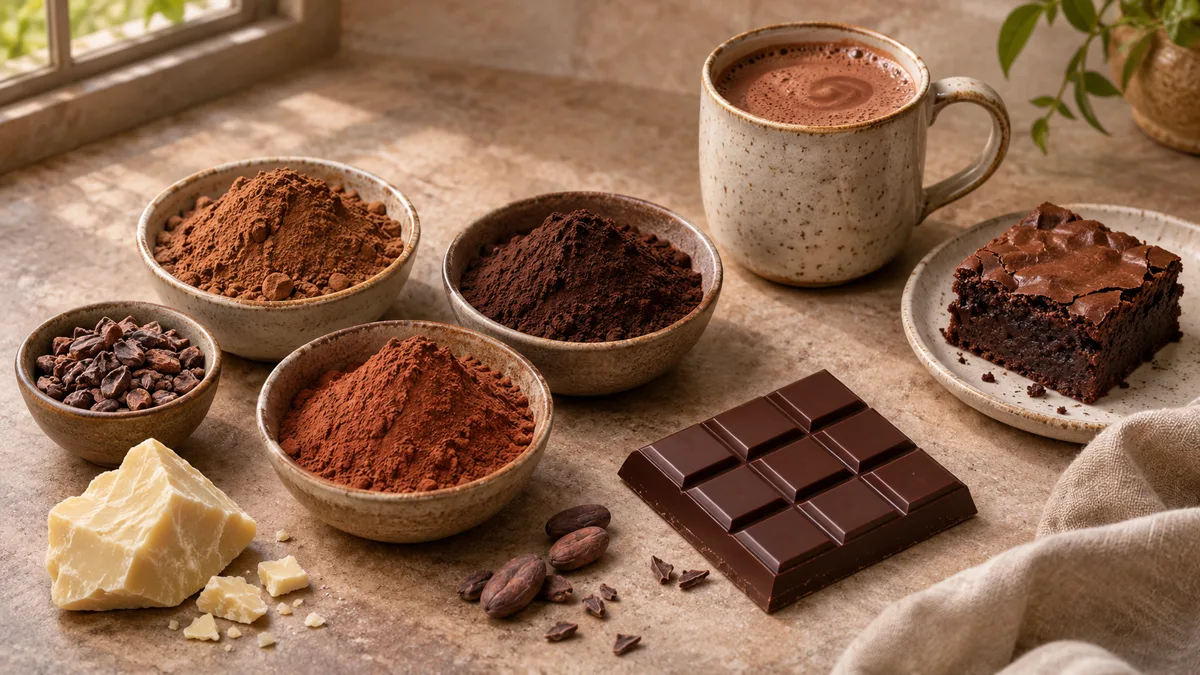
# Cacao vs. Cocoa: What to Use for Hot Chocolate, Baking, and Homemade Chocolate
Cacao and cocoa come from the same plant. For most home cooks, the name on the package matters less than whether the powder is unsweetened, whether it has been processed with alkali, and what the recipe actually calls for.
Products marketed as cacao powder are often promoted as less heated or less processed than conventional cocoa powder. Sometimes that distinction is meaningful, but the words are not reliable enough to establish exactly how a product was made. Cacao is not automatically healthier, and cocoa is not automatically inferior.
For hot chocolate, brownies, frosting and smoothies, you can usually use unsweetened cacao powder and unsweetened cocoa powder in similar amounts. The substitution that deserves more caution is natural cocoa versus Dutch-process cocoa in recipes that rely on baking soda. And if you want to make an actual chocolate bar, powder is not the same as cacao nibs, cocoa mass or cocoa butter.
Quick Guide: Which Cocoa or Cacao Should You Use?
| What you're making | Best starting choice | What matters |
|---|---|---|
| Homemade hot cocoa | Natural or Dutch-process unsweetened cocoa | Pick the flavor you like; add sugar separately. |
| Dark, mellow hot cocoa | Dutch-process cocoa | Usually darker and less acidic. |
| Rich drinking chocolate | Chopped chocolate melted into milk | Cocoa butter gives it more richness than powder alone. |
| Brownies | Any unsweetened powder if the recipe permits | Natural and Dutch usually work well in dense brownies without chemical leavening. |
| Chocolate cake | The exact powder specified | Cocoa acidity may affect baking soda and rising. |
| Cookies, muffins or pancakes | Follow the recipe's cocoa type | Check baking soda, baking powder and other acidic ingredients. |
| Frosting, pudding or chocolate sauce | Any unsweetened cocoa or cacao powder | Primarily a flavor and color decision. |
| Smoothies, oatmeal or yogurt | Any unsweetened cocoa or cacao powder | Avoid sweetened hot cocoa mix unless you want the added sugar. |
| Homemade chocolate bark for the refrigerator | Powder, a suitable fat and sweetener | An easy confection, but not necessarily a stable, snappy chocolate bar. |
| Chocolate bars made from scratch | Food-safe cacao nibs or cocoa mass, sugar, optionally cocoa butter | Fine grinding and tempering make the biggest difference. |
If you only want one inexpensive, versatile pantry ingredient, start with plain, unsweetened natural cocoa powder. Add Dutch-process cocoa later if you prefer its flavor or regularly use recipes that call for it.
What Is the Difference Between Cacao and Cocoa?
Cacao is the name of the tree, Theobroma cacao, whose seeds are used to make chocolate. In everyday English, cacao is often used for the plant, its seeds and products marketed as minimally processed. Cocoa is commonly used for the processed ingredients, including powder, but the terms overlap.
The basic production chain looks like this:
Cacao pods → fermented and dried beans → shelled nibs → ground cocoa mass → cocoa butter and cocoa cake → cocoa powder.
The International Cocoa Organization's processing overview and the European Cocoa Association's production guide explain how fermentation, roasting, grinding and pressing change the beans into different chocolate ingredients.
Here is what the different labels typically mean:
| Ingredient | What it is | What you'd use it for |
|---|---|---|
| Cacao beans / cocoa beans | Seeds from the cacao pod, generally fermented and dried | Starting ingredient for bean-to-bar chocolate. |
| Cacao nibs / cocoa nibs | Shelled pieces of the bean, containing cocoa solids and natural cocoa butter | Crunchy toppings, baking inclusions and grinding into chocolate. |
| Cocoa mass / cacao paste / chocolate liquor | Finely ground nibs, including their natural cocoa butter | Making chocolate bars and other chocolate products. It contains no alcohol. |
| Cocoa butter / cacao butter | The natural fat separated from cocoa mass | Chocolate texture, melting and tempering. Buy food-grade for cooking. |
| Cocoa powder | Ground cocoa cake after much of the fat has been pressed out | Drinks, cakes, brownies, frosting and sauces. |
| Cacao powder | Usually a similar defatted powder, often marketed as less heated | The same broad uses as unsweetened cocoa powder; check the package details. |
| Dutch-process cocoa | Cocoa treated with an alkaline ingredient | Darker drinks, cakes and desserts; behaves differently in some baking recipes. |
| Hot cocoa mix | Typically cocoa plus sugar and sometimes milk powder and flavorings | Convenient sweetened drinks, not a direct substitute for unsweetened baking cocoa. |
One detail is especially important: cacao powder is not simply whole cacao beans ground into dust. Like ordinary cocoa powder, it is generally produced after some cocoa butter has been removed. If you grind whole nibs finely enough, their fat tends to turn the mixture into cocoa mass, not ordinary free-flowing cocoa powder.
In U.S. food regulations, standardized cocoa contains at least 10% but less than 22% cacao fat by weight; lowfat cocoa contains less than 10%, and high-fat or breakfast cocoa contains at least 22%. These are actual composition distinctions, unlike an unsupported assumption that all products labeled cacao follow one particular processing method. See the FDA's cacao-product standards.
Natural Cocoa vs. Dutch-Process Cocoa: The Baking Difference That Matters
Both are made from cacao. The crucial difference is alkalization, sometimes called Dutching.
Natural cocoa is not alkalized and remains acidic. Dutch-process cocoa is treated with an alkaline substance that raises its pH. This generally makes it darker and gives it a mellower, less tangy flavor. It may also affect how it mixes into liquids and how it reacts with leavening ingredients.
A package may describe Dutch-process cocoa as processed with alkali, alkalized, Dutched or European-style. Black cocoa is a particularly heavily alkalized variety used for very dark baked goods. Don't identify an unlabeled cocoa solely by its color, because cocoa color also depends on the beans and other processing steps.
The chemistry matters most when a recipe uses baking soda, which is alkaline and needs sufficient acidity elsewhere in the batter to react effectively. Natural cocoa can provide some of that acidity. Dutch-process cocoa generally provides less.
Baking powder, by contrast, already includes acidic and alkaline components. Recipes that use it may be more forgiving, although the flavor and final color can still change. Buttermilk, yogurt, sour cream, vinegar and other ingredients can also change the batter's acidity.
King Arthur Baking's side-by-side substitution tests show that the effects can include changes in rise, spreading, texture, color and flavor. This is why simply counting the teaspoons of baking soda or baking powder does not always tell you everything about a recipe.
Can You Substitute Cacao Powder for Cocoa Powder in Baking?
Usually, yes, if both powders are plain, unsweetened and nonalkalized. Start with a 1:1 substitution by weight, then adjust for taste. A cacao powder may have a more bitter, fruity or intense flavor, but this varies by manufacturer.
However, a bag labeled cacao is not proof of one exact pH. For a delicate cake recipe that specifically requires natural cocoa for its acidity, follow the recipe or check the manufacturer's processing information rather than relying on the word cacao alone.
Cocoa and cacao substitution chart
| You have | The recipe asks for | Can you substitute it? |
|---|---|---|
| Unsweetened, nonalkalized cacao powder | Natural cocoa powder | Usually yes, 1:1 by weight. Flavor may differ. |
| Natural unsweetened cocoa | Unsweetened cacao powder | Usually yes, 1:1 by weight. |
| Dutch-process cocoa | Natural cocoa | Sometimes. Usually fine without chemical leavening; check baking-soda recipes carefully. |
| Natural cocoa | Dutch-process cocoa | Sometimes. Expect possible flavor/color changes, and check the recipe's leavening. |
| Sweetened hot cocoa mix | Unsweetened cocoa | Not directly. It contains added sugar and may contain milk powder and other ingredients. |
| Cacao nibs | Cocoa powder | No. Nibs add crunch and fat rather than behaving like fine powder. |
| Melted chocolate | Cocoa powder | Not directly. Chocolate adds cocoa butter and often sugar. Recipe quantities need adjustment. |
Best practice: Use the same weight of powder when the recipe provides grams. A tablespoon or cup measurement may pack differently across brands.
Which cocoa is best for brownies?
For dense, fudgy brownies with little or no baking soda or baking powder, natural cocoa, Dutch-process cocoa and cacao powder can all work well. Natural cocoa often tastes brighter, Dutch-process cocoa may taste more mellow and look darker, and some cacao powders taste sharper or fruitier.
A Milk Street kitchen comparison preferred cacao powder in one brownie test but Dutch-process cocoa in its chocolate cake test. Those are recipe-specific taste results, not a universal ranking.
If your brownie recipe specifically uses baking soda, treat the substitution with the same care as other baking recipes.
Which cocoa is best for chocolate cake?
Use what the recipe specifies. In a cake, the cocoa's acidity can affect how the batter rises and sets, especially when baking soda supplies much of the leavening. Dutch-process cocoa can also produce a noticeably darker cake.
When an older American recipe simply says cocoa, natural cocoa is often the safer choice. A modern recipe from a reliable developer may be written to accept either variety; check its notes.
What about cookies, pancakes, muffins, frosting and pudding?
Cookies, muffins and pancakes can depend on leavening chemistry, so follow the recipe when possible. Cookies may spread differently even if the flavor is acceptable.
Frosting, pudding, chocolate sauce, smoothies and most unbaked desserts do not depend on cocoa reacting with baking soda. In those cases, choose primarily by taste, color and price. See King Arthur Baking's guide to cocoa types for additional examples.
Which Is Better for Hot Chocolate: Cacao or Cocoa?
Both are good. No baking reaction is involved, so this is mainly a flavor decision.
- Natural cocoa: A familiar, sometimes brighter chocolate taste.
- Dutch-process cocoa: Generally darker and smoother tasting, often less acidic.
- Cacao powder: May taste more robust or fruity, depending on the beans and processing.
You do not need a special powder marketed for hot chocolate. Plain unsweetened baking cocoa works well, and making your own lets you control the sugar.
Easy homemade hot cocoa recipe (one mug)
Ingredients
- 1 cup (240 mL) milk or unsweetened nondairy milk
- 1 to 2 tablespoons unsweetened cocoa or cacao powder
- 2 teaspoons sugar, more or less to taste
- Small pinch of salt
- Optional: a drop of vanilla or a pinch of cinnamon
Method
- Mix the cocoa, sugar and salt with a small splash of hot water or warm milk until smooth.
- Gradually whisk in the rest of the milk.
- Warm gently in a saucepan or microwave-safe mug, stirring until evenly mixed. Taste and adjust the cocoa and sugar.
Start with 1 tablespoon of powder for a milder drink and 2 tablespoons for a darker, stronger one. Different powders have different bitterness levels, so sweeten to your taste rather than following a fixed sugar ratio.
Why does cocoa powder clump or float in milk?
Cocoa powder does not completely dissolve like sugar. Some components dissolve, but its fine particles largely remain dispersed in the drink. Mixing a small amount of hot liquid with the powder first wets the particles and helps prevent clumps. Whisking or frothing also helps.
Hot cocoa vs. hot chocolate: Are they different?
The names overlap in everyday use, but there is a useful kitchen distinction:
- Hot cocoa is commonly made from cocoa powder, liquid and sweetener.
- Drinking chocolate is commonly made by melting actual chocolate into milk or another liquid.
For a richer drink, melt about 25 to 35 grams of chopped dark chocolate into one cup of hot milk, then taste before adding sugar. Chocolate contains cocoa butter, which contributes a fuller mouthfeel than defatted powder alone.
Don't confuse unsweetened cocoa powder with instant hot cocoa mix. A mix usually already contains sugar and may contain powdered milk, so substituting it for baking cocoa will alter both sweetness and ingredient ratios.
How to Make Chocolate From Scratch: What Ingredients Do You Actually Need?
This is the point where cocoa powder, cacao nibs and cocoa butter stop being interchangeable.
Option 1: Melt and mold existing chocolate (the easy route)
If the goal is chocolate bars or shapes without manufacturing the chocolate itself, buy good-quality chocolate, melt it carefully and pour it into molds. Temper it if you want a glossy finish, a clean snap and reliable room-temperature texture.
This is the most practical starting point for most home cooks. You're reshaping chocolate, not creating it from cacao beans, but the result can still be excellent.
Option 2: Make real chocolate from cacao nibs or cocoa mass
For genuine chocolate-making, start with food-safe, properly processed cacao nibs or cocoa mass. Cacao nibs naturally contain both cocoa solids and cocoa butter. Cocoa mass is nibs that have already been ground into a paste.
A practical starting 70% dark chocolate formulation is:
| Ingredient | Weight | Share of batch |
|---|---|---|
| Roasted cacao nibs, or equivalent pure cocoa mass | 650 g | 65% |
| Food-grade cocoa butter | 50 g | 5% |
| Dry granulated sugar | 300 g | 30% |
| Total | 1,000 g | 100% |
The 70% cacao figure comes from the 65% nibs or mass plus 5% added cocoa butter. It does not mean that 70% of the finished chocolate is fat-free cocoa powder.
A chocolate grinder or melanger refines the nibs or cocoa mass together with sugar and cocoa butter until the particles are fine enough to feel smooth. This can take many hours, often a day or longer with home equipment. Check your machine's minimum working batch before using these quantities. A conventional blender or food processor generally cannot give the same fine texture.
The finished chocolate is then tempered and molded. For one common dark-chocolate tempering method, chocolate is heated to roughly 50–55°C (122–131°F), cooled to 28–29°C (82–84°F) and brought back to a working temperature around 31–32°C (88–90°F). Formulas and methods differ, so follow the temperature guidance for the chocolate you are using. See Valrhona's tempering instructions.
Two important mistakes to avoid:
- Don't add ordinary liquid milk to chocolate you're trying to refine into a shelf-stable bar. Milk chocolate is typically made using milk powder. Water-based ingredients can make the chocolate seize and introduce other storage problems.
- Don't expect gritty sugar to disappear just because the chocolate has melted. Proper particle-size reduction is a separate step from melting or tempering.
Chocolate Alchemy's bean-to-bar guide explains the equipment and why refining, conching and tempering are different operations.
Option 3: Make chocolate-flavored bark from cocoa powder
If you have only cacao or cocoa powder, you can mix it with a suitable melted fat and sweetener to make a refrigerator-set confection. Recipes using coconut oil are common, but coconut oil does not behave like cocoa butter: the result may soften quickly at room temperature and typically will not snap like a properly tempered chocolate bar.
Simple refrigerated cocoa bark: Whisk 3 tablespoons melted coconut oil, 3 tablespoons unsweetened cocoa powder, 2 tablespoons powdered sugar and a pinch of salt until smooth. Spread thinly on parchment and refrigerate until firm. Keep it chilled. This is an easy homemade confection, not tempered chocolate, and its texture will be softer at room temperature.
For a more conventional bar made from cocoa powder, you need to add back cocoa butter, because much of the bean's original fat was removed when the powder was made. You still need suitable refining and tempering for a smooth, stable finished product.
Bottom line: Cocoa powder is ideal for a drink, cake or frosting. Nibs or cocoa mass are the more natural starting point for making a genuine chocolate bar.
Is Cacao Healthier Than Cocoa?
Not automatically. Both plain, unsweetened powders can provide fiber, minerals and cocoa-derived plant compounds. The biggest everyday nutritional differences often come from the amount of added sugar, the powder's remaining fat content and how much you actually consume.
Cacao powder is often promoted for its flavanols, compounds studied for their potential cardiovascular effects. Processing does matter, but the word cacao does not tell you how many flavanols are left.
Does Dutch-processing reduce cocoa flavanols?
Yes, substantial reductions have been measured, particularly with stronger alkalization.
In a 2008 study published in the Journal of Agricultural and Food Chemistry, researchers reported these average measured total flavanol concentrations in the cocoa powders they tested:
| Powder category in the study | Average total flavanols |
|---|---|
| Natural, nonalkalized | 34.6 mg/g |
| Lightly alkalized | 13.8 mg/g |
| Moderately alkalized | 7.8 mg/g |
| Heavily alkalized | 3.9 mg/g |
These are historical results from a set of commercial samples, not guaranteed amounts for every cacao or cocoa powder sold today. The research was conducted by authors associated with Hershey and Brunswick Laboratories, so its industry ties should be understood alongside the measured findings.
Higher flavanol content also does not mean that ordinary chocolate has been proven to prevent heart disease. In its 2023 review of a proposed cocoa-flavanol health claim, the FDA determined that the supporting scientific evidence was very limited. The qualified claim applies to specially defined high-flavanol cocoa powder containing at least 4% naturally conserved cocoa flavanols, and qualifying foods made with it, not ordinary cocoa powder or chocolate generally.
If preserving flavanols matters to you, choosing a nonalkalized powder is a reasonable starting point. A manufacturer-provided measurement is much more informative than a raw or cacao label alone.
Does cacao have less sugar or more caffeine?
Plain unsweetened cacao and cocoa powders have little naturally occurring sugar. Most of the sugar in hot cocoa comes from what you add, and most of the sugar in a sweetened chocolate bar is added during manufacturing.
Both powders also contain caffeine and theobromine. USDA FoodData Central's reference data give approximately 12.4 mg of caffeine per tablespoon (5.4 g) of ordinary unsweetened cocoa powder. Actual products, particularly differently processed powders, vary. A strong drink made with two tablespoons can therefore contain meaningful caffeine for someone sensitive to it, although typically much less than brewed coffee. See the USDA FoodData Central caffeine data.
What About Lead and Cadmium in Cacao, Cocoa and Dark Chocolate?
This is a legitimate issue, but it should not be confused with a blanket warning that cocoa is unsafe.
Cadmium can enter cacao through soil, while lead contamination can occur during cultivation or processing. The amount varies by origin and product. Organic, raw and cacao labels do not guarantee lower heavy-metal exposure.
A 2024 study of 72 U.S.-market cocoa and dark chocolate products found that some samples exceeded California Proposition 65 daily-exposure thresholds. Specifically, 31 of 72 exceeded the lead threshold at the stated serving size, while 13 of the 37 products with the relevant daily-dose data exceeded the cadmium threshold. This was a selected group of products, not a random sample of all brands. California warning thresholds are also not interchangeable with FDA food-safety limits.
The FDA's overview of cadmium in food notes that cocoa products generally make a relatively small contribution to population-wide cadmium exposure, although individual intake matters.
For most people, an occasional cup of hot cocoa or a brownie is not a reason for alarm. Consumers using large amounts of cacao or cocoa powder daily may reasonably prefer brands that disclose credible product-specific testing, particularly when serving children.
Is Raw Cacao Really Raw?
Raw cacao usually signals a manufacturer's intention to avoid conventional roasting or limit heating. It does not tell you, by itself, the exact temperatures or food-safety steps used.
Cacao beans generally undergo fermentation and drying before being made into powder, nibs or chocolate. Fermentation generates heat, and subsequent processes can vary widely. Raw is not a substitute for a documented production method or a verified flavanol measurement.
Food safety is another consideration. As the Cocoa of Excellence microbiological-hazards guide explains, agricultural cacao beans can carry pathogens such as Salmonella, which manufacturers must control through validated processing and hygiene. Skipping roasting is not inherently healthier if effective microbial controls are absent.
How to Choose Cocoa or Cacao at the Grocery Store
Check these four things before paying extra for a premium-sounding label:
- Unsweetened or sweetened? Plain baking cocoa and cacao powder are different from sugary hot cocoa mix.
- Natural or processed with alkali? This matters for some baking recipes and can affect flavor, color and flavanols.
- How much fat remains? More cocoa butter can change richness and baking performance. If the manufacturer discloses fat content, compare like with like.
- Price per ounce and evidence for claims. Organic certification, ethical-sourcing certifications and raw marketing each address different questions. None alone proves superior flavor, higher flavanols or lower heavy metals.
The sensible pantry approach: Buy natural unsweetened cocoa first. Keep Dutch-process cocoa as a second option if you like darker, mellower chocolate flavor or bake recipes designed for it. Buy cacao powder when you prefer that particular product's flavor or can verify a processing characteristic that matters to you.
Store dry powders in a tightly sealed container in a cool, dry place away from humidity and strong odors. Follow the manufacturer's best-by date; flavor can fade even when a dry powder remains usable. Cacao nibs contain more cocoa butter than powder and deserve particular attention to freshness and rancid odors.
Frequently Asked Questions
Is cocoa powder the same as cacao powder?
They are similar ingredients made from the same plant. In retail marketing, cacao powder often implies a less-heated, nonalkalized product, but it is not a reliable guarantee. Check the ingredient list and processing information.
Can I use baking cocoa to make hot chocolate?
Yes. Plain unsweetened cocoa powder works very well. Mix it with a little hot liquid first, then add milk and sugar to taste.
Can I substitute cacao powder for cocoa powder in hot chocolate?
Yes. Start with the same amount of unsweetened powder. Because their flavors vary, taste before deciding whether to add more sugar or cocoa.
Can I use cacao instead of cocoa in brownies or cake?
Usually in brownies and other recipes that do not rely on chemical leavening. In cakes and baking-soda recipes, use a comparable nonalkalized powder and follow the recipe's instructions for the best result.
Are cocoa and cacao vegan or dairy-free?
Plain cacao and cocoa powders come from a plant and contain no dairy by themselves. Packaged hot cocoa mixes, baking products and chocolate bars may contain milk or other additives, so check the ingredient and allergen labels.
Is cocoa butter the same as cacao butter?
Yes. These names refer to the fat from cacao beans. For cooking, make sure the product is labeled food-grade, not merely cosmetic-grade.
How do you pronounce cacao vs. cocoa?
- Cacao: usually pronounced kuh-KOW.
- Cocoa: pronounced KOH-koh.
Can I make cocoa powder by blending cacao nibs?
Not in the usual sense. Nibs contain substantial cocoa butter. Grinding them tends to produce a paste; commercial-style cocoa powder requires pressing out much of that fat first.
Does 70% cacao mean 70% cocoa powder?
No. The percentage generally includes cocoa ingredients such as cocoa mass and added cocoa butter. It does not reveal the exact fat content, flavanol content or amount of roasting.
Is white chocolate made from cacao?
Yes. Under U.S. white-chocolate standards, white chocolate must contain at least 20% cacao fat, along with specified dairy and other composition requirements. It contains cocoa butter but not the brown, nonfat cocoa solids responsible for dark chocolate's characteristic color.
Are cacao nibs a substitute for chocolate chips?
They can be used as a crunchy inclusion in cookies, granola or yogurt, but they are not the same. Nibs are generally unsweetened and hard; chocolate chips are formulated to be sweet and chocolate-like when eaten.
Are cacao and cocoa safe for dogs?
No. Cacao nibs, cocoa powder and chocolate contain theobromine and caffeine, which are toxic to dogs. Cocoa powder and dark chocolate can be particularly concentrated sources. See the FDA's chocolate-toxicity guidance, and contact a veterinarian promptly after a suspected ingestion.
The Bottom Line
For hot chocolate, choose by taste. For baking, choose by acidity. For homemade chocolate bars, choose the right ingredients and equipment.
Cacao and cocoa are not two competing plants, and a premium cacao label does not automatically mean superior nutrition. What matters is whether the powder is unsweetened or alkalized, how much cocoa butter it contains, and whether it behaves the way your recipe needs it to.
Buy for the result, not the label.
References and Further Reading
Cocoa Processing and U.S. Product Standards
- Processing Cocoa. International Cocoa Organization. Explains fermentation, drying, roasting and the manufacturing chain.
- From Cocoa Beans to Semi-Finished Products. European Cocoa Association. Describes nibs, cocoa mass, pressing, cocoa butter and powder.
- 21 CFR Part 163: Standards for Cacao Products. U.S. standards for cacao nibs, cocoa, chocolate liquor and standardized chocolate products, including compositional and labeling rules.
Baking and Making Chocolate
- Dutch-Process vs. Natural Cocoa. King Arthur Baking. Recipe-tested guidance on the effects of swapping alkalized and nonalkalized cocoa.
- Types of Cocoa, Explained. Alice Medrich for King Arthur Baking. Practical guidance on natural, Dutch-process and black cocoa.
- Cocoa Powder, Dutch-Process Cocoa and Cacao Powder: What's the Difference?. Christopher Kimball's Milk Street. Reports comparative tests in brownies and chocolate cake.
- The Complete Guide to How to Make Chocolate. Chocolate Alchemy. Detailed specialist explanation of nibs, ingredient percentages, refining and tempering.
- Tempering Chocolate. Valrhona. Professional temperatures and methods for achieving stable, glossy chocolate.
Nutrition, Health and Safety
- Impact of Alkalization on the Antioxidant and Flavanol Content of Commercial Cocoa Powders. Miller et al., Journal of Agricultural and Food Chemistry (2008). Original industry-associated analysis of measured flavanol levels by alkalization category.
- FDA Announces Qualified Health Claim for Cocoa Flavanols in High-Flavanol Cocoa Powder. U.S. Food and Drug Administration (2023). Explains the very limited evidence and why the claim does not apply to ordinary chocolate.
- USDA FoodData Central: Caffeine Data. USDA. Includes reference values for caffeine in unsweetened cocoa powder; actual product values vary.
- A Multi-Year Heavy Metal Analysis of 72 Dark Chocolate and Cocoa Products in the USA. Hands et al., Frontiers in Nutrition (2024). Original consumer-product testing, with important differences in data availability by contaminant.
- Cadmium in Food and Foodwares. FDA. Population-level dietary exposure and food-safety context.
- Microbiological Hazards in Cocoa Beans. Cocoa of Excellence knowledge base. Why raw agricultural beans need validated microbiological controls.
- Leave Chocolate Out of Rover's Celebrations. FDA. Theobromine and caffeine toxicity risks for dogs.
Editorial currency note: Product formulas, manufacturer practices and scientific findings can change. This article was researched and fact-checked against the sources above as of November 2, 2026. No individual brand's laboratory results have been independently verified for this guide.