Independent review | Last researched July 30, 2026
Independent-purchase disclosure
I purchased the Something Nice Zero Pro toothpaste examined in this article with my own money.
Something Nice did not request, sponsor, commission, approve or review this article. The company did not provide a product sample or compensation, and I did not contact the company before conducting this research.
This is primarily an independent review of the formula, ingredients, scientific rationale, public evidence and marketing claims. It is not a commissioned research project or a substitute for individualized dental care.
The answer in brief
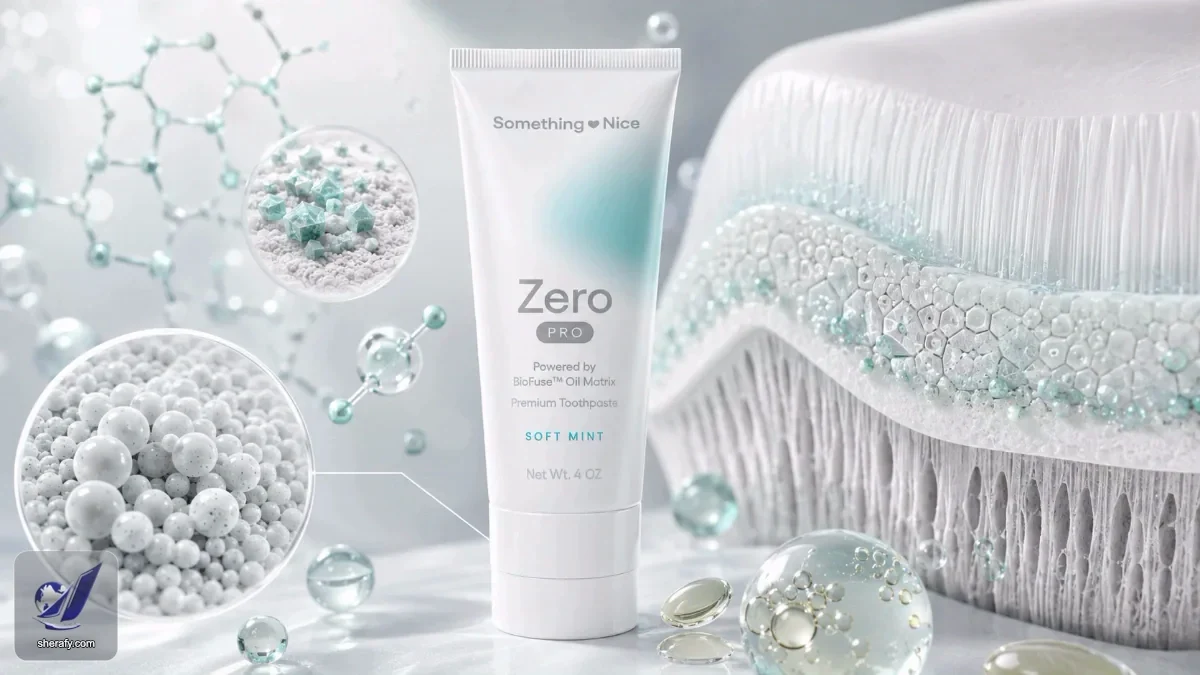
Something Nice Zero Pro is a premium fluoride-free toothpaste containing two central technologies:
- A disclosed 10% concentration of nano-hydroxyapatite, or nHAp
- A proprietary linseed-and-rosehip-oil system called BioFuse Oil Matrix
These two components do not have the same evidentiary status.
Nano-hydroxyapatite is a legitimate biomimetic dental material with direct laboratory, in-situ and clinical research supporting its ability to deposit mineral on teeth, remineralize early enamel lesions and occlude exposed dentinal tubules associated with sensitivity. Ten percent is a scientifically defensible concentration, and particle size can materially affect how hydroxyapatite behaves.
However, the evidence does not establish that every 10% nHAp toothpaste performs identically, that 10% is the universal minimum effective concentration, or that nano-hydroxyapatite is clinically superior to every well-formulated microcrystalline hydroxyapatite toothpaste.
BioFuse Oil Matrix is more novel and much less established. Something Nice publishes specific laboratory and short-term human results rather than relying entirely on vague marketing language. The company reports 99.9% reductions in two targeted bacteria during laboratory exposure, an approximately 48% reduction in salivary Streptococcus mutans after 14 days, and recovery of bacteria it characterizes as beneficial. (Something Nice)
The problem is not that the company presents no evidence. The problem is that its public evidence currently consists largely of charts and short summaries without enough valid methodological information to evaluate the results independently. More concerningly, the “study details” beneath the BioFuse results presently contain repeated language about an unrelated Mitopure and mitophagy study involving overweight, inactive adults. (Something Nice)
The most defensible conclusion is therefore:
Something Nice Zero Pro has a credible and research-supported nano-hydroxyapatite foundation. BioFuse is biologically plausible and potentially interesting, but its strongest product-specific claims remain publicly underdocumented.
What is Something Nice Zero Pro toothpaste?
Zero Pro is a four-ounce, fluoride-free toothpaste sold by Something Nice, an oral-care company founded by orthodontist and online creator Dr. Ben Winters.
At the time of this review, the company listed a one-time purchase price of $45 per tube, making it substantially more expensive than a conventional mass-market toothpaste. The product page states that a tube should last approximately two to three months. (Something Nice)
The package identifies the formula as containing:
- 10% nano-hydroxyapatite
- BioFuse Oil Matrix
- Xylitol
- Hydrated silica
- Zinc citrate
- Linseed seed oil
- Rosehip seed oil
- Peppermint and wild-mint oils
It is marketed as being free from:
- Fluoride
- Sodium lauryl sulfate, or SLS
- Titanium dioxide
The company describes Zero Pro as a toothpaste that simultaneously remineralizes teeth, reduces harmful bacteria and preserves desirable members of the oral microbiome. (Something Nice)
Those proposed functions need to be examined separately. The science supporting hydroxyapatite cannot automatically validate BioFuse, and research on other hydroxyapatite toothpastes cannot automatically establish the clinical performance of Zero Pro as a finished product.
Part One: The Science of Nano-Hydroxyapatite
What is hydroxyapatite?
Hydroxyapatite is a calcium-phosphate mineral closely related to the dominant mineral component of human enamel, dentin and bone.
This makes synthetic hydroxyapatite a biomimetic material: it is designed to resemble and interact with biological mineral rather than acting only as an unrelated chemical treatment.
Nano-hydroxyapatite consists of hydroxyapatite particles engineered at dimensions measured in nanometers. Reviews of the material describe properties such as increased surface area, surface energy and solubility compared with larger hydroxyapatite particles. These characteristics may improve its ability to interact with microscopic tooth defects and exposed dentin. (PubMed)
The product’s founder is therefore justified in saying that particle size can matter. Nano-hydroxyapatite is not physically interchangeable with every larger-particle hydroxyapatite powder.
But that does not mean that the word “nano” automatically guarantees a better toothpaste.
Is nano-hydroxyapatite identical to tooth enamel?
Something Nice describes nHAp as identical to what teeth are naturally made of. That is understandable as simplified consumer language, but it is not literally precise.
Natural enamel is a highly organized tissue containing directionally arranged mineral prisms and a complex hierarchical microstructure. Synthetic nano-hydroxyapatite resembles its dominant mineral component, but it does not reproduce the complete biological architecture of mature enamel. (PubMed)
A more scientifically accurate description would be:
Nano-hydroxyapatite is chemically similar to the dominant mineral in teeth and can act as a biomimetic source of calcium-phosphate material.
That distinction matters because “similar to tooth mineral” is not the same as “a replacement layer of biologically regenerated enamel.”
What does nano-hydroxyapatite actually do?
Nano-hydroxyapatite toothpaste may support teeth through several overlapping mechanisms.
Mineral deposition
Particles can attach to demineralized or irregular tooth surfaces and contribute calcium-phosphate material to early lesions.
Filling microscopic surface defects
Small particles may occupy pores, irregularities and defects created by early mineral loss. This can produce a smoother surface and may change how light reflects from the enamel.
Acting as a mineral reservoir
Nano-hydroxyapatite may help maintain calcium and phosphate near the tooth surface, encouraging crystal deposition when surrounding conditions favor remineralization.
Occluding dentinal tubules
When dentin becomes exposed, fluid movement inside microscopic dentinal tubules can trigger sharp sensitivity. Hydroxyapatite particles may cover or plug those tubules, reducing fluid movement and the resulting pain response. (Nature)
These mechanisms are biologically plausible and supported by experimental observations. They do not mean toothpaste can regrow a missing piece of enamel, replace a filling or reverse a structurally established cavity.
A correction to the phrase “enamel tubules”
Something Nice states that nHAp can penetrate “enamel tubules.” That terminology is technically imprecise.
Dentin contains dentinal tubules. Enamel instead contains organized mineral prisms and can develop microscopic pores and subsurface spaces when demineralized. (PubMed)
The broader point—that small particles may enter microscopic defects in enamel and exposed dentinal tubules—is reasonable. The more accurate terms are:
- Microporosities in demineralized enamel
- Surface defects
- Intercrystalline spaces
- Dentinal tubules
This is a terminology correction, not a rejection of the underlying mechanism.
Does particle size make nano-hydroxyapatite better than regular hydroxyapatite?
Particle size can affect:
- Surface area
- Chemical reactivity
- Dissolution behavior
- Ability to remain dispersed
- Access to microscopic surface irregularities
- Ability to enter or cover dentinal tubules
- Interaction with saliva and the acquired dental pellicle
Nano-hydroxyapatite may therefore behave differently from microcrystalline hydroxyapatite even though both belong to the same chemical family.
However, clinical performance also depends on:
- Particle shape
- Average and maximum particle dimensions
- Particle-size distribution
- Crystallinity
- Surface coatings or chemical modifications
- Agglomeration or clumping
- Concentration
- Abrasive system
- Surfactants
- Product pH
- Stability during storage
- Brushing time and technique
- Saliva and dietary conditions
A 2025 laboratory comparison of commercial hydroxyapatite toothpastes found meaningful performance differences among finished formulations. That reinforces a critical point: the presence of nHAp—or even a particular percentage—does not guarantee that all products will behave the same way. (PubMed)
The fair conclusion on nano versus micro hydroxyapatite
The founder’s core scientific point is reasonable:
Smaller particles can provide physical and chemical advantages, and nano-hydroxyapatite should not be treated as indistinguishable from all larger hydroxyapatite particles.
The stronger proposition remains unproved:
There is not yet robust head-to-head human evidence showing that nano-hydroxyapatite toothpastes are universally superior to well-formulated microcrystalline hydroxyapatite toothpastes at preventing actual cavities.
The strongest long-term hydroxyapatite cavity trials have often involved particular microcrystalline formulations, while much of the nano-specific evidence involves laboratory remineralization, in-situ enamel specimens, white-spot lesions and sensitivity.
Why does Zero Pro use 10% nano-hydroxyapatite?
Something Nice emphasizes that Zero Pro contains 10% nHAp and argues that lower concentrations may provide inadequate coverage while higher concentrations produce no additional benefit. (Something Nice)
The 10% figure is not arbitrary. It has a legitimate basis in published research.
The 2009 concentration study
A widely cited laboratory study created early lesions in bovine enamel and tested nHAp concentrations of:
- 1%
- 5%
- 10%
- 15%
The researchers found that surface-hardness recovery increased as the concentration rose toward 10%. They found no statistically significant additional improvement when moving from 10% to 15% and concluded that 10% may be optimal for remineralizing early enamel lesions in that specific model. (Carifree)
This gives the company a credible basis for selecting 10%.
But the study had important limitations:
- It used bovine enamel rather than naturally developing cavities in humans.
- It was conducted under controlled laboratory pH cycling.
- It tested prepared suspensions, not Zero Pro.
- It did not establish that 10% is the minimum effective concentration.
- It did not prove that 10% is optimal for every particle type, formula or clinical outcome.
The study supports the statement that 10% is a rational and research-based concentration. It does not support the absolute claim that lower concentrations cannot work.
The 5% versus 10% human in-situ study
A randomized, double-blind crossover study involved 30 adults wearing oral appliances containing prepared enamel specimens. The specimens were exposed to:
- 5% nHAp toothpaste
- 10% nHAp toothpaste
- 1,100 ppm fluoride toothpaste
Each treatment phase lasted 28 days. The study reported no significant difference in remineralizing efficacy among the 5% nHAp, 10% nHAp and fluoride formulations in that model. (Europe PMC)
This is direct nano-hydroxyapatite research and should not be dismissed as merely generic hydroxyapatite evidence.
It also complicates the idea that anything below 10% is necessarily inadequate. In this particular experiment, 5% did not perform significantly worse than 10%.
The appropriate conclusion is:
Ten percent is a scientifically meaningful concentration and may represent a plateau in some experimental models. However, concentration is not the only determinant of performance, and published evidence does not establish 10% as a universal minimum.
What the major hydroxyapatite studies actually show
The hydroxyapatite evidence base contains several different types of research. These should not be treated as interchangeable.
| Study type | What it can tell us | What it cannot prove |
|---|---|---|
| Laboratory study | Whether a material deposits mineral or changes surface hardness under controlled conditions | Whether users will develop fewer cavities over years |
| In-situ study | How prepared tooth specimens behave while carried in a human mouth | The natural progression of cavities in the participant’s own teeth |
| Short clinical study | Changes in sensitivity, bacterial counts or white-spot lesions | Long-term cavity prevention unless followed long enough |
| Long-term randomized trial | Whether a complete toothpaste changes clinical outcomes | Whether one ingredient alone caused the result |
| Product-specific trial | How the finished commercial formula performs | Whether competing products with the same ingredient behave identically |
The 10% hydroxyapatite versus 500 ppm fluoride study
A 14-day crossover study compared a toothpaste containing 10% hydroxyapatite with one containing 500 ppm amine fluoride. Adults wore appliances containing prepared primary-tooth enamel specimens.
Both toothpastes significantly remineralized early lesions, and the researchers found no significant difference in overall efficacy. Hydroxyapatite produced a more homogeneous pattern of remineralization, while fluoride produced greater mineral concentration near the lesion surface. (PubMed)
This is useful evidence for a 10% hydroxyapatite formulation, but it was not a long-term cavity trial and does not establish that Zero Pro itself performs identically.
The one-year trial in children
A randomized trial compared a fluoride-free microcrystalline hydroxyapatite toothpaste with fluoride toothpaste in 207 children. Participants used their assigned toothpaste three times daily, and the trial followed caries development for approximately 336 days.
The hydroxyapatite formula met the study’s predefined non-inferiority criterion. However, the test material was microcrystalline rather than a demonstration of nano-specific superiority, and the non-inferiority margin allowed a relatively broad range of possible differences. (PubMed)
This trial matters because it demonstrates that a complete hydroxyapatite toothpaste can be studied under ordinary use over a meaningful period.
It cannot be used to claim that nano particles caused the outcome or that Zero Pro has been clinically demonstrated to produce the same result.
The 18-month trial in adults
An 18-month randomized, double-blind trial compared a fluoride-free hydroxyapatite toothpaste with a toothpaste containing 1,450 ppm sodium fluoride.
Among participants who completed the study according to protocol, 89.3% in the hydroxyapatite group and 87.4% in the fluoride group showed no increase in the primary Decayed, Missing and Filled Surfaces measurement. The hydroxyapatite product met the trial’s predefined non-inferiority standard. (Frontiers)
This is meaningful evidence. It also requires context:
- The trial tested a particular microcrystalline hydroxyapatite product.
- It was not a test of Zero Pro.
- It was funded partly by the hydroxyapatite toothpaste manufacturer.
- Three authors were employees of that manufacturer. (Frontiers)
Industry funding does not automatically invalidate research. It does increase the importance of transparent methods, preregistration and independent replication.
What systematic reviews conclude
A 2022 systematic review found that nHAp and sodium fluoride showed similar remineralizing potential under experimental conditions favoring remineralization. Under conditions dominated by continued demineralization, however, fluoride performed better in the included evidence, while nHAp did not differ significantly from a fluoride-free control.
The reviewers rated the overall evidence as very low because of the small number of trials, short follow-up periods, study heterogeneity, high risk of bias and frequent manufacturer involvement. (PubMed Central (PMC))
That review does not prove nHAp is ineffective. It indicates that the evidence is more convincing for supporting remineralization of early damage than for preventing mineral loss under every continuing acid challenge.
A 2024 review of nano-hydroxyapatite for white-spot lesions found promising effects on surface hardness and mineral gain, but it also noted the limited number of clinical studies, high risk of bias and relatively short follow-up periods. (PubMed)
A 2026 systematic review of fluoride-free active toothpastes found only three human clinical trials specifically evaluating hydroxyapatite toothpastes for caries-focused outcomes. That is real clinical evidence, but it remains a much smaller body of evidence than the literature supporting fluoride. (PubMed)
Is nano-hydroxyapatite as effective as fluoride?
The most accurate answer is:
Some hydroxyapatite formulations have performed comparably to fluoride formulations in particular laboratory, in-situ and clinical studies. That does not yet establish universal equivalence between all hydroxyapatite and fluoride toothpastes.
Fluoride and hydroxyapatite also do not work in precisely the same way.
Fluoride promotes a tooth environment more resistant to acid dissolution and assists remineralization. Hydroxyapatite provides calcium-phosphate material that can deposit on surfaces and within early mineral defects.
The FDA’s current over-the-counter anticaries monograph lists specified fluoride compounds as recognized anticaries active ingredients. The American Dental Association likewise requires a toothpaste making an accepted cavity-protection claim through its Seal program to contain fluoride.
This regulatory distinction does not prove hydroxyapatite is ineffective. It means hydroxyapatite has not followed the same established United States monograph and ADA Seal pathway for anticaries claims.
For a person with low cavity risk who specifically wants a fluoride-free toothpaste, a well-formulated nHAp product may be a scientifically reasonable choice.
Someone with frequent cavities, severe dry mouth, exposed roots, orthodontic appliances, significant enamel erosion or other elevated-risk conditions should not assume that switching from fluoride is risk-free simply because hydroxyapatite is promising. That decision is better made with a dentist who knows the person’s actual history.
Does nano-hydroxyapatite reduce tooth sensitivity?
Sensitivity is one of the more credible potential benefits of nano-hydroxyapatite.
A randomized, double-blind eight-week clinical trial compared toothpastes containing:
- 10% nHAp
- 15% nHAp
- 10% nHAp with potassium nitrate
- Calcium sodium phosphosilicate, a recognized desensitizing material
All groups experienced significant reductions in sensitivity. The 15% nHAp and 10% nHAp-plus-potassium-nitrate formulations performed comparably to the calcium sodium phosphosilicate control across the main measurements. The plain 10% nHAp formula improved sensitivity but was less effective than some comparators at later time points. (Nature)
A separate systematic review and meta-analysis concluded that hydroxyapatite-containing oral-care products were effective for dentin hypersensitivity and may perform favorably against fluoride or other desensitizing agents. (PubMed)
This supports Zero Pro’s general sensitivity rationale.
It does not directly validate the company’s product-specific claim that most users will notice improvement within one or two weeks. The company presents that timeframe on its product page, but I did not locate a published Zero Pro trial establishing it. (Something Nice)
Persistent or localized sensitivity should not automatically be treated as a toothpaste problem. It can also indicate decay, cracks, defective restorations, gum recession, grinding or significant erosion.
Does nano-hydroxyapatite whiten teeth?
Hydroxyapatite may produce a modest optical effect by filling microscopic surface irregularities and creating a smoother, more reflective surface.
Zero Pro also contains hydrated silica, which can remove some external staining through mechanical polishing. The degree of stain removal depends on the grade, shape and concentration of the abrasive system. (ada.org)
Something Nice says users may experience optical whitening of up to two shades within one or two weeks. That is a specific product-performance claim. I did not locate a complete published Zero Pro whitening study with baseline shade measurements, standardized photography, comparator groups and statistical results. (Something Nice)
The responsible conclusion is:
- A smoother mineral surface may look brighter.
- Hydrated silica can help remove external stains.
- Zero Pro is not expected to bleach intrinsic tooth color in the way peroxide treatments can.
- The two-shade timeframe remains a company claim rather than a publicly validated product-specific result.
Can Zero Pro regrow enamel or reverse cavities?
The word “rebuild” needs careful interpretation.
Enamel is acellular and cannot repair itself through living cellular regeneration. Early, non-cavitated lesions can nevertheless undergo remineralization when calcium and phosphate are redeposited into areas of mineral loss. (Carifree)
Nano-hydroxyapatite may therefore support:
- Remineralization of early white-spot lesions
- Mineral deposition onto demineralized surfaces
- Filling of microscopic surface defects
- Protection of exposed dentin
- Reduction of sensitivity
It cannot reasonably be expected to restore:
- A visible hole in a tooth
- Missing enamel anatomy
- Deep dentin decay
- A broken filling
- An infected pulp
- A cracked tooth
- Advanced periodontal destruction
A toothpaste can support early mineral repair. It cannot substitute for restorative dental treatment after physical tooth structure has been lost.
Is 10% nano-hydroxyapatite safe?
The most important recent regulatory assessment comes from the European Commission’s Scientific Committee on Consumer Safety.
In its 2025 final opinion, the committee concluded that nano-hydroxyapatite could be considered safe in toothpaste at concentrations up to 29.5%—but only for material meeting the particle specifications evaluated in the submission. The committee reported negligible uptake through the buccal mucosa and did not identify mutagenic, cytotoxic or inflammatory concerns under the tested conditions. (Public Health)
The opinion applies to a defined form of nHAp:
- Rod-shaped particles
- Uncoated and not surface-modified
- At least 87% of particles having an aspect ratio of three or less
- Remaining particles having an aspect ratio no greater than nine
- Maximum reported particle length of approximately 122 ± 43 nanometers
- No needle-shaped particles
The assessment also concluded that unintentionally ingested particles meeting these specifications would be expected to dissolve rapidly in gastric fluid. (Public Health)
Zero Pro’s 10% concentration is below the committee’s 29.5% maximum.
However, concentration alone does not prove that Zero Pro uses precisely the same particle specifications. The company’s consumer-facing pages do not appear to disclose:
- Mean and maximum particle length
- Full particle-size distribution
- Particle aspect ratio
- Particle morphology
- Whether the material is coated or surface-modified
- Crystallinity
- Agglomeration behavior
- Supplier certificate of analysis
This is a transparency limitation, not evidence that the product is unsafe.
A technical specification sheet or certificate of analysis would allow the company’s nHAp to be compared directly with the material evaluated by European regulators.
Part Two: What Is BioFuse Oil Matrix?
What the company says BioFuse does
Something Nice describes BioFuse Oil Matrix as an advanced lipid nanoemulsion made with “activated lipid molecules.” The company says the system:
- Targets bacteria associated with cavities and periodontal disease
- Physically disrupts bacterial cell walls or membranes
- Preserves desirable oral bacteria
- Produces a low risk of bacterial resistance
- Helps maintain a balanced oral microbiome
The ingredient list identifies linseed seed oil and rosehip seed oil as the disclosed BioFuse components. (Something Nice)
The company focuses particularly on:
- Streptococcus mutans, associated with acid production and dental caries
- Porphyromonas gingivalis, an important organism in periodontal dysbiosis
BioFuse is the primary feature separating Zero Pro from the company’s less expensive standard Zero toothpaste. (Something Nice)
What is a nanoemulsion?
A nanoemulsion is a system in which very small droplets of one liquid—commonly an oil—are dispersed within another liquid such as water.
Reducing droplet size can:
- Increase total surface area
- Improve dispersion
- Alter contact with biological membranes
- Improve delivery of oil-soluble compounds
- Influence antimicrobial activity
Some experimental nanoemulsions have been shown to disrupt bacterial membranes or inhibit biofilms. Their effectiveness depends heavily on the oil, surfactants, droplet size, charge, concentration and complete formulation. (PubMed)
This means the broad BioFuse concept is scientifically plausible.
It does not mean that evidence from unrelated nanoemulsions proves that BioFuse selectively kills particular oral pathogens.
What do linseed oil and rosehip oil contribute?
Linseed oil
Linseed oil contains a distinctive lipid profile and can interact with the acquired dental pellicle—the protein-and-lipid film that forms on tooth surfaces.
A small in-situ study involving five participants found that rinsing with linseed oil altered the lipid composition and ultrastructure of the pellicle formed on enamel specimens. (PubMed)
That provides a plausible reason to study linseed oil in oral-care products.
It does not demonstrate that linseed oil:
- Selectively kills S. mutans
- Selectively kills P. gingivalis
- Spares a broad range of commensal organisms
- Prevents cavities or periodontal disease
- Reproduces BioFuse’s company-reported percentages
Rosehip seed oil
Rosehip seed oil may contribute lipids to the emulsion and influence its physical behavior. However, I did not locate direct peer-reviewed oral-care research validating the specific bacterial-selectivity claims made for the linseed-and-rosehip combination used in BioFuse.
That does not make rosehip oil irrelevant. It means the independent literature on the individual oil cannot substitute for testing the proprietary finished technology.
What evidence does Something Nice publish for BioFuse?
Something Nice publicly presents four categories of BioFuse findings.
1. A laboratory assay
The company reports a 99.9% reduction in both S. mutans and P. gingivalis after ten minutes of exposure compared with regular toothpaste. (Something Nice)
2. The founder’s eight-day self-test
Dr. Winters reportedly tested his own saliva during eight days of BioFuse use and observed near-complete elimination of S. mutans. (Something Nice)
3. A 14-day clinical comparison
The company reports an approximately 48% reduction in salivary S. mutans among BioFuse users, compared with a 6% reduction in a group using a major-brand toothpaste. (Something Nice)
4. Testing on beneficial bacteria
The company says treated samples showed normal recovery of bacteria it categorizes as beneficial and describes this as evidence of selective targeting. (Something Nice)
These are substantive claims. If supported by rigorous and reproducible studies, they would make BioFuse genuinely interesting.
The central problem: summary results without usable study documentation
As of July 30, 2026, the BioFuse science page provides charts and short result descriptions but does not provide enough valid methodological information to answer several essential questions.
For the laboratory assay, the public page does not clearly establish:
- The bacterial strain identifiers
- Starting bacterial concentrations
- Whether bacteria were free-floating or organized into mature biofilms
- Number of replicates
- Product dilution
- Exact comparator formula
- Culture or viability method
- Detection limit
- Absolute colony counts
- Log reductions
- Variability and confidence intervals
- Whether the assay was independently conducted
For the 14-day human comparison, the relevant unanswered questions include:
- Number of participants
- Participant ages and cavity-risk profiles
- Inclusion and exclusion criteria
- Randomization method
- Blinding
- Baseline bacterial counts
- Identity and formula of the comparator
- Adherence
- Timing of saliva collection
- Laboratory assay method
- Absolute counts
- Variance
- Confidence intervals
- Statistical significance
- Withdrawals
- Adverse events
- Ethics approval
- Trial registration
These details are not academic decoration. They determine whether a result is robust, clinically meaningful and reproducible.
The published “study details” currently describe an unrelated Mitopure study
The most serious public-documentation problem is visible on the company’s own BioFuse page.
When the page presents the methodology beneath the laboratory assay, founder self-test, clinical comparison and beneficial-bacteria results, it repeatedly lists:
- Ninety healthy, overweight, middle-aged participants
- Ages 40 to 65
- A randomized, double-blind, placebo-controlled protocol
- An objective involving Mitopure
- Investigation of mitophagy in inactive adults
- A purported publication in Cell Reports Medicine
Those details are unrelated to toothpaste, oral bacteria or BioFuse. (Something Nice)
The most likely explanation is a website-template or copy-and-paste error. There is no basis to characterize it as proof of fabricated research or intentional deception.
But the practical effect is significant:
A consumer who selects “See Study Details” is not currently shown the actual methodology for the BioFuse result being presented.
For a company making strong claims about clinical validation, this is a meaningful quality-control and transparency failure.
Because webpages can change, this observation is specifically dated to July 30, 2026.
Does that mean the BioFuse studies do not exist?
No.
The absence of complete public documentation does not prove that the underlying work was never performed.
Possible explanations include:
- Internal company testing
- Contract-laboratory reports
- Unpublished data
- Research currently under review
- Research recorded under another technical name
- Studies owned by a supplier or licensing partner
- A web-development error that omitted the correct methods
- Preliminary work not intended for academic publication
The correct criticism is not:
“Something Nice has no evidence.”
The correct criticism is:
Something Nice publishes company-reported results, but the materials currently available to the public are insufficient for independent appraisal.
That distinction protects against unfairly dismissing potentially legitimate work while still applying an appropriate scientific standard.
Is BioFuse deliberately being kept secret because it is proprietary?
Something Nice explicitly describes BioFuse as proprietary. That can reasonably justify protecting:
- Exact oil ratios
- Manufacturing conditions
- Processing temperatures
- Emulsifier combinations
- Activation procedures
- Droplet-production methods
- Other trade-secret details
Proprietary status does not require withholding basic evidence about whether the technology works.
A company can protect its formula while still publishing:
- Trial design
- Sample size
- Comparator
- Bacterial assays
- Statistical methods
- Results
- Confidence intervals
- Adverse events
- Conflict-of-interest disclosures
Based on the publicly available record, it would be speculative to claim that Something Nice is deliberately concealing unfavorable data. The more accurate statement is that complete supporting documentation is not presently accessible through the obvious product, science, journal and trial-registry channels reviewed for this article.
Is BioFuse patented?
The main product page usually describes BioFuse as proprietary. A separate Something Nice marketing page calls it a patented ingredient. (Something Nice)
I searched publicly discoverable patent resources using combinations of:
- BioFuse
- BioFuse Oil Matrix
- Something Nice
- Dr. Ben Winters
- Benjamin Winters
- Linseed oil and rosehip oil oral formulations
- Lipid nanoemulsion toothpaste
- Activated oil oral-care formulations
I did not identify a clearly corresponding public patent or published application.
That does not establish that the patent claim is false. The intellectual property could be:
- Owned by a supplier
- Licensed from another company
- Filed under a technical name unrelated to BioFuse
- Filed under another inventor or corporate entity
- Not yet publicly published
- Covered by a patent outside the databases or search terms examined
A patent or published-application number would resolve the question immediately. Without one, the appropriate conclusion is simply that the public marketing claim could not be independently traced during this review.
How strong is the 99.9% laboratory claim?
A 99.9% reduction sounds dramatic, but laboratory results depend heavily on how an experiment is designed.
Important distinctions include:
Free-floating bacteria versus biofilm
Bacteria in mature dental biofilms can behave very differently from isolated organisms suspended in liquid. Biofilms include protective extracellular material, multiple interacting species and gradients of oxygen, nutrients and pH.
Ten-minute exposure versus two-minute brushing
The company’s laboratory claim uses ten minutes of exposure, while the package instructs consumers to brush for two minutes. A ten-minute assay may still be scientifically useful, but it should not automatically be interpreted as the effect produced during ordinary brushing. (Something Nice)
Concentrated ingredient versus finished toothpaste
It matters whether the experiment tested:
- Pure BioFuse
- A diluted BioFuse mixture
- Finished Zero Pro toothpaste
- A slurry made from the toothpaste
- A concentration greater than normal oral exposure
Reduction percentage versus initial count
A 99.9% reduction represents a three-log reduction, but its biological meaning depends on the starting concentration, assay precision and detection limit.
Until the full protocol is available, the result should be described as a company-reported in-vitro finding, not an independently established clinical outcome.
How strong is the 48% human result?
The reported 48% decline in salivary S. mutans is potentially meaningful, but it remains a surrogate endpoint.
A surrogate endpoint is a biological measurement believed to relate to disease risk. It is not the same as measuring the disease itself.
A reduction in salivary S. mutans may support an antimicrobial effect. It does not, by itself, prove that users developed:
- Fewer cavities
- Less enamel demineralization
- Less gum inflammation
- Less periodontal attachment loss
- Less tooth loss
It also matters that Zero Pro contains several ingredients capable of influencing bacteria or plaque independently of BioFuse:
- Xylitol
- Zinc citrate
- Peppermint oil
- Wild-mint oil
- nHAp
- A surfactant
- Hydrated silica combined with brushing
A comparison between complete Zero Pro and an unrelated major-brand toothpaste cannot isolate BioFuse’s individual contribution.
The strongest test would compare:
- Complete Zero Pro
- An otherwise identical formula without BioFuse
- A recognized active control
- An appropriate vehicle or negative control
Without a matched base formula, it is difficult to determine which ingredient—or combination of ingredients—caused the bacterial change.
Does BioFuse preserve “good bacteria”?
The oral microbiome is more complicated than a simple division between good and bad organisms.
Streptococcus mutans is an important acid-producing, acid-tolerant organism associated with dental caries. Modern caries science nevertheless treats decay as an ecological and polymicrobial disease involving biofilm behavior, dietary sugars, repeated acidification, saliva and many interacting organisms. (PubMed)
Likewise, Porphyromonas gingivalis is an important keystone organism in periodontal dysbiosis, but periodontitis involves a multispecies community combined with a damaging host inflammatory response. It is not simply a one-bacterium infection. (PubMed)
To establish microbiome selectivity convincingly, researchers would ideally report:
- Which organisms were defined as beneficial
- Species and strain identifiers
- Number of species tested
- Effects on mixed-species biofilms
- Changes in microbial diversity
- Changes in community composition
- Changes in community function
- Recovery over time
- Repeated-use effects
- Sequencing methods
- Statistical analysis
Showing that a limited number of selected organisms recover after treatment is not equivalent to proving that the entire oral microbiome remains healthy and undisturbed.
The company’s current evidence may be an early signal of selectivity. It does not yet justify treating comprehensive microbiome preservation as established.
Is bacterial resistance unlikely?
Something Nice argues that BioFuse physically disrupts bacterial membranes rather than interfering with a single metabolic pathway, making resistance less likely than it would be with a conventional antibiotic. (Something Nice)
That mechanism is plausible. Physical membrane disruption can present a different adaptive challenge than inhibition of a specific enzyme.
However, bacteria can sometimes adapt to membrane-active agents through changes in:
- Membrane composition
- Surface charge
- Efflux systems
- Biofilm production
- Stress-response pathways
- Community structure
A robust low-resistance claim would require experiments involving repeated sublethal exposure, serial passage and measurement of changes in susceptibility over time.
The most accurate conclusion is:
BioFuse may have a lower resistance potential based on its proposed physical mechanism, but that outcome has not been publicly demonstrated through resistance-development studies.
Complete Zero Pro Ingredient Analysis
The package lists the following ingredients:
| Ingredient | Main purpose | Evidence-based assessment |
|---|---|---|
| Water | Solvent and vehicle | Disperses the toothpaste’s other ingredients. |
| Glycerin | Humectant and texture control | Helps prevent drying and contributes to the consistency of the paste. |
| Hydrated silica | Abrasive and polishing agent | Helps remove plaque deposits and surface stains. Its abrasivity depends on the specific silica and finished formula. |
| Nano-hydroxyapatite, 10% | Remineralization and sensitivity support | The strongest evidence-based functional component in Zero Pro. Ten percent is a credible concentration, but particle specifications remain undisclosed publicly. |
| Xylitol | Sweetener and possible anticaries adjunct | Noncariogenic and potentially useful, but benefits depend on dose and exposure frequency. Evidence from chewing gum and candies cannot be transferred directly to two minutes of brushing. |
| Sorbitol | Humectant and sweetener | Maintains moisture and improves taste and mouthfeel. |
| Linseed seed oil | BioFuse component | Has evidence of interaction with the acquired enamel pellicle, but independent evidence does not establish BioFuse’s selective bacterial claims. |
| Rosehip seed oil | BioFuse component | May contribute lipids and help form the proprietary emulsion. Product-specific antimicrobial efficacy remains underdocumented publicly. |
| Stevia extract | Non-sugar sweetener | Primarily improves taste. Its concentration and extract composition are not disclosed. |
| Sodium benzoate | Preservative | Protects the toothpaste from microbial spoilage. |
| Peppermint oil | Flavor | Produces mint flavor and freshness. It may have antimicrobial activity at some concentrations, but its contribution here cannot be isolated. |
| Xanthan gum | Thickener and stabilizer | Helps maintain consistency and suspend particles. |
| Potassium sorbate | Preservative | Helps prevent spoilage during storage and use. |
| Wild-mint oil | Flavor | Adds mint flavor and aroma. |
| Sodium cocoyl glutamate | Surfactant | Helps distribute ingredients and loosen deposits without using SLS. |
| Ultramarines, CI 77007 | Colorant | Provides color. The product is titanium-dioxide-free, but it is not colorant-free. |
| Zinc citrate | Plaque, calculus, odor or antimicrobial support | A potentially meaningful supporting ingredient. Its concentration is not disclosed, and it could contribute to bacterial changes attributed to the finished formula. |
The basic functions of silica, glycerin, sorbitol, detergents, gums and flavoring agents are consistent with standard toothpaste formulation practices described by the ADA. (ada.org)
Xylitol: helpful, but dose matters
Xylitol is a sugar alcohol that does not feed acid production in the same way as ordinary sugar. It is frequently studied in gum, candies and lozenges consumed multiple times per day.
Systematic reviews have found possible benefits for plaque or caries prevention, but the strength of the evidence varies and depends heavily on dose, frequency and delivery method. (PubMed)
A toothpaste is in contact with the mouth for a much shorter period than repeatedly chewed gum. Without knowing Zero Pro’s xylitol concentration and retained dose, it should be considered a reasonable supporting ingredient rather than proof of a major independent therapeutic effect.
Zinc citrate may contribute more than the marketing suggests
Zinc compounds are used in oral-care products for effects involving bacterial activity, plaque, calculus and malodor. Zinc citrate has been included in studied dentifrice formulations intended to reduce plaque mineralization and gingival problems. (PubMed)
This is important when interpreting BioFuse testing.
If the tested formulation contained zinc citrate, reductions in bacteria or odor could potentially reflect:
- BioFuse
- Zinc
- Xylitol
- Mint oils
- Their combined action
That does not weaken Zero Pro as a complete product. It does weaken any attempt to attribute the entire outcome specifically to BioFuse without a matched BioFuse-free control.
What is the toothpaste’s RDA value?
Relative Dentin Abrasivity, or RDA, is a standardized laboratory measure used to characterize the abrasive action of toothpaste.
The ADA notes that RDA should not be used as a simplistic ranking of toothpaste safety, although accepted dentifrices must remain within defined limits. (ada.org)
Zero Pro contains hydrated silica, but I did not locate a published RDA value on the product or BioFuse pages reviewed for this article.
That does not mean the toothpaste is excessively abrasive. It means consumers and dental professionals cannot independently characterize its abrasive system from the ingredient list alone.
An RDA test result would be particularly useful for people with:
- Exposed dentin
- Gum recession
- Significant erosion
- Aggressive brushing habits
- Existing non-carious cervical lesions
What does SLS-free mean?
Sodium lauryl sulfate is a common detergent and foaming agent.
Zero Pro instead uses sodium cocoyl glutamate and produces less foam. Foam can help disperse toothpaste, but the amount of foam is not a direct measure of cleaning quality.
A systematic review found that SLS-free toothpaste may improve some outcomes among people who experience recurrent aphthous ulcers. (PubMed)
This means SLS-free formulation can be a meaningful tolerability feature for certain users.
It does not establish that SLS-containing toothpaste is broadly toxic or unsuitable for everyone.
What does titanium-dioxide-free mean?
Titanium dioxide is often used as a white pigment.
Removing it may satisfy consumers who prefer to avoid the ingredient, but its absence does not provide a direct remineralizing or antimicrobial effect.
Zero Pro still contains ultramarines, CI 77007, as a colorant. “Titanium-dioxide-free” should therefore not be interpreted as “colorant-free.”
What does fluoride-free mean?
Fluoride-free is a formulation choice, not automatically a sign of superior safety or effectiveness.
Fluoride remains the established anticaries ingredient recognized in the FDA’s over-the-counter monograph and required for a cavity-protection claim under the ADA Seal of Acceptance program.
Nano-hydroxyapatite is not pseudoscience. It has a credible mechanism and a growing evidence base. But its research base is smaller, more heterogeneous and more formulation-dependent.
A more accurate framing is:
Zero Pro offers a scientifically plausible fluoride alternative for people deliberately seeking one. It has not made fluoride obsolete.
Evidence Scorecard
| Claim | Assessment |
|---|---|
| 10% nHAp is a meaningful concentration | Supported |
| 10% may represent a remineralization plateau in some models | Supported by laboratory evidence |
| Lower nHAp concentrations cannot work adequately | Not supported as a universal rule |
| Nano particle size changes hydroxyapatite behavior | Supported |
| Nano-HAp is universally superior to micro-HAp | Not established clinically |
| nHAp can remineralize early enamel lesions | Supported, with evidence-quality limitations |
| nHAp can reduce dentin sensitivity | Supported |
| Zero Pro itself prevents cavities as effectively as fluoride toothpaste | Not directly established |
| Zero Pro can regrow missing enamel | Not supported |
| BioFuse reduced two bacteria by 99.9% in laboratory testing | Company-reported result; insufficient public methods for independent appraisal |
| BioFuse reduced salivary S. mutans by about 48% | Company-reported short-term result; insufficient public methods for independent appraisal |
| BioFuse preserves the healthy oral microbiome | Not adequately demonstrated publicly |
| BioFuse has a very low risk of resistance | Mechanistically plausible but not directly established |
| Zero Pro reduces sensitivity in one to two weeks | Plausible from ingredient research but not publicly established for this product |
| Zero Pro produces up to two shades of whitening in one to two weeks | Product-specific marketing claim not independently validated in the materials located |
| Zero Pro’s 10% nHAp concentration falls below the latest European safety ceiling | Supported, subject to particle specifications |
| BioFuse is patented | Claim appears in company marketing, but a clearly corresponding public patent was not located |
What Something Nice gets right
It discloses the nHAp concentration
Many products advertise hydroxyapatite without stating how much they contain. Zero Pro clearly identifies a 10% concentration, making its formula easier to compare with published research.
Ten percent is scientifically defensible
The concentration is supported by laboratory research showing increasing remineralization up to approximately 10%, with no significant added benefit at 15% in that model. (Carifree)
Particle size is not merely a marketing invention
Nano-scale particles can behave differently from larger hydroxyapatite particles. The company is justified in treating nHAp as more than a generic synonym for every form of hydroxyapatite.
The company publishes concrete BioFuse numbers
Rather than saying only that BioFuse “supports oral wellness,” Something Nice provides measurable claims: 99.9%, eight days and 48%. That creates something specific that can eventually be validated or challenged.
The formula contains several rational supporting ingredients
Xylitol, zinc citrate, a mild surfactant and hydrated silica all have recognizable formulation roles.
The microbiome concept is directionally sensible
Modern oral health is not about sterilizing the mouth. Preserving ecological balance while reducing disease-associated organisms is a scientifically worthwhile goal.
Where Something Nice needs more transparency
The BioFuse methodology page must be corrected
Unrelated Mitopure and mitophagy language should not appear beneath oral-care study results.
The complete BioFuse reports should be made accessible
Summary charts are useful for consumers but insufficient for scientific appraisal.
The claimed patent should be identifiable
Publishing a patent or application number would resolve uncertainty without revealing trade secrets.
The nHAp specifications should be disclosed
A certificate or technical sheet should identify particle dimensions, shape, coating status, crystallinity and supplier specifications.
The RDA value should be published
This would help dental professionals assess the complete silica-and-mineral abrasive system.
BioFuse should be tested against a matched control formula
An otherwise identical toothpaste without BioFuse would help isolate the proprietary technology’s contribution.
Microbiome selectivity requires broader testing
Testing two pathogens and an undefined group of “good bacteria” is not equivalent to characterizing the oral microbial community.
What evidence would make BioFuse convincing?
Something Nice could substantially strengthen its claims by releasing:
- The complete laboratory protocol and report
- The full 14-day clinical protocol
- Trial-registration and ethics-review details
- Sample sizes and participant characteristics
- Baseline bacterial measurements
- Comparator identity and ingredient composition
- Culture, PCR or sequencing methods
- Absolute counts in addition to percentages
- Statistical tests, confidence intervals and variability
- Dropout and adverse-event information
- Testing against mature mixed-species biofilms
- Identification of the beneficial organisms tested
- Broader microbiome-sequencing data
- A matched formula without BioFuse
- Nanoemulsion droplet-size, charge and stability measurements
- Repeated-exposure resistance testing
- Independent replication
- A patent or published-application number
None of this would require the company to disclose the exact formula or manufacturing process.
Is Something Nice Zero Pro worth $45?
The answer depends on what the buyer believes they are paying for.
A disclosed 10% nHAp concentration has genuine scientific value. The product also contains a coherent combination of supporting ingredients and may be appealing to people who specifically want:
- A fluoride-free toothpaste
- A meaningful nHAp concentration
- An SLS-free formula
- Potential sensitivity support
- A milder foaming system
But Zero Pro is not merely priced as an nHAp toothpaste. Its premium positioning is also tied to BioFuse as a proprietary microbiome-targeting innovation.
At $45 for four ounces, the evidentiary expectation should be higher than it would be for a basic toothpaste. The product would be easier to justify at that price if the company published complete, verifiable BioFuse documentation.
The value judgment therefore comes down to this:
The nHAp provides a credible reason to consider the toothpaste. BioFuse may provide additional value, but the public evidence is not yet sufficient to quantify that value confidently.
Final Verdict
Something Nice Zero Pro should not be dismissed as an empty influencer product or a typical “natural toothpaste” built entirely around vague wellness language.
Its most important ingredient—10% nano-hydroxyapatite—is scientifically legitimate. Direct nHAp studies support enamel mineral deposition, early-lesion remineralization and dentinal-tubule occlusion. The company is also correct that particle size can affect how hydroxyapatite behaves.
At the same time, the evidence does not establish that 10% is the universal minimum effective dose, that nano-hydroxyapatite is always clinically superior to microcrystalline hydroxyapatite, or that Zero Pro itself has demonstrated long-term cavity prevention equivalent to fluoride.
BioFuse Oil Matrix is the more original and uncertain part of the formula. Its proposed nanoemulsion mechanism is plausible, and Something Nice presents specific results rather than relying solely on generalities. However, the company’s current science page provides inadequate study documentation and contains repeated methodology text from an unrelated Mitopure study.
That is not evidence that BioFuse is fraudulent or ineffective. It is evidence that the public presentation is not yet strong enough to validate the company’s strongest claims independently.
Overall assessment
Something Nice Zero Pro is a scientifically credible 10% nano-hydroxyapatite toothpaste built around a potentially valuable proprietary antimicrobial technology that still requires substantially better public documentation.
The hydroxyapatite makes the product credible.
BioFuse makes it interesting.
Transparent product-specific research would make it convincing.
Frequently Asked Questions
Does Something Nice Zero Pro contain 10% nano-hydroxyapatite?
Yes. The concentration is stated on both the package and the official product page. (Something Nice)
Is 10% nano-hydroxyapatite a meaningful amount?
Yes. Laboratory research found increasing remineralization as concentrations rose toward 10%, with no significant added improvement at 15% in that particular model. (Carifree)
Is 10% the minimum effective concentration?
No universal minimum has been established. A human in-situ study found no significant difference among 5% nHAp, 10% nHAp and an 1,100 ppm fluoride toothpaste in its remineralization model. (Europe PMC)
Is nano-hydroxyapatite better than regular hydroxyapatite?
Nano particles can offer physical advantages such as greater surface area and access to microscopic defects. However, strong human evidence demonstrating universal clinical superiority over microcrystalline hydroxyapatite is still lacking.
Is nano-hydroxyapatite as effective as fluoride?
Some formulations have performed comparably to fluoride in specific studies. The total fluoride evidence base remains larger and more established, and results from one hydroxyapatite product cannot automatically be transferred to another.
Is Zero Pro an ADA-accepted anticavity toothpaste?
A toothpaste must contain fluoride to qualify for an anticavity claim through the current ADA Seal of Acceptance pathway. This does not mean the ADA has determined Zero Pro to be ineffective; it means a fluoride-free product does not qualify through that particular pathway. (ada.org)
Does BioFuse Oil Matrix work?
Something Nice reports strong laboratory and short-term human findings. The mechanism is plausible, but the publicly available methods and statistics are not currently sufficient to validate the results independently.
Does BioFuse kill only bad bacteria?
The company reports selective effects, but the available public evidence does not demonstrate preservation of the entire oral microbiome. The identities and breadth of the “good bacteria” tested are not clearly documented.
Is BioFuse patented?
A company marketing page calls it patented, but this review did not locate a clearly corresponding public patent under the obvious product, company, founder or ingredient names. It may be licensed, supplier-owned, filed under another name or not yet published. (Something Nice)
Is nano-hydroxyapatite safe?
A 2025 European scientific opinion concluded that a specifically characterized rod-shaped, uncoated form of nHAp was safe in toothpaste at concentrations up to 29.5%. Zero Pro contains 10%, but the company does not publicly provide enough particle information to confirm an exact match with those specifications. (Public Health)
Can Zero Pro reverse cavities?
It may support remineralization of early, non-cavitated lesions. It cannot restore a physical hole, deep decay, an infected tooth or missing enamel structure.
Can Zero Pro reduce sensitivity?
Hydroxyapatite has legitimate evidence for occluding dentinal tubules and reducing sensitivity. Zero Pro’s exact one-to-two-week timeframe remains a company claim rather than a published product-specific result.
Is Zero Pro safe to swallow?
The company describes accidental swallowing as safe and advises supervision for children under 12 and medical consultation after excessive ingestion. Routine swallowing should not be treated as the intended use; consumers should follow the product directions. (Something Nice)
Is Zero Pro worth the price?
The 10% nHAp concentration gives it credible functional value. Whether the $45 price is justified depends partly on whether BioFuse eventually proves to provide benefits beyond the product’s already-established ingredients.
Research Method
This review examined:
- The Zero Pro package and ingredient label
- Something Nice’s official product page
- The company’s BioFuse science page
- Additional company marketing pages
- PubMed-indexed research
- ClinicalTrials.gov
- European Commission safety opinions
- FDA anticaries regulations
- American Dental Association materials
- Publicly discoverable patent databases
Searches for BioFuse research and intellectual property included variations of:
- BioFuse
- BioFuse Oil Matrix
- Something Nice
- Ben Winters
- Benjamin Winters
- Lipid nanoemulsion toothpaste
- Linseed and rosehip oral formulations
- Streptococcus mutans
- Porphyromonas gingivalis
The absence of a document from these searches does not prove that it does not exist internally, under a different technical name or through a supplier or licensing partner.
References and Further Reading
Something Nice and Zero Pro
Something Nice Zero Pro product page: Product formula, ingredients, price, nHAp concentration, directions, claims and company explanations. (Something Nice)
Something Nice BioFuse Oil Matrix page: Laboratory, founder self-test, clinical-comparison and beneficial-bacteria claims, including the currently displayed methodology text. (Something Nice)
Something Nice marketing landing page: Patented-ingredient language and description of BioFuse “smart bubbles.” (Something Nice)
Nano-hydroxyapatite concentration and remineralization
Huang, Gao and Yu: In-vitro comparison of 1%, 5%, 10% and 15% nHAp concentrations in early enamel lesions. (Carifree)
Najibfard and colleagues: Randomized crossover in-situ comparison of 5% nHAp, 10% nHAp and 1,100 ppm fluoride. (Europe PMC)
Amaechi and colleagues: In-situ comparison of 10% hydroxyapatite and 500 ppm amine fluoride. (PubMed)
Wierichs and colleagues: Systematic review of nHAp for caries prevention and remineralization. (PubMed Central (PMC))
Systematic review of fluoride-free active toothpastes: Review of human caries-focused clinical trials, including hydroxyapatite formulations. (PubMed)
Long-term hydroxyapatite trials
Microcrystalline hydroxyapatite trial in children: Randomized comparison with fluoride toothpaste over approximately one year. (PubMed)
Hydroxyapatite trial in adults: Eighteen-month randomized non-inferiority comparison with 1,450 ppm fluoride toothpaste. (Frontiers)
Sensitivity and oral-care mechanisms
Randomized nHAp sensitivity trial: Comparison of 10%, 15% and potassium-nitrate-containing nano-hydroxyapatite toothpastes. (Nature)
Hydroxyapatite sensitivity systematic review and meta-analysis: Evidence concerning dentinal-hypersensitivity reduction. (PubMed)
Linseed oil and the acquired enamel pellicle: Small in-situ investigation of changes in pellicle lipid composition and structure. (PubMed)
Safety and regulation
European Commission Scientific Committee on Consumer Safety: 2025 opinion on nano-hydroxyapatite in toothpaste and mouthwash. (Public Health)
American Dental Association toothpaste overview: Fluoride, ingredients, irritation, children, abrasivity and ADA Seal requirements. (ada.org)
FDA OTC Monograph M021: United States over-the-counter anticaries active ingredients and labeling framework.
Oral microbiome context
Caries ecology and S. mutans: Reviews discussing caries as a polymicrobial biofilm disease rather than a one-organism infection. (PubMed)
Periodontal dysbiosis and P. gingivalis: Reviews describing the organism’s keystone role within a complex inflammatory, polymicrobial disease. (PubMed)