
As I look back on 2021, I find myself grappling with the persistent patterns of violence and dispossession that continue to define the Israeli-Palestinian conflict. This year, like so many before it, demonstrated how cycles of injustice perpetuate themselves when root causes remain unaddressed. Through examining the events of 2021, I’ve come to understand more deeply how international inaction enables ongoing humanitarian crises.
The demolition of Khirbet Humsa al-Fawqa in February 2021 particularly struck me as emblematic of broader patterns. When Israeli forces razed this Palestinian community for the second time that year, citing its location near a military firing range, B’Tselem’s characterization of this as “forcibly transferring Palestinian communities in order to take over their land” resonated deeply. This wasn’t an isolated incident but part of a decades-long practice that violates international law prohibiting the forcible transfer of occupied populations.
What troubles me most is how these demolitions are bureaucratized and normalized. Families who have lived on land for generations are suddenly deemed “illegal” by an occupying power, their homes reduced to rubble while the international community issues statements of concern that change nothing on the ground.
Sheikh Jarrah
The threatened evictions in Sheikh Jarrah brought international attention to East Jerusalem’s discriminatory property laws. As I followed these events, I was struck by how a legal framework can be constructed to appear neutral while systematically favoring one group over another. Palestinian families faced eviction from homes they’d lived in for decades, while Israeli settlers, often backed by well-funded organizations, could claim properties based on pre-1948 ownership, a right denied to Palestinians who lost property in what became Israel.
The protests that erupted weren’t just about housing; they were about the cumulative weight of displacement, the fear of erasure, and the frustration of living under laws designed to dispossess.
The May Escalation
The violence that erupted in May 2021 felt both shocking and entirely predictable. The storming of Al-Aqsa Mosque on May 7th, where over 300 Palestinians were wounded by Israeli police firing stun grenades and rubber bullets during Ramadan prayers, served as the immediate catalyst. Yet this incident cannot be separated from the broader context of occupation, the Sheikh Jarrah evictions, and years of accumulated grievances.
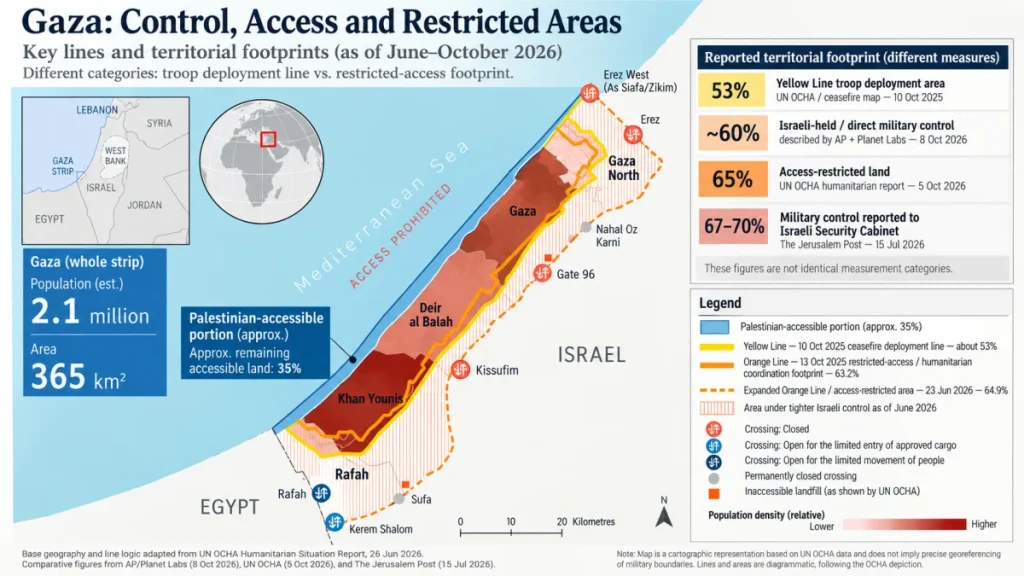
When Hamas began firing rockets into Israel, an action I view as both desperate and counterproductive, Israel’s response was swift and overwhelming. The statistics haunt me: by the ceasefire on May 21st, over 212 Palestinians had been killed in Gaza, including 61 children, while rocket fire killed 13 people in Israel. The disproportionality of these numbers reflects not just military capabilities but fundamental power imbalances.
The destruction of Gaza’s main COVID-19 testing laboratory during the airstrikes particularly exemplified the disregard for civilian infrastructure. The bombing of the building housing Associated Press and Al Jazeera offices, despite AP’s denial of any Hamas presence, raised serious questions about press freedom and the targeting of civilian structures.
The Criminalization of Solidarity
What particularly disturbed me was how the May violence exposed the fragility of coexistence within Israel itself. The unrest in “mixed cities” like Lod, the threats against Arab citizens who joined solidarity strikes, and the Ministry of Education’s request for lists of participating teachers revealed how quickly democratic norms can erode when dissent is viewed as disloyalty.
These actions reminded me that the struggle for Palestinian rights isn’t just about the occupied territories, it’s also about the rights of Palestinian citizens of Israel to express solidarity with their people without facing employment discrimination or state surveillance.
International Complicity Through Inaction
Perhaps what I find most frustrating is the international community’s consistent pattern of responding to crises with humanitarian aid while avoiding the political solutions necessary to prevent future violence. Egypt’s $500 million pledge for Gaza’s reconstruction, while needed, doesn’t address why Gaza requires repeated reconstruction. The U.S. claiming credit for brokering a ceasefire rings hollow when it continues to provide unconditional military support that enables the very actions it occasionally criticizes.
The growing recognition by human rights organizations such as B’Tselem and Human Rights Watch that Israel’s system constitutes apartheid represents a significant shift in discourse. Yet this recognition hasn’t translated into meaningful pressure for change.
Moving Beyond Cycles of Violence
As I reflect on 2021, I’m struck by how each violent episode is treated as an isolated incident rather than a predictable outcome of systematic oppression. The killing of an Israeli yeshiva student in May, the Hamas gunman’s attack in Jerusalem in November, the September prison break, these events cannot be understood outside the context of occupation, blockade, and denial of basic rights.
What would it mean to truly break these cycles? It would require acknowledging that security for Israelis cannot be achieved through the oppression of Palestinians. It would mean international actors moving beyond statements of concern to concrete pressure for ending the occupation. Most fundamentally, it would require centering Palestinian rights and dignity in any vision of a just future.
The events of 2021 reinforced my conviction that neutrality in the face of injustice is itself a form of complicity. Every demolished home, every family evicted, every child killed represents not just a tragedy but a policy choice, one enabled by international inaction.
As we move forward, I believe we must ask ourselves: How many more years of “brutal cycles” will we witness before acknowledging that the status quo is unsustainable? How many more lives will be lost to maintain a system that denies basic rights to millions? The answers to these questions will determine whether future years bring more of the same violence and despair, or whether we might finally see movement toward justice and genuine peace.
The path forward requires courage, courage to name injustice clearly, to challenge powerful interests, and to insist that Palestinian humanity is non-negotiable. Anything less condemns us to witnessing these same cycles of violence year after year, each time acting surprised by outcomes that were entirely predictable.