

AI Arbitration Clause Checklist for AI Contracts and Disputes
An AI arbitration clause does not need to be flashy. It needs to fit the contract. If the relationship could produce disputes over model access, training data, output quality, confidentiality, audit rights, privacy-sensitive information, or technical evidence, the clause should be reviewed with those realities in mind. This checklist is…
AAA-ICDR AI Guidance Explained: What Arbitrators Should Do
A practical explainer on the AAA-ICDR Guidance on Arbitrators’ Use of AI Tools, including accuracy, due process, independent judgment, disclosure, and confidentiality. AAA-ICDR’s March 2025 Guidance on Arbitrators’ Use of AI Tools is short, but it carries real weight. This explainer shows what the guidance says, what principles matter most,…

JAMS AI Rules Explained
A practical explainer on the JAMS Artificial Intelligence Disputes Clause and Rules, including scope, commencement, emergency relief, evidence handling, and why they matter. JAMS made AI arbitration more concrete when its Artificial Intelligence Disputes Clause and Rules became effective on June 14, 2024. This guide explains what those rules are,…

AI Dispute Resolution Glossary
A plain-English glossary of key AI dispute resolution terms, including arbitration, AI evidence, model licensing, training data, confidentiality, privilege, and procedural fairness. AI dispute resolution brings together technical language, legal language, and procedural language that often gets blurred in ordinary discussion. This glossary defines the key terms in plain…
AI Dispute Resolution FAQ
Answers to common questions about AI dispute resolution, including arbitration, clauses, evidence, confidentiality, AI tools, and California-related issues. What is AI dispute resolution? What counts as AI evidence? Can arbitrators use AI tools? Does arbitration protect confidentiality? This FAQ page gives short, practical answers to the questions businesses, lawyers,…

AI Confidentiality and Privilege in Disputes
A practical guide to confidentiality and privilege in AI disputes, including prompts, outputs, enterprise tools, arbitration process risks, and common misconceptions. Confidentiality and privilege are not the same thing, and AI has made the difference more important. This guide explains where businesses and counsel get exposed, how AI tools…
Can Arbitrators Use AI Tools? Ethics, Disclosure, and Limits
Yes, arbitrators can use AI tools in some circumstances. But that answer is too shallow to be useful. The real question is not whether AI can be used at all. It is whether the tool use supports the integrity of the proceeding or starts to weaken it. That distinction matters…
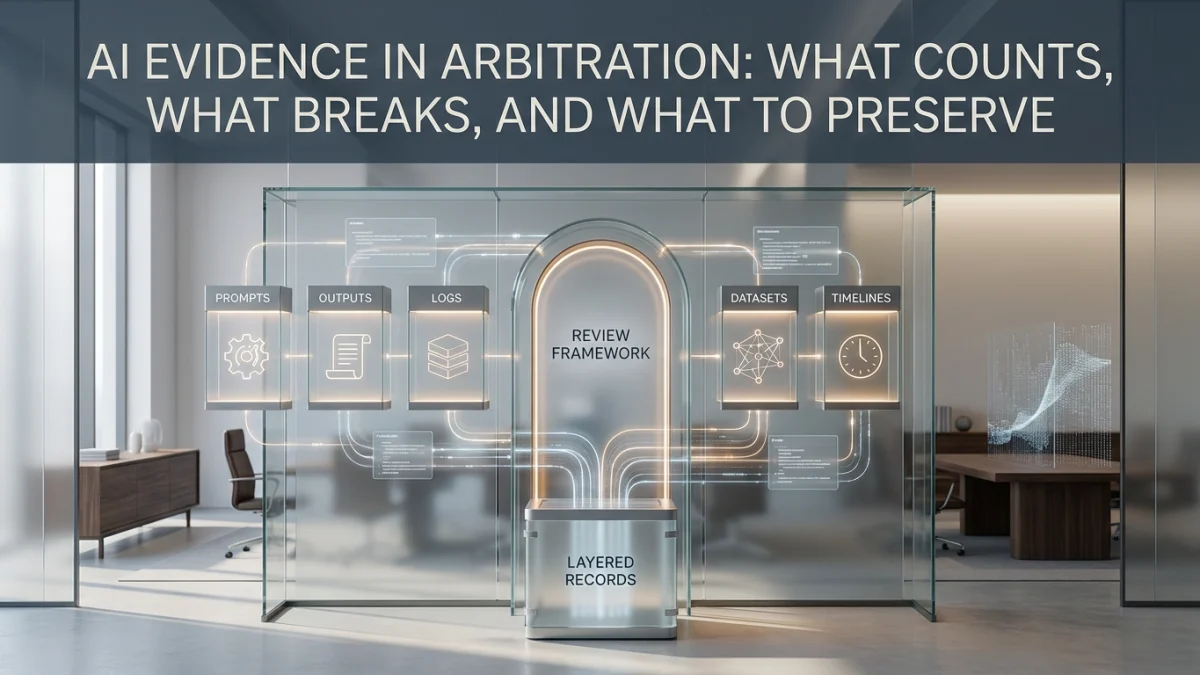
AI Evidence in Arbitration: What Counts, What Breaks, and What to Preserve
A practical guide to AI evidence in arbitration, including prompts, outputs, logs, datasets, preservation, authenticity, confidentiality, and common proof problems. Many AI disputes are really evidence disputes in disguise. The outcome may depend on prompts, outputs, logs, version history, evaluations, incident records, or data-governance documentation. This guide explains what counts…

AI Dispute Resolution: A Practical Guide for Businesses, Lawyers, and Arbitrators
A practical guide to AI dispute resolution, including arbitration, clauses, evidence, confidentiality, governance, and when AI disputes belong outside court. Artificial intelligence is creating new categories of disputes, from model licensing fights and training-data conflicts to confidentiality breakdowns, hallucination claims, and AI evidence problems. This guide explains what AI dispute…