Article type: Parent Action Guide and sensory-support guide
Scope: Autistic children and adolescents; adult overlap noted where relevant
Last updated: July 17, 2026
When the world is too much
Sensory overload can make an ordinary day look impossible.
A child covers their ears in a grocery store. Refuses a shirt that feels "wrong." Melts down when the blender turns on. Runs from a school assembly. Eats only foods with one texture. Falls apart after a birthday party that everyone else thought was fun. Holds it together all day and then collapses the moment they get home.
To a stranger, this can look like defiance.
To the child, it may feel like too much sound, light, touch, smell, movement, social demand, or internal body discomfort arriving all at once.
Autism often involves differences in how a person experiences and responds to sensory input. The CDC includes unusual reactions to sounds, smells, tastes, sights, or textures among examples of restricted or repetitive behaviors and interests related to autism. The NHS similarly notes that autistic children may react strongly, or not much at all, to lights, sounds, smells, tastes, and textures.
That does not mean every hard moment is sensory overload. It also does not mean every sensory preference is autism. But when sensory distress is real, the most useful question is not, "How do I make my child stop reacting?"
The better question is:
What is the child reacting to, and how can we make the environment, communication, and expectations more manageable?
During acute escalation, the practical distinctions in autism meltdowns versus tantrums can help adults prioritize safety and regulation over teaching in the moment.
Start with the environment, not the argument
If a child is already overloaded, reasoning usually comes too late.
In the middle of overload, the nervous system is not waiting for a lecture. A child may not be able to explain what hurts, what changed, or what they need. They may scream, bolt, freeze, hide, hit, drop to the floor, repeat phrases, refuse to move, or seem unreachable.
Start with the least dramatic, most practical steps.
- Reduce input. Lower noise, dim harsh light, move away from crowds, reduce talking, remove strong smells if possible, or leave the space.
- Reduce demand. Stop asking new questions. Pause corrections. Give fewer instructions. Switch from talking to pointing, writing, pictures, or one simple choice.
- Create safety. Block hazards, protect the child from injury, give space, and keep exits supervised if the child may run.
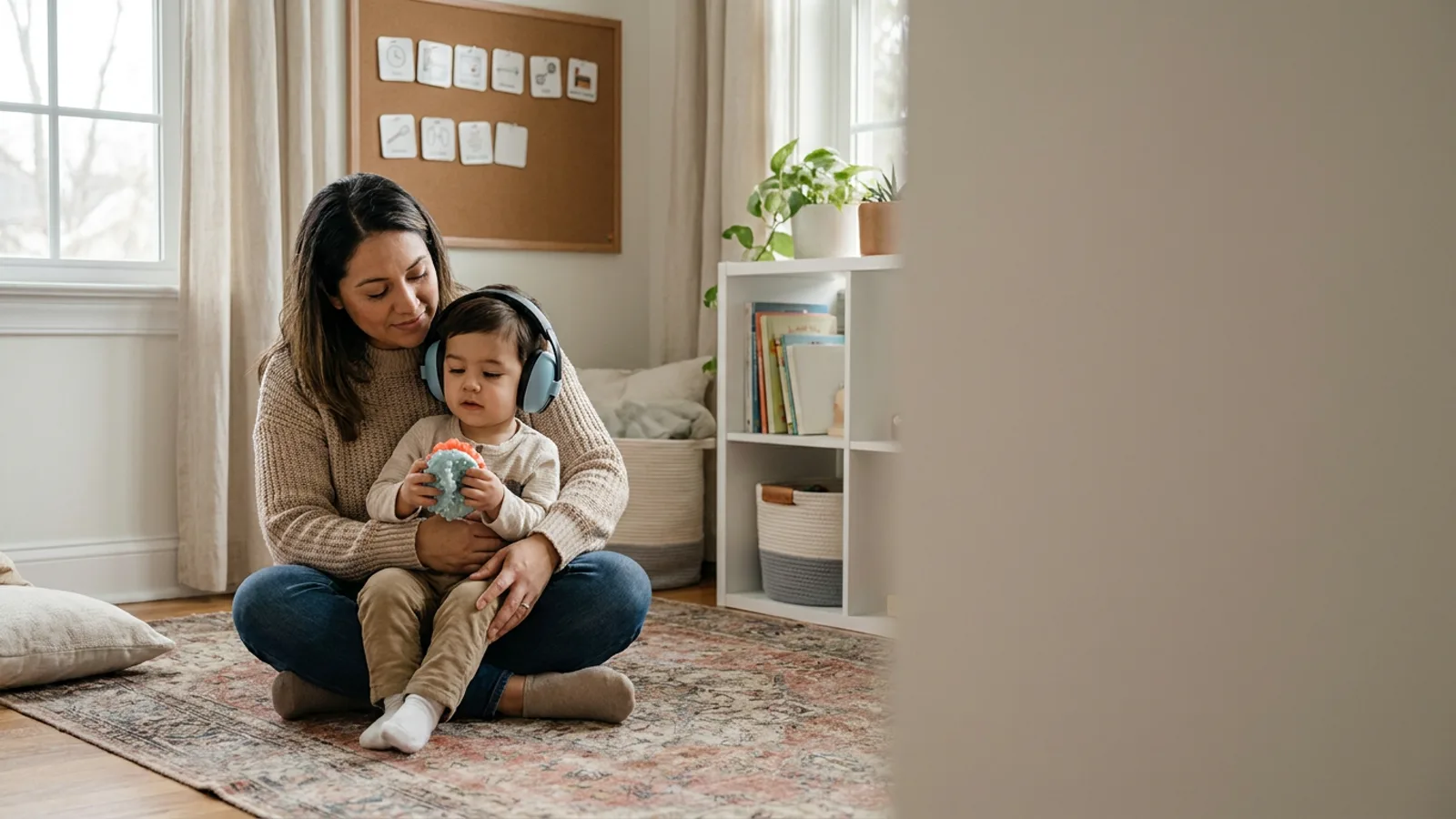
- Offer a known support. Headphones, sunglasses, a quiet corner, a familiar object, a chew, a movement break, deep pressure if the child likes it, or a safe place to sit can help.
- Do the teaching later. Once the child is calm, you can look for patterns and practice coping skills. During overload, the first job is lowering the load.
This is not "letting the child win." It is matching the support to the problem. If the room is painful, the solution is not better obedience. It is less pain.
Build a sensory profile before buying products
Parents are often sold sensory products before anyone helps them understand the sensory pattern.
Some products are useful. Some are harmless but unnecessary. Some are expensive guesses. A sensory profile is more valuable than a shopping list because it tells you what actually causes distress, what helps recovery, and what settings create the worst mismatch.
For one or two weeks, track the moments that seem sensory-related. Keep it simple.
- What happened right before the reaction?
- Where were you?
- What sounds, lights, smells, textures, temperatures, crowds, or movements were present?
- Was the child hungry, constipated, tired, sick, anxious, rushed, or in pain?
- Did the child try to escape, seek input, hide, become rigid, become silly, freeze, or melt down?
- What helped?
- What made it worse?
- Did the reaction happen immediately, or did the child crash later at home?
The goal is not to prove that everything is sensory. The goal is to stop guessing.
Sound
Sound overload may look like covering ears, yelling, bolting, hiding, irritability, panic, or refusal to enter a place. Common triggers include hand dryers, vacuums, blenders, school bells, cafeterias, assemblies, fire drills, birthday parties, sirens, barking dogs, overlapping voices, or music in stores.
Helpful accommodations may include noise-reducing headphones, warning before loud sounds, quiet seating, leaving before the noisiest part of an event, replacing hand dryers with paper towels, or using a written plan for fire drills.
Be careful not to use headphones as the only solution. They may help, but the child may also need quieter spaces, fewer overlapping demands, and adults who understand that noise can be painful or disorganizing.
Light and visual clutter
Bright lights, flicker, glare, crowded walls, busy stores, flashing screens, and visually cluttered classrooms can wear a child down. Signs may include squinting, looking away, headaches, agitation, zoning out, hiding under furniture, or avoiding certain rooms.
Helpful changes may include natural light, lamps instead of harsh overhead lights, sunglasses or a hat, calmer seating, less clutter near the child's work area, and breaks from visually busy places.
Clothing and touch
Touch distress can make daily care feel like a battle. Seams, tags, socks, waistbands, hair brushing, nail clipping, toothbrushing, sunscreen, water temperature, hugs, food textures, or someone bumping into the child can trigger strong reactions.
Useful supports may include tagless clothing, softer fabrics, washing new clothes before wearing, letting the child choose between two tolerable outfits, experimenting with sock types, using a predictable grooming routine, and avoiding surprise touch.
Consent matters here. A child who hates unexpected touch may still enjoy firm pressure, weighted items, or hugs when they are offered in the right way. Ask, show, wait, and respect "no" whenever safety allows.
Smell and taste
Smells can be invisible to adults and overwhelming to the child. Cleaning products, perfume, cafeteria food, car air fresheners, soap, toothpaste, sunscreen, scented markers, candles, and cooking smells can affect eating, school participation, appointments, and family visits.
Taste and texture issues can also overlap with feeding difficulties. A child may avoid mixed textures, mushy foods, crunchy foods, sauces, certain temperatures, or foods touching each other. If food restriction is severe, growth, nutrition, choking, gagging, vomiting, constipation, or anxiety around eating should be discussed with a qualified clinician or feeding specialist.
Movement and body position
Some children avoid movement. Others seek it constantly. A movement-seeking child may jump, spin, crash, pace, climb, rock, swing, run, or push against furniture. That does not automatically mean they are "hyper" or trying to be difficult. Their body may be trying to get input that helps them feel organized.
Helpful supports may include planned movement breaks, heavy work such as carrying light groceries or pushing a laundry basket, safe jumping, wall push-ups, playground time, or seating options that allow small movement without disrupting everyone else.
Movement supports should be safe, supervised, and matched to the child. If a child falls often, seems dizzy, has unusual weakness, has seizures, or is injured during movement-seeking, ask a clinician or therapist for guidance.
Internal body signals
Some autistic children have trouble noticing or describing hunger, thirst, pain, needing the bathroom, temperature, nausea, fatigue, or emotional escalation. This is sometimes discussed as interoception, meaning the sense of what is happening inside the body.
A child who seems "suddenly" overwhelmed may actually be hungry, constipated, overheated, exhausted, in pain, or unable to tell anyone they need the toilet.
Before assuming behavior is the problem, check the body.
Make accommodations normal, not a reward
A sensory accommodation is not a prize for being good. It is a support that helps the child access the day.
Glasses are not a reward for reading nicely. A wheelchair ramp is not a reward for trying hard. In the same way, headphones, quiet space, visual instructions, movement breaks, or flexible clothing should not be treated as special treats the child must earn by suffering first.
That does not mean every request can be met instantly. Families and schools have real constraints. But the adult posture matters.
Try:
- "The cafeteria is too loud today. Let's use the quieter seat."
- "You can wear the headphones before the assembly starts."
- "We are going to the store. Here is the plan, and here is where we can take a break."
- "You do not have to hug. You can wave, fist bump, or say hello."
- "This shirt is not working. Choose the blue one or the gray one."
Avoid:
- "You are fine."
- "Everyone else can handle it."
- "Stop being dramatic."
- "You can have headphones if you behave."
- "You need to get used to it."
- "I paid for this party, so you are going to enjoy it."
Some children can build tolerance slowly with skilled support. That is different from flooding them with distress and calling it exposure.
For turning sensory observations into written educational access needs, see autism IEPs, 504 plans, and classroom accommodations.
Practical supports by setting
The best accommodation is often boring. It makes the environment clearer, calmer, more predictable, or easier to leave.
Home
At home, focus on repeatable routines and low-friction sensory choices.
- Keep a quiet recovery spot that is not used as punishment.
- Let the child use safe stims unless they are harmful.
- Build sensory breaks into the day, not only after a meltdown.
- Offer clothing options that meet basic needs without turning every morning into a fight.
- Reduce unnecessary background noise when possible.
- Give warning before loud chores such as vacuuming or blending.
- Make grooming predictable: same place, same steps, same words, same finish.
- Watch for after-school collapse. A child may need decompression before homework, chores, questions, or social demands.
School
School is often where sensory needs become misunderstood because the child is expected to learn, communicate, transition, sit, eat, socialize, and tolerate noise at the same time.
Useful school accommodations may include:
- quiet lunch option or quieter cafeteria seating;
- headphones during assemblies, fire drills, music, or independent work;
- warning before schedule changes;
- visual schedule or written checklist;
- movement breaks built into the day;
- seating away from doors, pencil sharpeners, speakers, or high-traffic areas;
- alternative to hand dryers;
- access to a calm space before escalation;
- reduced visual clutter around work area;
- permission to use a fidget or sensory item if it helps attention;
- flexible uniform or clothing plan when possible;
- transition support between activities;
- sensory-aware plan for field trips, substitute teachers, assemblies, and testing days.
The key is to connect each accommodation to a need. "Headphones as needed" is vague. "Noise-reducing headphones during cafeteria, assemblies, fire drills, and independent work when classroom noise is high" is more useful.
Stores, appointments, and public places
Public places combine sensory input with time pressure. Plan for the exit before you need it.
- Go at quieter times when possible.
- Keep trips short and specific.
- Use pickup or delivery when the goal is groceries, not sensory practice.
- Bring headphones, sunglasses, snacks, water, communication supports, and a preferred calming item.
- Show the child where you are going, what comes first, and how the trip ends.
- Avoid adding extra stops after the child has already done the hard part.
- For medical or dental appointments, ask ahead about waiting in the car, using a quieter room, dimming lights, avoiding strong smells, or scheduling the first appointment of the day.
Success may mean leaving before everything falls apart. That is not failure. That is reading the nervous system in time.
Family events
Relatives may interpret sensory accommodations as rudeness, overprotectiveness, or special treatment. Prepare the adults, not just the child.
You can say:
- "Loud rooms are hard for him, so we are bringing headphones."
- "She may need breaks. If she leaves the room, she is not being rude."
- "He does not have to hug. Please offer a wave or high five."
- "We may leave early so the day stays successful."
- "Please do not pressure her to eat unfamiliar foods. We brought safe food."
Family support improves when expectations are concrete. "Please be understanding" is less useful than "Please do not touch him without asking."
Do not confuse coping with comfort
Some autistic children look fine until they are not.
They may hold still, comply, smile, answer politely, or stay quiet in a setting that is costing them a lot. Then they fall apart at home, refuse school the next morning, cannot sleep, or become more rigid and reactive for days.
That delayed crash matters.
If a child survives an event but needs hours or days to recover, the event may still be too demanding. A good plan does not ask only, "Did they get through it?" It asks, "What did it cost?"
This is especially important for verbally fluent children, girls who mask, children who are praised for being "so good" at school, and children whose distress shows up later as shutdowns, headaches, stomachaches, aggression, avoidance, or exhaustion.
What to avoid
Forcing eye contact, touch, or participation
If a child is already overloaded, forced eye contact, forced greetings, forced hugging, or forced group participation can add more demand. Teach social options, not compliance at any cost.
Removing stimming only because it looks unusual
Stimming can be calming, expressive, or regulating. If it is safe, let it be. If it is harmful, replace it with a safer option instead of simply banning it.
Buying every sensory product
A weighted blanket, sensory swing, chew, fidget, compression clothing, or special light may help some children. None of them is a universal autism solution. Use the sensory profile first, and involve an occupational therapist when the needs are complex or safety matters.
Treating avoidance as laziness
Avoidance can be communication. A child refusing the cafeteria may be avoiding sound. A child refusing shoes may be avoiding pain. A child refusing school may be avoiding a combination of noise, social confusion, transitions, unpredictable adults, and exhaustion.
Ask what the refusal is protecting them from.
Waiting for the meltdown before offering support
If adults only offer help after a child escalates, the child learns that escalation is the reliable way to get relief. Offer breaks, warnings, choices, and sensory tools earlier.
If ordinary demands reliably produce panic, freezing, shutdown, or escalation, the guide to PDA and extreme demand avoidance explains both the uncertainty around the label and low-risk ways to reduce threat and friction.
When to ask for more help
Ask for professional support if sensory issues are interfering with eating, sleep, school attendance, hygiene, medical care, safety, communication, or family life.
Start with the pediatrician, developmental clinician, school team, or occupational therapist depending on the problem.
Get medical input sooner if you notice:
- sudden new sensory distress;
- loss of skills or major regression;
- new severe food restriction, weight loss, dehydration, choking, vomiting, or constipation;
- self-injury, aggression, or unsafe bolting;
- suspected pain, headaches, ear problems, vision problems, dental pain, reflux, allergies, seizures, or sleep apnea;
- severe anxiety, panic, depression, or school refusal;
- sensory distress that is making basic care impossible.
Sensory supports should never be used to ignore medical problems. A child who cannot tolerate toothbrushing may have sensory sensitivity, dental pain, motor difficulty, anxiety, or all of those at once.
What to ask an occupational therapist or school team
Bring examples, not just labels.
Useful questions include:
- What sensory patterns do you see across sound, light, touch, smell, taste, movement, and body awareness?
- Which supports should be available before overload starts?
- What accommodations should be written into the school plan?
- How can we tell sensory distress from anxiety, avoidance, pain, or communication frustration?
- Which sensory tools are safe for this child's age, body, and abilities?
- What should we stop doing because it is increasing distress?
- How can we teach the child to request a break, quieter space, movement, pressure, or help?
- What is the plan for fire drills, assemblies, cafeterias, buses, field trips, and substitute teachers?
- How will we measure whether the accommodation is helping?
The best plan should be specific enough that a new adult can follow it.
A simple accommodation plan you can write down
Use this format for home, school, therapy, or relatives.
What tends to overload my child
List the biggest triggers: loud overlapping voices, hand dryers, fluorescent lights, scratchy clothing, food smells, crowded rooms, unexpected touch, transitions, heat, or waiting.
Early signs
List what happens before the big reaction: covering ears, pacing, asking to leave, becoming silly, repeating phrases, clinging, hiding, arguing, going quiet, or scanning for exits.
What helps early
List supports that work before overload peaks: headphones, quiet place, written instructions, movement break, dimmer light, fewer words, snack, water, bathroom, visual timer, safe object, or leaving.
What makes it worse
List predictable mistakes: too much talking, blocking escape, surprise touch, public correction, teasing, taking away the sensory tool, adding demands, or insisting they explain themselves while overloaded.
What to do after
List recovery needs: quiet time, no lecture, hydration, simple food, repair conversation later, sleep, or a shorter plan next time.
This is not a perfect plan. It is a starting map.
The aim is access, not perfection
Sensory accommodations are not about making every environment silent, soft, dim, predictable, and easy. Life cannot be engineered that neatly.
The aim is access.
Can the child learn? Eat? Sleep? Visit the doctor? Attend school? Join family life? Go to the store sometimes? Recover after hard moments? Communicate distress before it becomes a crisis?
For some children, the answer improves with small changes. For others, the support needs are more substantial and must be written into school plans, therapy goals, medical care, and family routines.
Either way, the principle is the same:
A child should not have to prove distress by falling apart.
When adults learn the sensory pattern early, support can arrive before the nervous system has to shout.
References and further reading
Autism and sensory differences
- CDC: Signs and Symptoms of Autism Spectrum Disorder. CDC overview noting social communication differences, restricted or repetitive behaviors, and unusual reactions to sound, smell, taste, appearance, or feel.
- NHS: Supporting an autistic child. Practical guidance on making surroundings more comfortable, managing light and noise, maintaining routines, planning for triggers, and supporting school participation.
- NHS: Signs of autism in children. Includes sensory examples such as strong reactions to lights, sounds, smells, tastes, textures, clothing, and food textures.
Accommodations and support planning
- NHS inform: Supporting an autistic person. Describes sensory, communication, and routine adjustments such as quiet spaces, headphones, clear language, visual communication, and advance warning of changes.
- NICE Guideline CG170: Autism spectrum disorder in under 19s: support and management. Clinical guideline covering support and management for autistic children and young people.
- Chelsea and Westminster Hospital NHS Foundation Trust: Sensory processing difficulties. Practical examples of tracking triggers and adapting sound, light, safe spaces, and sensory input.
- NHS England: Sensory-friendly resource pack. Resource on sensory-friendly healthcare environments and why sensory adjustments matter.
Editorial notes
This article is educational and does not diagnose sensory processing differences, prescribe occupational therapy, or replace individualized medical, therapy, or school guidance. If sensory distress is sudden, severe, unsafe, or connected to eating, sleep, pain, regression, school refusal, self-injury, aggression, or medical care avoidance, parents should seek qualified professional support.