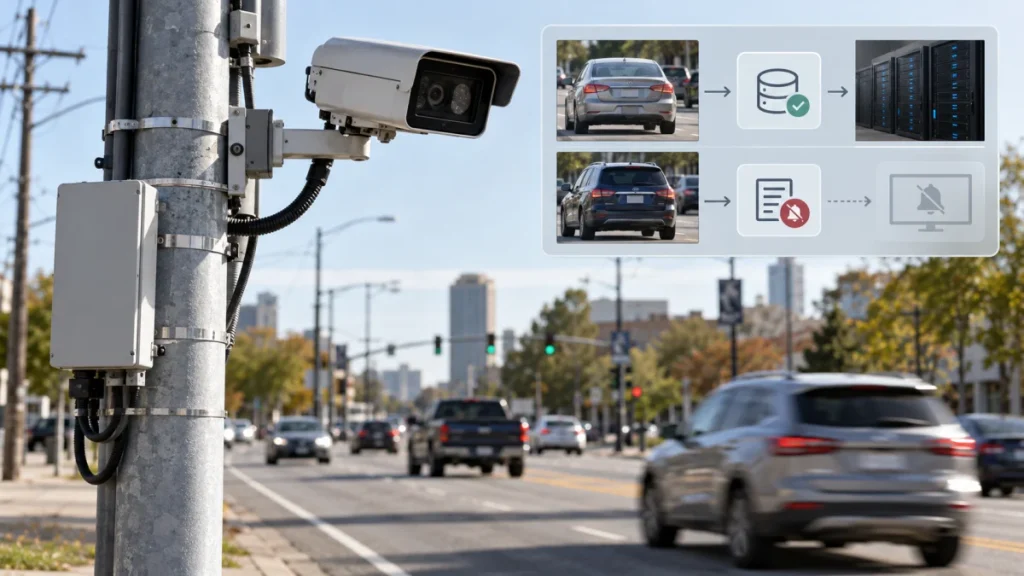
The October 21–23 reports do not establish one California-wide 911 outage or a coordinated attack. They describe several different failures: Oakland’s local telephone, internet and dispatch systems were disrupted after copper and fiber lines were reported cut; Gilroy and Morgan Hill lost police non-emergency lines; some AT&T and T-Mobile customers in Santa Barbara had trouble reaching 911; portions of Riverside County reported cellular 911 access problems; and a separate provider notice warned of possible VoIP 911 routing impacts at named dispatch centers.
Oakland’s 911 calls were transferred to Alameda County while dispatchers worked from county and fire facilities. Police Chief James Beere said two initial fallback arrangements were compromised, but public reports do not identify them or explain how they failed. Oakland reported its normal telephone service restored at about 8:30 a.m. Friday, October 23. That is roughly 36 hours after the first reported disruption to city operations, not proof that every caller was unable to reach emergency help for 36 hours.
Some other affected services were reported restored on October 22. No public source reviewed by October 24 establishes a shared route, provider, cut, suspect, or motive connecting the incidents. The evidence supports a serious Oakland service failure and several separate California disruptions. It does not show that they were one operation.
What happened in each reported location
The term “911 outage” covers different points in an emergency call. A local dispatch center can lose its phone or dispatch systems even when a caller’s wireless carrier is working. A customer’s carrier can have trouble delivering 911 to an otherwise operating center. A provider can report a potential routing impact without confirming a full outage at every center named. A non-emergency police line is a different service from 911.
| Place or notice | Service affected | Reported cause and contingency | Status in the records reviewed |
|---|---|---|---|
| Oakland | City police phone lines, internet and computer-aided dispatch (CAD) were reported down. AT&T said some calls went to an incorrect location. | Police and AT&T reported cut copper and fiber. The city transferred 911 calls to the Alameda County Sheriff’s Office and relocated Oakland dispatchers to county and fire facilities. The police chief said two earlier fallbacks were compromised. | City reported all telephone service restored about 8:30 a.m. Oct. 23. The public record does not show how many calls were lost, misrouted or delayed. |
| Gilroy | Police non-emergency line. | Police reporting attributed the outage to a cut fiber line (CBS); the city alert provided temporary non-emergency numbers and told residents to use 911 for emergencies. | No dated restoration confirmation for this specific line was located in the records checked. Its current status should not be inferred from the old alert. |
| Morgan Hill | Police non-emergency lines. | Police reporting attributed the outage to a copper cable cut affecting Verizon. The department said its 911 emergency lines remained operational. | No dated restoration confirmation for this non-emergency line was located in the records checked. |
| Santa Barbara city | Some AT&T and T-Mobile customers were warned they might have difficulty reaching 911. The city said text-to-911 was not affected at that time. | The city notice did not identify a physical cause. | The city said service was restored on Oct. 22. The notice concerned the city and named carriers. |
| Santa Barbara County status page | The county’s public status page displayed a countywide 911 outage/restoration notice. | The version reviewed did not expose a clear dated timeline or cause. It cannot establish whether the notice described the same event as the city’s carrier-specific alert or a separate incident. | The page indicated restoration but did not provide a date that could be independently matched to the city notice. |
| Portions of Riverside County | Some cellular users in places including Indio, Palm Springs and Cathedral City reported trouble reaching 911. Local reporting also described wireless issues in Desert Hot Springs while its police department said its 911 system remained operational. | The contemporaneous reports did not identify a cause. Agencies issued alternate contact guidance while the issue was active. | A county alert reported service operational by about 5 p.m. Oct. 22. Indio police said its emergency lines returned at 4:11 p.m. |
| RedSky/Sinch notice TT #1092756 | Potential VoIP 911 impact in the provider’s network or systems. The notice named 15 potentially affected PSAPs, not 15 confirmed total outages. | RedSky first described calls going to the National Emergency Call Relay Center, then said calls were delivered to each center’s 10-digit 24-hour emergency line. The provider later identified a fiber cut. | The notice was marked resolved on Oct. 23. It said service was operating normally when posted, but did not give the exact restoration time. |
| RedSky/Sinch notice TT #1092980 | Potential VoIP 911 impact at Indio and Palm Springs. | RedSky identified a fiber cut and listed direct 10-digit emergency lines as the workaround. | A resolved notice was posted the evening of Oct. 22. Its internal “restored at” date is malformed, so that timestamp cannot be relied on. The notice does not establish whether it was the same incident as the mobile-carrier reports. |
The 15 locations listed in TT #1092756 were CSU San Bernardino Police Department; the Los Angeles County Sheriff’s Department stations in Lakewood, Norwalk and San Dimas; Long Beach Police Department; Montclair Police Department; Newport Beach Police Department; San Bernardino County Sheriff’s Rialto/Valley service; San Bernardino Police Department; Santa Maria Police Department; Pomona Police Department; and the Banning, Beaumont, Hemet and Murrieta police departments. RedSky’s wording was “potential impact” to Sinch VoIP 911 service. The list is not evidence that each center lost all 911 capacity.
Oakland’s timeline and the limits of the impact record
Oakland’s dispatchers noticed a frozen CAD system at about 8:30 p.m. Wednesday, October 21. They then found the police department’s phone lines and internet unavailable as well. Around 9:45 p.m., the city transferred 911 calls to the Alameda County Sheriff’s Office. The county answered calls, while Oakland dispatchers relocated to the Sheriff’s Office and the Oakland Fire Department.
On Thursday, the city said CAD and internet service had returned, while phone service remained impaired. Oakland police limited responses to Priority 1 calls because of reduced capacity. Fire dispatch continued handling fire and medical calls. The city reported all telephone service to city systems was back online at about 8:30 a.m. Friday after city and AT&T crews worked overnight. The city also said it would work with AT&T to harden infrastructure and strengthen backup systems.
That sequence describes disrupted normal operations and a practical contingency: calls were routed through the county, and dispatchers moved to other facilities. It does not establish the outcome of every emergency call. AT&T told NBC Bay Area that calls were going through but some were going to an incorrect location. An Alameda County sergeant told KTVU that no delays had been reported at that point. Neither statement is a complete call audit. The records reviewed do not include a total number of calls, misroutes, abandoned calls, response delays, or casualties. No public dataset was found that would support a claim that there were none.
What the cable damage proves, and what it does not
Oakland police and AT&T said both copper and fiber lines were cut. AT&T supplied photographs of damaged lines to local news outlets. Police investigated the damage as a possible criminal act, and AT&T attributed it to theft and vandalism. Those reports support the existence of physical cable damage. They do not identify who cut the lines, establish a final motive, or show that the person intended to interrupt 911.
Copper theft with collateral fiber damage is one plausible explanation. AT&T says thieves sometimes mistake fiber for copper or cut fiber located near copper lines. That describes a possible mechanism in general, not proof of what happened in Oakland. The company reported more than 10,400 copper-theft incidents nationwide in 2025, including 4,300 in California. These are AT&T’s own company-reported counts; the post does not provide an audited method or denominator. The figures show what the company says it experienced, not how many events affected 911 or whether the California outages were related.
Other explanations remain open. Damage at different sites could have been unrelated. Separate carrier or VoIP routing failures could have coincided with local cable damage. Some incidents might have involved shared infrastructure, but public reports do not show which routes or facilities were shared. A coordinated attempt to disrupt 911 is possible as a hypothesis, but no public investigative finding reviewed here ties the locations, cuts, carriers, or actors together.
The careful answer is not that the incidents were definitely unrelated. It is that the public evidence does not establish that they were connected. Same-day timing, multiple reports of damaged cable, and AT&T’s broader theft statistics cannot substitute for a shared physical route, matching forensic evidence, an investigative finding, or other direct link.
Why backup paths matter
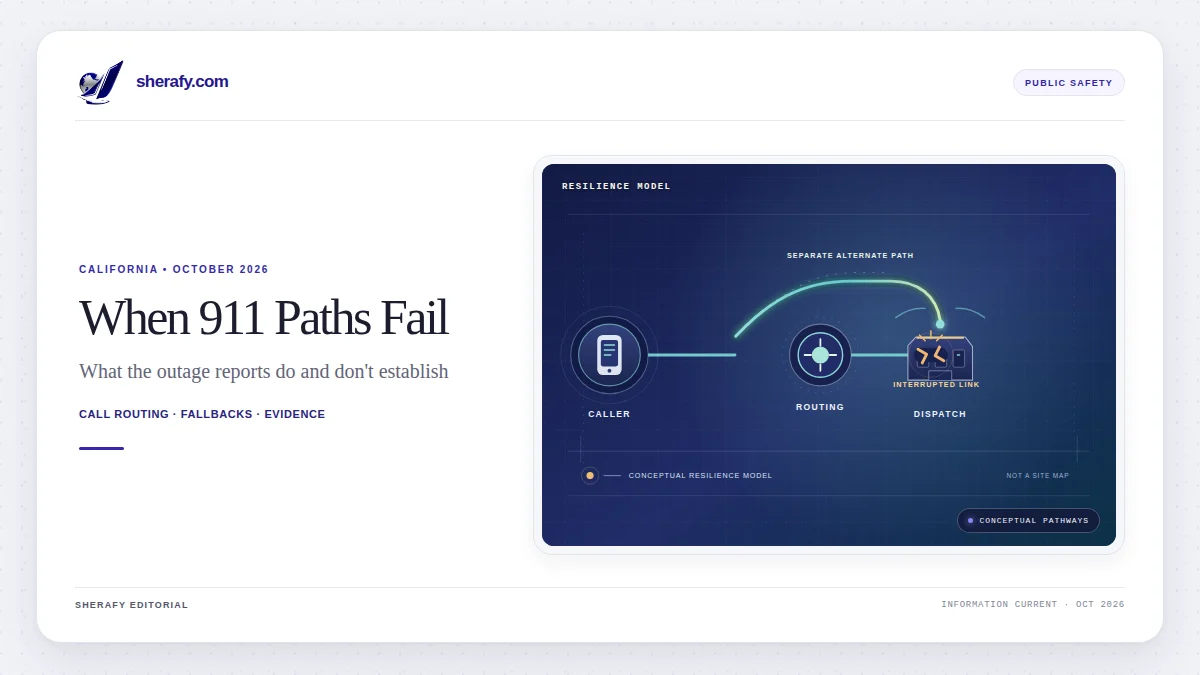
A 911 call can travel through a caller’s wireless or wireline provider, call-routing and location services, and then to a public safety answering point, or PSAP. At the PSAP, a call taker speaks with the caller and records information. A computer-aided dispatch system helps staff organize incidents and assign responders. These are related systems, but they perform different jobs. A CAD failure does not automatically mean a phone call cannot reach 911; a carrier routing problem can affect callers even when a dispatch center is operating.
Oakland reported problems at more than one layer: telephone lines, internet and CAD. Public reporting does not provide a network diagram or incident report that explains precisely how each symptom arose. The known workaround was operational as well as technical: county staff answered calls, Oakland dispatchers relocated, and information was relayed to fire dispatch.
Two systems can be logically separate while relying on the same physical route or equipment. If primary and backup connections share a cable, conduit, switching facility, power source or other point of failure, one event can affect both. The FCC’s current definition of physically diverse 911 paths says a shared physical segment, including the same fiber-optic cable, is not diverse even when circuits are logically distinct.
That principle helps explain why the two compromised Oakland fallbacks deserve scrutiny. It does not tell us what those systems were. The public record does not say whether they shared a provider, building, cable route, power, routing software, or any other dependency. The fact that both were compromised makes an after-action review important; it does not by itself identify a design defect or prove that the two arrangements were not physically diverse.
The Alameda County transfer and dispatcher relocation show that a contingency was activated. They do not establish how quickly every call was answered or whether there were errors. To assess the system, the city and its providers would need to disclose the failed components, how each fallback was affected, how call routing changed, and the call disposition and dispatch records. The Alameda County Sheriff’s Office is a county agency distinct from Oakland’s city police; our guide to how police and sheriff jurisdictions differ explains that distinction.
Do the separate reports point to one cause?
The reports differ in location, service, provider, timing and workaround:
- Oakland described a local dispatch-center disruption after cuts to both copper and fiber.
- Gilroy and Morgan Hill reported non-emergency police line failures. Morgan Hill said its 911 lines remained operational.
- Santa Barbara city warned that some customers of two mobile carriers might have difficulty reaching 911, then reported restoration.
- Riverside County communities reported mobile users having trouble reaching 911, with restoration reported later that day.
- RedSky described potential impacts to Sinch VoIP 911 routing at named PSAPs and listed fiber cuts in two incident notices.
These reports can overlap in time and geography without being the same failure. A carrier’s wireless connection to a local PSAP, a provider’s VoIP call-positioning service, and a PSAP’s own telephone/CAD systems sit at different points in the call path. The RedSky notice involving Indio and Palm Springs overlaps with Riverside County’s mobile-service reports in place and time, and it also names a fiber cut. But the notices identify different service layers and do not say the same cut caused both reports. No source reviewed connects the RedSky notices to Santa Barbara’s carrier alert or Oakland’s damaged lines.
The strongest support for a common physical explanation is that several incidents involved reported cable damage or fiber cuts. The strongest limit is that the available accounts do not identify a common route, network owner, repair location, forensic signature or responsible person. Different reported providers and workarounds also fit separate incidents. The coordination hypothesis therefore remains unproven, while the possibility of hidden shared infrastructure or a common actor cannot be ruled out from the public information alone.
Records that could change the conclusion include carrier and provider route diagrams, repair tickets, exact cut locations, RedSky/Sinch impact logs, Oakland call-routing logs, PSAP call and dispatch records, and an official investigative update. A finding of matching routes or forensic evidence would strengthen the connection theory. Evidence that each site used independent providers and separate facilities would weaken it.
Earlier failures, rules and California’s transition
Oakland had a different 911 communications failure in July 2023 after a power outage. Local reporting said the event affected phone and dispatch systems and described backup-power problems; some technical details came from unnamed sources or the police union. A 2025 City Auditor report also found that 54% of Oakland 911 calls in 2024 were answered within 15 seconds, below the city’s 90% target. These are relevant records of earlier operational pressure. They do not explain the October 2026 cable damage or establish what happened to callers during this outage.
The FCC’s 911 reliability rules apply to defined categories of providers and facilities involved in routing or delivering 911 traffic. Section 9.19 defines physical diversity, requires covered providers to take reasonable measures regarding reliability, and describes benchmarks for diverse paths, operational integrity and monitoring. The 2026 rule became effective August 10, but the updated detailed benchmarks and some newly covered provider categories have staged compliance dates tied to later Commission notices. The older reasonable-measures requirements remain for providers in the earlier covered categories. It would be wrong to say no reliability duty applied, and it would also be premature to say the Oakland outage proves an FCC violation. The public record reviewed does not establish the exact provider role, facility, applicable compliance date, topology or required evidence for a violation finding.
California’s Public Utilities Commission describes resilience strategies for facilities-based providers with facilities in designated Tier 2 and Tier 3 High Fire-Threat Districts. Those strategies include redundant networks and backup power, but they are not a blanket technical finding about every California 911 route. The CPUC says Cal OES’s public outage dashboard displays active and restored outages from the past 24 hours. That rolling window does not provide a lasting incident record for an October 22 event checked on October 24.
California was also partway through its Next Generation 911 transition. Cal OES’s September update described 23 dispatch centers moved to an interim statewide NG911 system and additional wireless traffic from major carriers being routed at Kern County and Bakersfield centers. The update does not list Oakland as a transitioned center. Internet Protocol-based NG911 can give networks more options for routing calls and data, as the FCC’s NG911 order explains, but it still depends on reliable physical paths, equipment and operating plans. Modernization alone does not prove a specific center could have avoided these failures.
What residents should do during a 911 disruption
For an emergency, try 911 first. If the call does not connect, follow the current instructions from the local police, fire, county or emergency management agency. Use an alternate emergency number only if the agency has announced it for the current outage. Temporary numbers in the October alerts may no longer work or may no longer be the right route after restoration.
If voice calling is not possible, text-to-911 may help where the local center and carrier support it. Federal 911.gov guidance says voice remains the preferred way to reach 911 when available and advises texting if a caller cannot call. Do not call 911 just to test the system. Local test calls should be arranged through the 911 center’s non-emergency number.
What investigators and agencies still need to explain
For Oakland, the key unanswered question is what “two fallback systems” meant in practical terms. The public needs a post-incident account of which services failed, what dependencies they shared, how calls were transferred, how many calls were misrouted or abandoned, and what dispatch and response records show. The city’s stated plan to harden infrastructure and backup systems is a commitment, not a technical explanation of the failure.
Across California, the necessary next step is to compare actual route and repair records rather than headlines. Public evidence would need to identify whether the same carrier facilities, fiber segments, contractors, or physical sites were involved. Investigators would also need to distinguish copper theft with collateral damage from deliberate service interruption and state what evidence supports the distinction.
Until those records emerge, the most defensible conclusion is specific: Oakland’s emergency communications systems experienced a serious, cable-related disruption and used county and fire dispatch contingencies; other California notices covered a mixture of customer carrier access, potential VoIP routing, and non-emergency police phone lines. The reports raised a legitimate resilience question, but they did not establish one statewide failure or coordinated attack.
Information current as of October 24, 2026.
References and Further Reading
Oakland and Bay Area incident records
- CBS San Francisco: Oakland 911 system restored after cut copper and fiber. Reports the restoration time, city systems affected, call transfer, dispatcher relocation, and statements from Oakland and AT&T.
- CBS San Francisco: Oakland, Gilroy and Morgan Hill service disruptions. Contemporaneous account of the 9:45 p.m. county transfer and non-emergency line reports.
- KTVU: Oakland fallback arrangements and call response. Reports the chief’s statement about two compromised fallbacks, Priority 1 response limits, and the county’s time-limited no-delay statement.
- NBC Bay Area: Oakland calls and restoration. Reports AT&T’s statement that some calls were routed to a wrong location.
- Gilroy Police Department Nixle alert. Original non-emergency line notice; it directs callers with emergencies to 911.
Other California status notices
- City of Santa Barbara: Original AT&T and T-Mobile 911 notice. The city’s dated notice describes carrier-specific access difficulty and text-to-911 status.
- City of Santa Barbara: Restoration update. Confirms city restoration on Oct. 22.
- Santa Barbara County 911 status page. County status page; the version reviewed did not expose a dated incident chronology.
- KESQ: Riverside County 911 restoration. Reports local times and restoration based on police and county updates.
- RedSky incident TT #1092756. Provider notices describe a potential Sinch VoIP 911 impact, changing workarounds, a fiber-cut cause and a list of 15 potentially affected PSAPs.
- RedSky incident TT #1092980. Provider notice for potential Indio and Palm Springs VoIP impact; the internal restoration date is malformed.
Systems, rules and public guidance
- FCC, 47 CFR § 9.19. Current regulatory text on covered provider categories, physical diversity and phased compliance.
- FCC, 2026 Second Report and Order summary. Official Federal Register summary of new NG911 reliability and interoperability rules and their compliance phase-in.
- FCC, implementation dates for the 2026 rules. Bureau notice explaining which earlier reliability requirements remain and how new deadlines will be announced.
- FCC, Facilitating Implementation of Next Generation 911 Services (2024). Explains how IP-based NG911 can support flexible routing; it is general technical context, not an account of Oakland’s network.
- California Public Utilities Commission: Communications Network Resiliency. Describes the scope of California’s resilience strategies and the 24-hour Cal OES outage dashboard.
- Cal OES: Next Generation 911 monthly updates. September 2026 status update on California’s partial statewide transition.
- 911.gov: Calling 911 FAQ. Federal guidance on voice calls, text-to-911 availability and scheduling test calls.
Historical and interested-party context
- Oakland City Auditor: 2025 Emergency Response Times Audit. Pre-incident context for Oakland call-answer performance and dispatch operations.
- KTVU: Oakland 911 communications failure in July 2023. Reports a prior power-related incident; some backup details rely on an unnamed source.
- AT&T: Copper theft figures for 2025. Interested-party statistics and general claims about copper theft; not evidence of the 2026 Oakland motive or a link among incidents.
- AT&T: Copper theft and fiber damage FAQ. AT&T’s description of collateral fiber damage as a possible mechanism.
- Sherafy: Police vs. Sheriff vs. State Trooper vs. FBI vs. U.S. Marshals. Internal contextual link explaining the general city/county agency distinction; it is not evidence about the incident.