
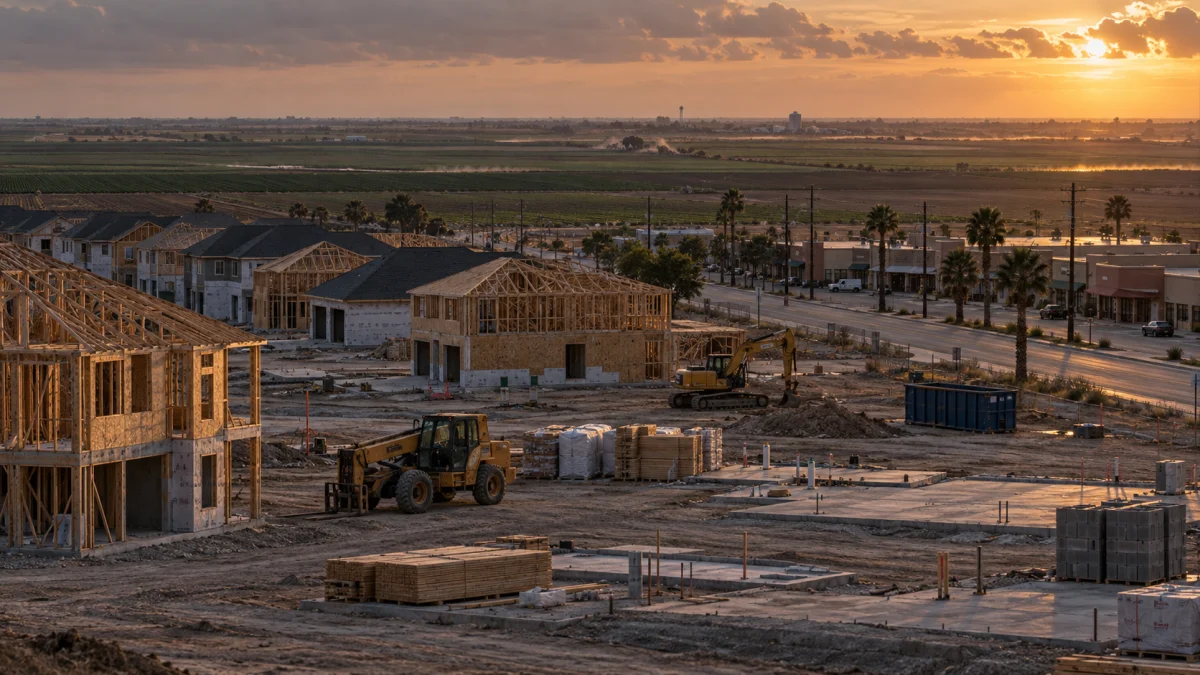
Yes, in some affected labor markets. Research published in 2026 finds that sharply increased immigration enforcement has contributed to employment declines in U.S. cities where ICE activity surged. The effect extends beyond immigrants who were arrested: studies also identify fewer U.S.-born workers on the job, disrupted businesses and reduced local spending.
That does not establish a nationwide shortage in every industry, or prove that every lost job in South Texas was caused by deportations. It also does not mean that American workers can never benefit from reduced competition for particular jobs. Some previous enforcement programs raised wages in certain low-wage occupations, while other workers and businesses lost employment.
The central economic finding is narrower, and more consequential: removing one group of workers does not automatically create an equal number of available jobs for another group. A company may instead scale back production, postpone a project or close. And immigration enforcement can influence economic activity even when no worker is actually deported.
This briefing examines what is known as of October 12, 2026, using the latest available government employment data, ICE administrative records, original economic studies and reporting from South Texas.
Intelligence assessment: What does the evidence actually support?
| Key question | Assessment | Evidence status |
|---|---|---|
| Has intensified ICE enforcement reduced employment in some cities? | Yes. Multiple studies estimate declines relative to comparable, less-affected areas. | Supported by causal-inference research |
| Have U.S.-born workers also lost work? | Yes, in some heavily affected markets. The evidence does not support an automatic one-for-one transfer of jobs. | Supported, with limits by population and location |
| Is South Texas experiencing labor disruption? | Employers report shortages; some regional employment measures have declined while arrests increased. | Observed and reported; local causation not fully isolated |
| Are deportations raising food prices and housing costs nationwide? | Economic mechanisms exist, but the net 2025-26 nationwide price effects are not established. | Mixed evidence and model projections |
| Can reduced immigrant labor benefit some U.S. workers? | Yes. Higher wages or additional openings are possible in particular occupations. | Supported in some earlier enforcement studies |
An important distinction applies throughout: an ICE arrest is not a deportation; an employment shortfall is not necessarily an unemployment-rate increase; and a model projection is not a measured outcome. Treating these as interchangeable creates misleading claims on both sides of the immigration debate.
What is happening in South Texas after the immigration crackdown?
The Rio Grande Valley illustrates why an immigration enforcement policy can become an economic issue for communities that supported stricter border controls.
In an October 7, 2026 investigation, The Washington Post, construction contractors and other business owners described delayed projects, missing workers and declining customer traffic. The newspaper’s analysis of government data found that at-large ICE arrests in South Texas increased more than twentyfold, from roughly 400 in 2024 to more than 9,000 in the 2026 data examined. At-large arrests occur in the community, rather than through transfers of people already in jail or criminal-justice custody.
The Post also reported that nearly 80% of people arrested at large by ICE’s Harlingen field office since Trump returned to office had no criminal records. That description is not equivalent to proving they had lawful immigration status, nor does it mean they were all deported. Civil immigration violations and criminal convictions are distinct categories.
There is independent evidence of local labor-market weakness. The Bureau of Labor Statistics’ Brownsville-Harlingen metropolitan-area series, extracted October 2, shows that payroll employment in mining, logging and construction combined was 5.3% lower in August 2026 than a year earlier. Total nonfarm employment in the area was down 0.7% year over year.
But the geographic comparison matters. The BLS Texas statewide series reports that construction payroll employment across Texas was up 1.9% over the same period. It would be incorrect to turn a South Texas decline into a claim that the entire state’s construction industry collapsed.
Agriculture shows another important limit. The Post reported a 13% decrease in agricultural jobs across four South Texas counties in the year ending March 2026, compared with broadly steady statewide farm employment. Yet the newspaper also found that the area’s farm-employment decline began years before the current enforcement campaign, although it accelerated in 2025.
What is verified: Arrests surged, local businesses reported disruptions, and several South Texas employment measures weakened.
What remains unproven by those facts alone: The exact share of each local decline caused specifically by ICE, as opposed to other forces affecting hiring, agriculture, building activity and household spending. That requires better comparative evidence.
What does national research show about ICE raids and job losses?
The strongest recent analysis does not merely count workers arrested and compare that number with unemployment. It asks what happened to employment in places experiencing unusual enforcement surges relative to the employment trajectory those places likely would have followed otherwise.
Brookings: Employment fell below its expected trajectory
In Beyond Arrests: How ICE Enforcement Depressed Local Employment in 2025, published September 4, 2026, researchers at the Brookings Institution examined 341 metropolitan areas and identified 64 that experienced particularly large increases in ICE arrests, measured both in absolute numbers and relative to employment.
Their principal finding: six months after a local enforcement surge began, employment in those 64 metropolitan areas was an estimated 0.43% below its expected path. In a hypothetical metropolitan economy with 3 million jobs, a gap of that magnitude would be equivalent to approximately 13,000 fewer jobs than expected, not necessarily 13,000 newly unemployed individuals.
The gap did not show a recovery within the observed period. At 11 months, the estimated shortfall reached 0.69%, but only 11 of the 64 surge cities had data extending that far after their local surge. That longer-horizon figure is therefore less certain.
The paper uses employment data extending through December 2025, even though it was published in September 2026. It should not be represented as a direct measurement of labor-market conditions in October 2026.
The researchers also compared the estimated employment shortfall with excess ICE arrests. At six months, the employment gap equaled roughly 0.43% of jobs, versus excess arrests equivalent to approximately 0.11% of the workforce. This is the basis for a striking finding: the employment shortfall was about four times the number of additional arrests, after putting both measures on a comparable scale.
That is not proof that each arrested person individually caused four jobs to disappear. The arrests are a measure of a larger enforcement shock, and the employment estimate is a statistical comparison against a counterfactual. The ratio suggests that direct removal of workers cannot, by itself, account for the broader observed decline.
Brookings also performed alternative comparison and timing tests. Those strengthen the causal interpretation, but do not make an observational study immune to every unmeasured local economic difference.
NBER: Some U.S.-born workers were affected too
A separate National Bureau of Economic Research working paper by Elizabeth Cox and Chloe East, issued in April 2026 and revised in June, analyzed uneven increases in ICE activity across geographic areas.
The authors found reduced work among likely undocumented immigrants who remained in the United States in areas with major enforcement increases. They also found that fewer U.S.-born men were at work in those areas relative to comparison locations.
This matters for two reasons. First, the immigrant result cannot be explained entirely by physically deporting the people being studied; they remained in the country. Second, the U.S.-born result challenges the assumption that the disappearance of immigrant labor automatically improves employment for citizens.
Both studies are working research, not a census of every business affected. Their findings are strongest for the populations, locations and time periods their designs examine. But taken together, they provide materially stronger evidence than anecdotal reports of empty construction sites.
Why can deporting workers eliminate jobs held by Americans?
Because workers do not operate as isolated, interchangeable units. Businesses combine labor, equipment, capital, customers and different occupational skills to produce goods and services.
Consider a hypothetical residential construction project. A framing crew does not finish its work on schedule. The builder may then be unable to schedule electricians, plumbers, drywall crews, inspectors and finishing contractors as planned. Some of those workers may be U.S.-born citizens. The delay can reduce their billable hours even though they were never targets of immigration enforcement.
This is an illustrative mechanism, not a claim about a particular named building project.
The economic channels can be separated as follows:
| Channel | What changes | Potential result |
|---|---|---|
| Direct labor removal | An employed person is arrested or leaves the workforce | A business loses a worker or must recruit a replacement |
| Workforce withdrawal | People who remain in the country stop reporting to work or limit travel because of enforcement risk | Staffing shortages can exceed the number of arrests |
| Production complementarity | A missing crew or occupation interrupts other workers’ tasks | Projects are delayed and additional jobs or hours may be lost |
| Customer-demand shock | Residents spend less or avoid public-facing businesses | Shops and service firms may cut shifts, hiring or operating hours |
| Labor substitution | Employers successfully recruit available U.S.-born or authorized workers | Some workers may gain hours, jobs or negotiating leverage |
There is evidence for the demand channel as well. In ICE-ing the Economy, a 2026 working paper, Wharton researcher Exequiel Hernandez studied geocoded enforcement activity alongside foot-traffic and spending estimates. He found that establishments in targeted metropolitan areas experienced approximately 2.7% fewer visits and 6.2% less weekly spending relative to comparison areas.
Those percentages are research estimates across observed establishments, not verified accounting losses for every small business. Nevertheless, they help explain why the consequences can reach merchants whose employees were never arrested.
Do mass deportations create jobs for American citizens?
Sometimes they can open vacancies or improve wages, but available evidence does not support a general one-for-one replacement.
In a simple labor-substitution case, an employer who loses one worker hires another person with the same qualifications in the same place, at a wage the employer is willing to pay. A U.S. worker could benefit. If employers previously relied on lower-paid workers without legal authorization, tighter enforcement could also pressure them to raise wages and improve recruitment practices.
But labor markets are rarely that simple. The replacement worker may live elsewhere, need training or already have a different job. Some businesses cannot afford higher labor costs at current selling prices. Others reduce output instead of filling every vacancy.
The Congressional Research Service’s March 12, 2026 review of seven quasi-experimental studies provides useful historical perspective. Looking at earlier 287(g) agreements and the Secure Communities program, CRS reported wage increases in some low-wage labor markets, mixed employment effects for U.S.-born people in lower-wage markets, and generally lower employment for U.S.-born people in higher-wage labor markets.
One study summarized by CRS found that employment rose for a narrow group of U.S.-born workers in the very lowest-paid occupations, while other groups experienced no increase or a decline. Another found that certain service industries lost jobs even as their average wages rose.
This is a more precise answer than either slogan: some Americans may gain from reduced labor competition while other Americans lose work because employers produce less or households spend less.
It also exposes a statistical trap. A business can have unfilled vacancies and reduce overall payroll. A local economy can lose jobs without a proportional rise in its unemployment rate, especially if people leave the area or stop participating in the labor force. Those are different economic measures.
The Federal Reserve Bank of Dallas has separately noted that reduced immigration and net outflows change the monthly payroll growth needed to keep the national unemployment rate stable. Slower job growth, on its own, is not sufficient to diagnose either a recession or an immigration-related labor shortage.
Which industries are most exposed: construction, farms or services?
Construction: High reliance on immigrant labor, but not uniformly on undocumented workers
According to a 2026 National Association of Home Builders analysis of 2024 workforce data, 26.3% of U.S. construction workers were foreign-born. The shares were 39% in Texas, 40.6% in Florida and 42.1% in California. Immigrant shares were especially high in several finishing trades, including drywall installation, roofing and painting.
Foreign-born does not mean undocumented. These totals include naturalized U.S. citizens, permanent residents and other immigrants who may be authorized to work. They establish the industry’s immigrant workforce exposure, not the number of workers legally removable by ICE.
The distinction also matters for costs. A slowdown in building can reflect labor supply, but also mortgage rates, financing, land availability, material prices, demand and permitting. See sherafy.com‘s related explanation of why the United States imports so much construction lumber from Canada, which examines a different supply-chain constraint.
Agriculture: A much clearer measure of unauthorized-worker exposure
The U.S. Department of Agriculture’s National Agricultural Workers Survey summary estimates that 42% of hired crop farmworkers lacked work authorization in the 2020-22 period. Another 19% were authorized noncitizen immigrants and 7% were naturalized citizens.
That is a more directly relevant legal-status measure than the construction industry’s foreign-born share. But it is not a 2026 estimate, and the underlying survey excludes H-2A guest workers and livestock workers. It cannot be used as a percentage for every person employed anywhere in American agriculture.
Agriculture is vulnerable to timing. A crop may be ready for harvest during a narrow window; a vacancy filled weeks later may not restore what could not be picked. That risk makes seasonal farm labor different from a job that can be postponed without losing the product.
Restaurants, retail and other local services: Exposure extends beyond payrolls
Restaurants, stores, landscaping companies and other service businesses can face both worker shortages and reduced customer traffic. The Wharton spending study indicates that the economic effects of visible enforcement need not be confined to businesses with large immigrant workforces.
The appropriate conclusion is not that every local business has lost 6.2% of revenue. It is that enforcement can operate simultaneously as a labor-supply shock and a consumer-demand shock.
Will deportations make food more expensive or housing more affordable?
These are two different questions, and the evidence is stronger on some mechanisms than on the net outcome.
Food prices: Labor costs can rise, but nationwide effects are not yet established
Agriculture relies on seasonal workers in occupations where replacement and timing can be difficult. If labor becomes scarcer, producers may offer higher wages, mechanize, reduce acreage, import more products or accept lower output. Any resulting retail price changes depend on productivity, foreign supply, weather, transportation, tariffs and the share of total costs attributable to labor.
An NBER model of mass deportations, issued in February 2026 by Javier Cravino, Andrei Levchenko, Francesc Ortega and Nitya Pandalai-Nayar, examines a hypothetical removal of half the unauthorized workforce. In that model, relative consumer prices in sectors particularly intensive in unauthorized labor, including farming, rise by approximately 1% compared with the average consumption basket.
That is not a finding that U.S. supermarket prices rose 1% because of deportations in 2026. It is a projected sector-relative price response under a particular scenario and set of model assumptions.
Housing: Lower demand and less construction can pull in opposite directions
Fewer residents or slower population growth can reduce the number of households competing for homes and rentals. At the same time, reduced construction labor can delay new housing supply or raise builders’ costs.
A March 2026 Dallas Fed working paper found that increased unauthorized immigrant worker inflows during 2021 through early 2024 raised local house prices and rents, without a matching short-run increase in housing construction. The study also found roughly one-for-one increases in local employment associated with those inflows, without statistically significant local wage declines.
This is important counterevidence to the claim that immigration has no housing-demand cost. But the result cannot simply be reversed and used to calculate what the 2025-26 enforcement campaign did to rents: housing supply, household formation, migration patterns and the location of enforcement differ.
The White House has attributed lower housing costs in part to its immigration policies. Reduced housing demand is a plausible channel. The claim that current deportations, specifically, explain nationwide rent changes has not been established by the evidence reviewed here.
Do deportations raise wages for U.S.-born workers?
The answer depends on which workers, where, and over what period.
The February 2026 NBER deportation model projects that removing 50% of unauthorized workers would raise average U.S.-born real wages by 0.15% in the short run, but lower them by 0.33% in the long run as reduced population and production lead to lower capital accumulation.
Those are simulated national averages. They are not measured wage changes after ICE arrests, and the averages conceal differences by occupation and place. Nor does the model imply that every native-born worker’s paycheck would first rise and then fall by exactly those amounts.
It is possible for a lower-skilled worker with direct competitors in a particular occupation to benefit from a tighter labor market while another worker loses earnings because a firm contracts. Wage gains for workers who remain employed can coexist with fewer total hours worked or fewer jobs.
The real question is not simply whether wages go up. It is whether changes in wages, employment, output and prices leave the affected workers and households better off overall.
What is the Trump administration’s economic argument?
The administration argues that immigration enforcement reduces competition for housing and jobs, protects U.S. workers from wage pressure and directs economic opportunities toward citizens. In a January 14, 2026 White House statement, officials cited increases in U.S.-born employment, declines in foreign-born employment, wage gains and lower home prices as evidence that mass deportations were benefiting Americans.
The statement documents the administration’s position. It does not, by itself, demonstrate that deportations caused the broad economic changes it lists. National employment, wages and housing prices also respond to interest rates, the business cycle, immigration inflows, government policy outside immigration, technology and industry-specific demand.
The claim is nonetheless testable. Stronger evidence for broad benefits would include sustained real wage and employment gains among comparable U.S.-born workers in places with greater enforcement, relative to places with less enforcement, after accounting for other economic conditions. Evidence of business closures, fewer U.S.-born workers employed, or prolonged reductions in local spending points in the other direction.
So far, the best causal research on heavily affected areas gives substantial reasons to doubt the proposition that more enforcement automatically means more employment for Americans. That does not settle every question about border control, legality, public finances or the long-term design of immigration policy. It addresses a specific labor-market prediction.
For a separate examination of fiscal costs and taxes, see sherafy.com‘s assessment of what undocumented immigrants pay and receive. Labor-market effects and fiscal effects should not be confused.
Has a crackdown produced labor shortages before?
Yes. The mechanism predates the second Trump administration.
Following Alabama’s 2011 immigration law, the state’s Department of Agriculture and Industries acknowledged a severe farm and agribusiness labor shortage after Latino workers departed. In a December 2011 statement, the department described meetings with farmers and federal and state officials to address labor shortages associated with the law.
The statements are contemporary evidence of disruption, not a precise statewide calculation of lost production. They also do not prove that the 2011 legal framework and the 2025-26 federal enforcement program produced identical results.
The broader historical lesson from the CRS review is more informative: earlier enforcement episodes produced mixed effects on wages and U.S.-born employment, with documented losses in some sectors and gains in others. Enforcement cannot be evaluated using only the number of people removed or only the wages of one occupational group.
Can the United States replace immigrant workers without relying on unauthorized labor?
Over time, some employers can attract more U.S. workers by raising wages, improving working conditions, investing in equipment, training apprentices or relocating operations. But a legal labor shortage cannot be solved simply by assuming an unemployed American is immediately available, qualified, nearby and willing to accept the offered terms.
Work authorization also matters. Employers are required to comply with employment eligibility rules, and reliance on unauthorized workers is not a sustainable substitute for lawful workforce planning.
Existing legal programs address some needs but have limits. The Department of Labor’s H-2A program allows qualifying employers to recruit foreign workers for temporary or seasonal agricultural jobs when sufficient domestic workers are unavailable, subject to wage and worker-protection rules. The H-2B program covers certain temporary nonagricultural needs, not permanent, unrestricted access to labor across all construction occupations.
A credible policy assessment therefore has to consider enforcement, lawful recruitment, worker protections, compensation, productivity and the transition period together. A shortage of trained tradespeople may take years to address through apprenticeship and education; a field that needs harvesting this week does not have years.
Why does this matter politically in South Texas?
South Texas is significant because areas that shifted toward Donald Trump in 2024 also have businesses and households directly affected by immigration enforcement. That makes the conflict between two campaign promises, stronger enforcement and a stronger economy, visible to voters.
The Cook Political Report-TelevisaUnivision survey of Texas Hispanic likely voters, conducted August 26-September 3, 2026, found that economic issues outweighed immigration and ICE combined by roughly two to one as voters’ top concerns. The survey included an additional sample in three Rio Grande Valley and South Texas congressional districts.
Polling indicates discontent with elements of current enforcement, but it cannot establish the result of the November elections. More importantly for the economic question, voter reactions are not independent proof of the size or cause of job losses.
The original reporting makes South Texas an important case study. It does not make the region a reliable proxy for every state.
What evidence would change the assessment?
The most useful next measurements are not additional anecdotes. They are consistent comparisons of at-large arrests, local payrolls, hours worked, wages, business openings, construction completions, agricultural output and consumer spending over the same periods and geographic boundaries.
The Deportation Data Project’s August 2026 ICE release contains administrative data extending through August 6, 2026 and now includes a city-of-arrest field. Its documentation also warns about data-quality issues, including inconsistently entered city names and concerns about some removal records. Any original geographic comparison must clean those records and distinguish arrests from completed removals.
Further employment releases may reveal whether employers adapt through wages and recruitment, or whether the shortfalls persist. Housing and food-price data will also clarify which supply and demand effects dominate. Until those comparisons exist, broad national claims about exact jobs gained, prices raised or rents reduced by the crackdown remain premature.
Bottom line: Are Trump’s deportations helping or hurting the labor market?
The evidence does not support the simple claim that deporting an undocumented worker creates a job for an American. In places with major ICE enforcement surges, recent studies estimate employment losses that extend beyond those arrested, including among U.S.-born workers. South Texas offers concrete examples of labor disruption, although not every local decline can be attributed to immigration enforcement.
The opposite simplification is also wrong: reducing immigrant labor can raise wages or improve employment opportunities for some workers in some occupations. Housing demand may also ease when population growth slows.
The question that matters is the net economic effect, including who gains, who loses, how quickly employers adapt and what happens to production and consumer spending. On that question, the growing evidence points to significant costs from abrupt, highly visible enforcement in affected local economies, while leaving room for variation across industries and time horizons.
Frequently asked questions
Are ICE raids causing labor shortages in 2026?
In some areas, yes. Employers report staffing disruptions, while Brookings and NBER studies estimate reduced employment in places experiencing substantial enforcement surges. The evidence does not establish a uniform nationwide shortage caused by ICE.
Are U.S. citizens taking the jobs left by deported immigrants?
Some may obtain openings or higher wages, but substitution is not automatic. Research on recent and earlier enforcement episodes finds mixed effects, including employment losses among U.S.-born workers when businesses contract.
Do undocumented immigrants make up 42% of American farmworkers?
USDA estimates that 42% of hired crop farmworkers surveyed in 2020-22 lacked work authorization. That does not mean 42% of all agricultural workers, all immigrants or the 2026 workforce were undocumented. The underlying survey excludes H-2A and livestock workers.
Will deportations make homes cheaper?
They could reduce housing demand, but they could also make housing harder to build by reducing labor availability. Existing research confirms that immigration affects housing demand; it has not established the net nationwide effect of the current deportation campaign on prices or rents.
Do mass deportations increase Americans’ wages?
They can increase wages for some workers facing direct competition. One 2026 economic model projects small average short-run real wage gains for U.S.-born workers under a hypothetical mass-removal scenario, followed by longer-run average losses. These are projections, not measured outcomes for every worker.
References and Further Reading
Government data and primary records
- Bureau of Labor Statistics: Brownsville-Harlingen Economy at a Glance. Regional employment series showing the August 2026 year-over-year changes; the published combined category is mining, logging and construction.
- Bureau of Labor Statistics: Texas Economy at a Glance. Statewide comparison, including construction employment growth in August 2026.
- USDA Economic Research Service: Legal Status of Hired Crop Farmworkers. Original historical survey-based estimate of work authorization among hired crop farmworkers, with important population exclusions.
- Deportation Data Project: ICE Administrative Data Release, August 24, 2026. Government-derived administrative records through August 6, 2026, with notes on how to interpret arrest locations and removal data.
- Alabama Department of Agriculture and Industries: Commissioner Statement, September 28, 2011. Contemporary state acknowledgment that its immigration law was associated with severe agricultural labor shortages.
- U.S. Department of Labor: H-2A Temporary Agricultural Program. Official rules for lawful seasonal agricultural recruitment.
Economic studies and research reviews
- Brookings Institution: Beyond Arrests: How ICE Enforcement Depressed Local Employment in 2025. September 2026 updated metropolitan-area employment study and its methodology; replaces the institution’s preliminary May analysis for headline estimates.
- Cox and East, NBER: Labor Market Impacts of ICE Activity in Trump 2.0. April 2026 working paper, revised June, finding employment effects among likely undocumented immigrants remaining in the U.S. and U.S.-born men.
- Cravino, Levchenko, Ortega and Pandalai-Nayar, NBER: The Economic Impact of Mass Deportations. February 2026 structural model of hypothetical removal scenarios, wages and sector-relative consumer prices.
- Hernandez: ICE-ing the Economy: Immigration Enforcement Under Trump 2.0 and Local Economic Activity. May 2026 working paper estimating effects on establishment visits and consumer spending.
- Federal Reserve Bank of Dallas: The Impacts of Unauthorized Immigration on U.S. Labor and Housing Markets. March 2026 empirical study of immigration inflows during 2021-24, local employment, rents and housing prices; not a direct estimate of current deportation effects.
- Congressional Research Service: Measuring the Impact of Immigration Enforcement on Labor Markets. March 2026 review of seven earlier quasi-experimental studies and their mixed employment and wage findings. The linked page reproduces the CRS report.
- National Association of Home Builders: States and Construction Trades Most Reliant on Immigrant Workers. Industry-association analysis of foreign-born construction workers in 2024, not an estimate of undocumented workers.
Original reporting, administration claims and voter research
- The Washington Post: The Border Counties That Swung to Trump Are Now Short of Workers. October 7 reporting and analysis that prompted the South Texas case study, including interviews and local agricultural data.
- White House: Mass Deportations Are Improving Americans’ Quality of Life. Primary statement of the administration’s economic case; claims of causal benefits require independent testing.
- Cook Political Report and TelevisaUnivision: 2026 Texas Hispanic Voter Survey. Survey methodology and political context for the South Texas backlash.
Editorial currency note (October 12, 2026): Regional payroll figures are preliminary and may be revised. The principal Brookings employment study covers outcomes through December 2025 despite its September 2026 publication date. ICE administrative records have their own reporting cutoffs and quality limitations. The economic working papers may also be revised. Recheck these sources before any substantial future update.