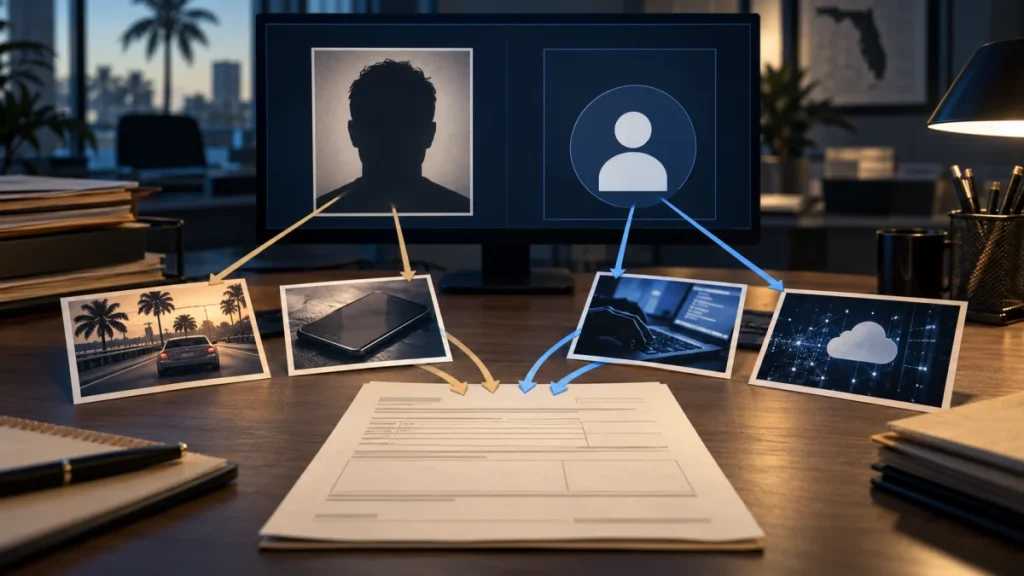
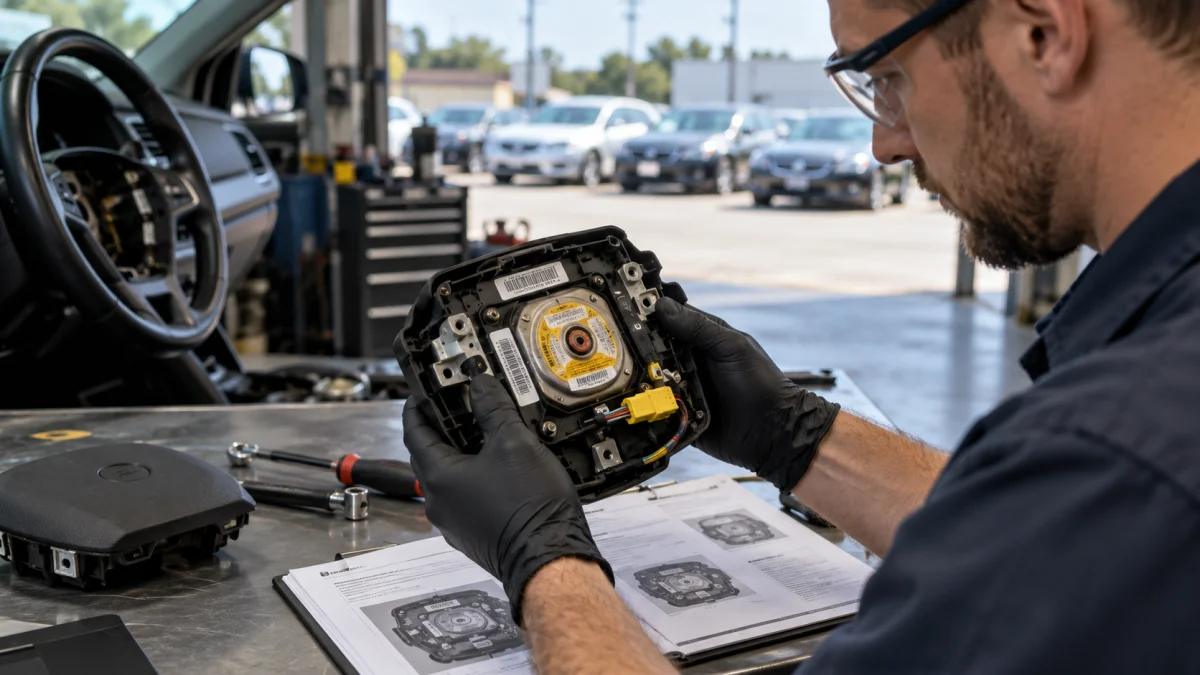
If you bought a vehicle from JB Ohio Auto Sale LLC in Galloway, Ohio, there is currently no public VIN list that lets you determine whether your car received one of the counterfeit airbags involved in owner John Bojorquez’s federal criminal case.
Bojorquez pleaded guilty on September 4, 2026, to trafficking in counterfeit goods. The U.S. Attorney’s Office says he imported counterfeit airbags from China, represented them as Honda airbags, and did so for vehicles he sold through JB Ohio Auto Sale. He admitted intentionally trafficking at least 44 counterfeit airbags between August 2024 and May 2025. (Department of Justice)
But 44 trafficked airbags does not mean 44 customer vehicles received counterfeit airbags. Customs intercepted some before they reached the dealership, and investigators later found additional counterfeit airbags still at JB Ohio Auto Sale. DOJ has not publicly broken the 44 down into intercepted, stored, installed or sold units. (Department of Justice)
For buyers, the practical answer is:
A clean VIN recall search does not prove that an unknown replacement airbag currently installed in a used vehicle is genuine. Check your vehicle’s crash and airbag-replacement history, run the normal recall lookup anyway, and if there is reason to think the airbag was replaced or otherwise may be suspicious, have the system evaluated by the vehicle manufacturer’s dealership or a reputable repair shop qualified to work on airbags and supplemental restraint systems.
Do not dismantle the steering wheel or inspect an airbag yourself.
Federal prosecutors are specifically asking people who bought vehicles from JB Auto Sale and suspect a counterfeit airbag to contact the U.S. Attorney’s Office at 888-529-2820. (Department of Justice)
Which JB Ohio Auto Sale Vehicles Are Affected?
Authorities have not publicly identified them.
As of September 4, 2026, DOJ’s announcement does not provide an affected list of VINs, makes, models or model years, and sherafy.com found no such JB-specific list in the other public federal safety materials reviewed for this article.
| Question | What the public evidence shows |
|---|---|
| Did John Bojorquez plead guilty? | Yes. |
| Did the case involve counterfeit airbags imported from China? | Yes. |
| Were they represented as Honda airbags? | Yes. |
| Did Customs seize 20 counterfeit Honda airbags? | Yes. |
| Did the same Chinese shipper send four additional similarly disguised shipments? | Yes. |
| Were additional counterfeit airbags found at JB Ohio Auto Sale? | Yes. |
| Did Bojorquez admit trafficking at least 44 counterfeit airbags? | Yes. |
| Were 44 airbags installed in customer vehicles? | Not publicly established. |
| Were 44 customer vehicles affected? | Not publicly established. |
| Is there a public affected-VIN list? | None was identified in the sources reviewed. |
| Were all 44 individually documented as Honda-branded in the public release? | DOJ characterizes the scheme as counterfeit airbags represented as Honda equipment, but it does not publish a part-by-part inventory of all 44. |
| Were the JB airbags DTN60DB inflators? | No evidence currently connects the two cases. |
| Is there a blanket JB-specific stop-drive notice? | None was identified in the DOJ or NHTSA materials reviewed. |
The defensible conclusion is narrower than the most dramatic version of the story: the counterfeit-airbag trafficking is established by Bojorquez’s guilty plea, and DOJ says the airbags were imported for vehicles he sold. The public record does not yet establish which individual customer vehicles actually received them. (Department of Justice)
What John Bojorquez Actually Admitted
According to the U.S. Attorney’s Office for the Southern District of Ohio, U.S. Customs and Border Protection intercepted 20 counterfeit Honda airbags at Chicago O’Hare International Airport in August 2024.
They had been shipped from China to Bojorquez at JB Ohio Auto Sale and were falsely described as “desktop night lights.”
DOJ says the same Chinese shipper sent another four similar shipments of counterfeit Honda airbags that month, with packages labeled either “desktop night lights” or “blue desktop nightlights.”
When law enforcement executed a search warrant at JB Ohio Auto Sale in May 2025, investigators seized multiple additional counterfeit airbags. Some were piled in a clothes hamper and covered by a towel.
Bojorquez admitted intentionally trafficking in at least 44 counterfeit airbags from August 2024 through May 2025. Sentencing will occur at a future hearing. (Department of Justice)
Because he has pleaded guilty, the trafficking conduct described in his admission should not be written as though it remains merely an accusation.
Why “44 Counterfeit Airbags” Does Not Mean 44 Cars
The federal statute matters here.
Under 18 U.S.C. §2320, to “traffic” includes not only transferring an item to another person for commercial advantage or financial gain, but also making, importing, exporting, obtaining control of or possessing it with intent to transfer or dispose of it.
That distinction fits the known facts. At least 20 of the counterfeit airbags were seized by Customs, while investigators later found additional counterfeit airbags still at the dealership. (Department of Justice)
DOJ does not disclose how many of the admitted 44 were:
- intercepted before reaching JB Ohio Auto Sale;
- delivered but never installed;
- still in inventory when investigators searched the dealership;
- installed in vehicles;
- or ultimately transferred to customers.
So “44 trafficked airbags” cannot responsibly be converted into “44 affected cars.”
The same caution applies to wording that says Bojorquez installed all of the counterfeit airbags in customer vehicles. DOJ’s announcement says he imported them “for vehicles he sold” and admitted trafficking at least 44. It does not publicly state that every one of those 44 was installed. (Department of Justice)
Is There a JB Ohio Auto Sale VIN List or Recall?
No JB-specific affected-VIN list appears in DOJ’s September 4 announcement, and none was identified in the other public sources reviewed for this article.
That does not mean investigators necessarily lack vehicle records.
Ohio’s motor-vehicle dealer recordkeeping rule in effect during the 2024-2025 conduct required dealers to maintain records for vehicles purchased, leased and sold. Required information included the VIN, title information, year and make, purchaser’s name and address, purchase agreement and odometer information. Records generally had to be retained for three years, including by a former license holder that had gone out of business. (Ohio Laws)
That supports a limited inference:
If JB Ohio Auto Sale maintained the records required by Ohio law, those records should help identify the broader universe of vehicles and purchasers associated with the dealership.
But that still would not answer the harder question: which vehicle, if any, received which counterfeit airbag?
A sales record proves that a vehicle was sold. It does not prove that investigators can trace a particular counterfeit part to that VIN.
That is also why an unofficial “affected VIN list” assembled from old auction listings would be misleading. A historical record showing that JB Ohio Auto Sale owned, bought or sold a particular vehicle would not establish that a counterfeit airbag was installed in it.
How to Check a Car You Bought From JB Ohio Auto Sale
There is no JB-specific consumer lookup at this point, so the useful process is to preserve your records, determine whether the vehicle has a history that could have involved airbag replacement, check ordinary recalls, and seek professional inspection when warranted.
1. Find the VIN and preserve your JB purchase records
Keep your bill of sale, title paperwork, financing documents and any repair records connected with the purchase.
Honda notes that a vehicle’s 17-character VIN can commonly be found at the base of the driver’s-side windshield, on the driver’s-side door jamb, on registration documents or on proof of insurance. (Honda Owners)
Those records could become important if prosecutors later identify particular vehicles or purchasers.
2. Check whether the vehicle has a history that could have involved airbag replacement
NHTSA’s current guidance in the separate DTN60DB aftermarket-inflator case tells used-car owners to review vehicle history for factors including previous airbag deployment, crashes or total-loss events, theft and repairs performed at non-certified service centers. If those indicators exist, NHTSA recommends professional inspection in that case. (NHTSA)
That guidance does not establish that a JB vehicle contains a counterfeit airbag, and there is no evidence that the JB airbags were DTN60DB inflators.
It is nevertheless relevant as a practical screening concept: if a vehicle’s original airbag was removed or replaced after a crash, theft or other repair, there was an opportunity for replacement equipment to enter the vehicle.
A vehicle-history report can therefore help identify reported crashes or airbag deployments. It cannot authenticate the physical airbag currently installed in the vehicle.
3. Run the normal recall lookup
You should still check for ordinary manufacturer recalls.
Honda says its VIN lookup returns safety recalls specific to that vehicle that have not yet been completed. (Honda Owners)
That information is useful. But recall status and aftermarket-part authenticity are different questions.
4. Seek professional evaluation if there is a real reason for concern
For the separate DTN60DB problem, NHTSA says a vehicle-manufacturer dealership or reputable independent repair shop can perform the necessary inspection. (NHTSA)
For a Honda vehicle purchased from JB Ohio Auto Sale, an authorized Honda dealer is therefore a sensible first place to ask for an airbag-system evaluation. Honda’s own technician materials also provide a process for escalating suspected counterfeit equipment rather than treating it as an ordinary repair.
The important wording is to ask the shop to assess whether the installed equipment is consistent with the correct genuine equipment for that vehicle and document anything suspicious. Do not assume a dealer can conclusively authenticate every unknown counterfeit solely from the VIN.
A useful request is:
“I bought this vehicle from JB Ohio Auto Sale. The owner has pleaded guilty in a federal counterfeit-airbag case. Please evaluate whether the installed airbag equipment appears consistent with the correct genuine equipment for this vehicle, and document any suspicious labels, markings, part information or other findings.”
Why a Clean VIN Recall Search Does Not Prove the Airbag Is Genuine
This is one of the most important distinctions for JB buyers.
Honda describes its VIN lookup as a way to determine whether a vehicle has an applicable open safety recall. (Honda Owners)
NHTSA demonstrates the limitation of that system very clearly in its separate DTN60DB case. Those dangerous replacement inflators were installed as aftermarket equipment and are not tied to the vehicle’s VIN, so NHTSA says a VIN search cannot tell an owner whether one is present. (NHTSA)
There is no evidence that the JB airbags were DTN60DB units. The relevant lesson is about the limits of recall databases:
A VIN recall search answers whether listed manufacturer recalls apply to the vehicle. It does not necessarily inventory or authenticate an unauthorized replacement component installed later.
So a result showing no open recalls should not be treated as a counterfeit-airbag clearance.
Can the Airbag Warning Light Tell You Whether the Airbag Is Genuine?
No.
An SRS or airbag warning light diagnoses certain faults in the restraint system. It does not authenticate the manufacturer’s trademark or prove the origin of an installed component.
A 2015 Honda service bulletin illustrates the distinction. In that specific recall procedure for certain older Honda vehicles, technicians were directed to check normal SRS-indicator behavior and then separately consider whether an airbag might be incorrect or counterfeit. If a technician suspected a counterfeit before removing the airbag, Honda instructed the technician not to remove it and to seek further assistance.
Ohio law recognizes another reason the dashboard indicator cannot serve as an authenticity test. State law separately prohibits knowingly selling or installing a device that causes a vehicle’s airbag diagnostic system to inaccurately indicate that a functional airbag is installed. (Ohio Laws)
There is no evidence in the Bojorquez case that such a diagnostic-spoofing device was used. The statute simply shows why “the warning light looks normal” and “the installed airbag is genuine” are not equivalent claims.
What Might Make a Honda Airbag Look Suspicious to a Technician?
Honda’s 2015 service bulletin provides useful examples, but it needs to be read in context.
The bulletin concerned a Takata-related recall procedure for specified older Honda models; it is not a universal counterfeit-airbag checklist for every Honda ever built.
Within that procedure, Honda told trained technicians to watch for unusual writing or markings. Examples pictured or described included an incorrect or non-standard safety label, a model year written in marker and non-standard wires. Honda instructed technicians who suspected a counterfeit to stop the procedure and contact company support.
The same bulletin also shows that part and serial numbers form part of Honda’s controlled inflator-replacement process.
Those details demonstrate the sort of information a trained repair facility may consider. They should not be turned into a do-it-yourself inspection guide.
NHTSA currently warns consumers in the DTN60DB context not to remove an airbag cover or dismantle any part of the steering wheel themselves. The agency says people have been killed while attempting to work on their own airbags. (NHTSA)
Are the JB Ohio Airbags the DTN60DB Inflators Linked to 11 Deaths?
There is currently no evidence that they are.
The timing makes the two stories easy to confuse.
On September 3, one day before the Bojorquez plea was announced, NHTSA reported that defective replacement driver-airbag inflators marked DTN60DB had been involved in 14 crashes resulting in 11 deaths and three severe injuries. NHTSA says the inflators were likely illegally imported. (NHTSA)
DOJ announced the JB Ohio guilty plea the following day.
But DOJ’s release does not identify DTN60DB, and NHTSA’s DTN materials do not identify Bojorquez or JB Ohio Auto Sale.
| JB Ohio Auto Sale case | DTN60DB safety case |
|---|---|
| Federal counterfeit-goods prosecution | NHTSA safety-defect action |
| Counterfeit airbags represented as Honda equipment | Driver-airbag inflators marked DTN60DB |
| At least 44 counterfeit airbags trafficked | Total U.S. population not known |
| No JB-specific public VIN list identified | NHTSA says an affected-vehicle list is unavailable |
| No JB-specific death or serious-injury connection disclosed in sources reviewed | 11 deaths and 3 severe injuries |
| No DTN60DB identifier disclosed | DTN60DB is the defining marking |
| No JB-wide stop-drive instruction identified | NHTSA says a vehicle with DTN60DB should not be driven until replacement |
NHTSA says the known DTN60DB ruptures so far involved Chevrolet Malibu, Hyundai Sonata and Chevrolet Equinox vehicles, while cautioning that there is no information showing the problem is limited to those models. (NHTSA)
The proper connection between the stories is therefore limited:
DTN60DB demonstrates how dangerous illegally imported replacement airbag equipment can be and how aftermarket parts can fall outside normal VIN-based recall identification. It does not establish anything about the specific construction, manufacturer or failure mode of the JB Ohio counterfeit airbags.
Should You Stop Driving a Car Bought From JB Ohio Auto Sale?
DOJ’s announcement does not instruct every JB Ohio Auto Sale purchaser to stop driving, and no JB-specific NHTSA stop-drive notice was identified in the public materials reviewed for this article.
A purchase from the dealership therefore does not, by itself, prove the vehicle contains a counterfeit airbag.
That does not mean the issue should be ignored. If the vehicle has a history suggesting an airbag was replaced under uncertain circumstances, or a qualified technician finds suspicious equipment, obtain prompt professional guidance about whether the car should remain in service.
The rule is different if a technician specifically identifies DTN60DB. In that separate case, NHTSA says the vehicle should not be driven until the inflator is replaced with genuine equipment. (NHTSA)
Again, no evidence currently links DTN60DB to JB Ohio Auto Sale.
What to Do If a Technician Finds a Suspicious Airbag
If a qualified shop believes the vehicle contains suspicious or counterfeit airbag equipment, the useful next steps are to get the finding documented, keep the VIN and JB purchase paperwork together with the repair order, and ask the shop to record any safely observable identifying information such as labels, markings, part numbers or serial numbers.
Do not personally handle or disassemble the airbag in an attempt to preserve evidence.
Then contact the U.S. Attorney’s Office for the Southern District of Ohio at 888-529-2820. DOJ specifically published that number for people who own vehicles purchased from JB Auto Sale and suspect a counterfeit airbag. (Department of Justice)
NHTSA also accepts vehicle-safety complaints and lists its Vehicle Safety Hotline as 888-327-4236. (NHTSA)
Keep inspection, repair and replacement receipts. DOJ has not announced in its September 4 release whether JB purchasers will receive inspection reimbursement, replacement reimbursement or restitution, so buyers should not assume those costs are automatically covered.
What Prosecutors Still Have Not Publicly Told Buyers
The guilty plea answers the criminal question more clearly than it answers the consumer-safety question.
The public materials reviewed as of September 4 do not identify how many of the 44 airbags were actually installed, how many customer vehicles investigators believe were affected, the relevant VINs, the affected makes or model years, the individual counterfeit part numbers or serial-number patterns, whether customers are being contacted directly, or whether any inspection or replacement program will be offered. (Department of Justice)
They also do not establish that any JB airbag was a DTN60DB inflator.
Ohio law required dealers to maintain sales records containing information that could identify vehicles and purchasers. But even assuming those records were properly maintained and obtained by investigators, a dealership sales list is not automatically an affected-airbag list. Investigators would still need evidence connecting particular counterfeit components to particular vehicles. (Ohio Laws)
That is the major factual gap still facing JB Ohio buyers.
Frequently Asked Questions
Did every car sold by JB Ohio Auto Sale have a counterfeit airbag?
No. There is no evidence supporting that claim.
Did 44 cars receive counterfeit airbags?
That has not been established. Bojorquez admitted trafficking at least 44 counterfeit airbags, but federal law defines trafficking broadly enough to include importing or possessing counterfeit goods with intent to transfer them. Some airbags were intercepted by Customs or later seized at the dealership. (Department of Justice)
Were the counterfeit airbags Honda airbags?
They were counterfeits represented as Honda airbags. DOJ describes the intercepted 20 and the additional similar shipments as counterfeit Honda airbags and characterizes the broader scheme as importing counterfeit airbags while claiming they were Honda equipment. DOJ has not published a part-by-part inventory of all 44 units. (Department of Justice)
What if my JB Ohio vehicle is not a Honda?
DOJ has not published an affected make/model list. Its request to contact prosecutors is phrased for owners of vehicles purchased from JB Auto Sale who suspect a counterfeit airbag, rather than for a published set of Honda VINs.
That does not prove that non-Honda vehicles were affected. It means the public information is not specific enough to define the affected vehicle population.
Does a Carfax or other vehicle-history report prove my airbag is genuine?
No. A history report can help identify reported events such as crashes or airbag deployment. It does not authenticate the physical component currently installed in the car.
Does a clean recall lookup mean the airbag is genuine?
No. It means the VIN lookup did not return an applicable open recall within the database’s scope. NHTSA’s separate DTN60DB case demonstrates that aftermarket airbag equipment can exist outside VIN-based recall identification. (NHTSA)
Does a normal airbag warning light clear the car?
No. The warning system detects certain SRS faults; it is not a counterfeit-part authentication system.
Can I inspect the airbag myself?
No. NHTSA warns against attempting to remove an airbag cover or dismantle a steering wheel yourself. (NHTSA)
Are the JB Ohio airbags DTN60DB?
No evidence currently connects the JB Ohio case with DTN60DB.
Is there a JB Ohio Auto Sale airbag recall?
No JB-specific manufacturer recall or affected-VIN lookup was identified in the public sources reviewed as of September 4. The criminal counterfeit-parts case is also fundamentally different from an ordinary manufacturer recall.
Who pays for an inspection or replacement?
DOJ’s JB Ohio announcement does not say. NHTSA’s statement that owners must pay for DTN60DB inspections and replacements applies to that separate DTN60DB issue and should not be presented as a JB-specific reimbursement rule. (NHTSA)
Bottom Line
John Bojorquez’s guilty plea establishes a serious fact: he admitted intentionally trafficking at least 44 counterfeit airbags, and federal prosecutors say the Chinese imports were represented as Honda airbags for vehicles he sold through JB Ohio Auto Sale. (Department of Justice)
What the plea does not establish publicly is equally important: it does not show that 44 customer cars received counterfeit airbags, and authorities have not released a public affected-VIN list.
For someone who bought a vehicle from JB Ohio Auto Sale, the practical response is to preserve the purchase records, examine whether the vehicle has a history that could have involved airbag replacement, check ordinary manufacturer recalls, and seek professional evaluation if there is a real reason to suspect replacement or counterfeit equipment.
A clean VIN recall result and a normal dashboard warning light are not proof that an unknown aftermarket airbag is genuine.
And the separate DTN60DB warning should not be conflated with this criminal case. DTN60DB inflators have been linked by NHTSA to 11 deaths and three severe injuries, but there is currently no evidence linking those inflators to John Bojorquez or JB Ohio Auto Sale. (NHTSA)
If you own a vehicle purchased from JB Auto Sale and suspect a counterfeit airbag, DOJ says to contact the U.S. Attorney’s Office at 888-529-2820. (Department of Justice)
References and Further Reading
Federal case and law
U.S. Department of Justice — Galloway Car Dealership Owner Pleads Guilty to Importing Counterfeit Air Bags The primary federal source for Bojorquez’s guilty plea, the 20-airbag Customs seizure, the additional shipments, the dealership search, the admitted total of at least 44 and the contact number for concerned purchasers.
U.S. House Office of the Law Revision Counsel — 18 U.S.C. §2320, Trafficking in Counterfeit Goods or Services The federal statute defining “traffic,” including importation and possession with intent to transfer.
Airbag safety and inspection
NHTSA — Deadly Air Bag Inflator Replacements: What to Know Current NHTSA guidance for the separate DTN60DB problem, including vehicle-history screening, professional inspection, VIN limitations and the warning against DIY airbag inspection.
NHTSA — Vehicle Air Bags and Injury Prevention General NHTSA guidance on counterfeit airbags and documented failure modes including non-deployment and expulsion of metal fragments.
NHTSA — Consumer Alert: Banned Chinese Air Bag Inflator Kills 11th Person in the U.S. The September 3, 2026 update documenting the separate DTN60DB death and injury toll. No connection to JB Ohio Auto Sale has been established.
American Honda Service Bulletin 15-040 — Driver Airbag Inflator Recall and Suspected-Counterfeit Guidance A technician bulletin for specified older Honda vehicles that illustrates how Honda instructed dealers to handle suspected incorrect or counterfeit airbags during that particular recall procedure.
American Honda — Official Honda Recall Lookup Honda’s VIN-based tool for determining whether a vehicle has applicable open safety recalls.
Ohio law and dealership records
Ohio Revised Code §4549.20 — Improper Replacement of Motor Vehicle Air Bag Ohio law defining counterfeit and nonfunctional airbags and prohibiting counterfeit-airbag installation, importation, sale and diagnostic-system deception.
Ohio Administrative Code Rule 4501:1-3-04 — Dealer Required to Maintain Records, 2018 Version The dealer-record rule in force during the 2024-2025 conduct described by DOJ, requiring records including VIN and purchaser information and generally requiring three-year retention.
Editorial currency note: This article reflects public information reviewed through September 4, 2026. It should be updated if prosecutors, NHTSA or a vehicle manufacturer releases affected VINs, part identifiers, customer-notification procedures, inspection guidance, sentencing information or a restitution/reimbursement process.