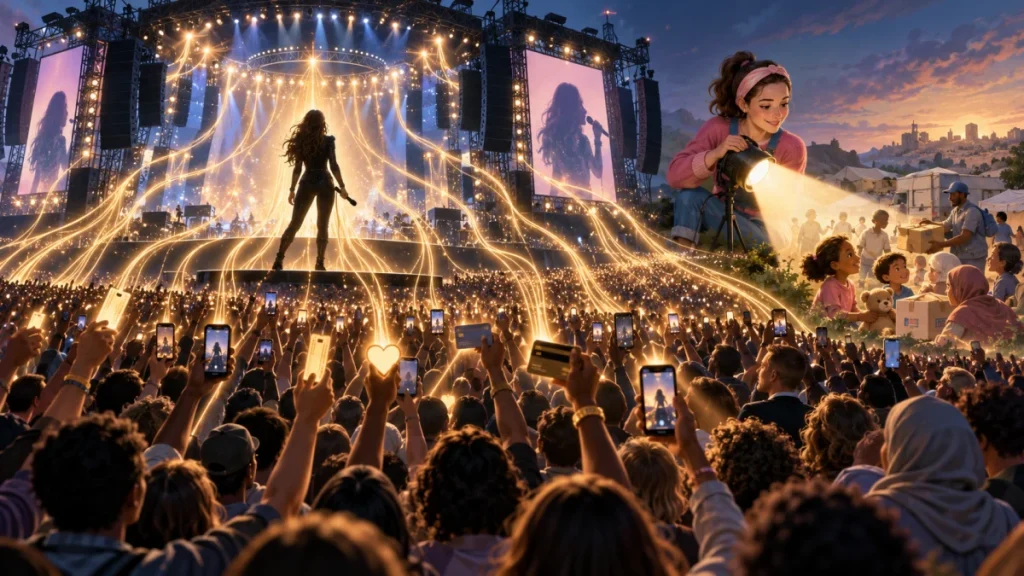
Give it 10 or 15 years.
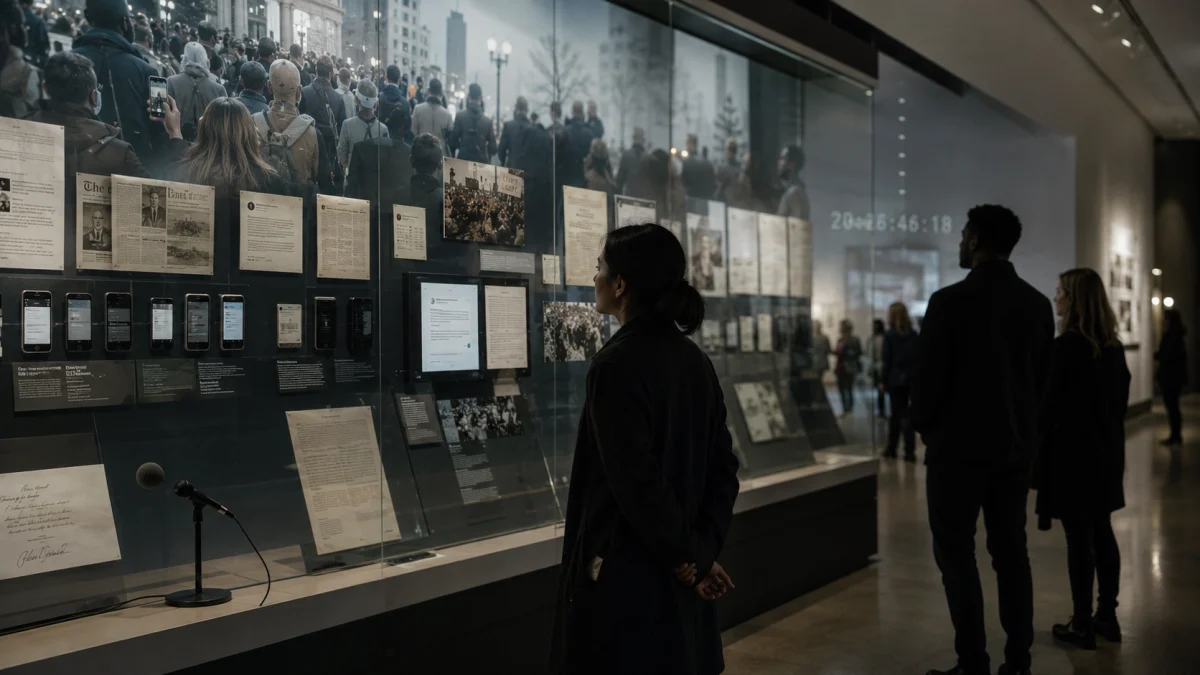
The footage will be in documentaries. The photographs will hang in museums. Today’s arguments will have been compressed into timelines. Politicians will speak solemnly about lessons learned. Schoolchildren will ask how ordinary people could have watched terrible things happen in front of them.
And then something predictable will happen.
A remarkable number of people will remember themselves as having been against it all along.
They will remember objecting sooner than they did. They will remember being more certain than they were. Some will remember conversations they never had, positions they never publicly took, risks they never accepted.
A few will probably tell their children that they spoke out.
This essay is not a demand that everyone speak publicly about every atrocity on Earth. I don’t believe moral worth can be measured in Instagram stories.
People have jobs. Children. Aging parents. Immigration concerns. Financial insecurity. Fear. Exhaustion. Limited attention. Some people act privately. Some donate without announcing it. Some help individuals rather than movements. Some genuinely do not understand what they are seeing until much later.
And sometimes people are simply scared.
That is human.
What I am asking is much smaller.
When the danger has passed, tell the truth about who you were while it was happening.
You Do Not Have to Have Been a Hero
There is an easy moral game people play with history.
Ask someone today what they would have done during segregation.
They would have opposed it.
During the Holocaust?
They would have hidden somebody.
During the civil-rights movement?
They would have marched.
During a lynching?
They would have confronted the mob.
During Rwanda, Bosnia, Darfur or some other atrocity now safely placed behind museum glass?
Surely they would have known.
Surely they would have said something.
The strange thing about history is that once the moral cost of choosing the right side approaches zero, the population of that side becomes enormous.
But real courage is measured under the conditions that existed then, not under the consensus that formed afterward.
There were consequences for challenging segregation.
There were consequences for resisting fascism.
There were consequences for protecting Jews and other persecuted people under Nazi rule.
There were consequences for confronting racial terror in the United States.
And there are consequences now—for careers, friendships, political relationships, professional standing and sometimes personal safety—when people confront powerful institutions or unpopular truths.
That does not mean everyone who avoids those consequences is evil.
It means we should stop confusing what someone believed privately with what someone did publicly.
Private belief is not public courage.
The Part of “First They Came” We Keep Forgetting
Martin Niemöller’s famous “First they came…” passage is often repeated as though it were advice delivered by a man who had always understood the danger.
It wasn’t.
It was a confession.
Niemöller had initially sympathized with parts of the German nationalist and Nazi political project before becoming an opponent of Hitler’s interference with the churches and eventually spending years imprisoned by the Nazi regime.
After the war, he did something unusually valuable: he acknowledged the people he had failed to defend earlier.
The United States Holocaust Memorial Museum explains that Niemöller used his postwar lectures to confront Germans who were shifting responsibility onto other people and institutions. He admitted that he and others had preferred to remain quiet while groups they did not identify with were persecuted.
That context changes the meaning of the words.
“First they came…” was not Niemöller polishing his résumé as a resistance hero.
It was Niemöller refusing to do exactly that.
There is dignity in saying:
I was wrong.
I was afraid.
I cared only when it reached people like me.
I should have understood sooner.
Those sentences are worth infinitely more than a heroic story manufactured after everybody already knows the ending.
“Never Again” Is a Present-Tense Promise
The phrase Never Again becomes nearly meaningless if it applies only to atrocities whose perpetrators are dead and whose moral verdict has already been settled.
Condemning the Holocaust today requires essentially no courage.
Condemning Jim Crow lynching requires no courage.
Condemning the Rwandan genocide requires no courage.
Those conclusions are important. Remembering matters. Teaching them matters.
But memory is supposed to create a test for the present.
That test arrives while information is incomplete, propaganda is everywhere, political tribes are screaming at each other, respectable institutions are offering explanations and people can still lose something for taking the wrong position.
That is when “Never Again” becomes difficult.
And that is the point.
The Record Is Being Written Right Now
We do not need to pretend every contemporary conflict is historically identical.
It isn’t.
The Holocaust, American racial terror, Rwanda, Srebrenica, Sudan, the persecution of the Rohingya, Gaza and the 2026 Iran war have different causes, perpetrators, legal classifications, histories and scales.
The shared question is narrower:
What do people do when extreme human suffering is visible before history makes caring about it socially easy?
In Gaza, the UN Independent International Commission of Inquiry has concluded that Israeli authorities have committed genocide and said in June 2026 that genocidal acts were continuing, including conduct involving Palestinian children. That is an actual finding by a UN investigative commission, not merely a slogan. At the same time, the separate genocide case before the International Court of Justice has not reached a final merits judgment; proceedings remain ongoing. Both facts should be stated because accuracy does not weaken the moral argument. It strengthens it.
In Sudan, UN investigators reported in February that the Rapid Support Forces’ capture of El Fasher involved more than 6,000 documented killings during the first three days examined, alongside alleged murder, attacks on civilians, starvation tactics, sexual violence and other conduct amounting to war crimes and potentially crimes against humanity. New warnings of atrocity crimes have continued into 2026.
In Iran, the war that began with U.S. and Israeli attacks on February 28 has produced enormous civilian harm. A UN humanitarian update reported more than 2,100 civilians killed by March 30, tens of thousands injured and extensive damage to homes, schools and health facilities. The war was still continuing nearly six months later. Iran’s own conduct and attacks affecting civilians are also subject to the laws of war; opposing civilian suffering does not require pretending one side possesses a monopoly on wrongdoing.
And in the United States in 2026, several deaths of Black Americans found hanging have generated intense public concern because of America’s history of racial terror.
Accuracy matters here too.
Sixteen-year-old Juliana Nzita was found hanged near a Charlotte church. Police concluded that she died by suicide, while relatives and others raised questions about the investigation. In Mississippi, 29-year-old Tasia Fortune was found hanging outside an abandoned property in August; authorities were still investigating when the case drew national attention. Other similar deaths have generated disputes between official findings and some relatives or community advocates.
Those deaths should not simply be declared lynchings when homicide has not been established.
But America’s documented history of lynching Black men, women and children also makes it absurd to treat the public demand for transparent investigation as historically irrational. The Equal Justice Initiative has documented thousands of racial-terror lynchings and the role official indifference played in sustaining them.
That distinction—between scrutiny and unsupported certainty—is exactly what honest historical memory requires.
Some People Will Actually Remember Themselves Wrong
There is another uncomfortable possibility.
Not everyone who rewrites their role in this period will necessarily be consciously lying.
Human memory is remarkably cooperative with the person we would like to believe we are.
In a series of experiments involving more than 3,000 participants, researchers found that people sometimes remembered themselves as having been more generous than they actually were, particularly when their real behavior conflicted with their own fairness standards.
In other words, people can unconsciously edit morally inconvenient details of their own histories.
Other research on autobiographical moral memory finds similar patterns: people organize recollections of past behavior in ways that preserve a favorable sense of their present moral identity.
So in 2040, some people may sincerely believe they were louder, earlier and braver than they really were.
Which is why contemporaneous records matter.
History Should Keep Receipts—But Not Create Purity Tests
This does not mean constructing some dystopian database of ordinary people who failed to post enough.
A missing tweet proves almost nothing.
Someone may never have used social media. They may have donated anonymously, helped people privately, contacted elected officials, protested without posting photographs, argued within their workplace or family, or simply held views they never made public.
Absence of a public record is not proof of indifference.
But the opposite principle matters too:
The bigger your future claim, the more evidence that claim should reasonably leave behind.
If a politician someday says, “I fought this from the beginning,” look at their votes, speeches, legislation and contemporaneous interviews.
If a company says it “always stood for human rights,” look at its contracts, lobbying, investments and public statements while the controversy was actually occurring.
If a media figure says, “I was one of the people warning everyone,” their broadcasts, articles and archived posts should tell us whether that is true.
If someone says they marched, organized, wrote repeatedly to officials or publicly put their reputation on the line, there may be photographs, emails, archived webpages, local reporting, organizational records or people who were there.
And if somebody merely says, “I privately thought it was wrong”?
Fine.
That may be impossible to verify.
But “I privately disagreed” and “I stood up against it” are not the same historical claim.
We should stop pretending they are.
The People Who Actually Spoke Paid Before the Discount
There is another reason retrospective heroism bothers me.
It steals something from the people who actually did it.
Someone spoke while their friends were calling them crazy.
Someone marched when the march was unpopular.
Someone documented evidence people did not want documented.
Someone lost a job.
Someone lost professional opportunities.
Someone was arrested.
Someone destroyed relationships.
Someone endured harassment.
Someone simply kept saying, This is wrong, while people around them insisted that the situation was complicated enough to justify looking away.
Then years pass.
The political winds change.
The evidence becomes overwhelming.
The textbooks settle on gentler language for what everybody witnessed.
And suddenly people who accepted none of the original risk want part of the moral credit.
No.
You do not get the courage after the courage becomes free.
Silence Is Human. Rewriting It Is a Choice.
I am not interested in guilting every person alive into becoming a full-time activist.
Humans have different capacities. Different responsibilities. Different fears. Different information. Different obligations to their families and communities.
There are people living through history right now who simply do not have room in their lives to carry every horror in the world.
I understand that.
Ten years from now, tell me that.
Say:
I didn’t know enough.
I was overwhelmed.
I was afraid of losing my job.
I didn’t understand what was happening yet.
I thought somebody else knew better.
I cared but did nothing.
I changed my mind later.
I was wrong.
Those are human answers.
Some of them may be painful.
But they are honest.
What I do not want to hear when today’s controversies have become tomorrow’s museum exhibits is:
I was always one of the good ones.
Not if you weren’t.
Because failing to act is one thing.
Failing to act and then borrowing the courage of the people who did is another.
You were never required to be a hero.
Just don’t become one retroactively.
History does not need a heroic version of you.
It needs the true one.
And if “Never Again” is supposed to mean anything, perhaps it begins there.
References and Further Reading
- United States Holocaust Memorial Museum — “Martin Niemöller: ‘First They Came…’” — Essential context showing that Niemöller’s famous words emerged from his postwar acknowledgment of earlier silence and complicity, rather than a claim of lifelong resistance.
- United States Holocaust Memorial Museum — “Causes and Motivations” — Examines bystanders, public opposition, institutional silence and the complicated range of choices available under Nazi rule.
- Equal Justice Initiative — “Lynching in America” — Major historical documentation of racial-terror lynchings of Black Americans and the public and institutional environments that enabled them.
- UN Independent International Commission of Inquiry — Gaza findings, June 2026 — The Commission’s current finding that Israeli authorities continue to commit genocide and other atrocity crimes against Palestinians in Gaza.
- International Court of Justice — South Africa v. Israel — The official case docket, useful for distinguishing findings by other international bodies from the still-pending final ICJ genocide judgment.
- UN Human Rights Office — El Fasher investigation — Documents mass killings and alleged war crimes and possible crimes against humanity during the RSF offensive in Sudan.
- UN OCHA — Iran Humanitarian Update No. 2 — Details civilian deaths, injuries, displacement and infrastructure damage during the 2026 Iran conflict.
- Nature Communications — “Motivated Misremembering of Selfish Decisions” — Experimental evidence that people can remember their own past behavior as more morally favorable than it really was.
- Associated Press — Tasia Fortune investigation and Charlotte Observer — Juliana Nzita reporting — Contemporary reporting showing why the 2026 hanging cases require careful separation between documented circumstances, official findings, family objections and unsupported claims of lynching.
Editorial currency note: The Gaza genocide proceedings, Iran war, Sudan conflict, and several U.S. death investigations discussed here remain active as of August 24, 2026. Legal findings, casualty figures and investigative conclusions may change as new evidence emerges.