Yes, many AI data centers use substantial amounts of water. No, there is no evidence that technology companies are secretly pretending to need cooling water so they can “steal” America’s rivers. And no, enormous quantities of consumptive water use are not technically unavoidable.
Those three facts can all be true at the same time.
The more important story is what sits between them.
U.S. data centers directly consumed an estimated 66 billion liters—about 17.4 billion gallons—of water in 2023, roughly three times their estimated consumption in 2014. Lawrence Berkeley National Laboratory projects that direct consumption could reach roughly 145 billion to 275 billion liters per year by 2028, depending heavily on growth and cooling choices. Those numbers cover data centers broadly, not AI alone, although accelerated AI computing is a major driver of the current infrastructure expansion.
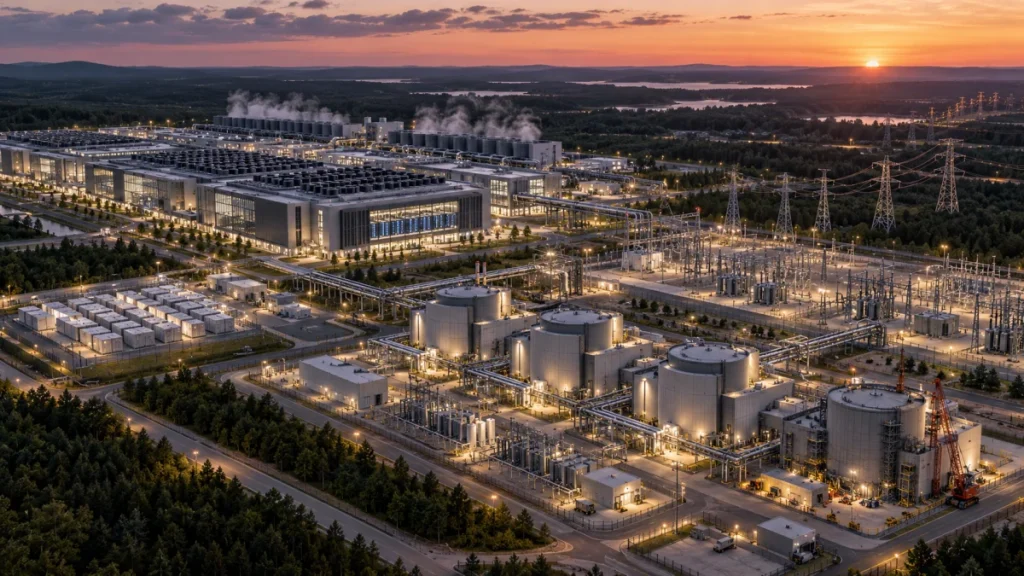
At the same time, water-intensive cooling is not the only way to operate a modern data center. Dry cooling, direct-air cooling and newer closed-loop systems can dramatically reduce or nearly eliminate ongoing evaporative water consumption at the facility itself. The tradeoff is that some of those systems can require more electricity, particularly in hot climates.
That changes the question.
The useful question is not whether AI secretly needs America’s water.
It is:
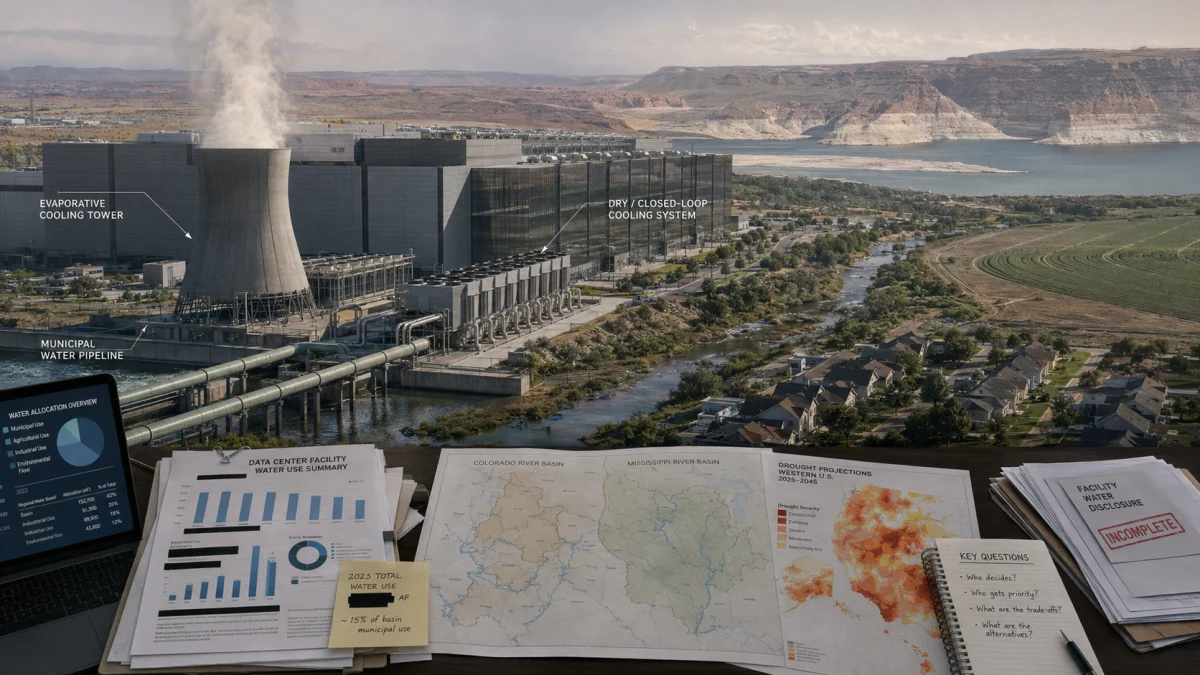
If lower-water technologies exist, why are communities—especially communities facing drought or water stress—still being asked to allocate large quantities of drinking-quality water to some data centers, sometimes without the public even being told exactly how much water those facilities will consume?
That question is supported by considerably more evidence.
Do AI Data Centers Actually Need Water?
Computers do not consume water in the way a person, farm or manufacturing process consumes it.
They produce heat.
That heat has to go somewhere.
A conventional data center can move heat from servers into chilled water, transfer it again into another water loop and ultimately send it to a cooling tower. Inside that tower, some water evaporates into the atmosphere, carrying heat away with it.
The evaporated water has to be replaced continuously.
The Department of Energy describes cooling towers as the final heat-rejection stage in a typical water-cooled data center and explicitly notes that these systems can require extensive amounts of water because evaporation is fundamental to how they reject heat.
So the viral statement that “AI data centers don’t need water to cool them” is a half-truth.
AI data centers do not inherently need to consume large quantities of freshwater in order to function.
But they absolutely need a way to remove heat, and many facilities currently accomplish that partly by evaporating water.
Those are not the same thing.
Liquid Cooling Does Not Automatically Mean Massive Water Consumption
This distinction gets mangled constantly.
When people hear that AI servers are “liquid cooled,” they often imagine enormous quantities of fresh water constantly being pumped through computer chips and discarded.
That is not necessarily what happens.
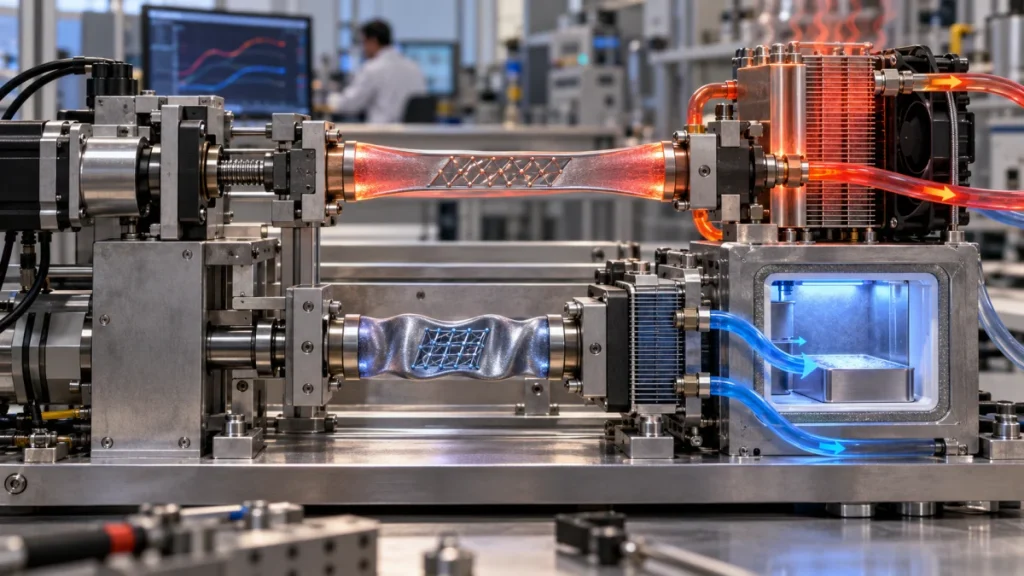
A direct-to-chip cooling system can circulate liquid repeatedly through a closed loop. The liquid absorbs heat from the chips, moves somewhere else to dump that heat, cools down and returns to the servers.
What matters is what happens at the final heat-rejection stage.
A facility could circulate water through its servers while ultimately using dry outdoor radiators and consuming very little water.
Or it could circulate liquid through the servers and then send that heat to an evaporative cooling tower that consumes large quantities of replacement water.
The phrase “closed-loop cooling” alone therefore tells you very little about a facility’s total water footprint.
You have to follow the heat all the way out of the building.
How Much Water Are U.S. Data Centers Actually Consuming?
The best national estimate remains striking.
Lawrence Berkeley National Laboratory estimated:
- 2014: 21.2 billion liters of direct data-center water consumption.
- 2023: 66 billion liters, or approximately 17.4 billion gallons.
- 2028: roughly 145 billion to 275 billion liters under its modeled scenarios.
By 2023, hyperscale and large colocation facilities accounted for approximately 84% of direct U.S. data-center water consumption.
That is not a trivial amount of water.
It is also important not to misrepresent it.
The number includes the entire U.S. data-center industry: cloud computing, business software, storage, streaming, conventional internet services, AI and other workloads. It cannot simply be relabeled “AI water consumption.”
What is clear is that AI is changing the trajectory.
The same Berkeley Lab research found that GPU-accelerated servers became significant enough around 2017 to help reverse a period in which U.S. data-center electricity demand had remained relatively stable. Its June 2026 update now projects U.S. data centers could consume approximately 11.8% of U.S. electricity in 2030 under its reference case, with modeled scenarios ranging from 9.5% to 15.3%.
More computation means more heat.
More heat means more cooling.
Whether that results in dramatically more water depends partly on what cooling infrastructure companies choose to build.
The Water Outside the Data Center Matters Too
Onsite cooling is only part of the water footprint.
Electricity generation can consume water as well.
Berkeley Lab modeled approximately 800 billion liters of indirect water consumption in 2023 associated with generating the electricity used by U.S. data centers—more than ten times its estimate of direct onsite consumption. The researchers emphasize that this number varies geographically because electricity sources and power-plant cooling systems have radically different water requirements.
That is why claims such as “this data center uses zero water” deserve careful inspection.
Does that mean:
- zero evaporative water for onsite cooling?
- zero potable water?
- zero operational water?
- zero water associated with electricity production?
- zero water associated with semiconductor manufacturing?
Those are completely different claims.
A facility can achieve near-zero onsite cooling consumption without having a zero-water footprint overall.
A January 2026 PLOS Water analysis specifically warned that emphasizing non-evaporative cooling while ignoring electricity-related water consumption can create an incomplete picture of a facility’s water demands.
So Can AI Data Centers Be Built Without Consuming Millions of Gallons of Cooling Water?
Yes.
That part of the viral argument is substantially correct.
Microsoft says that a new data-center design introduced in 2024 circulates cooling water through a closed loop and consumes zero water for cooling during normal operations, rather than continuously evaporating it. The company says each facility using the design could avoid more than 125 million liters of cooling-water consumption annually.
Google has similarly said that its Mesa, Arizona data center was designed around air-cooled technology in response to Arizona’s water conditions.
Those statements come from the companies themselves. They demonstrate that the technologies exist; they should not be mistaken for independent audits of the companies’ total water footprints.
There is also a real engineering tradeoff.
Dry cooling generally uses much less onsite water but can require more electricity than evaporative cooling. DOE has explicitly warned that replacing evaporative cooling with dry systems can shift some of the water burden upstream if the additional electricity comes from water-consuming power plants. Peer-reviewed research comparing Phoenix-area facilities has found the same basic water-energy tradeoff.
That does not mean water-intensive cooling is automatically justified.
It means the honest question is location-specific:
In this particular place, under this particular climate, with this electricity supply and this water supply, which system imposes the smallest overall cost on the community and environment?
That analysis should happen before approval, not after the servers arrive.
Are Tech Companies “Stealing” America’s Water?
There is no evidence of the secret national water-theft operation described in the viral claim.
But saying that should not end the investigation.
The way most data centers obtain water actually raises a different—and far more documentable—set of concerns.
A July 2026 Congressional Research Service report found that an estimated 97% of onsite U.S. data-center water needs are supplied through municipal or other public water systems, rather than companies secretly pumping water directly out of major federal reservoirs. CRS also reported that its research had not identified commercial data-center operators directly signing water-supply agreements with the Bureau of Reclamation or Army Corps of Engineers for water stored in federal facilities.
That means the central issue is usually not clandestine theft.
It is allocation.
A city, utility, water district or state decides that an industrial customer can receive water.
The company pays whatever rate and terms have been negotiated.
The infrastructure may need to be expanded.
Residents, farms, ecosystems and other industries continue drawing from the same broader water system.
During abundance, those competing claims may coexist without obvious consequences.
During drought, extreme heat or long-term supply decline, the question becomes much sharper:
Who gets priority?
And that answer is political as much as technological.
The Public Often Cannot See Enough to Answer That Question
This is where criticism of the existing system becomes considerably harder to dismiss.
CRS concluded in 2026 that facility-specific data-center water-use information is limited and frequently unavailable to the public. Utilities may know how much water an individual facility consumes while reporting only aggregated system-wide figures. Some water-service agreements can restrict disclosure. Self-supplied facilities may face different reporting requirements depending on state and local law.
CRS also noted something remarkable considering the scale of the infrastructure boom:
The federal government has not conducted a systematic assessment of data-center water use.
So Americans are being asked to debate the water consequences of one of the largest infrastructure expansions in modern computing while basic facility-level data remain incomplete.
That is not a conspiracy theory.
It is a governance failure.
Google and The Dalles Show Why Transparency Matters
The conflict in The Dalles, Oregon, provides one of the clearest examples.
Google has operated data centers there for years.
When journalists sought information about the company’s water consumption, the city initially refused to release the figures, arguing that Google’s water use constituted a trade secret. After the county district attorney ordered disclosure, the city sued in an attempt to block release of the records.
Google reimbursed the city’s legal costs.
The dispute eventually ended with the records becoming public.
What did those records reveal?
Google’s facilities consumed approximately 355 million gallons of city water in 2021, about 29% of all water consumed in The Dalles that year. More recent records obtained by Oregon Public Broadcasting show consumption rose to approximately 383.9 million gallons in 2023 and 434.4 million gallons in 2024—more than one million gallons per day. OPB reports that Google now accounts for roughly a third of the city’s total water consumption.
The lesson is not that Google secretly stole that water.
The company obtained it through the municipal system.
The lesson is that citizens should never need a public-records fight and litigation to learn that one corporate customer is consuming roughly a third of their city’s water.
That is precisely the sort of arrangement that breeds conspiracy theories because the underlying governance is unnecessarily opaque.
Transparency is not anti-technology.
It is the minimum requirement for informed consent.
Is the Mississippi River Really at a Historic Low Right Now?
This part of the viral claim is overstated.
The Mississippi has experienced genuinely severe low-water events in recent years. Portions of the river reached historic lows during the 2022 and 2023 droughts, disrupting navigation and creating drinking-water concerns in Louisiana because low freshwater flow can allow salt water from the Gulf to move upstream.
But describing the entire Mississippi River as being at a “historic low” in August 2026 is not supported by current basin-wide data.
NOAA’s Mississippi River Basin dashboard currently ranks July 2026 as the 41st driest July in 132 years for the greater basin and January through July as the 30th driest year-to-date. Those are dry conditions, but they are not synonymous with a basin-wide all-time record low.
The other viral claim—that the Mississippi “provides water to over 30 states”—also confuses two different facts.
The Mississippi drainage basin covers all or part of 31 states.
That means precipitation and tributaries from those states drain toward the Mississippi system.
It does not mean 31 states receive their drinking water from the Mississippi River.
Drought.gov says the river itself provides drinking water to approximately 18 million people, while its enormous basin covers roughly 40% of the continental United States.
The Mississippi is enormously important.
Its importance does not need to be exaggerated.
The Colorado River Crisis, However, Is Extremely Real
The Colorado River is a different story.
As of August 2, 2026, the Bureau of Reclamation reported:
- Lake Powell: 23% full
- Lake Mead: 27% full
- Overall Colorado River reservoir system: 32% of capacity
A year earlier, total system storage stood at 39%. Reclamation was also forecasting 2026 Lake Powell inflow at only 36% of normal.
Then on August 15, Lake Powell’s provisional surface elevation fell to approximately 3,519.91 feet, edging below the previous record low from April 2023.
This is a profound water-security problem.
The Colorado River supplies more than 40 million people, 30 Tribal Nations, two Mexican states and approximately 5.5 million acres of U.S. agricultural land.
So fears about Western water scarcity are not hysteria.
The mistake is blaming the existing Colorado River crisis primarily on AI.
AI Data Centers Did Not Cause the Colorado River Crisis
The chronology alone rules that out.
Lake Mead and Lake Powell have been declining through a decades-long period of overuse, drought and warming that began long before the current generative-AI boom.
Bureau of Reclamation officials said this month that the combined contents of Powell and Mead have not been this low since before Lake Powell began filling in the 1960s and that water use has exceeded total system inflow in most years since 2000.
A detailed peer-reviewed accounting of Colorado River consumption found that between 2000 and 2019:
- irrigated agriculture represented 74% of direct human consumption;
- agriculture represented 52% of all basin water consumption when environmental and reservoir losses were included;
- cattle-feed crops including alfalfa and grass hay accounted for 46% of all direct human water consumption and 62% of agricultural consumption.
That scale matters.
Blaming AI data centers for the historic depletion of the Colorado River would obscure the dominant existing uses of the river and decades of decisions that created the current imbalance.
But this does not mean new data centers should get a free pass.
It means the argument should be better.
A New Data Center Does Not Have to Cause the Water Crisis to Make It Worse
Imagine a household whose income has fallen below its expenses.
Adding another recurring bill did not create the original financial problem.
That does not make the new bill irrelevant.
The Colorado River Basin already faces a structural imbalance between available supply and existing commitments.
Adding new industrial water demand to a stressed system therefore deserves scrutiny even if that industry accounts for only a fraction of total regional consumption.
The same logic applies to groundwater basins, municipal reservoirs and smaller watersheds across the country.
National percentages can become misleading when the actual competition occurs locally.
A data center might represent a tiny fraction of U.S. water use while consuming a substantial percentage of one city’s water.
The Dalles demonstrates exactly that.
This is why a January 2026 PLOS Water analysis argues that national totals are inadequate by themselves. Water insecurity has to be examined at the community level, including affordability, resilience during drought, ecosystem impacts, competing users and who participates in water-allocation decisions.
A “2 Million Gallons Per Day” Data Center Is Possible—But It Is Not a Universal Number
Another problem with this debate is that people routinely present one dramatic number as though it applies to every data center.
It does not.
A July 2026 USGS science synthesis says a hypothetical 100-megawatt data center may consume around 2 million gallons of water per day, equivalent in its example to approximately 6,500 households. USGS also notes that non-water cooling technologies exist and that water impacts depend heavily on facility design and location.
Meanwhile, CRS cites a different International Energy Agency estimate suggesting a 100-megawatt U.S. data center might average direct consumption equivalent to about 2,600 households across cooling strategies.
Those figures are not proof that someone is lying.
They demonstrate why “How much water does a data center use?” does not have one answer.
It depends on:
- computing load;
- facility size;
- cooling technology;
- local temperature and humidity;
- whether cooling towers are used;
- whether water is recycled;
- water quality;
- electricity generation;
- operating hours;
- and how the facility is actually managed.
That variability makes project-specific disclosure even more important.
“Zero-Water Cooling Exists” Should Change the Burden of Proof
This is the strongest legitimate argument inside the viral claim.
Once lower-water alternatives exist, communities should not simply accept “the servers need water” as the end of the discussion.
Developers seeking large water allocations should have to explain:
Why this cooling system?
Why here?
How much potable water will be consumed during an average day?
How much during the hottest week of the year?
How much during a drought?
Could reclaimed wastewater be used instead?
Could dry or hybrid cooling reduce the demand?
What additional electricity would those alternatives require?
Who pays for new water infrastructure?
What happens if supplies become inadequate?
Are residential customers curtailed before the data center?
Can the facility’s consumption be publicly audited every year?
Those are not anti-AI questions.
They are the questions any community should ask of a large industrial water user.
The Biggest Problem May Be Who Gets to Decide
Calling this “water theft” implies that the main problem occurs after the water allocation.
The more consequential decisions often happen before it.
Local governments compete for investment.
States offer tax incentives.
Utilities seek enormous new customers.
Developers negotiate infrastructure agreements.
Companies sometimes describe operational information as proprietary.
Residents often enter the process after major decisions are already underway.
A 2026 academic review identified precisely this problem, describing concerns that data-center development can undermine democratic water governance when governments, utilities or companies withhold consumption information needed for the public to evaluate proposed projects.
That does not prove corruption.
It proves that the institutional structure can create an information imbalance between the people allocating water and the people whose communities depend on it.
That imbalance deserves far more attention than claims of a hidden plan to steal rivers.
Should People “Stop Using AI” to Save Water?
People are free to stop using AI for environmental reasons.
But as a water-policy strategy, individual abstention is poorly targeted.
The dominant question is not whether one person sends another AI prompt.
It is whether governments and utilities approve billions of dollars in new infrastructure, what cooling systems those facilities use, where they are located, what electricity powers them and what contractual priority they receive during shortages.
If someone wants to oppose a data center proposed near their community, peaceful protest is entirely legitimate.
But the most consequential demands are concrete ones:
Publish the projected and actual water consumption.
Disclose the water source.
Require drought-contingency plans.
Require analysis of dry, hybrid and reclaimed-water cooling alternatives.
Prevent water-use data from being hidden behind unnecessary nondisclosure agreements.
Make industrial users pay the full infrastructure costs their projects create.
Do not approve projects when credible water-supply analysis shows that existing residents, agriculture, Tribal rights or ecosystems would be put at unacceptable risk.
Those demands can be measured.
“Stop stealing our water” cannot.
So, Are AI Data Centers Draining America’s Water?
Not in the simplistic way viral videos suggest.
There is no evidence that AI companies have invented fake cooling requirements as cover for a secret plan to seize the Mississippi or Colorado rivers.
But dismissing the broader concern would be just as intellectually dishonest.
Verified: U.S. data centers directly consumed an estimated 17.4 billion gallons of water in 2023, roughly triple their estimated 2014 consumption.
Verified: Federal modeling projects direct consumption could rise dramatically as data-center construction expands.
Verified: Some cooling systems consume large quantities of water through evaporation.
Verified: Technologies already exist that can reduce ongoing onsite cooling-water consumption to near zero in some facilities.
Verified: Facility-specific water-use information is frequently unavailable to the public, and the federal government still lacks a comprehensive facility-level accounting system.
Verified: In at least one U.S. city, Google’s data centers consume roughly a third of municipal water, and residents learned the historical figures only after a prolonged public-records dispute.
Verified: The Colorado River system is in severe distress, although AI data centers are not the primary cause of its decades-long depletion.
Not verified: A coordinated effort by “elites” to secretly steal America’s water under the false pretense of cooling AI.
The evidence supports a different conclusion.
America is entering an era in which enormous industrial computing facilities will increasingly compete for electricity, land and—in some places—water.
The technology industry should not receive automatic priority simply because AI is economically valuable.
Agriculture should not escape scrutiny because it was there first.
Government agencies should not be trusted merely because they call an allocation sustainable.
And communities should not be expected to accept a corporation’s sustainability claims while the underlying consumption data remain confidential.
Water is a finite public necessity.
When a new industrial facility wants millions of gallons of it, the burden should be on the developer and approving authorities to demonstrate—in public—that the demand is necessary, that lower-water alternatives were seriously evaluated, that existing users will not be sacrificed during scarcity, and that the community receiving the risk is receiving enough benefit to justify it.
That is the water fight worth having.
References and Further Reading
Primary Federal and Scientific Sources
2024 United States Data Center Energy Usage Report — Lawrence Berkeley National Laboratory — The principal federal research source for historical and projected U.S. data-center electricity and direct/indirect water consumption.
United States Data Center Energy Usage Report: 2025 Update — Lawrence Berkeley National Laboratory — June 2026 update extending U.S. data-center electricity projections through 2030.
Colocating Artificial Intelligence Data Centers With Energy Infrastructure on Federal Public Lands — U.S. Geological Survey — July 2026 science synthesis covering data-center electricity, water, land and infrastructure considerations.
Data Centers and Water: Frequently Asked Questions — Congressional Research Service — July 31, 2026 CRS report covering water sources, municipal supply, disclosure limitations, regulation and federal involvement. Linked through a public CRS archive.
Cooling Water Efficiency Opportunities for Federal Data Centers — U.S. Department of Energy — Technical explanation of cooling towers, evaporative water consumption and methods for reducing cooling-water demand.
Water Governance and Community Impacts
Four Water Insecurity Concerns About Datacenters Driving the AI Revolution — PLOS Water — January 2026 academic analysis of disclosure, community water security, governance and indirect water consumption.
The Dalles’ Mayor Called OPB’s Data Center Story Inaccurate. Here Are the Facts — Oregon Public Broadcasting — Detailed review of city records concerning Google’s water consumption and The Dalles’ long-term water planning.
Residents Seek More Transparency From Google in Water Deal With The Dalles — Oregon Public Broadcasting — Contemporary reporting on nondisclosure provisions and residents’ attempts to obtain water-use information.
The Dalles Settles Oregonian Lawsuit, Releases Google Water Records — Columbia Gorge News — Local reporting documenting the public-records dispute and eventual release of Google’s historical water-consumption records.
Colorado River
Lower Colorado Weekly Hydrologic Update — Bureau of Reclamation, August 3, 2026 — Federal reservoir data showing Lake Powell at 23% full, Lake Mead at 27% and overall system storage at 32% as of August 2.
New Water Accounting Reveals Why the Colorado River No Longer Reaches the Sea — Communications Earth & Environment — Peer-reviewed basin-wide accounting showing the dominant role of irrigated agriculture and cattle-feed crops in direct Colorado River consumption.
Bureau of Reclamation Colorado River Post-2026 Operations Update — Current federal context on depleted reservoir storage, long-term overuse and development of new operating rules.
Mississippi River
Mississippi River Basin Drought & Water Dashboard — NOAA/NIDIS — Current basin-wide drought and precipitation conditions.
Drought and Low Water in the Lower Mississippi River — NOAA/NIDIS — Explanation of the 31-state drainage basin, drinking-water dependence and saltwater-intrusion risks during low-flow events.
Industry Claims About Lower-Water Cooling
Sustainable by Design: Next-Generation Datacenters Consume Zero Water for Cooling — Microsoft — Microsoft’s description of its closed-loop cooling architecture. Useful as evidence that the technology exists; figures are company-reported rather than independently audited here.
How Google Brought Carbon-Free Energy to Arizona — Google — Google’s description of air-cooled technology at its Mesa facility. Included as an industry disclosure, not independent verification of total environmental impact.
Editorial currency note: Reservoir levels, drought conditions, proposed data-center projects, water contracts, cooling technologies and regulatory requirements can change quickly. Current river and policy information in this article was reviewed through August 20, 2026. National data-center water totals are modeled estimates rather than a comprehensive census of every facility because standardized facility-level reporting remains incomplete.