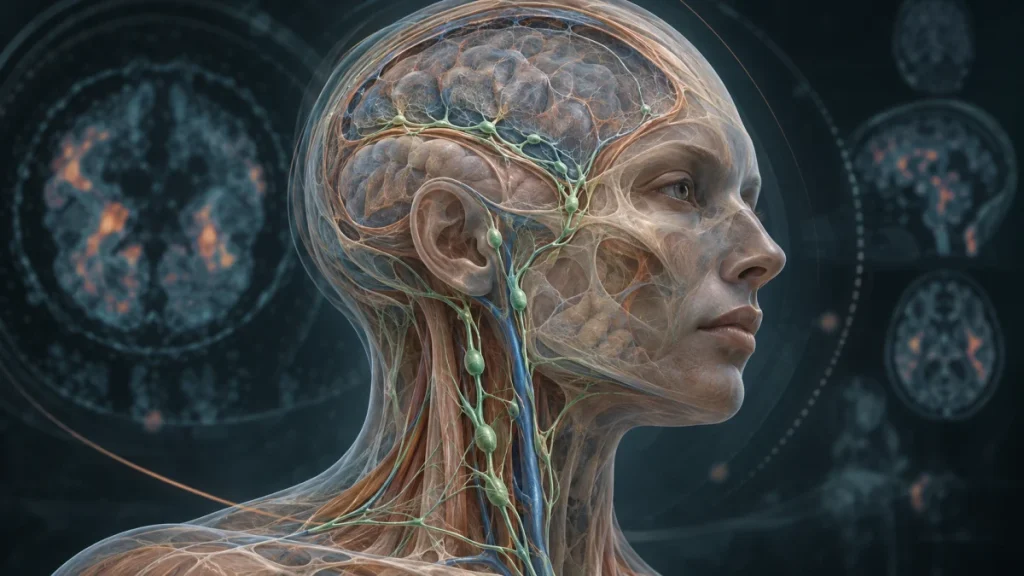
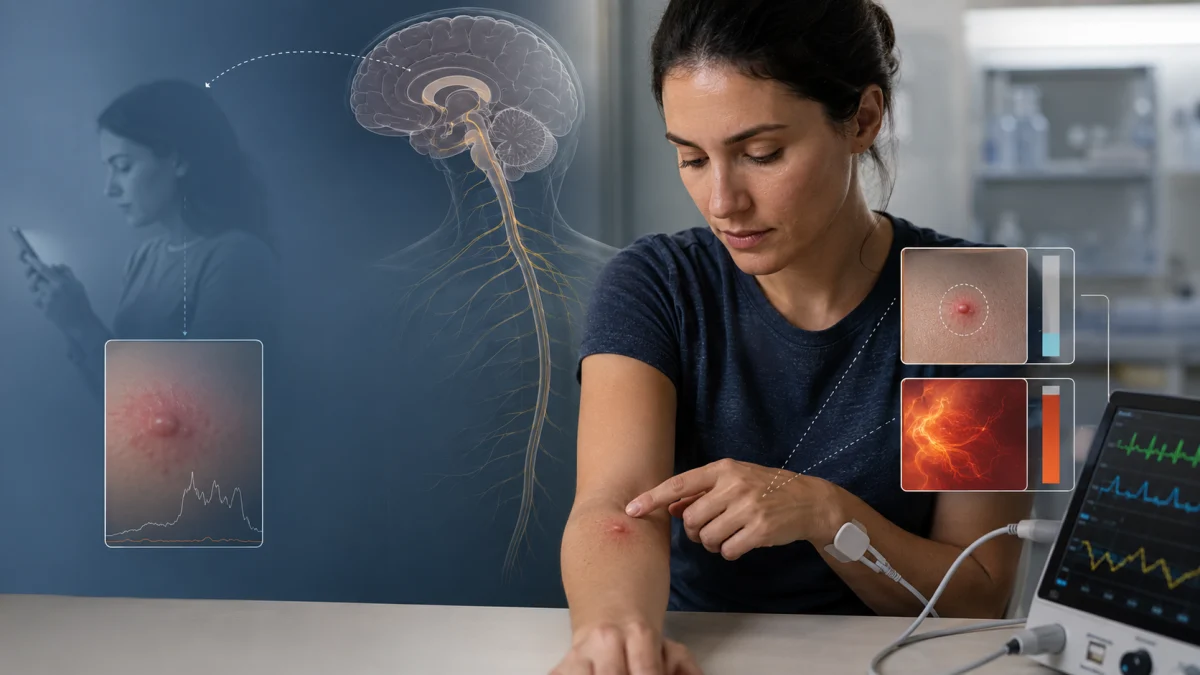
Yes—under a very specific set of experimental conditions, paying attention to an inflamed part of the body appears to reduce the measurable inflammatory response.
In a new peer-reviewed study published August 17, 2026, in Nature Human Behaviour, researchers induced a small, temporary inflammatory reaction on participants’ arms using histamine. When participants deliberately focused on the itching and burning sensations coming from that area, their skin developed a smaller inflammatory response than when they directed their attention elsewhere.
The effect was not just a change in how inflammation felt. Researchers physically measured the swelling and redness.
Across two independent groups, roughly 90% of participants showed a more regulated inflammatory response while paying attention to the affected area. The difference in the primary skin response was substantial: the researchers describe inflammatory responses under internal attention as roughly 1.5 times smaller than under distraction.
That makes the finding considerably more interesting than a simple placebo or pain-perception experiment.
But there is an equally important limit.
This study did not show that meditation can treat chronic inflammation, autoimmune disease, arthritis, inflammatory bowel disease, cancer, long COVID or any other inflammatory illness.
It examined a localized histamine skin reaction in healthy, mostly young adults for about 20 minutes.
Even the researchers explicitly caution that they do not yet know whether the effect extends to chronic, infectious or autoimmune inflammation.
The real finding is remarkable enough without turning it into something it isn’t.
What Did the Researchers Actually Do?
Researchers Nofar Mizrachi, Menachem Rottem and Liron Rozenkrantz conducted three preregistered experiments involving 57 participants in the final analysis.
The first two experiments used independent groups:
- Experiment 1 included 37 participants.
- Experiment 2 included 20 different participants.
- Experiment 3 brought back 17 participants from the earlier experiments for an additional mechanistic test.
Participants were healthy adults between 21 and 42 years old, with women making up a majority of the samples. The researchers preregistered their hypotheses, sample-size estimates, inclusion and exclusion criteria, primary outcomes and planned analyses before conducting the experiments.
To produce inflammation, an experimenter used a standardized histamine skin-prick test on the forearm.
Histamine rapidly causes a localized reaction characterized by:
Wheal: the raised area of swelling.
Flare: the surrounding area of redness.
The reaction develops within minutes and typically peaks around 15 to 20 minutes.
Researchers measured wheal and flare repeatedly at 1, 3, 5, 10, 15 and 20 minutes while also monitoring physiological signals including heart rate, respiration, skin conductance and skin temperature.
The important part was what participants did with their attention.
In one condition, they were instructed to concentrate on sensations from the inflamed area—the itching, burning and other feelings coming from their arm.
In the comparison condition, their attention was deliberately directed elsewhere.
Each participant experienced both conditions, allowing researchers to compare the same person’s inflammatory reaction while focused internally with that person’s response while distracted.
That within-person design eliminates a great deal of ordinary biological variation between people.
How Much Smaller Was the Inflammatory Response?
The difference was large enough to be plainly measurable.
In the first experiment, at the 20-minute measurement:
- Average wheal diameter was about 3.5 millimeters during internal attention.
- It was about 5.0 millimeters during distraction.
- Average flare was about 10.6 millimeters during internal attention.
- It was about 14.0 millimeters during distraction.
The wheal result produced a large statistical effect size, Cohen’s d = 1.30. The difference also developed rapidly: significant separation between the two attention conditions appeared within about three minutes and increased over time.
The researchers then performed a second experiment specifically designed to address an obvious objection.
Maybe watching videos during the distraction condition was physiologically different from staring at a fixation point. Maybe the visual stimulation, entertainment or mental workload—not attention itself—was producing the effect.
So Experiment 2 made the conditions much more similar.
Participants saw the same stream of abstract shapes in both conditions. When focusing internally, they used each changing shape as a reminder to return attention to their arm. During the distraction condition, they examined those same shapes and mentally judged whether each could realistically exist.
The difference in inflammatory regulation persisted.
That replication matters.
This was not one small experiment followed by a speculative conclusion. The central finding appeared in two independent groups using different attention tasks.
The Strangest Finding: People Felt More Itching While Showing Less Inflammation
The study produced a result that runs almost directly against intuition.
When participants paid attention to the affected area, they reported stronger sensations of itching and burning.
Yet their measurable inflammatory response was smaller.
In Experiment 2, focusing internally significantly increased perceived inflammation-related sensations compared with distraction. At the same time, the objective skin reaction remained better regulated.
So:
More perceived sensation did not mean more inflammation.
Distraction made the discomfort less noticeable while the underlying inflammatory response was larger.
That distinction is important because pain, itching and other bodily sensations are often treated as direct proxies for the severity of an underlying biological process.
They are not always the same thing.
The study instead raises the possibility that consciously perceiving a bodily signal may sometimes be part of the regulatory process itself.
That is a much more interesting proposition than simply saying that “mindfulness makes you feel better.”
Here, paying attention apparently made the sensations more noticeable while changing the physiology in the opposite direction.
Was This a Meditation or Mindfulness Study?
No.
This is one of the most important misconceptions to avoid.
Participants were not taught meditation.
They did not undergo mindfulness-based stress reduction.
They did not practice controlled breathing, visualization, positive thinking, progressive relaxation or a structured body-scan meditation.
They were essentially told:
Pay attention to the sensations coming from this part of your arm.
That is an attentional manipulation.
The researchers discuss mindfulness and other attention-based therapies because some of those interventions also encourage people to engage with bodily sensations rather than automatically avoiding them. But those therapies involve many additional psychological and behavioral components.
This experiment was designed specifically to isolate attention itself.
There is separate scientific literature examining whether mindfulness interventions affect inflammatory biomarkers. The overall picture there is much less dramatic.
A 2023 preregistered systematic review and meta-analysis found only small effects of mindfulness-based interventions on inflammation and stress biomarkers. When restricted to randomized controlled data, the pooled effect narrowly missed conventional statistical significance, and researchers identified issues including low study quality and evidence of publication bias.
An earlier systematic review likewise concluded that mindfulness might alter some immune parameters but described the evidence as tentative and emphasized the need for replication.
So this new experiment should not be converted into the claim that “science has proven meditation reduces inflammation.”
It hasn’t.
Does This Mean Your Mind Can Control Your Immune System?
In a limited but scientifically meaningful sense, yes.
That statement needs both halves.
The participants voluntarily changed where they directed their attention.
The inflammatory challenge was otherwise the same.
The measurable inflammatory response changed.
Because the study used within-person comparisons, counterbalanced conditions and preregistered experiments—and replicated the central effect in an independent group—the evidence supports a causal effect of attentional state on this particular acute inflammatory response.
That is more than merely finding that relaxed people happen to have lower inflammation.
But “the mind controls the immune system” can imply something much broader.
Humans cannot simply decide whether antibodies are produced, shut down an autoimmune attack, eliminate a bacterial infection or consciously set blood levels of inflammatory cytokines.
The immune system is an extraordinarily complex network involving many tissues, signaling molecules, cells and feedback mechanisms.
What this experiment adds to the evidence is narrower:
A voluntarily controlled cognitive process—attention—can influence at least one measurable inflammatory process in the human body.
That is still a significant finding.
What Does the Vagus Nerve Have to Do With It?
The researchers found evidence suggesting that part of the effect may involve the parasympathetic nervous system, including vagal regulation.
The vagus nerve is a major communication pathway connecting the brain with organs throughout the body. It has been studied for decades for its potential role in regulating immune activity through what is often called the cholinergic anti-inflammatory pathway.
Experimental and clinical research supports the broader idea that neural activity, including vagal signaling, can influence inflammation. But the exact pathways in humans remain more complicated—and less completely established—than simplified “activate your vagus nerve” wellness claims often suggest.
In the new attention study, researchers found increased heart-rate variability, or HRV, during internal attention compared with distraction.
That pattern is consistent with greater parasympathetic activity.
Importantly, however:
The researchers did not directly record activity from participants’ vagus nerves.
HRV is an indirect physiological indicator.
The paper therefore supports vagal involvement as a plausible mechanism, rather than demonstrating that researchers directly watched the vagus nerve activate and suppress inflammation.
That distinction matters because this study will almost certainly be absorbed into online claims about “vagus nerve hacks.”
The paper does not establish such a hack.
Researchers Also Tested Whether Simply Feeling the Area Was Necessary
The third experiment went further.
Researchers wanted to know whether the inflammatory effect depended on sensory signals traveling from the affected area back toward the brain.
Seventeen participants from the earlier experiments returned.
Researchers applied topical lidocaine to reduce sensory signaling from the skin while participants continued directing their attention toward the inflamed area.
The result was revealing.
Reducing sensory input weakened part of the normal recovery pattern seen during internal attention, particularly during the later phase when the swelling should have been moving back toward baseline.
But lidocaine did not completely eliminate the difference between internal attention and distraction.
The researchers therefore propose two potentially complementary processes:
A sensory-dependent pathway, in which information coming from the affected tissue helps the body regulate the inflammatory response.
A top-down pathway, potentially involving parasympathetic regulation, through which directing attention internally affects physiology even when sensory signaling is reduced.
That mechanism remains incomplete.
The study did not measure the underlying immune cells, cytokines or molecular signaling pathways responsible for the change, which the authors explicitly identify as a limitation.
Did Focusing Reduce Inflammation—or Did Distraction Make It Worse?
This is one of the most important unanswered questions in the experiment.
The study clearly demonstrates a difference between internal attention and distraction.
It does not conclusively establish where an ordinary, neutral state would fall between them.
There was no third condition in which participants simply experienced the histamine response while receiving no meaningful attentional instruction.
That means at least three possibilities remain logically compatible with the experiment:
- Internal attention actively reduced the inflammatory response.
- Distraction interfered with normal inflammatory regulation.
- Both occurred to some degree.
The authors themselves raise the possibility that directing attention away from uncomfortable bodily sensations could interfere with the brain’s ability to use those sensory signals for physiological regulation.
That is plausible.
It is not yet proven.
This distinction also makes the study’s title—“Voluntary attention regulates acute immune responses in humans”—more scientifically defensible than the simpler viral interpretation that “focusing your mind reduces inflammation.”
What was experimentally demonstrated was attentional regulation.
Determining exactly which attentional condition moves inflammation away from an ordinary baseline will require additional controls.
Could Constantly Distracting Yourself From Symptoms Be Counterproductive?
Possibly—but this is where the paper moves from evidence into hypothesis.
People commonly distract themselves from itching, pain and discomfort.
In some settings, clinicians also use distraction because it can make unpleasant sensations easier to tolerate.
The new study confirms that distraction can do exactly that: participants perceived less itching and burning when their attention was elsewhere.
But they simultaneously had a larger inflammatory skin response.
The researchers therefore raise the possibility that habitual symptom avoidance or distraction might sometimes carry a physiological tradeoff.
They even discuss the possibility that avoiding bodily sensations could matter in chronic pain or inflammatory conditions.
That has not been demonstrated.
It is a research question generated by the experiment, not a clinical conclusion.
There is also no basis here for telling someone with chronic pain to stare mentally at their pain all day or abandon useful distraction techniques.
The study lasted 20 minutes and examined a controlled histamine response.
Whether prolonged symptom attention is helpful, harmful or neutral in different diseases is an entirely different question.
Can This Help Autoimmune Disease or Chronic Inflammation?
We don’t know.
There were no patients with rheumatoid arthritis.
No lupus patients.
No people with Crohn’s disease.
No ulcerative colitis patients.
No participants were studied for chronic inflammatory pain.
There was no long-COVID cohort.
There was no systemic inflammatory disease.
There was no cancer-treatment experiment.
Researchers induced a temporary patch of inflammation on the forearms of healthy adults and watched it for 20 minutes.
The authors explicitly state that it remains unclear whether their results generalize to infectious inflammation, chronic inflammatory conditions or autoimmune disease.
That limitation isn’t a minor technicality.
Acute histamine-induced skin inflammation and chronic autoimmune inflammation are biologically very different problems.
Someone with rheumatoid arthritis, for example, does not merely have an oversized version of a histamine skin-prick reaction.
Autoimmune disease involves persistent immune dysregulation, immune recognition, inflammatory signaling, tissue-specific processes and complex genetic and environmental influences.
Nothing in this study demonstrates that attention can override those processes.
It would therefore be irresponsible to use this paper as a reason to replace anti-inflammatory drugs, immunomodulators, biologic therapies or other established medical treatment with attention exercises.
Is Less Inflammation Always Better?
No.
“Inflammation” has become such a negative word in health marketing that it is easy to forget what inflammation actually does.
Inflammation is part of the body’s defense and repair machinery.
You need inflammatory responses to fight pathogens, respond to injuries and coordinate tissue repair.
The problem is not the mere existence of inflammation. The problem can be excessive, prolonged, misdirected or poorly regulated inflammation.
The researchers emphasize this point themselves.
A smaller and faster-resolving response may represent efficient regulation in some settings. But suppressing inflammation too aggressively during an infection could theoretically interfere with host defense.
So even if scientists eventually learn how to deliberately manipulate inflammatory responses through attention, the goal would not necessarily be:
less inflammation at all times.
It would be:
appropriate inflammation, in the appropriate place, for the appropriate amount of time.
Was This Just the Placebo Effect?
Calling the result “just placebo” doesn’t adequately describe the experiment.
Participants were blinded to the study’s purpose, and the researchers measuring the inflammatory reactions were also blinded to the experimental conditions. The manipulation itself was simply where participants directed their attention.
There was also a physically measured outcome—not merely a report that participants believed they felt better.
In fact, they often felt more of the unpleasant sensation during the condition associated with less measurable inflammation.
That pattern is difficult to reconcile with the simplistic version of placebo in which people expect improvement, report feeling better and investigators mistake that perception for biological healing.
That does not mean expectation played absolutely no role.
Human cognitive experiments cannot magically remove every possible interaction among expectation, attention, perception and autonomic activity.
But the evidence supports something more interesting than “people imagined themselves less inflamed.”
Their skin reactions were measurably different.
Why This Study Matters
Researchers have known for years that the nervous and immune systems communicate.
Stress can affect immunity.
Neural circuits can alter inflammatory activity.
The vagus nerve and other autonomic pathways can participate in immune regulation.
What is unusual about this study is the simplicity of the intervention.
No drug was administered to suppress the reaction.
No nerve stimulator was implanted.
Participants did not complete months of psychological training.
They changed where they were paying attention for 20 minutes.
And an objective physiological response changed with it.
The result strengthens a broader scientific view of the brain not simply as an observer receiving information from the body, but as part of an active regulatory system continually interpreting bodily signals and helping coordinate physiological responses.
That doesn’t mean consciousness has magical command over biology.
It means the boundary between “mental” and “physical” processes is considerably less clean than everyday language implies.
Attention is a brain process.
The autonomic nervous system is biological.
The immune system communicates with neural pathways.
If changing one component alters another, that is not mystical.
It is physiology.
What the Study Proves—and What It Doesn’t
Verified by this study:
A voluntary change in attention altered a measurable acute inflammatory skin response in healthy humans.
The central result appeared in two independent participant groups.
Internal attention was associated with smaller inflammatory responses than distraction in roughly 90% of participants across the two cohorts.
Participants could perceive stronger itching and burning while simultaneously showing less measurable inflammation.
Reducing sensory signaling with lidocaine altered part of the effect, supporting a role for sensory feedback.
Increased HRV during internal attention was consistent with parasympathetic involvement.
Not established:
That meditation cures inflammation.
That thinking about an injury makes it heal faster.
That people can voluntarily shut down their immune systems.
That focusing on symptoms treats autoimmune disease.
That the technique reduces systemic inflammation.
That it lowers CRP, IL-6, TNF or other circulating inflammatory biomarkers.
That the vagus nerve was directly proven to cause the effect.
That distraction is medically harmful.
That patients should change treatment based on this research.
The strongest conclusion is also the most interesting one:
Attention appears capable of doing more than changing our perception of the body. Under at least some conditions, it can change what the body actually does.
The next question is no longer whether that can happen at all.
It is how far the effect extends beyond a 20-minute histamine reaction—and whether it can eventually be translated into something clinically useful.
References and Further Reading
Primary Research
“Voluntary Attention Regulates Acute Immune Responses in Humans” — Nature Human Behaviour Mizrachi, Rottem and Rozenkrantz’s August 17, 2026 peer-reviewed study. This is the primary source for the experimental design, sample characteristics, statistical results, mechanistic experiments and stated limitations.
Crossmark Record for “Voluntary Attention Regulates Acute Immune Responses in Humans” Confirms the current version of record, publication history and the authors’ declaration of no competing interests.
Vagus Nerve and Neuroimmune Regulation
“The Cholinergic Anti-Inflammatory Pathway in Humans: State-of-the-Art Review and Future Directions” — Neuroscience & Biobehavioral Reviews/PubMed A critical review of evidence for vagus-mediated inflammatory regulation in humans, including the strengths and remaining limitations of the field.
“The Cholinergic Anti-Inflammatory Pathway: A Critical Review” — Autonomic Neuroscience/PubMed Useful background on the proposed neural circuitry linking vagal activity and inflammatory regulation, including important mechanistic controversies.
Mindfulness and Inflammatory Biomarkers
“Only Small Effects of Mindfulness-Based Interventions on Biomarker Levels of Inflammation and Stress” — International Journal of Molecular Sciences/PubMed Central A preregistered systematic review and meta-analysis finding only small effects of mindfulness interventions on inflammation and stress biomarkers, with concerns about study quality and publication bias.
“Mindfulness Meditation and the Immune System: A Systematic Review of Randomized Controlled Trials” — Annals of the New York Academy of Sciences/PubMed Central Reviews randomized evidence linking mindfulness practices with immune-system biomarkers and concludes that some findings are promising but remain tentative.
Editorial note: This article describes research published on August 17, 2026. The findings are new, and no clinical application has yet been established. Conclusions may change as independent laboratories attempt replication and researchers test other forms of inflammation, longer time periods and patients with inflammatory disease.