A lot of people who say “go read history” have not read history. They’ve memorized a story they were handed young, called it truth, and spent the rest of their lives assuming everyone else is the one being misled.
Every generation imagines it would have known.
We imagine we would have recognized the danger earlier. We would have heard the dehumanizing language and understood where it was going. We would have seen the expulsions, the camps, the starvation, the mass graves, the missing children, the stripped citizenship, the burned villages, the lists of names, the official excuses, and we would have said the thing plainly.
We would not have hidden behind “complexity.”
We would not have waited for permission.
We would not have confused neutrality with wisdom.
At least, that is what we like to believe.
History is less flattering.
Again and again, the record shows something more uncomfortable: genocides are rarely obvious to everyone while they are happening. They are obvious to the victims. They are often obvious to the people documenting them. They may even be visible to governments, journalists, diplomats, courts, and ordinary citizens. But they are still argued over. They are softened. They are renamed. They are buried under security language, legal caution, patriotic feeling, ideological loyalty, and the fear of being seen as biased.
Then, years later, the fog clears. Not completely, but enough.
The dead are counted. The documents surface. The survivors testify. The official denials become embarrassing. The careful statements begin to look cowardly. The people who once sounded measured begin to sound evasive. And the future asks a brutal question:
Why did so many people spend so much energy resisting the word?
The word genocide has a legal meaning. Under the Genocide Convention, genocide means certain acts committed with intent to destroy, in whole or in part, a national, ethnic, racial, or religious group. Those acts include killing members of the group, causing serious bodily or mental harm, deliberately imposing conditions of life meant to bring about physical destruction, preventing births, and forcibly transferring children. (United Nations)
That definition matters. It should not be thrown around carelessly. But the difficulty of proving genocide is also part of the danger. Intent can be hidden. Records can be destroyed. Victims can be smeared. Numbers can be disputed. Governments can call destruction “security.” Armies can call starvation “pressure.” Propagandists can call witnesses “terrorists,” “traitors,” “foreign agents,” or “liars.”
That is the trap.
The word should not be used lightly. But it should also not be withheld so long that it becomes an obituary.
This essay is not an argument that every accusation of genocide is automatically true. It is not a demand to abandon evidence, law, context, or careful thinking. It is the opposite. It is a warning that “careful thinking” can become a costume for moral surrender when it is applied more generously to the powerful than to the dead.
Genocide denial is not always loud. It is not always hateful in the obvious way. It often sounds educated. It often sounds calm. It often asks for more time, more context, more balance, more proof, more patience. Sometimes those requests are honest. Sometimes they are necessary.
And sometimes they are the exact language history later condemns.
Gregory Stanton’s widely used “Ten Stages of Genocide” model describes denial as a stage that continues during and after genocide, including efforts to hide evidence, intimidate witnesses, deny crimes, and blame victims. (genocidewatch) That is one of the most disturbing lessons in the study of mass atrocity: denial is not merely what comes after. It is often part of the machinery itself.
Denial does not always say, “Nothing happened.”
More often, it says:
Something happened, but not like that.
Something happened, but the numbers are exaggerated.
Something happened, but the victims brought it on themselves.
Something happened, but the state had no choice.
Something happened, but the word genocide is inflammatory.
Something happened, but calling it genocide is hateful.
Not hateful to destroy a people.
Hateful to name the destruction.
That inversion is where history becomes merciless.
The Respectable Language of Denial
The most dangerous denial rarely begins as a cartoon.
It begins as a mood.
A person wants to be fair. A person wants to be serious. A person does not want to be manipulated. A person does not want to sound emotional. A person does not want to be grouped with extremists. A person does not want to be accused of hating the people accused of the crime.
So the person waits.
Waiting can be wise. But waiting can also become a form of participation.
There is a difference between saying, “I need evidence before I make a legal conclusion,” and saying, “Until a court reaches a final judgment years from now, I will treat the victims as suspicious and the perpetrators as misunderstood.”
There is a difference between respecting the seriousness of the word genocide and using that seriousness to make the word unreachable.
The language repeats across history:
“It is a civil war.”
“It is counterinsurgency.”
“It is relocation.”
“It is famine.”
“It is ancient hatred.”
“It is anti-terrorism.”
“It is development.”
“It is reeducation.”
“It is not about who they are; it is about what they did.”
“It is tragic, but complicated.”
“It is irresponsible to use that word.”
Again, not every case is identical. History does not repeat like a photocopier. It repeats like a pattern in human weakness.
People want to think of themselves as moral without paying the cost of moral clarity. They want to oppose atrocities in theory while remaining socially safe in practice. They want to be the kind of person who would have resisted the past, without becoming the kind of person who is uncomfortable in the present.
That is the central problem.
The future does not only remember what happened. It remembers what people called it while it was still possible to do something.
Ten Historical Mirrors
The following cases are not identical. Some have final legal judgments. Some are widely recognized by historians and governments but still disputed by denialist states or contested in legal terms. Some were named too late. Some were named while the killing continued, and still the world failed to stop them.
That variety is the point.
The pattern is not that every genocide follows the same script. The pattern is that denial always finds a script.
1. The Herero and Nama Genocide
Between 1904 and 1908, German colonial forces in what is now Namibia carried out a campaign against the Herero and Nama peoples. Britannica describes the conflict and its aftermath as killing about 75 percent of the Herero population, and notes that most scholars consider it genocide. (Encyclopedia Britannica) Germany formally recognized the atrocities as genocide in 2021, more than a century later, while disputes over reparations and direct compensation continue. (Time)
The denial pattern here is delay.
A century can pass, and the argument can still be made to sound technical. The word did not exist then. The standards were different then. The legal framework came later. Development aid should be enough. Reparations are complicated. Descendants should not reopen wounds.
But the wound was never closed for the people who inherited it.
The Herero and Nama case shows that recognition delayed is not recognition avoided. It is merely recognition made crueler by time.
2. The Armenian Genocide
The Armenian Genocide refers to the destruction of Armenian Christians in the Ottoman Empire during World War I. The United States Holocaust Memorial Museum estimates that between 664,000 and 1.2 million Armenians died through massacres, deportations, exposure, starvation, and systematic ill treatment. (Holocaust Encyclopedia) The International Association of Genocide Scholars has affirmed that the mass murder of Armenians in 1915 fits the Genocide Convention’s definition. (Armenian National Institute)
The denial pattern here is national security.
The victims are described as traitors. Deportation becomes relocation. Mass death becomes wartime chaos. The numbers become “disputed.” Recognition becomes “political.” The focus shifts from what was done to the accused state’s reputation.
This is one of the oldest denial moves: turn the accusation of genocide into an attack on the identity of the accused group.
That move is powerful because it recruits ordinary people into the defense. People who did not commit the crime begin to feel personally accused by the naming of the crime. Soon the conversation is no longer about the dead. It is about whether the living are being treated unfairly by memory.
3. The Holocaust
The Holocaust is the systematic, state-sponsored persecution and murder of six million European Jews by Nazi Germany and its collaborators between 1933 and 1945. (Holocaust Encyclopedia) It is among the most documented crimes in human history. And still, Holocaust denial persists. The United States Holocaust Memorial Museum defines Holocaust denial as attempts to negate the established facts of the Nazi genocide of European Jews. (United States Holocaust Memorial Museum)
That should humble us.
Evidence alone does not end denial. Survivors do not end denial. Photographs do not end denial. Documents do not end denial. Trials do not end denial. Memorials do not end denial.
Denial adapts.
At first, it may say the victims are lying. Later, it says the numbers are exaggerated. Later still, it says the events happened but are being used unfairly. Eventually it may not deny the killing at all. It may simply ask why people keep bringing it up.
The Holocaust teaches a terrifying lesson: if denial can survive this much evidence, then no atrocity is too documented to be denied.
4. The Holodomor
The Holodomor was the man-made famine in Soviet Ukraine in 1932–33 that killed millions. Britannica notes that the famine was officially denied by the Kremlin for more than half a century. It is recognized as genocide by Ukraine and many other governments and scholars, though its classification as genocide has also been debated, especially around the question of intent. (Encyclopedia Britannica)
The denial pattern here is bureaucracy.
Starvation can be made to look like policy failure. Grain seizure can be described as economic planning. Closed borders can be described as administrative necessity. Silence can be called unity. Famine can be blamed on weather, peasants, sabotage, or inefficiency.
When killing is done with bullets, it is easier to picture. When destruction is done through food, movement, paperwork, and punishment, the moral imagination struggles.
The Holodomor forces us to ask whether we are only prepared to recognize atrocity when it looks like the version we already know.
5. The Cambodian Genocide
From 1975 to 1979, the Khmer Rouge subjected Cambodia to forced labor, execution, starvation, ideological purification, and social destruction. The United States Holocaust Memorial Museum says nearly two million people died under Khmer Rouge rule. (United States Holocaust Memorial Museum) Britannica gives a broader estimate of 1.5 million to 3 million deaths, about a quarter of the country’s population. (Encyclopedia Britannica) A UN-backed tribunal later concluded that Khmer Rouge leaders committed genocide, crimes against humanity, and war crimes, with genocide convictions focused especially on crimes against Cham Muslims and ethnic Vietnamese. (United States Holocaust Memorial Museum)
The denial pattern here is ideology.
A revolution can sell destruction as renewal. It can call forced labor liberation. It can call murder purification. It can call the elimination of teachers, professionals, minorities, monks, dissidents, and ordinary families a necessary step toward equality.
This is one of the ugliest facts about human beings: people can commit mass murder while believing they are building a better world.
That does not excuse them. It explains why denial can feel sincere. Many people do not defend evil because they wake up wanting evil. They defend the story that makes evil feel meaningful.
6. Rwanda
In 1994, extremist Hutu forces led a planned campaign to kill Rwanda’s Tutsi minority and moderate opponents. The United Nations International Criminal Tribunal for Rwanda describes between 800,000 and one million men, women, and children being massacred in roughly 100 days. (UNICTR) The United States Holocaust Memorial Museum describes the genocide as a plan by a Hutu extremist-led government to wipe out the Tutsi minority and others who opposed its policies. (United States Holocaust Memorial Museum)
The denial pattern here is hesitation in real time.
The world did not lack warning. It lacked will. Declassified documents show that U.S. officials debated whether to use the word genocide and avoided the term for weeks, even as the killing unfolded. (National Security Archive)
Rwanda is the case that destroys the fantasy that genocide always hides.
Sometimes it is public. Sometimes it is fast. Sometimes the radio is telling people who to kill. Sometimes the bodies are already in the road. And still, institutions choose language that keeps responsibility at a distance.
A phrase like “acts of genocide” can become a moral half-step: enough to sound aware, not enough to demand action.
7. Srebrenica and Bosnia
In July 1995, Bosnian Serb forces captured Srebrenica and killed more than 8,000 Bosniak Muslim men and boys. The International Criminal Tribunal for the former Yugoslavia describes victims being detained, abused, tortured, executed, and buried in mass graves, while denial began almost immediately. (ICTY) The United Nations notes that both the ICTY and the International Court of Justice concluded that the acts committed at Srebrenica constituted genocide. (United Nations)
The denial pattern here is classification.
It was a massacre, not genocide. The numbers are inflated. They were combatants. The courts are biased. The term is being used to demonize an entire people.
Notice the emotional structure. Once again, the accusation becomes the injury. The crime becomes secondary to the discomfort of being associated with the crime.
Srebrenica also exposes the weakness of symbolic protection. A “safe area” is not safe because the world names it safe. It is safe only if someone is willing to protect it.
“Never again” is not a spell.
8. Darfur
In the early 2000s, Sudan’s government and Janjaweed militias committed mass atrocities in Darfur. The United States Holocaust Memorial Museum states that from 2003 to 2005, Sudan’s government under Omar al-Bashir, with Janjaweed militias, committed genocide targeting non-Arab ethnic groups, killing more than 200,000 people and displacing more than two million. (United States Holocaust Memorial Museum) In 2004, U.S. Secretary of State Colin Powell publicly determined that genocide had been committed in Darfur and that the Sudanese government and Janjaweed bore responsibility. (Holocaust Encyclopedia) The International Criminal Court later issued arrest warrants for al-Bashir, including a 2010 warrant on genocide charges. (International Criminal Court)
The denial pattern here is counterinsurgency.
The state says it is fighting rebels. The militias are irregular. The conflict is tribal. The region is complex. The government is trying to restore order. The displaced are unfortunate victims of war, not targets of a policy.
Darfur teaches another hard lesson: naming genocide is not the same as stopping it.
Sometimes the world says the word and still fails. Recognition without protection can become a different kind of shame.
9. The Rohingya
The Rohingya, a Muslim minority in Myanmar, endured decades of persecution before a 2017 military campaign drove more than 700,000 people into Bangladesh. The United States Holocaust Memorial Museum describes mass killing, rape, torture, arson, arbitrary arrest, detention, and forced displacement as part of a broader campaign of genocide. (United States Holocaust Memorial Museum) The UN Fact-Finding Mission on Myanmar warned of a continued threat of genocide against the Rohingya. (OHCHR) The Gambia brought a case against Myanmar at the International Court of Justice under the Genocide Convention, and the ICJ ordered provisional measures in 2020 to protect Rohingya rights while the case proceeds. (International Court of Justice)
The denial pattern here is belonging.
Before a people can be destroyed physically, they are often destroyed administratively. They are told they are not real citizens. They are foreigners. They are illegal. They are demographic threats. Their history is disputed. Their identity is treated as fraud.
Then, when violence comes, the groundwork has already been laid.
The state does not need everyone to cheer. It only needs enough people to believe the victims do not fully belong anywhere.
10. Uyghurs in Xinjiang
Uyghurs and other mostly Muslim Turkic minorities in Xinjiang have faced mass detention, surveillance, religious repression, forced labor allegations, family separation, and coercive population-control measures. In January 2021, the U.S. State Department determined that China had committed genocide and crimes against humanity against Uyghurs and other ethnic and religious minorities in Xinjiang; the United States Holocaust Memorial Museum notes that the Biden administration upheld that finding. (U.S. Department of State) The UN Human Rights Office’s 2022 Xinjiang assessment concluded that the extent of arbitrary and discriminatory detention may constitute international crimes, particularly crimes against humanity. (OHCHR)
The denial pattern here is modernization.
Camps become training centers. Repression becomes deradicalization. Forced assimilation becomes development. Surveillance becomes safety. Cultural destruction becomes national unity. Family separation becomes education. The state insists it is helping the people it is accused of destroying.
This is the modern face of atrocity: clean buildings, administrative language, digital systems, official tours, and polished denial.
It reminds us that genocide does not have to look primitive. It can be bureaucratic, technological, and branded as progress.
The Grammar of Genocide Denial
Across these cases, denial does not always use the same words. But it often follows the same grammar.
First, there is the demand for impossible certainty. People ask for a level of proof that may only exist after the crime is complete.
Then comes the civility trap. Naming the crime becomes more offensive than the crime itself.
Then the sympathy reversal. The accused state, army, empire, party, ideology, or public becomes the wounded party. The victims become dangerous because they accuse.
Then the “both sides” sedative. Complexity is used not to understand responsibility, but to dissolve it.
Then the number game. If the death toll is uncertain, the suffering is treated as uncertain.
Then the perfect victim test. Victims must be innocent, polite, strategically silent, represented by flawless advocates, and free of any association that can be used against them.
Then the reputation shield. Critics are accused of hatred toward the perpetrator group, rather than concern for the victim group.
Then the humanitarian rebrand. Destruction becomes security, relocation, counterterrorism, reeducation, stabilization, development, or public order.
Then the archive delay. People say history will decide, while the institutions creating history restrict journalists, investigators, courts, aid workers, and survivors.
Finally, the posthumous conversion. After the world accepts the atrocity, later generations insist they would have opposed it.
Everyone wants to inherit the courage of the past without risking the discomfort of the present.
That is how history repeats itself.
Not because people learn nothing. Because people learn the wrong lesson.
They learn that past genocides were bad. They do not learn how normal the excuses sounded while they were happening.
The Problem With Being “Impartial”
Impartiality is a virtue when it means honesty.
It is not a virtue when it means standing exactly halfway between the fire and the people burning in it.
There is a kind of person who wants to be so fair that they become unfair in the most predictable direction. They are skeptical of victims because victims sound emotional. They are patient with states because states sound official. They distrust moral urgency because urgency feels manipulative. They prefer the language of institutions because institutions feel adult.
I understand this temptation.
I do not write this because I think I am immune to denial. I write it because I know I am not.
I know the comfort of waiting. I know the appeal of saying, “It’s complicated,” and feeling wiser for having said less. I know the desire to avoid being captured by propaganda. I know how easy it is to fear being wrong in public more than being silent in the face of suffering.
But there is a point where nuance becomes a hiding place.
There is a point where “I am still researching” becomes “I have decided not to care yet.”
There is a point where neutrality no longer protects truth. It protects comfort.
The challenge is not to abandon caution. The challenge is to ask whether our caution is honest.
Are we cautious because the evidence is unclear?
Or are we cautious because the evidence is becoming clear, and clarity would demand something from us?
When Compassion Becomes Suspicious
One of the strangest features of atrocity politics is how quickly tenderness becomes controversial.
A person says children should not starve. Children should not be bombed. Children should not lose limbs. Children should not watch their families die. Children should not be treated as acceptable collateral. Children should not be reduced to the politics adults use to excuse their suffering.
And suddenly the conversation shifts.
Who are you really helping?
Why those children?
Who told you to say that?
Are you being used?
Do you condemn the right people first?
Are you secretly on the wrong side?
This is where a modern cultural example like Ms. Rachel matters, not because she is the center of the issue, but because the reaction to her reveals something about the moment. Reporting has described backlash against Rachel Griffin Accurso, known as Ms. Rachel, over her appeals for children in Gaza, including accusations that her advocacy was political or aligned with Hamas; she has said that caring about one group of children does not prevent care for another. (The Times of Israel) PBS later interviewed her about her advocacy for children in Gaza, where she framed the issue around hearing children’s voices and responding to their suffering. (PBS)
The point is not that every public figure gets every fact right. The point is not that compassion makes someone automatically correct about law, history, or geopolitics.
The point is simpler:
When a children’s teacher becomes controversial for caring about children, the controversy may be telling us less about the teacher than about the society watching her.
A society defending destruction must eventually become suspicious of tenderness.
Because tenderness keeps making the victims visible.
The Living Mirror
No serious essay about genocide denial can avoid the present. But it also should not collapse into a shouting match about one conflict, one people, one government, or one slogan.
The present is not useful because it gives us an easy answer. It is useful because it tests whether we have learned anything at all.
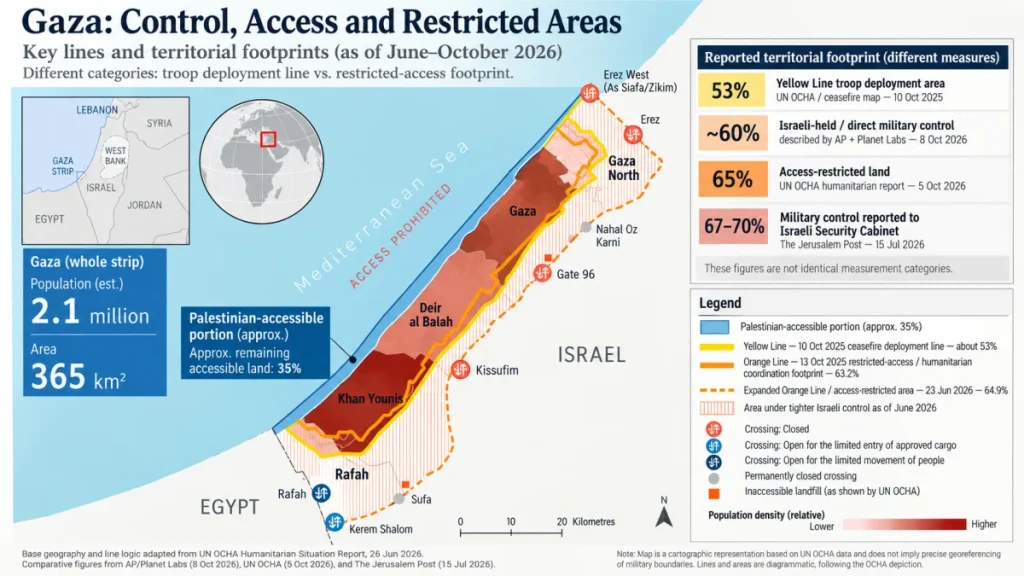
As of June 2026, the International Court of Justice has not issued a final judgment in South Africa’s genocide case against Israel regarding Gaza. The ICJ case remains ongoing. The Court’s January 2024 provisional-measures order found that at least some rights asserted by Palestinians under the Genocide Convention were plausible, including the right of Palestinians in Gaza to be protected from acts of genocide and related prohibited acts. (International Court of Justice) In May 2024, the Court issued further provisional measures related to Rafah and the risk of irreparable prejudice to those plausible rights. (International Court of Justice) In May 2026, the Court set later written-pleading deadlines, with South Africa’s reply due in November 2027 and Israel’s rejoinder due in May 2029. (The Presidency)
That is the legal posture.
It is not a final genocide judgment.
It is also not nothing.
Since the case began, major human rights bodies and organizations have reached stronger conclusions. In September 2025, the UN Independent International Commission of Inquiry on the Occupied Palestinian Territory, including East Jerusalem, and Israel concluded that Israel had committed genocide in Gaza. (OHCHR) Amnesty International concluded in December 2024 that Israel had committed genocide against Palestinians in Gaza. (Amnesty International) Israeli human rights organizations B’Tselem and Physicians for Human Rights Israel also concluded in 2025 that Israel was committing genocide in Gaza. (B’Tselem) Israel has rejected genocide allegations, arguing that its war is lawful self-defense against Hamas and that civilian harm is not evidence of genocidal intent; the United States has also intervened at the ICJ in support of arguments rejecting genocidal intent. (AP News)
This is where intellectual honesty matters.
A person can say, accurately, that the ICJ has not issued a final judgment.
A person cannot honestly pretend there is no serious genocide allegation, no substantial legal concern, no documented pattern, no expert finding, no court-ordered provisional measures, and no historical reason to be deeply alarmed.
The difference between those two statements is the difference between caution and denial.
History will not ask whether we predicted the final judgment perfectly.
It will ask what we did with what was knowable at the time.
The Future Will Read Us
Imagine the future reading us.
Not the future we invent to comfort ourselves. The real future. The one with access to archives we do not have yet. The one with court records, survivor testimony, leaked communications, satellite imagery, grave sites, hospital logs, policy memos, chain-of-command evidence, demographic data, and the accumulated grief of people we currently discuss as abstractions.
Imagine that future scrolling through old posts, essays, statements, interviews, sermons, university letters, corporate memos, government briefings, and private messages.
Imagine the facts are clearer then.
Imagine the euphemisms have expired.
Imagine the children have names.
What will it mean to have been the person who said, “It is hateful to call this genocide”?
What will it mean to have been the person who cared more about whether the accusation was rude than whether the destruction was real?
What will it mean to have been the person who called compassion propaganda?
This is not about wanting to be remembered as correct. That is too small.
It is about not wanting your intelligence to become a hiding place for cowardice.
It is about not wanting your caution to become a record of what you protected.
It is about understanding that history does not only condemn the architects of atrocity. It also studies the climate around them: the polite deflections, the respectable delays, the careful people who were always waiting for one more document, one more hearing, one more institution, one more decade.
And yes, there will always be deniers.
There are still Holocaust deniers. There are still Armenian Genocide deniers. There are still people who deny Srebrenica. There are still people who minimize Rwanda, Darfur, the Rohingya, and other mass atrocities. Denial does not disappear when history becomes clear. It just becomes a choice with fewer excuses.
So the question is not whether everyone will eventually agree.
They will not.
The question is whether you want to stand with the people whose moral posture depends on history never finishing the sentence.
What We Owe the Dead and the Living
We owe the dead accuracy.
We owe the living urgency.
Those two duties are not enemies.
Accuracy without urgency becomes sterile. Urgency without accuracy becomes reckless. The work is to hold both at once.
That means we should not use the word genocide as a casual insult. It means we should distinguish between legal judgments, scholarly consensus, government determinations, human rights findings, and active allegations. It means we should read carefully. It means we should be honest about uncertainty.
But honesty about uncertainty is not the same as manufacturing uncertainty.
When the evidence points toward mass destruction of a protected group, when courts issue emergency measures, when survivors testify, when aid workers warn, when journalists document, when human rights organizations converge, when officials use dehumanizing language, when food, water, medicine, homes, hospitals, births, families, and memory itself become targets, then “I am just being careful” may no longer be careful.
It may be a confession.
The lesson of history is not that every claim is true.
The lesson is that denial almost always sounds reasonable to the people who need it.
It sounds like patriotism.
It sounds like balance.
It sounds like legal precision.
It sounds like skepticism.
It sounds like refusing propaganda.
It sounds like protecting a community from unfair blame.
It sounds like being the adult in the room.
And sometimes it is.
But sometimes the adult in the room is simply the person asking everyone to lower their voices while the house burns.
Every generation imagines it would have recognized the crime earlier than the last. History suggests otherwise.
The question is not whether we would have been brave in the past.
The question is whether our present language is already becoming evidence.
References and Further Reading
Legal definition and genocide prevention
United Nations Office on Genocide Prevention and the Responsibility to Protect — definition of genocide under the Genocide Convention. (United Nations)
OHCHR — Convention on the Prevention and Punishment of the Crime of Genocide. (OHCHR)
United States Holocaust Memorial Museum — “What Is Genocide?” (United States Holocaust Memorial Museum)
Genocide Watch — Gregory Stanton’s “Ten Stages of Genocide,” including denial as a recurring stage during and after genocide. (genocidewatch)
Historical case studies
Britannica — German-Herero conflict and recognition of the Herero and Nama genocide. (Encyclopedia Britannica)
United States Holocaust Memorial Museum — Armenian Genocide overview and death toll estimates. (Holocaust Encyclopedia)
International Association of Genocide Scholars — affirmation of the Armenian Genocide. (Armenian National Institute)
United States Holocaust Memorial Museum — Introduction to the Holocaust. (Holocaust Encyclopedia)
United States Holocaust Memorial Museum — Holocaust denial and distortion. (United States Holocaust Memorial Museum)
Britannica — Holodomor overview, Soviet denial, and genocide classification context. (Encyclopedia Britannica)
United States Holocaust Memorial Museum — Cambodia under the Khmer Rouge. (United States Holocaust Memorial Museum)
Extraordinary Chambers in the Courts of Cambodia — Khmer Rouge tribunal findings. (ECCC)
United Nations International Criminal Tribunal for Rwanda — Rwanda genocide overview. (UNICTR)
National Security Archive — U.S. government hesitation and avoidance of the word genocide during Rwanda. (National Security Archive)
International Criminal Tribunal for the former Yugoslavia — Srebrenica genocide and denial. (ICTY)
United Nations — Srebrenica genocide commemoration and legal recognition by ICTY and ICJ. (United Nations)
United States Holocaust Memorial Museum — Darfur genocide overview. (United States Holocaust Memorial Museum)
International Criminal Court — Omar al-Bashir Darfur case and genocide warrant. (International Criminal Court)
United States Holocaust Memorial Museum — Rohingya / Burma case study. (United States Holocaust Memorial Museum)
OHCHR — UN Fact-Finding Mission on Myanmar and continued threat of genocide. (OHCHR)
International Court of Justice — The Gambia v. Myanmar provisional measures order. (International Court of Justice)
U.S. State Department — determination of genocide and crimes against humanity in Xinjiang. (U.S. Department of State)
United States Holocaust Memorial Museum — Uyghurs / China case study and U.S. responses. (United States Holocaust Memorial Museum)
OHCHR — Xinjiang human rights assessment. (OHCHR)
Contemporary legal and cultural references
International Court of Justice — South Africa v. Israel, January 2024 provisional-measures order. (International Court of Justice)
International Court of Justice — May 2024 order on further provisional measures in relation to Rafah. (International Court of Justice)
International Court of Justice — South Africa v. Israel case page and 2026 procedural status. (International Court of Justice)
South African Presidency — May 2026 ICJ timetable for South Africa’s reply and Israel’s rejoinder. (The Presidency)
OHCHR — UN Independent International Commission of Inquiry conclusion on Gaza genocide. (OHCHR)
Amnesty International — Gaza genocide report. (Amnesty International)
B’Tselem and Physicians for Human Rights Israel — 2025 Gaza genocide conclusions. (B’Tselem)
Associated Press — Amnesty report and Israel’s rejection of genocide allegations. (AP News)
Associated Press — U.S. intervention in South Africa v. Israel rejecting genocidal-intent arguments. (AP News)
Times of Israel — Ms. Rachel backlash over appeals for Gazan children. (The Times of Israel)
PBS NewsHour — Ms. Rachel interview on advocating for Gaza’s children. (PBS)