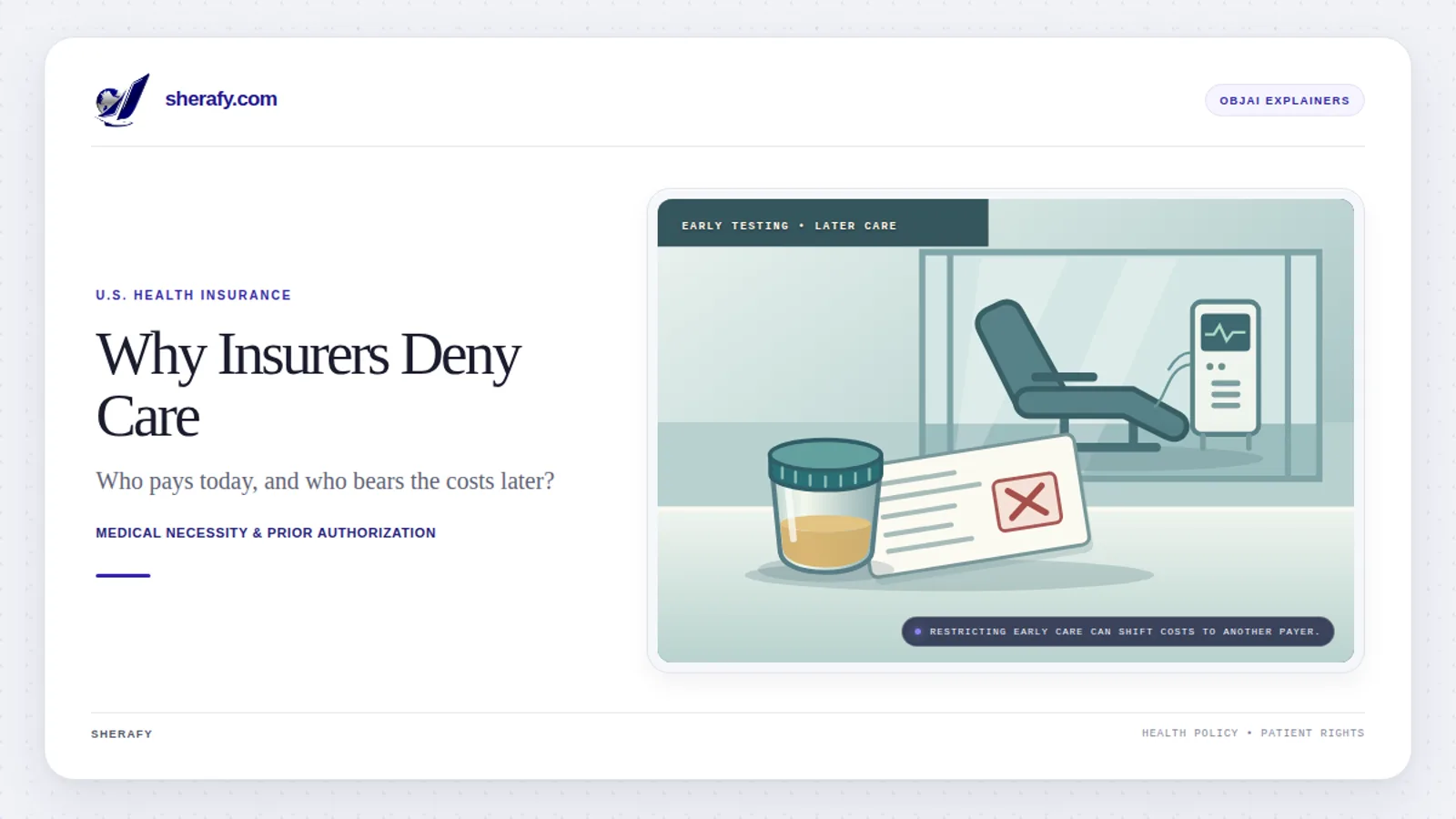
Health insurance companies deny doctor-recommended care because coverage decisions are governed by benefit contracts, medical necessity criteria, administrative requirements and financial incentives, not solely by the judgment of a treating physician. Some restrictions prevent unnecessary or ineffective treatment. Others obstruct care that patients genuinely need.
There is also a deeper economic problem: the organization paying for medical care today may not be the organization paying for the consequences of withholding that care tomorrow. A decision that reduces one payer's immediate expenses can increase costs for a future insurer, an employer, Medicare or the patient.
This is not merely a theoretical concern. Federal investigators have documented denials of services that met Medicare coverage requirements, and economic research has identified insurance turnover as a barrier to investment in preventive healthcare. Studies have also found circumstances in which restricting access to effective treatment was associated with higher subsequent medical spending.
In a November 25, 2026, Instagram video attributed to @doctoradhd, a creator identifying herself as a nephrologist described being told that stage 3 chronic kidney disease was not a valid diagnosis for a urine study she wanted to order. The account raises an obvious question: why would anyone obstruct an inexpensive test that could inform treatment for a potentially serious disease?
The precise test, insurance plan, denial notice and coverage rationale have not been independently verified. We cannot determine whether that particular decision was appropriate. But the broader problem is independently documented, and understanding it requires looking beyond the price of a single medical test.
Can health insurance overrule your doctor?
In practical terms, yes. An insurance plan can refuse to cover a treatment your doctor recommends, subject to the plan's contractual obligations and applicable law. That is not the same as a legal prohibition on providing treatment. It can, however, make treatment financially inaccessible.
Four concepts are often confused:
| Concept | What it means |
|---|---|
| Clinical necessity | A clinician's judgment about what care is appropriate for a particular patient. |
| Medical necessity under insurance rules | Whether the treatment satisfies the plan's applicable clinical coverage criteria. |
| Covered benefit | Whether the service falls within the benefits the plan is required or has agreed to provide. |
| Payment responsibility | Who pays, and how much, after applying coverage rules, deductibles and other cost-sharing. |
A physician's recommendation is not automatically proof that a plan must pay. Conversely, an insurance denial does not establish that treatment is clinically unnecessary.
Plans may require evidence of particular symptoms, test results, previous treatments or diagnoses. Reviewers may include physicians, nurses, pharmacists and other personnel, with administrative systems and contractors supporting the process. Requirements concerning clinical qualifications and review procedures vary by plan and jurisdiction.
Why do health insurance companies deny claims?
| Reason | How it can affect a patient |
|---|---|
| Prior authorization | Approval is required before a treatment, test or procedure is covered. |
| Medical necessity criteria | A reviewer concludes that the clinical criteria for coverage have not been met. |
| Step therapy | A patient must try another treatment before the requested treatment is covered, unless an applicable exception is granted. |
| Benefit exclusion | The service is outside the plan's covered benefits. |
| Documentation or coding problem | A claim or request contains missing, inconsistent or incorrect information. |
| Network or referral rules | The provider, facility or referral does not satisfy applicable plan requirements. |
| Eligibility or coverage issue | Coverage is inactive or another payer may be responsible. |
A prior authorization denial concerns approval of proposed care. A claim denial concerns payment after a claim is submitted. An administrative rejection may instead require correction and resubmission. These are different events, even if they all interfere with a patient's access to care.
A service can also be covered without an immediate insurance payment because the patient has not met a deductible. That is not necessarily a denial. Sherafy's explainer on why paying cash can sometimes cost less than using insurance looks at how deductibles and negotiated rates affect that choice.
How often do health insurance companies deny medical care?
There is no single reliable denial rate covering every American health plan. Different datasets count different things: individual claims, authorization requests, patients or households experiencing at least one denial.
The distinction matters because one patient can generate many claims or authorization requests.
What patients report
A January 2026 KFF national poll found that 33% of insured adults reported at least one denial of coverage for a doctor-prescribed service, treatment or medication in the previous two years. The proportion rose to 42% among respondents with a chronic condition requiring ongoing treatment.
A separate KFF survey released in September 2026 found that 49% of insured adults ages 18 to 64 with multiple chronic conditions reported a coverage denial or delay in the preceding two years. Of this population, 41% reported a denial and 37% reported a delay; some experienced both.
The Commonwealth Fund's June 2026 report, analyzing 4,589 privately insured respondents from a 2025 survey, provides additional evidence:
| Survey finding | Percentage |
|---|---|
| Privately insured working-age adults reporting a denial affecting themselves or a family member in the previous year | 21% |
| Respondents experiencing a prior authorization denial who reported delayed care | 41% |
| Respondents experiencing a prior authorization denial who reported worsening health | 28% |
| Respondents experiencing a claim denial who reported resulting medical debt they were still repaying | 43% |
These surveys document the experiences of patients and households. They do not independently determine whether each denial was clinically or legally inappropriate, and the reported health consequences are not experimentally established causal effects.
What insurance claims data show
KFF's analysis of federal Marketplace transparency data for 2024 found the following among the analyzed HealthCare.gov insurers:
| Measure | Result |
|---|---|
| In-network claims denied | 19% |
| Out-of-network claims denied | 37% |
| Combined claim-denial rate | Approximately 20% |
| Range of in-network denial rates across insurers | Approximately 3% to 36% |
| Denied claims internally appealed by consumers | Less than 1% |
Administrative problems accounted for a substantial share of reported denial reasons. The data also include excluded benefits, medical necessity determinations and missing authorization or referrals.
These figures do not mean that one in five American patients is denied necessary medical treatment. They count claims in a defined insurance market, not unique patients across the entire healthcare system. An initially denied claim may subsequently be corrected or paid.
How often are insurance denials wrong?
Federal investigators have established that inappropriate denials occur
In 2022, the Department of Health and Human Services Office of Inspector General (HHS OIG) examined a stratified sample of 250 prior authorization denials and 250 payment denials issued by 15 large Medicare Advantage organizations during one week in June 2019.
Investigators estimated that:
- 13% of denied prior authorization requests met Medicare coverage requirements.
- 18% of denied payment requests met applicable Medicare coverage and insurer billing requirements.
Some decisions involved additional clinical requirements or disputes over documentation. Others involved manual processing mistakes or computer-system errors.
These are estimates among denied requests in the reviewed population, not percentages of all Medicare Advantage requests. Nevertheless, they establish something important: insurance review can obstruct services that satisfy the relevant coverage requirements.
What happens when patients appeal?
KFF's analysis of CMS Medicare Advantage data found that plans made approximately 52.8 million authorization determinations in 2024. About 4.1 million, or 7.7%, were denied fully or partially.
Only 11.5% of denials were appealed. Of those appeals, 80.7% resulted in full or partial reversal.
To put the denominators in perspective, applying those rates to 1,000 hypothetical determinations produces the following:
| Outcome | Approximate number per 1,000 determinations |
|---|---|
| Fully approved initially | 923 |
| Fully or partially denied initially | 77 |
| Denied and not appealed | 68 |
| Denied and appealed | 9 |
| Initially denied, then fully or partially overturned | 7 |
| Initially denied, appealed and not overturned | 2 |
Method: 1,000 × 7.7% × 11.5% × 80.7% = approximately 7.15 observed appeal reversals. Counts are rounded and represent an illustrative cohort, not individual patient records.
It would be misleading to say that 80.7% of all denials were wrong. Appealed cases are a selected subset, and appeals can introduce additional clinical information.
But it would be equally misleading to assume the other 68 unappealed denials were correct. Their appropriateness cannot be determined from these aggregate statistics.
For comparison, KFF reported just over 625,000 prior authorization requests in Original Medicare in fiscal year 2024, approximately 22.9% of which were denied. Original Medicare subjects far fewer services to prior authorization, so its higher denial percentage does not establish that it denies medically necessary care more frequently than Medicare Advantage.
New federal investigations show why the type of care matters
Two HHS OIG investigations released in June 2026 examined admission requests for post-hospital care among 19 Medicare Advantage organizations in June 2024.
| Service | Reversal rate among appealed denials |
|---|---|
| Long-term acute care hospital admission | 36% |
| Inpatient rehabilitation facility admission | 43% |
| Skilled nursing facility admission | 95% |
The long-term acute care and rehabilitation investigation identified substantial variation between plans and concerns about contractor oversight.
The skilled nursing facility investigation found that 12% of admission requests were denied. Only 18% of those denials were appealed. The contractor naviHealth, a UnitedHealth Group subsidiary, denied 14% of the requests it processed; plans subsequently reversed 97% of its denials that were appealed. Requests for nursing home residents also had substantially higher denial rates than requests for other enrollees (40% versus 11%).
Federal investigators recommended collecting more detailed, service-specific information and examining the failures behind these patterns. Aggregate denial statistics conceal considerable variation in the services restricted and the organizations making those decisions.
Who actually pays your medical bills?
One of the most overlooked features of American health insurance is that the company administering your coverage may not be paying your medical expenses from its own funds.
According to the 2026 KFF Employer Health Benefits Survey, 71% of workers covered by employer-sponsored health benefits were enrolled in self-funded plans. The proportion was 85% among covered workers at larger firms and 25% among those at smaller firms.
With self-funded coverage, an employer generally pays employees' healthcare claims, often hiring an insurance company to administer the plan. Stop-loss insurance can transfer some of the employer's financial risk to an insurer.
| Coverage arrangement | Who generally bears the medical claims risk? |
|---|---|
| Fully insured commercial plan | The insurance carrier. |
| Self-funded employer plan | The employer or plan sponsor, subject to risk-sharing and stop-loss arrangements. |
| Medicare Advantage | A private plan receiving Medicare payments under regulated arrangements. |
| Original Medicare | The federal Medicare program, with applicable patient cost-sharing. |
| Medicaid managed care | A contracted managed care organization, subject to state payment and risk-sharing arrangements. |
Prescription drug benefits and utilization management may also involve pharmacy benefit managers, third-party administrators and specialized clinical-review contractors. Their compensation varies by contract.
This means that identifying the party making the decision is not enough. To understand who benefits financially from a denial, one must also identify who pays the claim, how the decision-maker is compensated and who bears the risk if the patient's condition deteriorates.
Why insurers may have weak financial incentives to prevent future illness
Health economists have identified a persistent problem known as insurance churn: patients move between insurers or coverage arrangements as their employment, eligibility, residence or personal circumstances change.
A 2010 study by Bradley Herring found evidence that expected enrollment turnover negatively affected preventive-service utilization. A 2011 study by Hanming Fang and Alessandro Gavazza examined how employment-based insurance can discourage investment in health during working years and affect later medical expenditures.
The financial logic is straightforward. If an insurer pays for an intervention that reduces the risk of hospitalization five years from now, but the patient has moved to another plan by then, the future insurer may receive much of the financial benefit.
A 2022 study in JAMA Network Open examined 3,018,633 members of a large commercial insurer between 2006 and 2018. It found annual external turnover of 21.5%. However, 34% of departing individual-market members and 32% of departing group-market members returned to the insurer within five years.
That qualification matters. Insurers can retain or regain members, benefit from improvements in near-term health, receive quality incentives and operate integrated care systems. Turnover weakens some long-term incentives; it does not eliminate them.
A November 2026 simulation study of lifetime insurance coverage also found that expected lifetime exposure to uninsurance had declined relative to the pre-ACA period. It examined broad coverage categories rather than retention by individual insurers, illustrating why coverage continuity and insurer retention are different measures.
The National Academy of Medicine's 2026 discussion of healthcare financing describes the misalignment as the wrong pocket problem: the organization financing an intervention and the organization receiving its eventual financial benefits may be different.
This is an established structural explanation for underinvestment in health. It does not prove that churn is the predominant cause of insurance denials or that a particular reviewer denied care because they anticipated a patient switching plans.
Can companies be financially rewarded for restricting medical care?
Yes, under certain documented compensation arrangements. That is different from proving that every denial is profitable or inappropriate.
In October 2024, ProPublica and The Capitol Forum investigated EviCore, a company providing utilization-management services to major insurers. Their reporting identified commercial incentives tied to expenditure reductions and technology used to determine which requests receive additional scrutiny. Those findings came from corporate records, data and interviews. They are evidence of specific business practices, not proof that every decision made by the company was medically unsound.
Such arrangements are not limited to private insurance. Beginning in 2026, CMS introduced the Wasteful and Inappropriate Service Reduction (WISeR) model for selected nonemergency Original Medicare services in six states.
Participating organizations can receive compensation linked to savings from preventing expenditures that do not meet Medicare coverage criteria. CMS requires a qualified human clinician to review non-affirmations, audits decision accuracy and provides financial safeguards, including payment recovery following successful claims appeals.
These safeguards are intended to reward accurate decisions rather than inappropriate denials. Whether they work adequately is an empirical question, not something established by their existence.
The design highlights the underlying policy challenge: when payment is tied to reducing medical expenditures, independent oversight must ensure that the reductions come from eliminating inappropriate care rather than obstructing necessary treatment.
When restricting treatment actually increases healthcare spending
The possibility that restricting care can increase later costs is not confined to hypothetical models.
A 2020 JAMA Network Open study by Mark, Parish and Zarkin analyzed Medicare Part D data from 2012 through 2017 to investigate prior authorization for buprenorphine-naloxone, an effective treatment for opioid use disorder.
The researchers found that removing prior authorization was associated with increased medication use and reduced hospitalization and emergency department utilization. Adding authorization was associated with changes in the opposite direction.
| Estimated outcome change | Removing authorization | Adding authorization |
|---|---|---|
| All-cause inpatient admissions | −5.7 | +14.7 |
| All-cause emergency department visits | −12.6 | +32.2 |
| Prescription drug expenditure | +$48.70 | −$124.70 |
| Non-drug healthcare expenditure | −$479.20 | +$1,236.90 |
Source: Table 4 of the study. The authors report these model-based estimates per plan per year. For removal of authorization, the 95% confidence intervals were $3.10 to $96.00 for prescription expenditure and −$942.70 to −$21.10 for non-drug expenditure.
Adding the two expenditure point estimates produces a reduction of $430.50 when authorization was removed and an increase of $1,112.20 when it was added, using the units reported by the authors. These are arithmetic combinations, not separately tested total-cost estimates or savings per individual patient.
This was a comparative interrupted time-series analysis, not a randomized clinical trial. The findings should not be interpreted as definitive causal proof or extrapolated to every medication. They do demonstrate why examining prescription spending alone can give a misleading picture of an authorization policy's economic consequences.
Does prior authorization ever save money?
Yes. Restricting unnecessarily expensive treatment, preventing duplication and discouraging ineffective care can reduce expenditure.
In Rationing Medicine Through Bureaucracy, a 2023 National Bureau of Economic Research working paper, Brot-Goldberg and colleagues studied low-income Medicare Part D beneficiaries randomly assigned to default plans. Restrictions reduced use of the affected drugs by 26.8%. Accounting for substitution, the researchers estimated annual prescription savings of $96 per beneficiary against approximately $10 in paperwork costs. Roughly half of affected marginal users switched to a related medication; the rest did not use a medication in that group. A later revision reported a similar utilization effect.
That is meaningful counterevidence to the assertion that authorization programs invariably waste money. However, a reduction in drug spending net of measured paperwork costs does not automatically account for every subsequent clinical consequence.
A systematic review published in the January 2026 issue of The American Journal of Medicine synthesized 25 studies across specialties and identified associations between prior authorization and treatment delays, disease exacerbation, hospital utilization and other adverse outcomes. The studies varied in design and quality, limiting the ability to derive one universal harm estimate.
The relevant question is therefore not whether prior authorization saves money in the abstract. It is whether a particular restriction distinguishes low-value care from high-value care accurately enough to justify its administrative burden and clinical consequences.
Chronic kidney disease: why an inexpensive test can matter
Chronic kidney disease (CKD) is defined by abnormalities of kidney structure or function that persist for at least three months. The KDIGO 2024 clinical practice guideline recommends evaluating both kidney filtration and albuminuria at least annually in people with CKD, with more frequent assessment where clinically appropriate.
The two measurements reveal different things.
| Test | Information provided |
|---|---|
| Estimated glomerular filtration rate (eGFR) | How effectively the kidneys filter blood. |
| Urine albumin-to-creatinine ratio (UACR) | Albumin leakage, a marker of kidney damage and progression risk. |
| Urinalysis | Depending on the procedure, blood, protein, pH and other urinary characteristics. |
| Urine microscopy | Cells, casts, crystals and other findings that may assist diagnosis. |
They are not interchangeable. The original physician account does not specify the exact procedure, so its appropriateness cannot be determined from the reported diagnosis alone.
Does stage 3 kidney disease mean a patient is halfway to dialysis?
No. Stage 3 CKD indicates reduced kidney filtration, not a fixed position on an inevitable path to kidney failure.
| Kidney function category | eGFR (mL/min/1.73 m²) |
|---|---|
| G1 | 90 or higher |
| G2 | 60 to 89 |
| G3a | 45 to 59 |
| G3b | 30 to 44 |
| G4 | 15 to 29 |
| G5 | Below 15 |
G1 and G2 require other evidence of kidney abnormality to establish CKD. Progression risk depends on the underlying disease, albuminuria, age, comorbidities and treatment, among other factors. Some people with stage 3 CKD never develop kidney failure. Even G5 does not, by itself, establish that dialysis must begin immediately.
Millions of patients lack recommended kidney assessment
A 2021 study of national clinical laboratory records examined approximately 28.3 million patients at risk because of diabetes or hypertension. Only 21% had UACR testing, compared with 89.6% who had eGFR testing. About 80.3% did not receive both components of guideline-concordant assessment during the study period. The dataset came from Labcorp and several authors were affiliated with the company.
A multisite study published online in Kidney360 in October 2026 examined records covering 9.2 million adults who had medical encounters at six American medical centers in 2024. Among those with diagnosed or probable CKD, only 25% had recorded UACR testing that year. Among people with probable CKD based on sustained reduced eGFR, only 47% had a CKD diagnosis code. An author was affiliated with Johnson & Johnson.
These findings document a substantial monitoring gap. They do not establish how much of that gap was caused by insurance denials rather than clinical omissions, missing records or other access barriers.
Identifying kidney disease can enable effective treatment
The DAPA-CKD randomized clinical trial enrolled 4,304 patients with CKD who met the study's eligibility criteria. Over a median 2.4-year follow-up, its primary composite outcome occurred in 9.2% of patients receiving dapagliflozin and 14.5% receiving placebo.
The absolute difference was 5.3 percentage points. The reported hazard ratio was 0.61 (95% confidence interval, 0.51 to 0.72), corresponding to a 39% lower estimated hazard. The composite included major kidney-function decline, end-stage kidney disease and death from renal or cardiovascular causes. The study was funded by AstraZeneca and stopped early following an independent monitoring recommendation.
These results demonstrate that appropriate treatment can substantially improve outcomes for eligible patients. They do not show that a particular urine test prevents dialysis, nor can the trial's composite outcome reduction be treated as the probability that one additional test will prevent kidney failure.
The physician's additional concerns about coverage of vitamin D, sodium bicarbonate and potassium citrate are plan-specific claims that cannot be generalized without documentation. Potassium citrate is appropriate for certain conditions, but its prescribing information warns of potentially serious risks in patients with impaired potassium excretion. Patients should not substitute over-the-counter products or household baking soda for prescribed treatment without clinical supervision.
Who pays when chronic kidney disease progresses to kidney failure?
Kidney failure provides a particularly concrete example of shifting financial responsibility.
Under Medicare's end-stage renal disease (ESRD) eligibility and coordination rules, eligible people can qualify for Medicare because of permanent kidney failure, even before age 65.
For patients with applicable employer or union group health coverage, the group plan generally pays first during a 30-month coordination period. Medicare generally pays first afterward for Medicare-covered services. The period is tied to ESRD-based Medicare eligibility, not the initial CKD diagnosis. Eligibility commonly begins in the fourth month of dialysis, with exceptions including qualifying home dialysis training or transplantation.
This is a conditional pathway, not something every kidney patient experiences. Group plans may retain secondary responsibility, and federal protections restrict discriminatory treatment based on ESRD status. Nevertheless, the rules demonstrate how the cost of a disease can move between private and public financing arrangements.
The 2025 United States Renal Data System Annual Data Report reported the following national figures for 2023:
| Measure | 2023 result |
|---|---|
| People beginning treatment for ESRD | 131,564 |
| People receiving ESRD treatment at year-end | 831,192 |
| Medicare expenditure for ESRD beneficiaries | $55.3 billion |
The report's CKD expenditure chapter also documents the substantial cost of care before kidney failure, while explaining limitations in calculating total costs across all payer categories.
These amounts include spending on defined patient populations, not just dialysis procedures or expenditure that could have been prevented through earlier care. They cannot be used to calculate the savings from one additional urine test.
An October 2026 partial release of the 2026 USRDS report includes newer expenditure chapters. The 2023 national figures above are retained as verified benchmarks rather than presented as the latest available data. Exact laboratory reimbursement figures are also omitted because the reported test and applicable payment arrangement remain unknown.
Is preventive healthcare always cost-saving?
No. A treatment can improve health, prevent complications and extend life while increasing lifetime medical expenditure.
A 2023 population-wide CKD screening cost-effectiveness analysis estimated that a one-time screening strategy at age 55, including treatment of detected disease under its modeled assumptions, would reduce kidney failure requiring dialysis or transplantation by 0.29 percentage points and increase quality-adjusted life expectancy. It also projected an increase in discounted lifetime medical costs from $249,800 to $259,000 and an incremental cost-effectiveness ratio of $86,300 per quality-adjusted life-year gained.
A subsequent screening analysis likewise found that the economic value of screening depended on the age of initiation, screening frequency, drug prices and treatment effectiveness.
| Term | Meaning |
|---|---|
| Clinically effective | Improves health outcomes. |
| Cost-effective | Produces sufficient health benefits relative to additional costs under a stated framework. |
| Cost-saving | Reduces expected expenditures compared with an alternative. |
It is not necessary for treatment to save money to be medically worthwhile. Improving the quality and length of human life is a legitimate purpose of healthcare, not simply a means of reducing insurance expenses.
The mathematics of denying inexpensive healthcare
The financial conflict becomes easier to understand when the same intervention is evaluated from two perspectives: the healthcare system and the organization currently responsible for paying for it.
A simple payer-level break-even model
Suppose an intervention costs $100 today and reduces the probability of a future medical complication by one percentage point. The complication would otherwise produce $50,000 in additional medical expenditure five years from now.
These are hypothetical assumptions, not clinical estimates for kidney testing or any specific treatment. Use a 3% annual discount rate to express future expenditure in present-value terms.
| Variable | Meaning | Example |
|---|---|---|
| C | Incremental early intervention cost | $100 |
| p | Absolute reduction in complication probability | 0.01 |
| D | Incremental complication expenditure | $50,000 |
| t | Years until expected financial benefit | 5 |
| r | Annual discount rate | 0.03 |
| q | Share of future avoided costs captured by the original payer | 0.10 |
The reproducible calculations are:
- Expected present value of expenditure avoided:
B = p × D / (1 + r)^t - Healthcare-system net savings:
B − C - Original-payer net savings:
q × B − C, assuming it funds the entire initial intervention. - Break-even share of future savings needed by that payer:
q* = C / B, when B is positive.
Applying the example inputs:
| Calculation | Expected present value per patient |
|---|---|
| Future expenditure avoided across payers | $431.30 |
| Early intervention expenditure | $100.00 |
| Net healthcare-system savings | $331.30 |
| Future expenditure avoided by original payer at 10% capture | $43.13 |
| Net savings for original payer | −$56.87 |
| Minimum capture share for original payer to break even | 23.2% |
The healthcare system is expected to spend $331.30 less by providing the intervention. But the payer funding it today is expected to spend $56.87 more, because it captures only a fraction of the future avoided costs.
This is how an intervention can be financially advantageous across the system while being financially unattractive to the current payer.
How much of the future savings must an insurer retain?
Keeping every other assumption constant:
| Share captured by current payer | Expected net savings for current payer | Expected net savings across payers |
|---|---|---|
| 0% | −$100.00 | $331.30 |
| 10% | −$56.87 | $331.30 |
| 25% | $7.83 | $331.30 |
| 50% | $115.65 | $331.30 |
| 75% | $223.48 | $331.30 |
| 100% | $331.30 | $331.30 |
The break-even threshold is approximately 23.2%. Above that threshold, both the payer and the healthcare system expect financial savings under the modeled assumptions. Below it, their financial interests diverge.
What the model does and does not establish
The model is an illustration of incentives, not a prediction of actual denial behavior. It assumes one future complication at a specified time, an intervention with a known incremental cost and risk reduction, and a fixed division of future expenditure. Real analyses must incorporate follow-up treatment, administrative review and appeal costs, competing health risks, patient cost-sharing, uncertainty and multiple possible complications. Insurer retention is not identical to the proportion of future costs captured.
If the intervention does not generate sufficient avoided expenditure, neither payer nor system saves money. It may still improve health enough to justify its cost. A broader societal analysis would also include effects such as lost earnings, caregiver burden, disability and quality of life.
The point is not that every denial saves an insurer money or that every approved intervention saves society money. It is that the two calculations can produce different answers.
Do health insurance companies make money by denying claims?
For a fully insured plan, reducing claims expenditure can improve financial results, all else equal. But the relationship between a particular denial and corporate profit depends on benefit obligations, administrative expenses, appeals, financial reporting rules and the underlying risk arrangement.
The claim circulated in the nephrologist's social media description that health insurers earn $200 billion in annual profit is not supported as stated. It lacks a defined reporting population, financial measure and year.
The National Association of Insurance Commissioners' 2025 annual industry report, which aggregates health entities filing the relevant regulatory statements, provides the following figures:
| Year | Annual net income |
|---|---|
| 2020 | $31.47 billion |
| 2021 | $18.53 billion |
| 2022 | $24.07 billion |
| 2023 | $24.94 billion |
| 2024 | $9.26 billion |
| 2025 | $5.95 billion |
For the full year 2025, the reporting population had $5.95 billion in positive net income despite an underwriting loss of $8.11 billion, with a reported profit margin of 0.4%.
The NAIC's first-half 2026 results show a substantial rebound:
| Financial measure | First half of 2025 | First half of 2026 |
|---|---|---|
| Net income | $12.15 billion | $27.66 billion |
| Underwriting result | $8.91 billion | $25.10 billion |
| Profit margin | 1.8% | 4.1% |
These figures concern regulated reporting entities, not the consolidated earnings of every healthcare conglomerate or its pharmacy benefit, provider and technology businesses. Revenue, investment income, underwriting results and net income are different accounting measures. Nor do these aggregate figures reveal how much profit is attributable to inappropriate denials.
The medical loss ratio limits, but does not eliminate, financial incentives
Under the Affordable Care Act's medical loss ratio requirements, applicable commercial insurers generally must spend at least 80% of adjusted premium revenue on clinical services and qualifying quality improvement in individual and small-group markets, or 85% in large-group markets. Failure to satisfy the applicable standard can trigger rebates.
These are aggregate regulatory calculations, not per-claim rules or simple profit caps. Medicare Advantage and Medicare Part D have separate requirements; self-funded employer claims arrangements are different again.
Therefore, every dollar of denied care does not automatically become an additional dollar of insurer profit. But neither do these requirements remove the financial incentive to control expenditure or ensure that every coverage decision is correct.
Why insurance denials can disproportionately harm vulnerable patients
A 2024 JAMA Network Open study examined approximately 1.54 million patients receiving 4.22 million preventive services from 2017 through 2020. The overall denial rate for the preventive claims studied was 1.34%.
Denials were disproportionately common among some lower-income and underserved groups. The lowest-income patients had 43% higher adjusted odds of experiencing a denial than the highest-income group (odds ratio 1.43). Observed denial rates were 1.79% among the least educated enrollees versus 1.14% among those with college degrees. Differences were also observed across racial and ethnic groups.
The study does not establish discriminatory intent. It does document unequal exposure to administrative barriers in a setting where most privately insured patients should receive specified preventive services without cost-sharing.
The burden of disputing a denial also extends beyond medical bills. A patient who must work hourly shifts, arrange childcare or manage a chronic illness may have fewer resources to navigate repeated telephone calls, documentation requests and appeals. A system that corrects errors only when patients successfully challenge them risks leaving the people least able to do so with the greatest burden.
Are the new 2026 and 2027 prior authorization rules fixing the problem?
Several federal reforms are intended to improve access, decision-making and transparency. They do not apply uniformly to all American health insurance.
| Date | Change |
|---|---|
| 2024 | New Medicare Advantage requirements strengthen consistency with Medicare coverage criteria, oversight and continuity of active treatment. |
| 2026 | Applicable payers begin providing specific reasons for denied non-drug authorization requests. Covered payer categories subject to new deadlines generally must decide expedited requests within 72 hours and standard requests within seven calendar days, or sooner when medically necessary. |
| March 31, 2026 | Initial required public reporting of specified prior authorization metrics under the CMS interoperability rule. |
| April 2026 | CMS proposes separate requirements for prescription drug authorization. The proposal also addresses certain non-drug authorization deadlines. |
| 2027 | Electronic prior authorization and related data-exchange requirements generally begin for affected payers under the existing final rule. |
The 2024 Medicare Advantage final rule requires applicable plans to follow Medicare coverage criteria, restricts use of internal criteria, and provides a minimum 90-day transition protection for ongoing treatment when certain enrollees change Medicare Advantage plans.
The CMS interoperability and prior authorization final rule covers specified Medicare Advantage, Medicaid, CHIP and federally facilitated Marketplace payers. Its new 72-hour and seven-calendar-day deadlines exclude federally facilitated Marketplace qualified health plan issuers. Employer plans are not generally subject to this rule simply because they provide health coverage. The rule excludes drugs.
The separate April 2026 drug authorization proposal is a proposal, not an enacted requirement as of this article's research date.
What the new data reveal
KFF's analysis of newly disclosed 2025 metrics found average standard-request denial rates of 12% for Medicare Advantage, 14% for Medicaid managed care and 18% for federally facilitated Marketplace insurers in its analyzed sample. Expedited-request denial rates were somewhat lower, at 10%, 12% and 16%, respectively.
These are not universal market-wide rates, and they should not be compared directly with the earlier national 7.7% Medicare Advantage figure without reconciling how requests and outcomes are counted.
Transparency can expose variation between plans. Electronic processing can reduce administrative delays. Neither automatically guarantees that coverage criteria are clinically appropriate or that financial incentives are aligned with patient welfare.
Can changing financial incentives improve healthcare?
One effort to address the problem is the CMS Kidney Care Choices model, which changes financial incentives and encourages coordinated care for kidney disease.
The model's evaluation for performance year 2023 reported improvements in several outcomes, including home dialysis, preparation for dialysis and preemptive and living donor transplantation. However, it also estimated approximately $304 million in net Medicare losses, driven largely by incentive payments. The evaluation did not establish statistically significant changes in total Medicare Parts A and B payments. CMS revised the model's financial methodology for 2026 and extended it through 2027.
Better outcomes and higher spending can coexist, even in programs designed to improve economic performance. Changing incentives is necessary in some circumstances, but it is not sufficient by itself.
Potential reforms include longer financial accountability horizons, shared-savings arrangements across payers, evidence-based authorization criteria, exemptions from unnecessary authorization, independent clinical review and public reporting of service-specific denial and reversal rates. They should be evaluated against actual outcomes, including access, accuracy, health, administrative burden and total expenditure.
What to do when health insurance denies treatment your doctor recommends
If your coverage is denied, identifying the exact nature of the denial is often more useful than arguing about its fairness in general.
- Get the denial in writing. Obtain the stated reason, relevant codes, review criteria, appeal instructions and deadline. An explanation of benefits is not necessarily a bill.
- Identify the type of denial. Determine whether authorization was refused, a claim was rejected, a medication is excluded or documentation is missing.
- Identify your plan type. Ask your employer's benefits administrator whether the plan is self-funded or fully insured. Determine whether Medicare, Medicaid or another program governs the review process.
- Contact your healthcare provider. Ask whether a corrected claim, additional clinical documentation, a formulary exception or a clinician-to-clinician review is appropriate. Do not request inaccurate coding.
- Request the applicable coverage criteria. Ask which rule or clinical requirement the reviewer applied and what evidence would satisfy it.
- File the appropriate appeal. Keep copies and records of communications. In urgent cases, ask about expedited review. Informal conversations with a reviewer may not preserve formal appeal deadlines.
- Seek independent review or regulatory assistance. Depending on the plan, external review, Medicare reconsideration or regulatory assistance may be available.
| Coverage type or issue | Where to seek official guidance |
|---|---|
| Commercial insurance | HealthCare.gov internal appeals and external review. |
| Private employer-sponsored coverage | U.S. Department of Labor health benefits claims guidance. |
| Medicare | Medicare appeals. |
| Medicaid | Your state Medicaid agency and managed care plan's grievance and appeal instructions. |
| General assistance | CMS insurance denial action plan. |
Applicable commercial and employer-plan frameworks commonly allow at least 180 days to file an internal appeal, but deadlines and procedures differ across plans and circumstances. An urgent request may qualify for expedited review. Do not delay emergency medical care while resolving a coverage dispute.
Frequently asked questions
Is it legal for insurance to deny medically necessary care?
It depends on the applicable benefit contract, coverage rules and legal protections. A clinically appropriate service may be excluded under some plans, while denial of a legally required covered service can violate applicable obligations. Medicare Advantage, for example, must comply with Medicare coverage requirements for basic benefits. The written rationale and applicable plan rules are essential to evaluating a specific decision.
Is preventive healthcare always free under the Affordable Care Act?
No. The ACA's preventive care requirements generally remove cost-sharing for specified recommended preventive services in applicable plans and circumstances. They do not make every diagnostic test, monitoring procedure or treatment for an existing condition free of charge. A urine test to monitor diagnosed kidney disease is not automatically a no-cost preventive benefit.
Can insurance deny a generic medication?
Yes. Generic drugs may be subject to formularies, indication-specific coverage, quantity limits, step therapy or authorization requirements. Applicable exceptions and appeal rights vary by plan. Being inexpensive or available generically does not itself establish mandatory coverage.
Does a denial mean I have to pay the full medical bill?
Not necessarily. The amount a patient owes depends on plan terms, provider contracts, applicable billing protections and whether the claim can be corrected or appealed. Obtain an explanation of the denial and confirm the amount the provider is permitted to bill before assuming the full charge is your responsibility. If a hospital bill goes unpaid, Sherafy's guide to nonprofit hospital collections and financial assistance explains the separate rules that can apply.
Are insurance companies using AI to deny claims?
Some review programs use algorithms or other automated technology to process claims, screen requests and support decisions. Automated processing errors have been documented by federal investigators. That does not establish that every adverse decision is made solely by a machine. The WISeR model, for example, expressly requires human clinical review of non-affirmations. Other requirements vary by program and jurisdiction.
Why do insurance companies overturn so many denials on appeal?
An appeal may identify an error, correct documentation or provide additional medical information. High reversal rates, especially when accompanied by federal findings of inappropriate initial denials, warrant scrutiny. But the outcomes of appealed cases alone cannot establish the error rate for all denials.
Does every denial financially benefit the insurance company?
No. The insurance company may be administering an employer-funded plan, the denial may be reversed, and administrative costs or subsequent treatment may offset any immediate expenditure reduction. The actual financial effect depends on the contract, payment responsibility and subsequent events.
The difference between saving money and shifting costs
The evidence does not establish that all insurance denials are unnecessary, that all prior authorization wastes money or that insurers deliberately seek to make patients sicker. It establishes a more specific and troubling problem.
Inappropriate denials are documented. Restrictions on effective treatment can be associated with higher subsequent medical expenditure. And American healthcare financing divides responsibility among organizations whose financial interests do not always align with the long-term interests of patients.
A system that measures success primarily through immediate expenditure reductions can overlook whether those reductions reflect better care or simply delayed, abandoned or transferred care.
The purpose of utilization management should be to prevent waste without preventing necessary treatment. Its performance should be judged by the accuracy of its decisions and their full consequences, not merely the amount of spending avoided today.
Saving an insurance plan money is not necessarily the same as saving healthcare money. And shifting the cost of illness to someone else is not the same as preventing it.
References and Further Reading
Government records, regulations and financial data
- HHS OIG: Some Medicare Advantage Organization Denials Raise Concerns About Access to Medically Necessary Care (2022). Independent case-file review establishing that some denied services met Medicare coverage or billing requirements.
- HHS OIG: Long-Term Acute Care and Inpatient Rehabilitation Denials (2026). Service-specific denial patterns and concerns about contractor performance.
- HHS OIG: Skilled Nursing Facility Authorization Denials and Appeal Reversals (2026). Documents high reversal rates, variation across plans and contractor-specific findings.
- CMS: 2024 Medicare Advantage and Part D Final Rule (CMS-4201-F). Coverage criteria, utilization-management oversight and continuity of treatment protections.
- CMS: Interoperability and Prior Authorization Final Rule (CMS-0057-F). Establishes applicable decision deadlines, reporting and electronic authorization requirements for non-drug services.
- CMS: Interoperability Standards and Prior Authorization for Drugs Proposed Rule (2026). Proposed extension of electronic and operational requirements; distinct from the existing final rule.
- CMS: WISeR Model Frequently Asked Questions. Official description of payment incentives, review requirements, audits and appeal safeguards.
- CMS: Medical Loss Ratio. Explains applicable premium expenditure requirements and rebates.
- NAIC: U.S. Health Insurance Industry, 2025 Annual Results. Regulatory financial statements, including historical net income, underwriting results and margins.
- NAIC: U.S. Health Insurance Industry, 2026 Midyear Results. Comparable first-half financial data for regulated health entities.
- CMS: Marketplace Public Use Files. Underlying federal transparency datasets for Marketplace claims and plan information.
Insurance coverage, surveys and denial data
- KFF: January 2026 Health Tracking Poll. Original polling on denials, delays and authorization burdens among insured Americans.
- KFF: Health Care Access and Affordability for Adults With Multiple or Complex Health Conditions (2026). Separates denial and delay experiences among people with chronic conditions.
- Commonwealth Fund: How Health Insurance Coverage Denials Affect Americans (2026). Original survey and focus-group findings on household experiences, health consequences, appeals and medical debt.
- KFF: Claims Denials and Appeals in ACA Marketplace Plans in 2024. Original analysis of federal Marketplace claims data, with limitations concerning denominators and insurance market scope.
- KFF: Medicare Advantage Prior Authorization Determinations in 2024. Analysis of CMS contract-level authorization and appeal records, including comparison with Original Medicare.
- KFF: Prior Authorization Metrics Provide New Insights Into Insurer Practices, but Gaps Remain (2026). Analysis of newly mandated insurer reporting across several markets.
- KFF: 2026 Employer Health Benefits Survey. National employer survey documenting self-funded coverage and other plan characteristics.
- Hoagland, Yu and Horný: Social Determinants of Health and Insurance Claim Denials for Preventive Care (2024). Original claims study examining socioeconomic and demographic variation in denials.
Healthcare economics and authorization research
- Herring: Suboptimal Provision of Preventive Healthcare Due to Expected Enrollee Turnover Among Private Insurers (2010). Empirical examination of turnover and preventive-service utilization, published online in 2009.
- Fang and Gavazza: Dynamic Inefficiencies in an Employment-Based Health Insurance System (2011). Economic theory and evidence concerning long-term health investment under fragmented employment-based coverage.
- Trends in Disenrollment and Reenrollment Within US Commercial Health Insurance Plans, 2006–2018 (2022). Large single-insurer study measuring turnover and return to previous coverage.
- Zhu, Robinette and Graves: Changes in the Lifetime Experience of Health Insurance in the US (2026). Simulation of lifetime coverage experience; not a measure of individual insurer retention.
- National Academy of Medicine: Anchoring Health Financing on Better Outcomes (2026). Discussion of structural financing incentives and the wrong pocket problem; a policy analysis rather than a new causal study.
- Mark, Parish and Zarkin: Formulary Prior Authorization, Buprenorphine-Naloxone Prescriptions and Hospital Use (2020). Original comparative interrupted time-series analysis of access to medication and downstream expenditure.
- Brot-Goldberg and colleagues: Rationing Medicine Through Bureaucracy (2023). NBER working paper exploiting randomized default plan assignment to examine drug utilization, spending and paperwork costs.
- Murphy and colleagues: Adverse Effects of Health Plan Prior Authorization on Clinical Effectiveness and Patient Outcomes (2026). Systematic review of 25 studies documenting associations between authorization and adverse outcomes; heterogeneous evidence limits generalization.
Kidney disease, monitoring and public expenditure
- KDIGO 2024 Clinical Practice Guideline for the Evaluation and Management of Chronic Kidney Disease. Clinical guidance on classification, assessment and monitoring of CKD.
- Alfego and colleagues: Chronic Kidney Disease Testing Among At-Risk Adults in the U.S. Remains Low (2021). National laboratory records illustrating the gap between eGFR and albuminuria testing.
- Ziolkowski and colleagues: Real-World Diagnostic Coding and Biomarker Testing for CKD (2026). Multisite retrospective evidence of incomplete CKD diagnosis and monitoring, published ahead of print.
- Heerspink and colleagues: Dapagliflozin in Patients With Chronic Kidney Disease (2020). Randomized trial of kidney and cardiovascular outcomes in eligible patients; funded by AstraZeneca.
- Cusick and colleagues: Population-Wide Screening for Chronic Kidney Disease, a Cost-Effectiveness Analysis (2023). Decision model demonstrating the difference between improved health, cost-effectiveness and cost savings.
- When to Start Population-Wide Screening for Chronic Kidney Disease: A Cost-Effectiveness Analysis. Subsequent modeling of screening timing, frequency, drug costs and clinical benefits.
- United States Renal Data System: 2025 Annual Data Report. National ESRD prevalence, incidence and Medicare expenditure benchmarks for 2023.
- USRDS: Healthcare Expenditures for Persons With CKD. Data on spending before kidney failure, including limitations on estimating expenditure across payers.
- NIDDK: 2026 USRDS Annual Data Report Partial Release. Identifies newer chapters released in October 2026.
- CMS: Clinical Laboratory Fee Schedule Files. Primary resource for code-specific Medicare laboratory reimbursement, distinct from commercial negotiated rates or patient charges.
- Medicare: End-Stage Renal Disease Coverage and Coordination. Eligibility, waiting periods and the 30-month coordination period for applicable group coverage.
- CMS: Kidney Care Choices Model and Evaluation Reports. Evaluation of coordinated kidney care, quality measures and Medicare financial outcomes.
- CMS: Kidney Care Choices Model Performance Year 2026 Update. Documents changes to financial methodology and extension through 2027.
- DailyMed: Potassium Citrate Extended-Release Tablets. Prescribing information on indications, contraindications and risks relevant to kidney disease.
Original reporting, firsthand accounts and additional context
- ProPublica and The Capitol Forum: Inside the Company Helping America's Biggest Health Insurers Deny Coverage for Care (2024). Original investigative reporting by T. Christian Miller, Patrick Rucker and David Armstrong on EviCore's commercial and review practices.
- STAT: How Health Insurance Churn Threatens Americans' Health (2025). Earlier public-facing analysis of the relationship between insurance turnover and investment in health.
- Instagram: November 25, 2026, video attributed to @doctoradhd. The firsthand account that prompted this investigation. The supplied transcript was reviewed, but the original recording and clinical denial documentation could not be independently authenticated. It is not the basis for the article's general factual conclusions.
Patient rights and appeals
- HealthCare.gov: Internal Appeals. Federal consumer guidance on challenging eligible insurance decisions.
- HealthCare.gov: External Review. Explains independent review procedures for applicable coverage.
- U.S. Department of Labor: Filing a Claim for Your Health Benefits. Claims and appeal protections applicable to covered employer-sponsored plans.
- Medicare: Appeals. Official routes for challenging Medicare coverage and payment decisions.
- CMS: Health Insurance Plan Denied a Claim. Practical consumer action plan and referral guidance.
- HealthCare.gov: Preventive Health Services. Explains the scope of applicable preventive-service coverage protections.
Editorial currency note: Research current through November 27, 2026. Survey results, claims and financial figures are identified by their applicable periods. Newer 2025 Marketplace raw transparency files and the partial 2026 USRDS expenditure tables were identified but not independently reconstructed or verified at the relevant table level; older verified national benchmarks are explicitly dated. KFF's analyses are cited as such rather than represented as independently replicated CMS datasets. The original physician's specific denial, exact laboratory reimbursement and selected kidney-care program expenditure comparisons could not be verified and are not presented as established facts. The payer-level model and per-1,000 calculations are sherafy.com illustrations derived from disclosed assumptions and published rates, not patient-level forecasts. This article provides general health-policy and consumer information, not individualized medical or legal advice. Coverage rules, financial data and pending regulations may change. See our editorial standards and source evaluation policy.