

Introduction
In today’s rapidly evolving and highly competitive business world, traditional entrepreneurial approaches are replaced by lean entrepreneurship, a more agile and adaptive methodology. This guide aims to provide an in-depth understanding of lean entrepreneurship, exploring its significance and transformative potential for startups. By addressing the questions “What is lean entrepreneurship?” and “What is the meaning of a lean startup?”, we will delve into how this cutting-edge methodology has revolutionized the operational landscape of startups, propelling them towards remarkable success.
What is Lean Entrepreneurship?
Lean entrepreneurship is a systematic and scientific approach to creating and managing successful startups. From traditional models that emphasize extensive planning and significant upfront investment, lean entrepreneurship prioritizes adaptability, learning, and experimentation before committing substantial resources. At its core, lean entrepreneurship seeks to validate business ideas through hypothesis-driven experimentation, iterative product releases, and continuous learning from customer feedback.
The Meaning of a Lean Startup
A lean startup embodies the principles and methodologies of lean entrepreneurship. Unlike well-established companies, lean startups operate in highly uncertain environments, necessitating a unique set of management principles. The term “lean” in lean startup signifies eliminating waste and maximizing value creation through resource efficiency. Lean startups prioritize learning, experimentation, and validated feedback to inform their decision-making process, steering clear of assumptions and extensive planning.

Key Principles of Lean Entrepreneurship
Entrepreneurship as Management
Lean entrepreneurship challenges the conventional notion that a startup is a scaled-down version of a large company. Acknowledging the extreme uncertainty that startups face, lean entrepreneurship emphasizes the need for a distinct set of management principles tailored to the startup ecosystem. These principles encompass agile decision-making, flexibility, and proactive navigation through turbulent and unpredictable environments.
Validated Learning
At the heart of lean entrepreneurship lies the concept of validated learning. Lean startups prioritize transforming ideas into tangible offerings, focusing on product or service development, measuring customer responses, and gathering meaningful insights. Through systematic testing of assumptions, data collection, and evidence-based decision-making, lean startups iterate and adapt their strategies based on real-world feedback.
Innovation Accounting
Innovation accounting is the backbone of lean entrepreneurship, enabling startups to measure progress, establish milestones, and prioritize work effectively. This rigorous approach ensures that startups quantitatively evaluate their growth, track key performance indicators, and maintain a sustainable trajectory. By relying on data-driven insights, innovation accounting empowers lean startups to make informed decisions, optimize resource allocation, and drive continuous improvement.
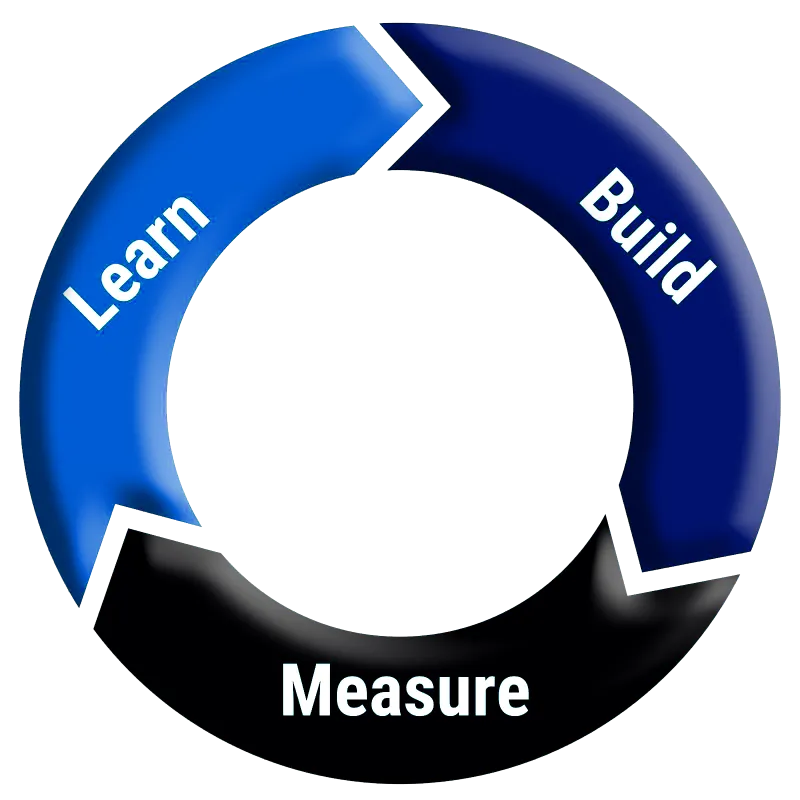
The Build-Measure-Learn Loop
A central tenet of the lean startup methodology is the Build-Measure-Learn loop. This iterative process empowers startups to gather rapid feedback, iterate on their product or service, and swiftly adapt to market needs. The loop commences with creating a Minimum Viable Product (MVP) – an initial version of the offering that includes essential features to address the needs of early adopters. Startups then measure customer responses to the MVP, extract valuable insights, and incorporate these learnings into subsequent iterations. By shortening the feedback loop, lean startups expedite learning and reduce the time between product refinements.
Embracing the Minimum Viable Product (MVP)
The Minimum Viable Product (MVP) lies at the core of lean entrepreneurship. It serves as the lean startup’s vehicle for quick and efficient learning. By focusing on the most critical features necessary to satisfy early adopters, startups can avoid overinvestment in superfluous elements or products the market may not embrace. The MVP is invaluable for gathering customer feedback, guiding subsequent iterations, and enhancing product development.
Driving Success Through Lean Entrepreneurship
Lean entrepreneurship emerges as a transformative methodology that challenges conventional business planning norms. Its emphasis on adaptability, learning, and customer-centricity equips startups with the tools to navigate uncertainty and make informed decisions in a dynamic business landscape. Lean startups embody resource efficiency, waste elimination, and a relentless pursuit of value creation. By embracing lean entrepreneurship principles, startups gain a competitive edge, increasing their odds of success in an ever-changing world. The transformative power of lean entrepreneurship continues to shape the modern business landscape, providing a beacon of guidance and inspiration for Fortune 500 companies and aspiring entrepreneurs alike.