Yes, substantially.
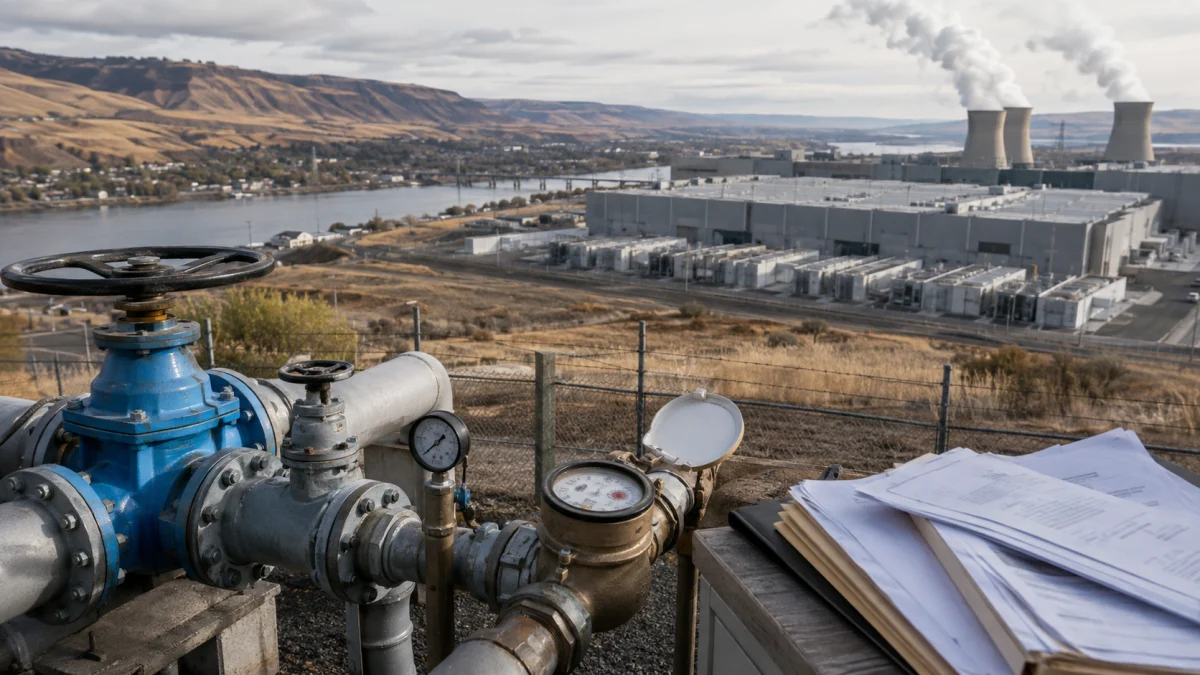
In 2021, The Dalles, Oregon, refused to disclose how much municipal water it supplied to Google’s local data centers, arguing that the figure was a trade secret. When the Wasco County district attorney ordered the city to release the information, The Dalles did not comply. Instead, it went to court against The Oregonian/OregonLive and reporter Mike Rogoway to prevent disclosure.
Google covered the city’s legal costs.
That part of the viral story is not an internet embellishment. City officials publicly said a confidentiality arrangement dating to 2015 required Google to protect the city from the cost of litigation over Google’s confidential information. The city later said Google had reimbursed its costs throughout the case, and when the dispute settled, The Dalles agreed to pay $53,173 toward the newspaper’s legal fees—with Google reimbursing that payment as well. (Columbia Community Connection)
But "Google paid a city to sue a newspaper" compresses the arrangement in a way that can imply something the evidence does not establish. We found no document showing Google handed city officials money in exchange for filing this particular lawsuit, nor evidence that Google ordered the city to sue. The available record instead shows an earlier agreement under which Google assumed the city’s costs of trying to preserve confidentiality.
And there is a second problem with the viral version of this story.
The widely repeated claim that Google "consumed 355 million gallons" of The Dalles’ water in 2021 mixes two different measurements.
City records put Google’s 2021 annual metered water use at roughly 355.1 million gallons. Google’s own environmental accounting for the same year reported 358.3 million gallons withdrawn, 83.8 million gallons discharged and 274.5 million gallons consumed. (Aquae Officiel)
Those numbers tell different parts of the same story.
And separating them makes the story more interesting, not less.
Why we investigated this
A viral version of the case can be reduced to an extraordinary sentence: Google used more than a quarter of a small city’s water, called the number a trade secret, and paid the city to sue a newspaper trying to find out.
The obvious questions are whether that actually happened, who made the decision to sue, what Google really paid for, what a "trade secret" had to do with a municipal water bill, and why different sources give Google’s 2021 water use as either 355 million gallons or 274.5 million gallons.
We reconstructed the case from the court settlement, the public-records litigation, contemporaneous city reporting and Google’s own environmental disclosures.
The short version: what is true, and what needs qualification?
| Claim | Assessment | What the record shows |
|---|---|---|
| The Dalles sued a newspaper over Google’s water-use records | True | The city filed a reverse public-records lawsuit after the DA ordered disclosure. |
| Google paid the city’s legal costs | True | City officials said a 2015 agreement made Google responsible for litigation costs involving the confidentiality commitment. |
| Google paid the city specifically to initiate this lawsuit | Not established | The evidence shows reimbursement under a pre-existing agreement, not a documented payment-for-lawsuit transaction. |
| A judge ruled Google’s water use was not a trade secret | False | The district attorney rejected the city’s showing. The court case settled before a final judicial ruling on the trade-secret question. |
| Google consumed 355 million gallons in 2021 | Misleading terminology | City meters showed about 355.1 million gallons of annual water use; Google separately calculated 274.5 million gallons of net consumption. |
| Google’s facilities accounted for about 29% of the city’s water use | Supported by the released city data | The approximately 355-million-gallon municipal-use figure was about 29% of The Dalles’ total in 2021. |
| Google ended the dispute by changing its position on secrecy | Supported | Reporting and the Reporters Committee’s account say Google stopped insisting that site-level water use remain confidential, enabling settlement. |
It started with a straightforward public-records request
On September 24, 2021, The Oregonian’s parent company submitted a request under Oregon’s public-records law seeking the annual amount of water The Dalles had distributed in 2020 to Design LLC, the entity associated with Google’s data-center operations.
That detail comes directly from the eventual settlement agreement.
The document also tells us something important about the nature of the information being requested: this was not a request for Google’s server architecture, cooling-system diagrams or proprietary engineering specifications.
It was a request for an aggregate water-use number held by a municipal government.
The city denied the request.
Its position was that disclosure would reveal a Google trade secret.
The Oregonian challenged that denial through the process provided under Oregon public-records law.
The Wasco County District Attorney’s Office reviewed the dispute and concluded that The Dalles had failed to meet its burden of showing that Google’s water-use information qualified for the trade-secret exemption.
The DA ordered the city to disclose the records. (Reporters Committee)
That could have ended the matter.
It didn’t.
The city went to court instead of releasing the number
On October 29, 2021, The Dalles filed City of The Dalles v. Rogoway in Wasco County Circuit Court.
This was what public-records lawyers call a reverse public-records lawsuit.
Normally, people picture a records lawsuit this way:
Government refuses records → requester sues government.
Here the sequence went the other direction:
Government refuses records → DA orders government to release them → government sues to prevent disclosure.
The defendants were reporter Mike Rogoway and Advance Local Media LLC, which operates The Oregonian/OregonLive. (Reporters Committee)
There is an important legal distinction here.
The Dalles was not accusing Rogoway of wrongdoing or seeking damages from him for asking questions. City Attorney Jonathan Kara described the lawsuit as the procedural mechanism available to challenge the disclosure ruling in circuit court. (Columbia Gorge News)
So saying "the city sued a reporter for asking about Google’s water" is technically incomplete.
But saying "the city sued to stop a reporter and newspaper from obtaining Google’s water-use records" is accurate.
And the financial arrangement behind that litigation is where this story becomes especially unusual.
Google was paying the city’s legal costs
At a November 8, 2021 City Council meeting, Kara explained why taxpayers would not bear the city’s attorney fees.
According to contemporaneous local reporting, Google and The Dalles had entered confidentiality arrangements during an earlier data-center deal in 2015. Google had agreed to hold the city harmless in connection with protecting the confidential information.
Kara said that made Google responsible for the attorney fees in the water-records litigation. (Columbia Community Connection)
That arrangement continued through the case.
When the City Council authorized a possible settlement in November 2022, a council motion allowed the city attorney to make payments of up to $100,000 and expressly said that money would be reimbursed by Google.
Columbia Gorge News reported at the time:
Throughout the suit, Google had reimbursed the city for its costs.
The final settlement was smaller. The Dalles agreed to pay $53,173 representing The Oregonian’s attorney fees and costs. The settlement itself identifies that payment, and local reporting says Google would reimburse the city for it.
So the central financial claim survives scrutiny:
Google was financing the city’s side of a lawsuit aimed at preventing disclosure of Google’s municipal water use.
But did Google actually pay The Dalles to sue The Oregonian?
This is where precision matters.
We found evidence of:
- a pre-existing confidentiality arrangement;
- Google’s obligation to protect the city from litigation costs connected with that arrangement;
- Google paying or reimbursing those costs;
- the city’s decision to contest the DA’s disclosure order;
- litigation whose practical purpose was keeping Google’s water figures confidential.
We did not find a contract saying, in effect:
Google will pay The Dalles $X if The Dalles files a lawsuit against The Oregonian.
Nor did we find evidence establishing that Google ordered city officials to initiate the litigation.
Those are different claims.
The strongest evidence supports this formulation:
The Dalles sued to prevent disclosure of Google’s water-use records, and Google funded the city’s litigation under a pre-existing confidentiality agreement.
That is less sensational than imagining a direct check written in exchange for filing the complaint.
It is also remarkable enough without embellishment.
The arrangement meant a private company whose records were being sought could financially insulate a public government from the cost of fighting disclosure.
Whatever one’s view of whether Google’s information deserved legal protection, that creates an obvious transparency problem: the normal financial pressure a public body might face when deciding whether prolonged secrecy is worth litigating was largely shifted onto the private company benefiting from the secrecy.
That last point is analysis, not evidence of illegal conduct. Nothing in the settlement admits wrongdoing, and the settlement expressly says it should not be treated as a concession on whether any exemption actually applied.
Why did Google think a water bill was a trade secret?
The city’s argument was not that the number itself contained proprietary technology.
The concern was what competitors might be able to infer from it.
The Reporters Committee for Freedom of the Press later summarized The Dalles mayor’s explanation: Google was concerned competitors could use its water consumption to learn information about how the company cooled its servers. (Reporters Committee)
There is a rational technical basis for thinking water consumption says something about a data center.
Large computing facilities generate substantial heat. Operators choose among cooling architectures involving air cooling, evaporative systems, chilled water and other approaches. Water and electricity usage can therefore reveal something about operating scale and thermal-management choices.
But Oregon’s public-records question was not simply:
Could this information conceivably be commercially useful?
The government had to establish that the legal trade-secret exemption actually applied.
The Wasco County district attorney concluded that The Dalles had not carried that burden. (Reporters Committee)
And that leads to another point that frequently gets misstated.
No judge ultimately ruled that Google’s water use was not a trade secret
The district attorney ordered disclosure.
The city challenged that result in circuit court.
But the case did not proceed to a final judicial ruling deciding whether Google’s annual water use legally qualified as a trade secret.
Instead, the parties settled.
The December 2022 agreement expressly says neither side admitted wrongdoing and that the settlement did not constitute a concession about whether a public-records exemption was valid.
So this formulation is accurate:
The district attorney rejected the city’s trade-secret justification and ordered disclosure.
This one goes too far:
A court ruled Google’s water usage was not a trade secret.
It didn’t.
What changed Google’s position?
After more than a year of litigation, Google changed its position on keeping site-level water use secret.
The Reporters Committee reported that The Dalles Mayor Richard Mays said Google had initially been concerned about competitors learning how its servers were cooled but later stopped seeking to shield the information.
That opened the door to settlement. (Reporters Committee)
The final agreement went considerably beyond the single 2020 figure originally requested.
It required The Dalles to disclose aggregate annual water usage for Google’s Design LLC utility accounts for every year from 2012 through 2021.
It also established that future requests for annual aggregate usage would be disclosed, subject to the city’s continuing obligations and exemptions under Oregon law.
That is how the public finally obtained the historical numbers.
And that is where another problem emerged: people started using the words water use, withdrawal and consumption as though they meant the same thing.
They don’t.
Google used about 355 million gallons in 2021—but that is not the same as consuming 355 million
The settlement contains an unusually useful definition.
It defines "Annual Water Usage" as the aggregate total of the water-meter readings for utility accounts associated with Design LLC during a calendar year.
The records subsequently reported for 2021 showed approximately 355.1 million gallons.
That represented roughly 29% of The Dalles’ total municipal water use that year. (Data Center Dynamics)
But Google released its own environmental accounting at around the same time.
Its 2021 site-level schedule listed The Dalles this way:
| Google’s 2021 metric | Million gallons |
|---|---|
| Water withdrawn | 358.3 |
| Water discharged | 83.8 |
| Water consumed | 274.5 |
And the arithmetic is straightforward:
358.3 million withdrawn − 83.8 million discharged = 274.5 million gallons consumed. (Aquae Officiel)
So how could The Dalles say roughly 355.1 million gallons while Google said 274.5 million?
Because they are not necessarily measuring the same thing.
Withdrawal, discharge and consumption are three different numbers
The terminology is easier than it sounds.
Water withdrawal
This is water taken into the facility or system.
Think of it as water entering the data-center operation.
Water discharge
Some of that water leaves the facility again as liquid wastewater or another return flow.
Water consumption
In Google’s environmental accounting, consumption is essentially the part that is withdrawn but not discharged back.
At The Dalles in 2021:
Withdrawal: 358.3 million gallons Discharge: 83.8 million gallons Consumption: 274.5 million gallons
Much of the consumed portion is associated with evaporative cooling. Once water evaporates, it is no longer immediately available to the same local water system, even though it obviously remains part of Earth’s broader hydrologic cycle.
The city’s 355.1-million-gallon figure, meanwhile, came from aggregate utility-meter readings.
Calling that figure water supplied, metered water use or annual municipal water usage is defensible.
Calling all 355.1 million gallons net water consumption is not.
The 355-million and 358-million figures are not perfectly identical either
There is another smaller discrepancy that rarely gets discussed.
The city’s 2021 meter-based figure was reported as roughly 355.1 million gallons.
Google reported 358.3 million gallons withdrawn.
That is a difference of about 3.2 million gallons, or less than 1%.
We have not found documentation that conclusively reconciles that difference.
It could reflect differences in meter boundaries, reporting periods, utility accounts, methodology or some other accounting distinction, but assigning a specific explanation without evidence would be speculation.
The proper conclusion is simpler:
The two datasets are very close, but they are not identical, and the available record does not tell us exactly why.
That distinction becomes even more important in later years.
Google’s water use continued rising
Google now publishes site-level water figures in its environmental reports.
Its reported The Dalles numbers were:
| Year | Google withdrawal | Google discharge | Google consumption |
|---|---|---|---|
| 2021 | 358.3M gal. | 83.8M | 274.5M |
| 2022 | 352.2M | 78.0M | 274.2M |
| 2023 | 383.7M | 81.3M | 302.4M |
| 2024 | 461.1M | 99.7M | 361.4M |
Google’s 2022 and 2023 environmental reports provide those site-level figures, while its 2025 report lists the 2024 numbers. (Brandlive)
Municipal records tell a similar—but again, not perfectly identical—story.
Records The Dalles supplied to Oregon Public Broadcasting showed Google-related water usage of 383.9 million gallons in 2023 and 434.4 million gallons in 2024. (opb)
Notice what happens:
In 2023, Google’s reported withdrawal of 383.7 million gallons and the city’s 383.9-million-gallon figure are essentially identical.
In 2024, however:
City figure: 434.4 million gallons Google withdrawal: 461.1 million gallons Google consumption: 361.4 million gallons
That leaves a much larger difference between the municipal dataset and Google’s withdrawal figure.
Again, we found no source that conclusively reconciles those numbers.
Rather than silently choosing one, they should be presented together.
That is exactly why specifying the measurement matters.
By 2025, reports put Google’s use near 550 million gallons
The issue is no longer historical.
In April 2026, The Oregonian reported that Google’s The Dalles data centers had reached nearly 550 million gallons of water in 2025, representing close to 40% of the city’s total. The reporting described that as a sharp increase from the previous year. (GovDelivery)
That means the basic transparency question that sparked the 2021 fight is arguably more consequential now than it was then.
But the terminology deserves the same caution.
The city’s settlement defines its disclosed Annual Water Usage using aggregate utility-meter readings. Google’s corporate environmental reports use separate definitions for withdrawal, discharge and consumption.
Unless a source establishes that a later city number uses Google’s environmental definition of consumption, the terms should not be treated as interchangeable.
This matters because a headline saying:
Google used nearly 550 million gallons of municipal water
does not necessarily mean precisely the same thing as:
Google permanently consumed 550 million gallons under Google’s environmental accounting method.
Both may describe a significant resource demand.
They are still different measurements.
Does "40% of the city’s water" mean Google is taking 40% of all available local water?
No.
That is another easy way for a legitimate number to become misleading.
The percentage compares Google’s reported municipal use with The Dalles’ overall municipal water use.
It does not mean Google possesses or consumes 40% of every gallon physically available in the Columbia River Gorge, 40% of the regional aquifer, or 40% of all water in the surrounding watershed.
Those are entirely different denominators.
That does not make the municipal percentage irrelevant.
Quite the opposite: a single industrial customer approaching two-fifths of a city’s water use is significant for infrastructure planning, treatment capacity, seasonal demand and the allocation of local resources.
OPB reported in January 2026 that The Dalles was planning major water-system upgrades while Google continued expanding its data-center footprint. City records supplied to OPB showed the company’s share had already reached roughly a third in 2024. (opb)
The useful question is not whether a large percentage can be made to sound frightening.
It is what percentage of which water, measured how, during what period, and with what effect on actual system capacity.
Google has also invested in The Dalles’ water infrastructure
A complete account should include what happened after the secrecy fight.
Google and The Dalles entered agreements involving substantial investment in water infrastructure. More recently, Google has highlighted an aquifer-storage-and-recovery project intended to capture surplus water during wetter periods and make it available during high demand or drought conditions. Google’s water-stewardship materials describe the project as part of its effort to improve local supply reliability. (Google Data Centers)
That is relevant when evaluating today’s water-supply picture.
It does not rewrite the history of the public-records dispute.
Google can both invest money in improving a municipal water system and have previously participated in an arrangement under which its water-use information was kept confidential and the city’s litigation costs were covered.
Those facts are not mutually exclusive.
The lawsuit may have produced a larger transparency change
There is another reason the case matters beyond The Dalles.
Google subsequently began publishing site-level water-use information for its data centers.
Latitude Media reported in 2026 that Google had become unusual among major technology companies in providing that level of site-specific disclosure, and traced the change back to the period following the Oregon records dispute. (Latitude Media)
Google’s current environmental reporting now lets anyone see, for individual locations, figures such as withdrawal, discharge and consumption.
That is exactly the kind of information the public could not obtain in The Dalles without a records request, a district attorney’s order, more than a year of litigation and a settlement.
There is some irony in that outcome.
The information once treated as potentially revealing enough to competitors to justify a court battle is now routinely published by Google itself.
So did Google really pay an Oregon city to sue a newspaper?
Yes—with an important qualification.
The Dalles filed a lawsuit to prevent The Oregonian from obtaining Google’s water-use information after the county district attorney ordered the records disclosed.
Google covered the city’s litigation costs pursuant to a pre-existing confidentiality arrangement. City officials said Google was responsible for those expenses, later confirmed that Google had been reimbursing the city throughout the litigation, and said Google would reimburse the settlement payment as well. (Columbia Community Connection)
What we cannot establish is the more specific implication that Google separately paid the city in exchange for deciding to sue or directly ordered officials to file the lawsuit.
The documented relationship is subtler:
Google wanted information about its operations treated as confidential. The city agreed to protect that confidentiality. Google agreed that doing so would not cost the city money. When a public-records dispute turned into litigation, that arrangement meant Google financed the government’s side of the fight.
And the records that ultimately emerged revealed another problem with the way this story is retold.
Google’s approximately 355.1 million gallons of municipal water use in 2021 was real and represented about 29% of The Dalles’ overall municipal use.
But Google’s own environmental accounting says it withdrew 358.3 million gallons and consumed 274.5 million gallons that year.
The difference is not semantic trivia.
It is the difference between accurately explaining what the records show and allowing one dramatic number to become several different claims as it moves across the internet.
The underlying story does not need that exaggeration.
A local government really did fight disclosure of a major private customer’s use of a public utility.
The district attorney really did order the information released.
The city really did sue instead.
And the private company whose information the city was trying to protect really did pay the government’s legal costs.
That is the story.
References and Further Reading
Primary legal records
City of The Dalles v. Rogoway — Reporters Committee for Freedom of the Press — Case chronology, filings and explanation of the reverse public-records lawsuit.
City of The Dalles v. Advance Local Media — Settlement and Stipulated Judgment — Primary court record defining "Annual Water Usage," documenting the original 2020 request, requiring disclosure of 2012–2021 data and setting the $53,173 attorney-fee payment.
Oregon’s City of The Dalles Agrees to Reveal Google’s Local Water Usage — RCFP — Explains the settlement and Google’s change in position on keeping the data confidential.
Google’s payment of the city’s legal costs
Hecklers and Hard Questions Don’t Stop Google Water Deal — Columbia Community Connection — Contemporaneous report quoting the city attorney’s explanation that Google’s 2015 hold-harmless arrangement made the company responsible for attorney fees.
City Authorizes Attorney to Settle Oregonian Lawsuit — Columbia Gorge News — Reports that Google had reimbursed the city’s costs throughout the litigation and would reimburse settlement payments.
The Dalles Settles Oregonian Lawsuit, Releases Google Water Records — Columbia Gorge News — Contemporary account of the final settlement, record release and $53,173 legal-fee payment.
Water-use data and current context
Google 2021 Annual Water Metrics by Data Center Location — Google’s site-level schedule showing 358.3 million gallons withdrawn, 83.8 million discharged and 274.5 million consumed at The Dalles in 2021.
Google 2023 Environmental Report — Contains The Dalles’ 2022 withdrawal, discharge and consumption figures.
Google 2024 Environmental Report — Contains Google’s 2023 site-level figures for The Dalles.
Google 2026 Environmental Report — Google’s current environmental-reporting framework and latest company-wide water disclosures.
The Dalles’ Mayor Called OPB’s Data-Center Story Inaccurate. Here Are the Facts — Oregon Public Broadcasting — Publishes and explains city-provided water figures of 383.9 million gallons in 2023 and 434.4 million in 2024.
More Oregon Water for Google’s Data Centers, More Concern Over Secrecy — Oregon Legislative Daily Clips / The Oregonian summary — Preserves the April 2026 Oregonian reporting that Google’s 2025 use approached 550 million gallons and 40% of the city’s total.
Google Data Centers — Responsible Water Use — Google’s current explanation of its water strategy and The Dalles-area water-stewardship projects.
Editorial currency note: Data-center construction, annual water consumption, municipal infrastructure plans and Google’s environmental disclosures continue to change. The current-year figures in this article should be reviewed when new annual city records or Google site-level water schedules are published.