Yes, an episode of The Lone Gunmen depicted a passenger jet heading toward the World Trade Center before September 11, 2001. The pilot aired on Fox on March 4, 2001—191 days before the attacks. In the fictional story, government insiders attempt to remotely steer an airliner into the towers, blame foreign terrorists and create demand for military spending. The protagonists prevent the crash.
The broadcast date and storyline are verifiable. A WIRED article published the day before the premiere described the aircraft and World Trade Center plot. Two days after the broadcast, creator Chris Carter discussed the same scene during an archived Charlie Rose interview.
But the episode does not establish that its writers had advance knowledge of 9/11 or that the attacks were orchestrated by the U.S. government. The real attacks involved al-Qaeda hijackers who physically seized aircraft, and the 9/11 Commission’s reconstruction of the plot places its development years before the television premiere.
The more consequential connection lies in the historical record: long before 9/11, intelligence agencies had encountered reports and scenarios involving aircraft used as weapons. Some were uncorroborated; others were hypothetical exercises. They were not a verified blueprint of the coming attack. Yet they challenge the idea that such a method was beyond anyone’s imagination—and raise a harder question about why the government did not prepare adequately for it.
What happened in The Lone Gunmen pilot?
The Lone Gunmen was a spin-off of The X-Files, following three conspiracy investigators and computer specialists: John Fitzgerald Byers, Melvin Frohike and Richard “Ringo” Langly. The first episode, titled “Pilot” (season 1, episode 1), begins as a government-conspiracy thriller before revealing a scheme to turn a passenger aircraft into a weapon.
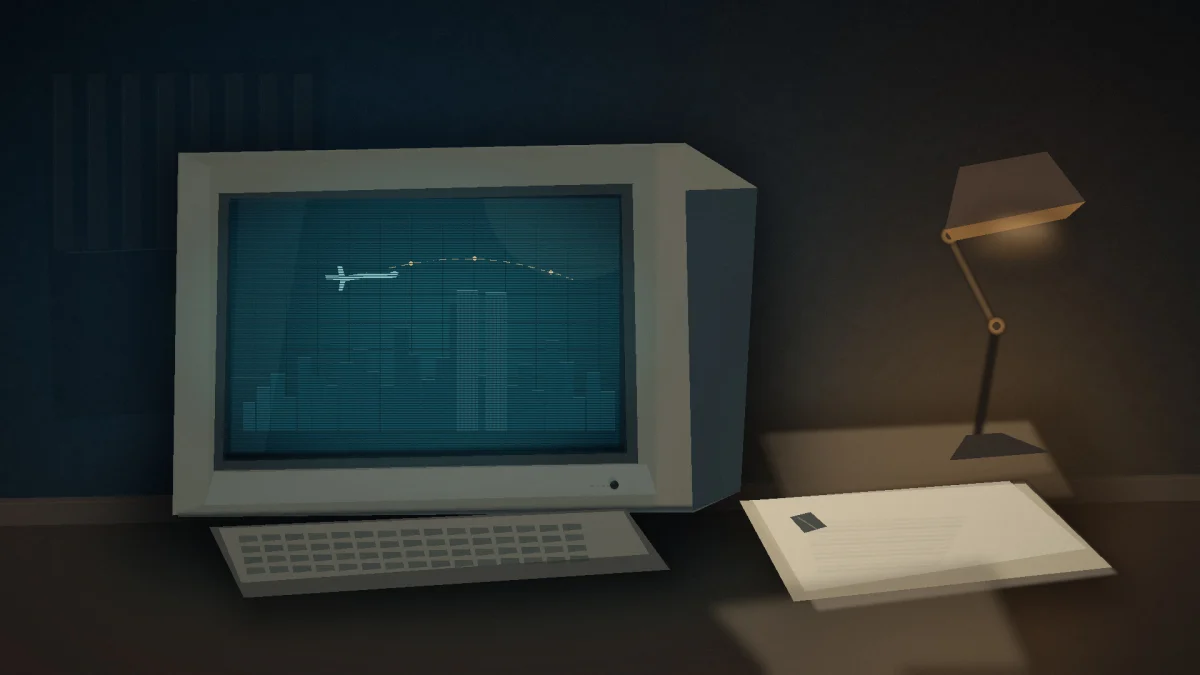
Within the fictional plot, the investigators uncover a plan identified as Scenario 12-D. A faction operating inside the government intends to take remote control of a commercial plane and crash it into the World Trade Center. The conspirators expect foreign enemies to be blamed, thereby encouraging conflict and military spending.
The episode’s finale shows the aircraft approaching one of the towers. The danger is real within the fiction, but the characters intervene and the plane pulls up in time. It does not strike the building.
That distinction is not a technicality. The original June 2002 TV Guide report on the episode confirmed both the near-collision and the remote-control mechanism. In the actual September 11 attacks, hijackers were aboard the aircraft and the collisions occurred.
The similarity is nevertheless unmistakable: a commercial jet, the World Trade Center, a terrorist-attack scenario and an expected geopolitical aftermath, depicted on network television six months before the real catastrophe.
How do we know the episode really aired before 9/11?
There is no need to rely on the date attached to a modern social-media upload. The premise was documented publicly in March 2001, before and immediately after the original broadcast.
| Date | Contemporaneous record | What it establishes |
|---|---|---|
| March 3, 2001 | WIRED: “Carter: The Real Lone Gunman” | A pre-premiere article described a passenger jet headed for the World Trade Center. |
| March 4, 2001 | Television Academy’s broadcast history | Fox aired the pilot episode of The Lone Gunmen. |
| March 6, 2001 | Charlie Rose interview with Chris Carter | The show’s creator appeared on television to discuss his new series. A contemporaneously archived transcript records a clip of the approach to the World Trade Center and Carter explaining the storyline. |
| May 17, 2001 | ABC News / Reuters coverage of Fox’s fall schedule | A Fox spokesperson confirmed the series would not be renewed, months before the attacks. |
| June 1, 2001 | Television Academy’s series history | The series finished its original broadcast run—more than three months before 9/11. |
| June 21, 2002 | TV Guide‘s retrospective | The startling resemblance received wider attention after the attacks. |
The strongest piece of evidence is the March 3 WIRED article. Written before the episode premiered, it independently described an aircraft headed toward New York’s World Trade Center. The claim that the television scene was inserted, fabricated or dated retroactively is incompatible with that contemporaneous reporting.
The March 6 appearance adds another useful detail. A transcript preserved by an X-Files fan archive records Carter describing the premise to Charlie Rose: the show’s three investigators foil terrorists trying to destroy the World Trade Center. The original interview is cataloged with its March 6, 2001 airdate; the scene-by-scene wording comes from the third-party transcript, not from an official transcript published on the interview page.
The scene is genuine. Its existence before 9/11 is not in dispute. What it means is a separate question.
Who wrote the episode? Was Vince Gilligan responsible?
Vince Gilligan, later the creator of Breaking Bad and co-creator of Better Call Saul, was one of four credited writers of the pilot, alongside Chris Carter, John Shiban and Frank Spotnitz. The pilot’s credits and a library catalog of the original DVD release list all four.
Viral clips often attach the story primarily to Gilligan because his later work made him especially recognizable. That framing exaggerates what the credits can tell us about who originated any particular story element. The available credits do not assign the World Trade Center idea to one writer.
What did the writers say after September 11?
In a June 2002 interview with TV Guide, Spotnitz recalled thinking immediately of The Lone Gunmen when he saw the attacks. He also raised the same question that makes the episode historically interesting: if television writers could imagine this kind of catastrophe, why wasn’t the government prepared for it?
In a March 2026 Television Academy interview, Spotnitz recalled briefly fearing that the attackers had seen the program and drawn inspiration from it. He said subsequent information relieved that fear. Gilligan described the shock on the Fox lot on the day of the attacks.
Those interviews establish the creators’ reactions, not a secret connection to the operation. They also show that the resemblance was disturbing to some of the people who made the episode, rather than merely a coincidence noticed by internet commentators decades later.
Had anyone imagined an aircraft attack before 9/11?
Yes. Multiple aircraft-as-weapon possibilities appeared in intelligence reports, security exercises and public fiction before September 2001. They were not all credible, related or equally specific. Treating them as one unified warning would distort the record. Ignoring them would distort it, too.
The 9/11 Commission’s chapter on foresight and hindsight documents several examples:
- 1994–1995: After an Algerian airliner hijacking in 1994, reports raised the possibility of an aircraft being crashed into a landmark. In early 1995, a participant in the Manila airline-bombing conspiracy told Philippine authorities that he and Ramzi Yousef had discussed flying an aircraft into CIA headquarters.
- August 1998: U.S. intelligence received a report that a group of Libyans hoped to crash a plane into the World Trade Center. The Commission said the report could not be corroborated. It was not established as an al-Qaeda plan.
- September 1998: A separate report described the possibility of an explosives-laden aircraft targeting a U.S. city. The Commission also described this as uncorroborated. This was not the same intelligence report as the August World Trade Center allegation.
- 1998 security exercise: Counterterrorism official Richard Clarke led a tabletop scenario in which terrorists seized a Learjet, loaded it with explosives and flew toward a target in Washington. The exercise exposed unresolved questions about how military and civilian authorities would respond.
- August 1999: FAA security analysts included a “suicide hijacking operation” among potential scenarios but considered it unlikely in the context of hijackers seeking prisoner releases. This was a hypothetical assessment, not advance identification of the 9/11 plot.
The World Trade Center was also an established terrorist target: a truck bomb exploded beneath it in February 1993, killing six people. Neither the target nor the idea of terrorists attacking prominent American buildings originated with the television show.
The idea was present in popular fiction, too. Tom Clancy’s 1994 novel Debt of Honor featured a jetliner attack on the U.S. Capitol, a plot detail described in an Associated Press report published that same year. The 9/11 Commission later noted that Clarke associated some of his concern about aircraft threats with Clancy novels. This does not show that the Lone Gunmen writers borrowed the idea; it shows that deliberate aircraft attacks were already part of the broader public imagination.
These examples support a narrow but important conclusion: the basic concept of aircraft being used against American buildings was conceivable before 9/11. They do not establish that U.S. officials possessed a verified warning naming the four actual flights, their hijackers, the targets and the date.
The September 10, 1998 CIA memo, released in 2026
On September 11, 2026, the CIA published 71 declassified President’s Daily Brief-related products. Among them was a two-page memo dated September 10, 1998, titled Bin Ladin’s Location and Intentions.
The original CIA memorandum, available as a PDF, contains reporting that a group associated with the 1998 East Africa embassy bombings “may fly an explosive-packed airplane into a US city.” The memo also mentions possible attacks on U.S. soil, including Washington.
But read the document carefully before treating it as a prediction:
- It does not name the World Trade Center as the target of that aircraft scenario.
- It does not identify the September 11 hijackers or describe the eventual four-aircraft operation.
- It is not a confirmed plot assessment. The memo says intelligence offered no conclusive information about bin Laden’s intentions for future attacks, and parts of the underlying reporting remain redacted.
- Its general existence was not wholly unknown until 2026. The 9/11 Commission discussed the September 1998 aircraft warning in 2004; the 2026 release makes the underlying memo available for direct examination.
Those limitations matter as much as the striking sentence. An intelligence product recording a possible scenario is evidence that analysts encountered the scenario—not proof that the source was correct, the operational details were known or officials deliberately allowed an attack.
Another CIA warning concerned hijackings, but not the same method
A separate December 4, 1998 CIA memo, Bin Ladin Preparing To Hijack US Aircraft and Other Attacks, discussed reporting about hijackings intended to secure the release of imprisoned militants. It also referenced hijacking training and a reported security test at an unidentified New York airport.
That is significant evidence that air travel was part of the threat picture. Yet a hostage-taking hijacking designed to negotiate prisoner releases differs from a suicide hijacking designed to turn an occupied passenger plane into a missile. Distinguishing methods is essential to evaluating whether a warning pointed toward the operation that actually happened.
The real 9/11 aircraft plot was developing before the show aired
The resemblance also invites another question: could the attackers have copied the television episode?
The available chronology does not support that explanation for the origin of the plot.
In Chapter 5 of its report, the 9/11 Commission reconstructs Khalid Sheikh Mohammed’s development of the aircraft-attack concept. According to Mohammed’s later account, he and Ramzi Yousef discussed using aircraft as weapons in the mid-1990s, including possible strikes against the World Trade Center and CIA headquarters. The Commission places Osama bin Laden’s approval of the developing “planes operation” in 1999.
The Commission’s reconstruction draws in part on accounts obtained from detained participants; those accounts have evidentiary limitations and should not be mistaken for independently verified transcripts of every planning conversation. Even with that caveat, the established pre-2001 operational history is inconsistent with the claim that a March 2001 television broadcast originated the attackers’ aircraft strategy.
Nor is there evidence that Carter, Gilligan, Shiban or Spotnitz obtained nonpublic operational intelligence or communicated with the plotters. An assertion that they somehow knew what was coming requires evidence of access, communication or unusually specific knowledge. The coincidence alone supplies none of those things.
Why didn’t earlier warnings prevent 9/11?
This is where the real historical investigation becomes more consequential than the television mystery.
Identifying a possible type of attack is not the same as detecting a specific operation or building defenses against it. These are three distinct tasks: understanding what an adversary might attempt, finding evidence that the adversary is preparing it and organizing institutions to stop it.
The 9/11 Commission identified failures at each stage, particularly in the transition from threat reporting to practical prevention.
In Chapter 11, it found that the CIA’s Counterterrorist Center had not systematically analyzed how hijacked or explosives-laden aircraft might be used as weapons from an adversary’s perspective. It had not developed corresponding warning indicators, such as suspicious efforts to obtain large-aircraft flight training, and government agencies had not adequately analyzed the defenses needed against terrorist-controlled aircraft.
The Commission also described how an August 1999 FAA analysis explicitly considered suicide hijacking but discounted it because that method appeared inconsistent with the presumed goal of negotiating the release of imprisoned militants. That is a revealing case of a threat being imagined, then assessed through assumptions that did not fit the eventual attackers.
The Commission’s examination of the FAA describes a security system more oriented toward bombs, sabotage and conventional hijackings. The Commission’s reconstruction of the response on September 11 explains how air-defense procedures assumed aircraft would remain identifiable and that hijackings would not be suicide attacks using the planes themselves as weapons.
The implications are concrete:
- A warning without a usable indicator is difficult to investigate. Officials need to know what behavior would distinguish preparation for a suicide aircraft attack from the vast background of ordinary flight activity.
- A warning held inside one agency does not automatically become a national defense plan. Intelligence, aviation security, law enforcement and military response had overlapping but poorly integrated responsibilities.
- Specific missed opportunities deserve more attention than vague predictions. The Commission identified failures involving future hijackers’ travel, watchlisting, aviation training and the handling of investigative leads. Those failures can be examined against actual records rather than reconstructed from resemblance to fiction.
This does not prove that one new exercise, one earlier memo or one different decision would certainly have prevented all four hijackings. It does establish that the disaster was not simply the result of an attack method no one could have conceived.
For a wider review of what government records do—and do not—establish about prior warnings, intelligence failures and other recurring controversies, see sherafy.com’s investigation of 15 frequently disputed 9/11 claims.
What did The Lone Gunmen get right—and what was different?
The similarity becomes easier to assess when the fictional details are compared with the actual operation rather than with selected seconds of video.
| Question | The Lone Gunmen pilot | September 11, 2001 |
|---|---|---|
| Was the World Trade Center a target? | Yes | Yes; two aircraft hit its towers |
| Was a passenger jet used as the weapon? | A passenger jet was directed toward the towers | Hijacked passenger jets were used as weapons |
| What aircraft were involved? | A Boeing 727 is identified in the fictional dialogue | The two aircraft that hit the towers were Boeing 767s |
| Who controlled the plane? | The conspirators attempted remote control | Hijackers physically took control from inside the aircraft |
| Who were the perpetrators? | Rogue insiders in a fictional government conspiracy | Al-Qaeda operatives |
| What was the stated motive? | Fabricate foreign terrorism to stimulate war and arms spending | Carry out al-Qaeda’s terrorist operation against the United States |
| Did the World Trade Center get hit? | No; the collision was prevented | Yes; the attacks caused catastrophic deaths and destruction |
The episode’s remote-control mechanism and false-flag motive are not details of the real hijackings. The real plot also targeted the Pentagon and included a fourth hijacked flight that crashed in Pennsylvania. The 9/11 Commission’s account of the four flights establishes those differences.
The overlap in target and general method remains noteworthy. But similarities that are broad enough to appear in earlier warnings and fiction are less probative of secret knowledge than a match on genuinely nonpublic operational details would be. That is an inference about the strength of evidence, not an attempt to calculate an invented probability for the coincidence.
Does the episode prove advance knowledge or a government false flag?
No. The episode is evidence that its writers imagined a fictional attack before 9/11. It is not evidence that they knew the actual attackers, timetable or operational plan.
The claim of foreknowledge requires several steps that the available evidence does not supply. Someone connected to the real operation would have needed to pass privileged information to the writers, or the writers would have needed access to independently verifiable details of the plot. There would need to be evidence of that connection beyond the public episode itself.
The known facts point in a different direction:
- The World Trade Center had already been attacked in 1993 and had obvious symbolic and economic significance as a potential target.
- Aircraft attacks against prominent buildings had appeared in earlier threat reports and scenarios, even though some intelligence was uncorroborated.
- The real al-Qaeda aircraft plan was already underway before March 2001, according to the Commission’s reconstruction.
- The fictional perpetrators, control mechanism, motive and outcome differ materially from the real attacks.
Taken together, these facts make it reasonable to infer that the episode is an extraordinary example of a fictional scenario converging with a danger that was already conceivable—not a demonstrated leak of the September 11 plot.
That inference has a limit. The public record does not establish the precise creative conversation in which the writers first chose the World Trade Center and aircraft storyline. Without such a record, we should not invent a specific inspiration or claim to know every influence on the script.
There is another important logical distinction: evidence of intelligence failure is not evidence of deliberate orchestration. An agency can receive an alarming but uncertain warning, mishandle information, fail to build appropriate defenses and later give incomplete accounts of its performance without that sequence proving it planned the attack. Claims of deliberate assistance or foreknowledge require additional evidence appropriate to those claims.
The intelligence failures can and should be investigated on their own merits. They do not become less serious because a speculative theory built around a television episode is unsupported.
Was The Lone Gunmen canceled or hidden because of the 9/11 episode?
No. Fox had already declined to renew the series by May 17, 2001—nearly four months before September 11. That decision was reported at the time by ABC News, citing a Fox spokesperson and Reuters. A May 16 Los Angeles Times report had already described a likely cancellation because of the show’s weak Friday-night ratings. The series finished its original broadcast run on June 1.
According to the Television Academy’s 2026 interview with Gilligan and Spotnitz, the pilot drew approximately 13 million viewers. The show initially aired on Sunday, then moved to Friday, where its ratings declined. The creators described trying unsuccessfully to keep it on the air.
The writers also reflected that the post-9/11 mood changed the reception of government-conspiracy storytelling. That may be relevant to the series’ later cultural prospects, but it cannot explain the end of a broadcast run that had already concluded.
The episode was not permanently erased. Fox Home Entertainment released the complete series on DVD on March 29, 2005, including the pilot and related bonus features.
Where can you watch The Lone Gunmen in 2026?
As checked October 14, 2026, JustWatch’s U.S. listing shows no licensed streaming offer. The complete series also exists on physical DVD; availability of new or secondhand copies varies.
A missing streaming listing is not evidence of government suppression. Licensing, distribution agreements and commercial demand can affect access to older shows. Without records explaining the rights decisions for this particular title, the reason for its current streaming absence is unknown, not established censorship.
What the episode really tells us
The Lone Gunmen did something striking: it dramatized an aircraft approaching the World Trade Center in March 2001. The date is authentic. The footage is not a post-9/11 invention. The writers themselves were shaken by what happened six months later.
But the documented history is more important than the resemblance. Aircraft attacks were conceivable before 9/11. Relevant threats and hypothetical scenarios reached U.S. officials. The real plot was already developing while the episode was being made. And the 9/11 Commission identified systemic failures that prevented scattered information from becoming effective defensive action.
The strongest conclusion is not that a television show revealed a secret operation. It is that a danger could be imagined—even reported—without the institutions responsible for preventing it adequately preparing for it.
That failure deserves scrutiny whether or not anyone ever made a television episode about it.
References and Further Reading
Original episode, broadcast record and creators’ accounts
- WIRED — “Carter: The Real Lone Gunman” (March 3, 2001). Michael Stroud’s pre-premiere reporting independently documents the passenger-aircraft and World Trade Center storyline.
- Charlie Rose — Chris Carter interview (March 6, 2001). Original broadcast archive establishing the date and interview; the contemporaneously archived fan transcript records the pilot excerpt and Carter’s discussion of the plot.
- IMDb — The Lone Gunmen: “Pilot,” complete credits. Lists Chris Carter, Vince Gilligan, John Shiban and Frank Spotnitz as the credited writers. Also corroborated by the original DVD’s library catalog entry.
- Television Academy Interviews — The Lone Gunmen series history. Documents the original March–June 2001 broadcast run and the one-season cancellation.
- ABC News / Reuters — “X-Files Returns, Duchovny Doesn’t” (May 2001). Contemporaneous confirmation from a Fox spokesperson that The Lone Gunmen would not be renewed, months before 9/11.
- TV Guide — “The Sept. 11 Parallel ‘Nobody Noticed’” (June 21, 2002). Early reporting on the resemblance, the prevented collision and the remote-control storyline, including an interview with Frank Spotnitz.
- Television Academy — “Vince Gilligan, Frank Spotnitz on Why Their X-Files Spinoff Only Lasted One Season” (March 2, 2026). Firsthand retrospective on the pilot, its reception and the series’ fate.
Original intelligence documents and official investigations
- CIA — Bin Ladin’s Location and Intentions (September 10, 1998; PDF). Primary memo containing the report about a possible explosives-packed aircraft attack on a U.S. city, along with substantial uncertainties and redactions.
- CIA — Bin Ladin Preparing To Hijack US Aircraft and Other Attacks (December 4, 1998; PDF). Documents earlier hijacking-related intelligence, principally in the context of hostage-taking and prisoner-release demands.
- CIA — Collection of 71 declassified 9/11-related Presidential Daily Brief products (September 11, 2026). Official release listing and access point for the newly published original documents.
- 9/11 Commission Report — Chapter 5, “Al Qaeda Aims at the American Homeland”. Reconstructs the aircraft plot, the role of Khalid Sheikh Mohammed and the timeline preceding the television episode.
- 9/11 Commission Report — Chapter 11, “Foresight and Hindsight”. Core source for earlier aircraft-as-weapon warnings, the 1999 FAA suicide-hijacking assessment, uncorroborated reports, the Washington-area exercise and analytical failures.
- 9/11 Commission Report — Chapter 3, “Counterterrorism Evolves”. Explains the pre-9/11 civil aviation security structure and prevailing threat assumptions.
- 9/11 Commission Report — Chapter 1, “We Have Some Planes”. Reconstructs the actual four hijackings and the improvised civilian and military response.
Availability and home-video history
- Vindy / Zap2it — “’X-Files’ spinoff ‘Lone Gunmen’ back in business on DVD” (March 23, 2005). Contemporary confirmation of the complete DVD release and its contents.
- JustWatch — The Lone Gunmen availability in the United States. Current streaming availability indicator; provider listings can change.
Editorial currency note (October 14, 2026): The historical broadcast dates, original interviews and 9/11 Commission findings are stable archival records. The September 2026 intelligence-document release adds direct access to older reports, not proof that the uncorroborated scenarios were accurate. Streaming availability and access to remaining classified records may change; those portions should be reviewed when this article is updated.