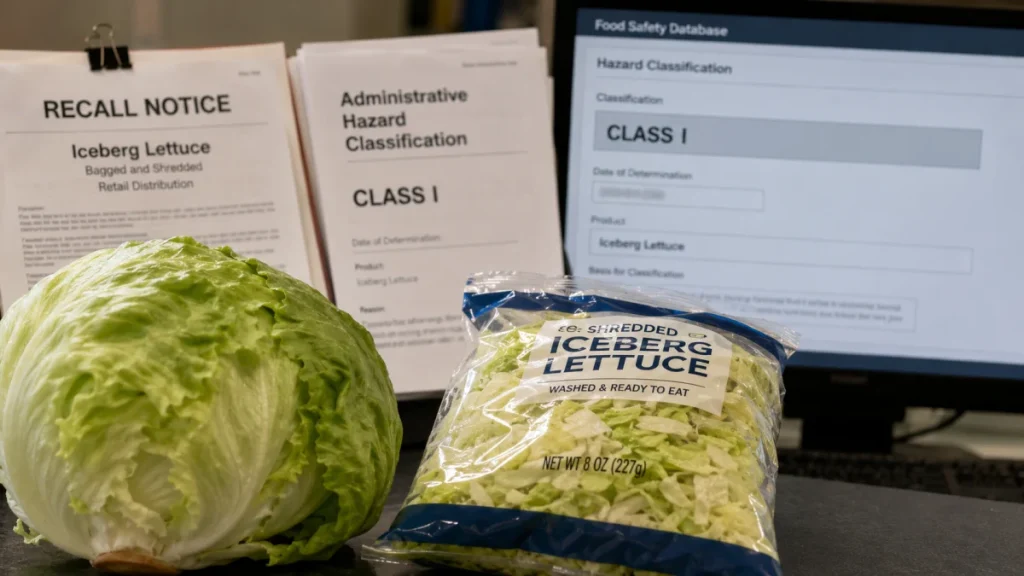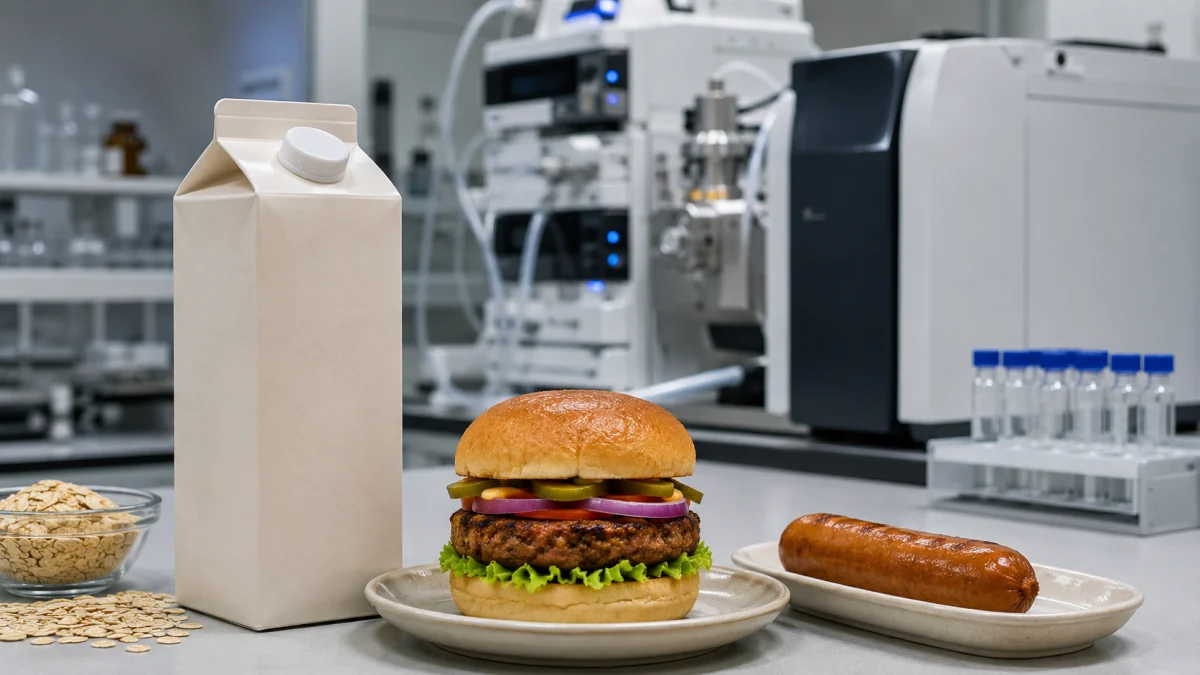
Researchers really did find at least one mycotoxin in every one of 212 plant-based products they tested. But that does not mean every oat milk, vegan burger or plant-based sausage contained a dangerous dose.
The 2026 UK study tested 92 plant-based meat alternatives and 120 plant-based beverages for 19 fungal toxins. All 212 products contained at least one. Some toxins were extraordinarily common: beauvericin, for example, appeared in 98.9% of the meat alternatives. But the researchers also reported that individual concentrations were generally below the regulatory maximum levels used for comparison.
That should rule out the simplest viral interpretation: the study did not show that 212 commercially available foods were acutely poisonous or unsafe to eat.
But the opposite conclusion — “everything was below the limits, so there is nothing to worry about” — goes further than the evidence allows.
Plant-based meat substitutes often combine grains, legumes, seeds and other ingredients that can each contribute small amounts of different mycotoxins. Some of the compounds researchers detected do not have specific maximum limits for plant-based meat or milk alternatives. And a newer study from the same research group has now modeled what happens when people consume these foods repeatedly rather than examining one product in isolation. It found potential cumulative-exposure concerns under some dietary scenarios, particularly for children.
So the scientifically defensible answer is neither “vegan food is toxic” nor “the findings are meaningless.”
The study found a real contamination pattern. What remains uncertain is how much that pattern matters to human health at realistic long-term consumption levels.
Why we investigated this: A widely circulating headline on August 28 says scientists tested “212 plant-based meat alternatives” and found fungal toxins in every one. The underlying finding is real, but the headline collapses three very different questions — whether a toxin can be detected, whether its concentration exceeds a regulatory benchmark, and whether a person’s total dietary exposure creates a meaningful health risk. Those questions do not have the same answer.
First, the viral headline gets one important detail wrong
ScienceDaily’s August 28 headline reads:
“Scientists tested 212 plant-based meat alternatives. Every one contained fungal toxins.”
The researchers did not test 212 meat alternatives.
They tested:
- 92 plant-based meat alternatives
- 120 plant-based beverages
- 212 products total
The beverages included oat-, soy- and almond/nut-based products. The products were purchased from five major UK retailers in Bedfordshire between January and February 2024. Researchers described the selection as a convenience-based random sample intended to cover a broad range of products and brands available to consumers.
That distinction does not erase the central finding. The researchers state plainly that every plant-based meat alternative and beverage tested contained at least one mycotoxin. Co-occurrence — more than one toxin in the same product — was also common.
But it matters because the headline makes the sample sound like 212 separate vegan burgers, sausages and meat substitutes when more than half were beverages.
It is also worth noting that this is not a study released on August 28. The paper appeared in the May 2026 issue of Food Control and Cranfield University publicized it in May. The August coverage is a resurgence of an already published study.
What exactly is a mycotoxin?
Mycotoxins are chemicals produced by certain fungi.
They can form on agricultural crops during growth, harvesting or storage. Grains, corn, nuts, dried fruit, beans and other plant commodities can all be affected under the right conditions. Because plant-based meat and milk alternatives are made from ingredients such as oats, wheat, soy, peas, almonds and other crops, it is not surprising in principle that mycotoxins can carry through into finished foods.
Some mycotoxins are well-established human health hazards.
Aflatoxins, for example, are genotoxic and carcinogenic. Regular exposure can increase liver-cancer risk. Ochratoxin A is associated with kidney toxicity and carcinogenicity. T-2 and HT-2 toxins can cause gastrointestinal and other toxic effects at sufficiently high exposures. FDA currently monitors several of these compounds in the U.S. food supply.
But “mycotoxin” is a category, not a single poison with one safe or dangerous concentration.
The biological significance depends on:
- which toxin is present;
- its concentration;
- how much of the food is eaten;
- how often it is eaten;
- the consumer’s body weight and age;
- exposure to the same toxin from other foods;
- and, increasingly, whether several toxins are being consumed together.
That is why a laboratory finding and a health-risk finding are not interchangeable.
How did researchers detect them?
The researchers used liquid chromatography coupled with tandem mass spectrometry, or LC-MS/MS, to test for 19 mycotoxins.
In simplified terms, the technique separates chemicals in a food extract and then identifies and measures them according to their molecular characteristics. It is capable of detecting contaminants at very small concentrations.
The study looked for:
- four aflatoxins;
- ochratoxin A;
- zearalenone;
- two fumonisins;
- deoxynivalenol;
- HT-2 and T-2;
- four enniatins;
- beauvericin;
- alternariol;
- alternariol monomethyl ether;
- and tentoxin.
This matters because modern analytical equipment can tell scientists that an extremely small amount of a chemical is present.
That does not automatically tell us that the amount is dangerous.
“Detected” and “dangerous” are not synonyms
Imagine a laboratory method becomes sensitive enough to detect a chemical at one part per billion.
Finding it answers one question:
Is this chemical present?
It does not by itself answer:
Is enough present to harm someone?
That second question requires dose and exposure.
This distinction is fundamental to toxicology. Regulatory risk assessments routinely compare estimated human exposure with doses associated with adverse effects or use tools such as the margin of exposure, which measures the distance between an estimated exposure and a dose associated with harm. A larger margin generally means more separation from the harmful dose.
The phrase “every sample contained a fungal toxin” is therefore factually important but toxicologically incomplete.
Which toxins were found most frequently?
Some of the prevalence numbers in the plant-based meat alternatives were striking.
Among the 92 meat alternatives:
| Mycotoxin | Percentage of meat alternatives in which it was detected |
|---|---|
| Beauvericin | 98.9% |
| Enniatin A | 93.5% |
| Enniatin A1 | 93.5% |
| Alternariol monomethyl ether | 85.9% |
| Tentoxin | 77.2% |
| Alternariol | 75.0% |
Beauvericin and several enniatins were also widespread in the beverages, with prevalence for some compounds and beverage categories ranging from 71.9% to 100%. Overall concentrations were significantly higher in the plant-based meat alternatives than in the beverages.
The researchers found additional patterns by ingredient.
Legume-based and combined cereal-legume meat substitutes were among the more affected categories. Of the 92 meat alternatives studied, 86 contained legumes somewhere in their formulation. Oat beverages showed notable occurrence of HT-2/T-2 and fumonisins, while ochratoxin A was particularly prevalent in the soy beverages.
There is an easy mistake to make with numbers like 98.9%.
A 98.9% detection rate does not mean the food was 98.9% toxin.
It means researchers could detect that particular compound in 98.9% of the relevant samples.
Concentration is a completely different measurement.
Were any of these foods above safety limits?
This is where a simple yes-or-no answer becomes misleading.
The researchers reported that individual quantified concentrations were generally below the EU maximum levels applicable to cereals and related commodities that they used as regulatory comparisons.
But plant-based meat and milk alternatives create an unusual regulatory problem.
EU contaminant rules establish maximum levels for numerous mycotoxins in particular commodities — cereals, nuts, dried fruits and other foods, for example. But the Food Control researchers note that plant-based meat alternatives and plant-based beverages are not themselves comprehensively listed as finished-product categories under those mycotoxin rules.
The raw materials may be regulated differently.
Cereals receive substantial mycotoxin monitoring. Legumes receive much less; the researchers specifically note gaps in regulatory monitoring even though legumes are major ingredients in modern meat substitutes.
The safest description is therefore not:
“All 212 products passed their safety limits.”
It is:
The measured concentrations were generally below the regulatory maximum levels researchers used for comparison, but plant-based meat and beverage alternatives do not have a comprehensive set of finished-product maximum limits covering every toxin detected.
That is a more important distinction than it may initially appear.
Why being below an individual limit does not completely settle the issue
Regulatory limits usually deal with particular contaminants in particular foods.
A modern plant-based burger can be more complicated.
One product may combine pea protein, wheat, soy, oils, vegetables, spices and other ingredients. Each raw ingredient may carry a different contamination profile. Researchers therefore found mixtures of different mycotoxins rather than simply one compound appearing in isolation.
The unanswered question becomes:
What happens when someone consumes small amounts of several mycotoxins repeatedly across several foods?
The May study could not answer that directly. It measured contamination.
Its authors specifically called for dietary-exposure assessments that account for changing consumption patterns.
Now there is one.
The newer 413-product study makes the story more complicated
A second paper from the same research group was published online on July 27, 2026 in Food Research International.
Instead of simply asking which foods contained mycotoxins, the researchers combined contamination data from 413 plant-based meat alternatives and beverages from the UK and Italy with age-specific food-consumption data.
They then modeled what would happen if consumers replaced:
- 25%,
- 50%, or
- 100%
of conventional meat and milk consumption with plant-based alternatives.
This is much closer to the question consumers actually care about.
And the results were not completely reassuring.
The researchers reported that increasing substitution from 25% to 100% increased several cumulative mycotoxin risk indicators. Infants and children generally had the highest estimated exposures relative to body weight.
For aflatoxins, calculated margins of exposure were below 10,000 in nearly all modeled scenarios.
That number needs explanation.
For genotoxic carcinogens such as aflatoxin B1, EFSA uses the margin-of-exposure approach rather than declaring a single intake level completely “safe.” A margin of 10,000 or higher, when calculated using the relevant animal benchmark dose, is generally considered of low concern and a lower priority for risk-management action. Values below 10,000 indicate progressively less separation between modeled exposure and the benchmark dose and therefore greater reason for risk managers to pay attention.
A margin below 10,000 does not mean a person has a 1-in-10,000 chance of getting cancer.
It is not a probability.
It is a risk-assessment ratio.
The newer study also found that estimated ochratoxin A risk increased as substitution increased, especially in younger groups, while combined exposure to Alternaria toxins and HT-2/T-2 produced some of the strongest modeled non-tolerable exposure signals.
Those results deserve attention.
But they still do not prove that people eating plant-based products are being harmed.
The newer study is a model, not a clinical trial
No one in the 413-product study was diagnosed with cancer, kidney damage or any other disease because they ate plant-based food.
There were no human participants being followed for health outcomes.
Researchers combined measured contamination data with dietary-consumption data and toxicological benchmarks to estimate exposure under hypothetical substitution scenarios.
That is legitimate risk-assessment science, but it has a different evidentiary meaning from an epidemiological study showing that consumers who eat these products actually experience more disease.
The study answers something like:
“Given the concentrations we have measured, how concerning could exposure become if people replaced increasing amounts of meat and milk with these foods?”
It does not answer:
“Do people who drink oat milk develop more cancer?”
Those are fundamentally different questions.
Other studies suggest the concern is not imaginary
The 413-product analysis is also not the first research to raise the cumulative-exposure issue.
A 2025 European risk-ranking study compiled contamination measurements from 182 plant-based dairy alternatives and 131 plant-based meat alternatives and modeled substitution of animal foods.
Its highest-priority contaminants included aflatoxins and Alternaria toxins. Children produced some of the highest modeled risk estimates, and soy-based meat alternatives ranked particularly high for several compounds.
An earlier 2024 Italian study analyzed 105 plant-based meat alternatives and found combinations containing as many as 12 different mycotoxins. Its exposure modeling identified potential concerns for some compounds.
But that same study also provides a useful reality check on frightening cancer language.
Its modeled additional liver-cancer burden associated with aflatoxin B1 exposure from the meat alternatives was estimated at roughly 0 to 0.05 cases per 100,000 people under the scenarios studied.
In other words, a toxicological assessment can legitimately identify something worth monitoring while the estimated real-world disease burden remains very small.
Those statements are not contradictory.
Independent testing also shows why detection alone can mislead
A 2026 assessment from Germany’s Federal Institute for Risk Assessment provides another useful example.
BfR tested plant-based beverages and found ochratoxin A in many almond and soy drinks. With a sufficiently sensitive laboratory method, detection rates were high.
Yet after considering the actual concentrations and realistic consumption by children aged six months to under six years, BfR concluded that the margins of exposure for ochratoxin A were of low concern for public health.
That is exactly why “scientists detected a toxin” is not enough information to judge a food.
At the same time, another 2026 German study testing 100 plant-based milk alternatives reported that certain oat- and nut-based products could be important contributors to mycotoxin exposure in toddlers under its risk-assessment assumptions.
The evidence is therefore not pointing toward one universal verdict that every plant-based beverage is dangerous or that every detected contaminant is irrelevant.
It points toward a more ordinary scientific conclusion: exposure depends heavily on the toxin, ingredient, concentration, age group and amount consumed.
What did the UK government previously conclude about plant-based drinks?
This question is particularly interesting because British scientific advisers had already identified the data gap before the new studies appeared.
In 2025, the UK’s Scientific Advisory Committee on Nutrition and Committee on Toxicity published a major assessment of almond, oat and soy drinks.
The committees said the limited evidence available suggested mycotoxins in plant-based drinks might not represent a major concern in the UK, while emphasizing that the amount and type of contaminants in these beverages were poorly characterized and needed continued monitoring.
Their toxicological assessment was based largely on evidence available up to January 2022.
They specifically recommended that the government consider:
- monitoring contaminants in plant-based drinks;
- establishing minimum toxicological standards, particularly for products marketed to young children;
- and encouraging industry to make contaminant data publicly available.
The 2026 research is therefore not overturning a settled conclusion.
It is adding new measurements to a problem UK advisers had already said suffered from inadequate data.
Does this mean oat milk is dangerous?
The evidence does not support telling consumers that ordinary oat-milk consumption is dangerous.
The UK study found contaminants in oat beverages, including Fusarium-related toxins, but it did not establish illness among oat-milk consumers.
Other studies have also found mycotoxins in commercial oat beverages.
That is biologically plausible because oats can become contaminated with Fusarium fungi and their toxins before they ever reach a beverage factory. FDA itself lists oats and other grains among foods susceptible to several mycotoxins.
The appropriate conclusion is not “oat milk contains poison.”
It is that oat beverages represent another potential source of contaminants already associated with cereal foods, and their growing consumption makes measuring that exposure increasingly important.
Does soy milk contain ochratoxin A?
It can.
In the UK survey, ochratoxin A was detected in 90% of the soy-based beverages tested.
Again, prevalence alone does not establish danger.
Germany’s BfR detected ochratoxin A in 23 of 29 soy-drink samples in its own testing, but at very low concentrations. Its exposure assessment concluded that realistic consumption scenarios for young children produced margins of exposure considered of low public-health concern.
This is an unusually good example of why consumers should ask two questions rather than one:
Was it detected?
and then:
At what concentration and estimated exposure?
Are mycotoxins unique to vegan or plant-based food?
No.
Mycotoxins are a broader agricultural food-safety problem.
They occur in crops including corn, wheat, oats, nuts, rice, dried beans and other commodities regardless of whether those crops are destined for a vegan burger, a loaf of bread or another food.
Animals can also consume contaminated feed.
Aflatoxin B1 eaten by dairy cows, for example, can be metabolized into aflatoxin M1 and appear in milk. FDA explicitly monitors this pathway.
The 212-product study therefore cannot establish that plant-based diets are more dangerous than diets containing animal products.
It did not conduct a comprehensive head-to-head comparison of total contaminant exposure from vegan and omnivorous diets.
It measured one category of contaminants in one category of foods.
Does the study prove plant-based meat causes cancer?
No.
Some of the compounds detected are carcinogenic or potentially carcinogenic at sufficient exposure.
That does not make the foods themselves proven carcinogens at the concentrations measured.
The study did not compare cancer rates between people who eat plant-based meat and people who do not.
It did not follow consumers over time.
It did not measure tumors.
It did not demonstrate a causal relationship between these products and human cancer.
The newer dietary model raises a legitimate question about long-term exposure to compounds such as aflatoxins.
That is a reason for better surveillance and risk assessment.
It is not evidence that eating a veggie burger caused someone’s cancer.
Are the U.S. products affected?
The 212-product study cannot answer that.
Its products were purchased in the United Kingdom.
It does not establish:
- that every U.S. oat milk contains a mycotoxin;
- that U.S. products contain the same concentrations;
- that any particular American brand is contaminated;
- or that the UK prevalence percentages can simply be applied to American supermarkets.
Mycotoxins themselves are certainly relevant in the United States. FDA currently monitors aflatoxins, deoxynivalenol, fumonisins, ochratoxin A, T-2/HT-2 and zearalenone in human foods, among other natural toxins.
But a U.S.-specific survey of comparable scale would be needed before making brand or market-wide claims about American plant-based meat and milk alternatives.
Which products were the worst?
The study supports comparisons between broad ingredient categories much better than it supports a consumer-facing “worst brands” list.
The meat substitutes containing legumes, and especially products combining legumes with cereals, showed substantial contamination patterns. Oat beverages stood out for some Fusarium toxins, while soy beverages showed high ochratoxin A prevalence.
But contamination can vary by:
- crop origin;
- weather during cultivation;
- harvest conditions;
- storage;
- supplier;
- batch;
- ingredient proportions;
- processing;
- and year.
A single market survey should therefore not be converted into a permanent ranking of brands unless repeated batch-level data justify it.
Should parents be more concerned about children?
This is the group for which the exposure question deserves the most attention.
Children often consume more food relative to their body weight than adults. The newer UK-Italian modeling study therefore estimated higher exposure per kilogram of body weight among infants and children under several scenarios.
Other European plant-alternative risk assessments have reached similar conclusions for particular compounds or products.
But that does not translate into evidence that children drinking plant-based beverages are being poisoned.
It means that if regulators are deciding where better contaminant monitoring would provide the most useful information, high-consuming children are an obvious population to examine carefully.
The UK government’s own 2025 assessment similarly recommended establishing minimum toxicological standards for plant-based drinks, particularly those marketed to young children.
Should consumers stop eating plant-based meat or drinking oat milk?
Not on the basis of these studies.
There is no evidence here that an occasional plant-based burger or oat-milk latte is causing toxic effects.
And even Andrea Patriarca, one of the authors of the UK study and a mycology researcher at Cranfield University, cautioned against frightening consumers away from these foods.
A reasonable response is much less dramatic:
Eat a varied diet rather than depending heavily on a single ingredient or highly repetitive set of products.
That is not a mycotoxin detox strategy. Consumers cannot see or reliably remove mycotoxins themselves, and FDA explicitly notes that individuals generally cannot control their presence in food. Monitoring and prevention largely belong upstream with farmers, manufacturers and regulators.
The more meaningful actions are:
- better testing of raw materials;
- more finished-product surveillance;
- updated exposure assessments as consumption changes;
- specific guidance for newer multi-ingredient food categories;
- and greater attention to children and unusually high consumers.
The regulatory gap may be the most important finding
The most useful takeaway from the research may have little to do with whether someone should throw away a carton of oat milk.
Food regulation evolved around recognizable commodities.
Wheat is wheat.
Oats are oats.
Soybeans are soybeans.
But a modern plant-based sausage might contain protein isolates or concentrates from several crops, cereal ingredients, vegetable components and numerous additional ingredients in one product.
The Food Control researchers argue that existing commodity-focused monitoring does not map neatly onto these new formulations. They specifically call for broader surveillance of raw materials and improved assessment of how toxins transfer or change during plant-based food manufacturing.
That argument is substantially harder to dismiss than “fungal toxins were detected.”
If consumption patterns change, the foods contributing most to a person’s exposure can change with them.
Regulation and surveillance should be capable of noticing.
Today’s coverage is already behind the research
There is one final wrinkle.
The August 28 ScienceDaily story quotes the researchers saying they are working with the University of Parma to evaluate population risk under different dietary habits.
That next-stage work is no longer merely prospective.
The same research group has already published the 413-product UK-Italian exposure analysis online. Its electronic publication date is July 27, 2026.
That newer paper changes how the May findings should be discussed.
The original survey established that contamination is widespread.
The newer paper asks whether widespread low-level contamination could translate into meaningful cumulative exposure as plant-based substitution increases.
Its answer is essentially:
Potentially, for some toxins and some population groups — enough to justify surveillance and further risk assessment, but not enough to conclude that these foods are causing disease.
That is the part of the story a headline about “toxins in every product” cannot convey.
What the evidence actually supports
| Claim | What the evidence shows |
|---|---|
| Every one of the 212 products contained at least one tested mycotoxin | Supported |
| Researchers tested 212 plant-based meat alternatives | Incorrect. It was 92 meat alternatives and 120 beverages |
| Every product contained a dangerous concentration | Not supported |
| Every product exceeded a regulatory safety limit | Not supported |
| The products were completely risk-free because individual levels were below comparison limits | Too strong; cumulative exposure remains an active question |
| Some detected mycotoxins can cause serious health effects | Yes, at sufficient exposure |
| The study proves plant-based meat causes cancer | No |
| A newer study found potential cumulative-exposure concerns | Yes, using exposure modeling |
| Children may receive greater exposure per kilogram of body weight | Supported by several modeling studies |
| The results prove U.S. brands have the same contamination | No |
| Plant-based food is uniquely affected by mycotoxins | No |
| Regulators need better data on these newer food categories | Strongly supported |
Bottom line
Yes, the headline contains a remarkable true fact: researchers detected at least one mycotoxin in every one of 212 plant-based meat and beverage products they tested in the UK.
But “contains a toxin” is not the same statement as “contains a dangerous dose.”
Individual concentrations in the original survey were generally below the regulatory maximum levels researchers used for comparison, and the study did not demonstrate illness, cancer or any other adverse health outcome among consumers.
The story should not end there, however.
Many products contained several mycotoxins at once. Some emerging toxins lack comprehensive finished-product limits. Plant-based substitutes can combine several susceptible agricultural ingredients. And a newer 413-product dietary model indicates that increasing substitution can produce potential cumulative-exposure concerns for certain toxin groups, especially among younger consumers.
That is a legitimate food-safety question.
It is not evidence that oat milk or veggie burgers are secretly poisoning everyone.
The evidence supports better monitoring, better exposure data and regulations capable of keeping pace with changing diets.
It does not support panic.
References and Further Reading
Primary research
Mycotoxin contamination in plant-based beverages and meat alternatives: A survey of the UK market — Food Control The primary 2026 UK market survey of 92 plant-based meat alternatives and 120 beverages. It provides the occurrence, prevalence and co-occurrence data discussed throughout this article.
Dietary transitions to plant-based meat and milk alternatives and their impact on mycotoxin exposure — Food Research International The newer 413-product UK-Italian exposure study modeling 25%, 50% and 100% substitution scenarios.
Risk ranking of mycotoxins in plant-based meat and dairy alternatives under protein transition scenarios — PubMed A separate European risk-ranking analysis examining how greater use of plant-based alternatives could alter mycotoxin exposure.
Occurrence of mycotoxins in meat alternatives: Dietary exposure, potential health risks, and burden of disease — ScienceDirect A 2024 study of 105 Italian meat alternatives that combined contamination measurements with exposure and disease-burden modeling.
Government and regulatory context
Mycotoxins — U.S. Food and Drug Administration FDA’s current overview of major mycotoxins, their health effects and the agency’s U.S. monitoring program.
SACN and COT assessment of the health benefits and risks of consuming plant-based drinks — GOV.UK The UK government’s assessment of nutritional and toxicological questions involving oat, almond and soy drinks, including the earlier lack of mycotoxin data.
Mycotoxins in plant-based drinks: updated health-risk assessment — German Federal Institute for Risk Assessment Useful independent 2026 data showing why high detection prevalence does not necessarily translate into high estimated exposure risk.
Margin of Exposure — European Food Safety Authority EFSA’s current explanation of the risk-assessment measure used for genotoxic carcinogens such as aflatoxins and other contaminants.
Commission Regulation (EU) 2023/915 on maximum levels for certain contaminants in food The core European regulatory framework establishing commodity-specific maximum levels for numerous food contaminants, including several mycotoxins.
Editorial currency note: Mycotoxin maximum levels, monitoring programs and risk assessments can change as regulators obtain new occurrence and toxicology data. Regulatory statements in this article were checked against sources available on August 28, 2026.