Article type: Study Explainer and evidence-based claim check
Scope: A July 2026 study in adult mice, with human clinical context; not treatment guidance
Last updated: July 24, 2026
Evidence confidence: Moderate for the reported effects in this mouse model; very low for benefit in autistic people
Commercial disclosure: No relevant commercial relationship disclosed
The 30-second answer
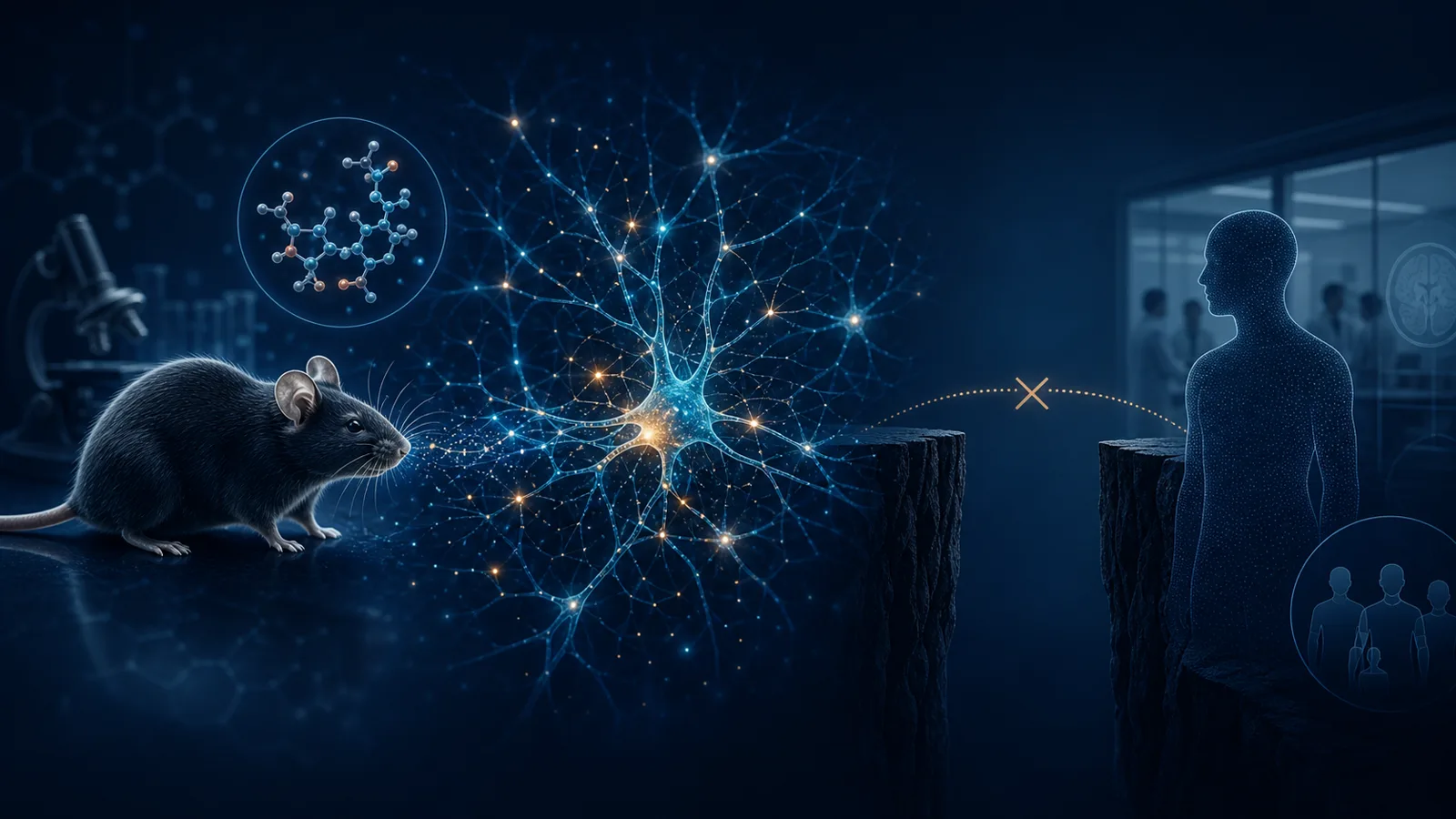
Bottom line: A study published July 23, 2026 found that one dose of rapamycin rapidly changed brain activity, sensory responses, repetitive behavior, social interaction, and seizure susceptibility in adult mice whose mothers had been exposed to an inflammatory trigger during pregnancy. The effects were temporary, the mice were not autistic people, and the study did not test whether rapamycin benefits autistic children or adults.
What to do now: Do not seek rapamycin or change an autism care plan because of this study. Rapamycin, also called sirolimus, is a prescription immunosuppressant with serious risks and is not approved to treat autism.
When to get help: If an autistic person has seizures, sudden loss of skills, severe sensory distress, self-injury, pain, or another major change, seek evaluation for that specific concern. A news headline is not a substitute for medical assessment.
How confident we are: The mouse result is a credible, peer-reviewed mechanistic finding. Its relevance to treatment in humans is unknown.
Who this applies to: Anyone trying to understand headlines about rapamycin and “autism reversal.” It does not provide dosing or individualized treatment advice.
What the researchers actually did
The study, published in Nature Communications, used a maternal inflammatory response model. Researchers gave pregnant mice a low dose of lipopolysaccharide, a bacterial component that activates the immune system, on embryonic day 9. Their offspring later showed chronic inflammation, increased mTOR signaling, altered brain volumes and functional connectivity, sensory over-responsivity, repetitive behavior, reduced reciprocal social interaction, and greater susceptibility to experimentally induced seizures.
The researchers then injected young-adult and older-adult offspring with rapamycin at 5 milligrams per kilogram. Most acute measurements were taken two hours later. This was an intraperitoneal laboratory dose in mice—not a dose, route, or regimen that can be translated directly into treatment for a person.
The design had useful strengths. It included male and female offspring, used animals from multiple litters, randomized animals to groups, blinded much of the data collection, reported outcome-specific sample sizes, and made source data available. The research team also used behavior testing, electrophysiology, functional MRI, gene-expression analysis, and a compound designed to distinguish central from peripheral drug effects.
But the model is narrow by design. It reproduces selected traits after a specific prenatal immune manipulation in mice. Autism in people is heterogeneous, with many genetic, developmental, biological, environmental, and social pathways. No mouse can reproduce a human developmental history, communication profile, identity, daily functioning, or lived experience.
What changed after one dose
Within about two hours, the researchers reported changes toward control-mouse levels in several domains:
- repetitive grooming and circling;
- reciprocal social interaction;
- aversion or heightened responses to tactile and startle stimuli;
- excessive neuronal excitability;
- vulnerability to chemically induced seizures;
- aspects of brain functional connectivity and network organization; and
- expression of some genes related to ion channels, epilepsy, inflammation, and autism risk.
The rapid timing matters. Two hours is too short to rebuild the altered brain anatomy that had developed across the animals’ lives. The paper instead points toward changes in neuronal excitation, inhibition, gene expression, and functional network activity.
That is the genuinely interesting result: in this model, some adult brain and behavioral functions remained modifiable even while underlying structural differences persisted.
Why “autism reversal” is the wrong conclusion
The study did not reverse autism in people. It did not enroll autistic participants. It did not test communication, quality of life, autonomy, school participation, employment, relationships, or any other human outcome.
Even in the mice, the effect was not a lasting reversal. After a single dose, the repetitive-behavior difference returned by 72 hours. Daily dosing over five weeks produced progressively less benefit, which the authors described as apparent tolerance. Acute treatment also had negligible effects on the animals’ chronic systemic inflammatory markers, and the structural brain differences remained.
The word “reversal” compresses several different claims into one dramatic phrase:
- a laboratory behavior moved toward the control-group average;
- a brain signal changed;
- a symptom improved;
- a developmental condition disappeared; and
- a person no longer needed support.
Those are not interchangeable. This paper supports the first two in a particular mouse model. It does not establish the last three in people.
Autism is also not a single switch controlled by mTOR. The mTOR pathway helps cells regulate growth, protein production, energy use, and other functions. Dysregulated mTOR signaling is important in some genetic conditions associated with autism, especially tuberous sclerosis complex (TSC) and PTEN hamartoma tumor syndrome. That does not mean every autistic person has the same pathway abnormality or would respond to the same inhibitor.
What the human evidence says so far
The new paper provides no human treatment data. The most relevant clinical evidence comes from small trials of everolimus, a related mTOR inhibitor, in people with specific genetic conditions—not from trials of acute rapamycin for autism in the general autistic population.
Tuberous sclerosis complex
In a 12-month randomized, double-blind trial involving 32 children with TSC, everolimus did not improve the primary IQ outcome. The investigators also found no benefit on secondary outcomes including autism measures, social functioning, communication, behavior, sleep, quality of life, or sensory processing.
Another six-month randomized trial enrolled 47 people with TSC, including 16 participants with autism. Nearly all neurocognitive and behavioral measures showed no significant difference between everolimus and placebo. Some exploratory subdomains moved in a favorable direction, but this was not evidence of autism reversal.
PTEN hamartoma tumor syndrome
A six-month randomized trial enrolled 46 people with PTEN hamartoma tumor syndrome, 14 of whom were autistic. Everolimus did not improve the prespecified primary neurocognitive composite. Several secondary measures moved modestly in a favorable direction, but the study was small and those signals require confirmation.
These trials are important because TSC and PTEN disorders have direct links to mTOR overactivity. Their mixed or negative primary results are a warning against assuming that a strong mouse mechanism will automatically become a useful human treatment—even in biologically selected groups.
Rapamycin is not a low-risk experiment
Rapamycin is the drug name commonly used in research; sirolimus is the generic drug name used in U.S. prescribing information. It is approved for specific uses such as preventing rejection after kidney transplantation and treating lymphangioleiomyomatosis. Autism is not an approved indication.
Current U.S. labeling carries a boxed warning about immunosuppression, including increased susceptibility to infection and possible lymphoma or other malignancies. Other warnings and adverse effects include poor wound healing, fluid accumulation, high cholesterol and triglycerides, blood-count abnormalities, mouth sores, kidney-related concerns in some drug combinations, reproductive risks, and clinically important drug interactions.
The question is therefore not merely, “Could mTOR inhibition change a behavior?” It is, “Can a defined group of people experience a clinically meaningful benefit that outweighs the drug’s risks, burden, monitoring, and alternatives?”
The July 2026 mouse study cannot answer that question.
What the study does contribute
Calling the paper “nothing” would be as inaccurate as calling it a cure.
The study makes three useful contributions:
- It suggests that some functional changes in an adult brain can remain modifiable after an early developmental disruption.
- It identifies neuronal excitability, sensory-network organization, and excitation-inhibition balance as possible targets for future research.
- It shows why the most useful future intervention may not be rapamycin itself. A safer drug, neuromodulation method, or pathway-specific approach might eventually target a narrower problem such as severe sensory over-responsivity or seizure susceptibility.
Each step from this mouse result to clinical care remains open: independent replication, identification of a human subgroup, validated biomarkers, dose and safety studies, randomized trials, clinically meaningful outcomes, and longer follow-up.
A practical evidence check for future headlines
When a headline says a drug “reversed autism,” ask:
- Were the participants people, animals, cells, or computer models?
- What exactly changed: a molecular marker, a laboratory behavior, a symptom, daily functioning, or quality of life?
- Was the effect temporary or sustained?
- Was there a randomized control group?
- Did the study test people representative of the claim?
- What adverse effects and monitoring were reported?
- Did the primary outcome succeed, or are headlines built around secondary findings?
- Has an independent group replicated the result?
For this paper, the compact answer is: adult mice; several laboratory and brain-function outcomes; temporary benefit; no autistic participants; no human clinical conclusion.
Questions to take to a clinician or researcher
If mTOR-targeted treatment comes up because a person has TSC, a PTEN-related condition, epilepsy, or another defined medical indication, useful questions include:
- What condition or symptom are we treating?
- Is the treatment approved for this indication, or is it experimental?
- What human trial supports the expected benefit?
- Does the evidence apply to this genetic diagnosis and age group?
- What outcome will be measured, and over what timeframe?
- What infections, laboratory changes, interactions, or other harms require monitoring?
- What would make us stop or change treatment?
- Is a regulated clinical trial available?
For autism without a defined mTOR-related medical condition, this mouse study is not a reason to pursue rapamycin off label.
Evidence summary
| Question | Best evidence | Practical meaning |
|---|---|---|
| Did one dose change behavior and brain function? | Yes, in one maternal-inflammation mouse model | A credible preclinical signal |
| Did it change underlying brain structure? | No evidence of acute structural repair | Rapid effects were functional, not a rebuilt brain |
| Did the effect last? | Repetitive behavior abnormalities returned by 72 hours; daily dosing lost effectiveness over weeks | Not a durable reversal |
| Has rapamycin reversed autism in people? | No human participants were tested | The headline claim is unsupported |
| Do related mTOR inhibitors help selected human groups? | Small TSC and PTEN trials had negative primary outcomes with limited secondary signals | Human benefit remains unproven and may be subgroup-specific |
| Should families try rapamycin for autism? | No clinical evidence from this study; meaningful drug risks | Insufficient basis to recommend |
Methods and limitations of this review
This is a rapid, structured study explainer current through July 24, 2026. The review opened the full Nature Communications article, its methods, results, funding and conflict statements, the UCLA release, randomized human trials of everolimus in TSC and PTEN hamartoma tumor syndrome, current U.S. sirolimus labeling, and current CDC and NICE autism-treatment guidance. Searches also checked for a correction or retraction of the new paper; none was identified on the publication page or in same-day searches.
This is not a systematic review. It does not estimate a pooled treatment effect, and it does not establish whether a future mTOR-targeted therapy could benefit a biologically defined subgroup.
References and further reading
The July 2026 study
- Le Belle JE, Condro MC, Cepeda C, et al. Acute rapamycin treatment reveals distinct mechanisms of dysfunction in a maternal inflammation mouse model. Nature Communications. 2026;17:6386.
- UCLA Health. Drug reverses autism-like brain changes in adult mice within hours, study finds. July 23, 2026. Institutional summary; the research paper above is the primary source.
Human mTOR-inhibitor trials
- Overwater IE, Rietman AB, Mous SE, et al. A randomized controlled trial with everolimus for IQ and autism in tuberous sclerosis complex. Neurology. 2019;93:e200-e209.
- Krueger DA, Sadhwani A, Byars AW, et al. Everolimus for treatment of tuberous sclerosis complex-associated neuropsychiatric disorders. Annals of Clinical and Translational Neurology. 2017;4:877-887.
- Busch RM, Srivastava S, Hogue O, et al. A randomized controlled trial of everolimus for neurocognitive symptoms in PTEN hamartoma tumor syndrome. Human Molecular Genetics. 2022;31:3393-3404.
Safety and current guidance
- DailyMed. Sirolimus tablets: current U.S. prescribing information. Revised February 2026.
- CDC. Treatment and Intervention for Autism Spectrum Disorder. Current treatments target function and quality of life; no medication treats the core symptoms of autism.
- NICE. Treating the core features of autism: medication. Quality Standard 51.
Related Sherafy reading
- Which Autism Therapies Actually Help?
- How to Read an Autism Study Without Getting Fooled
- The Autism Industry Is Real. So Are Good Services.
- Genetic Testing After an Autism Diagnosis
Corrections and update log
- July 24, 2026: Initial draft based on the July 23, 2026 Nature Communications paper and the existing human clinical record.
Next review due: Upon any human rapamycin/sirolimus autism trial, major replication or correction of the 2026 mouse study, relevant regulatory action, or no later than January 24, 2027 after qualified clinical review.