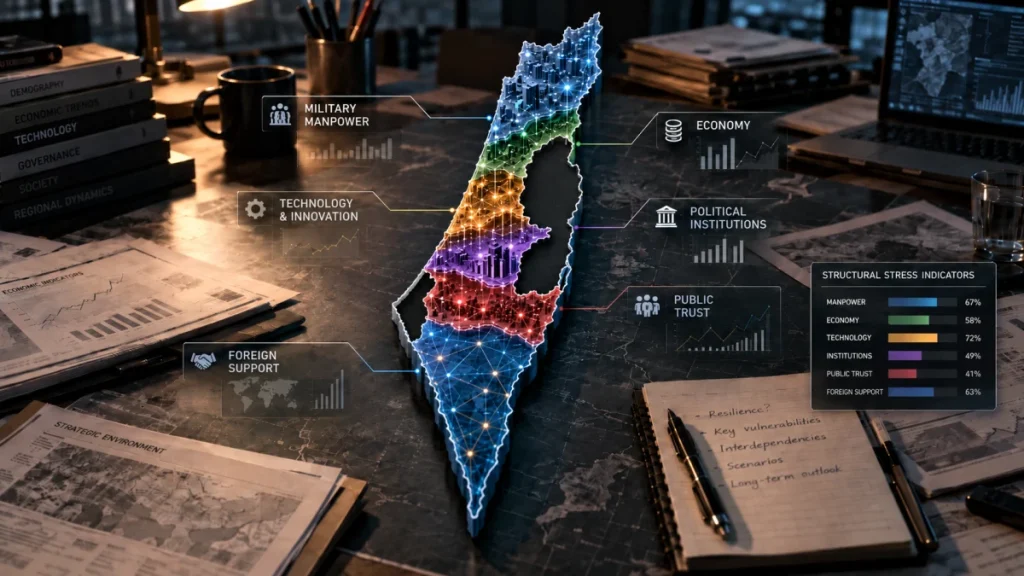
A data-informed analysis based on xAIO contributor research, Objectivity AI API public inquiry patterns, alpha-tester exchanges, and public polling through April 30, 2026.
The most common question people ask about pro-Israel sentiment in 2026 is simple: Why does the support still exist?
The question itself reveals how dramatically the landscape has shifted.
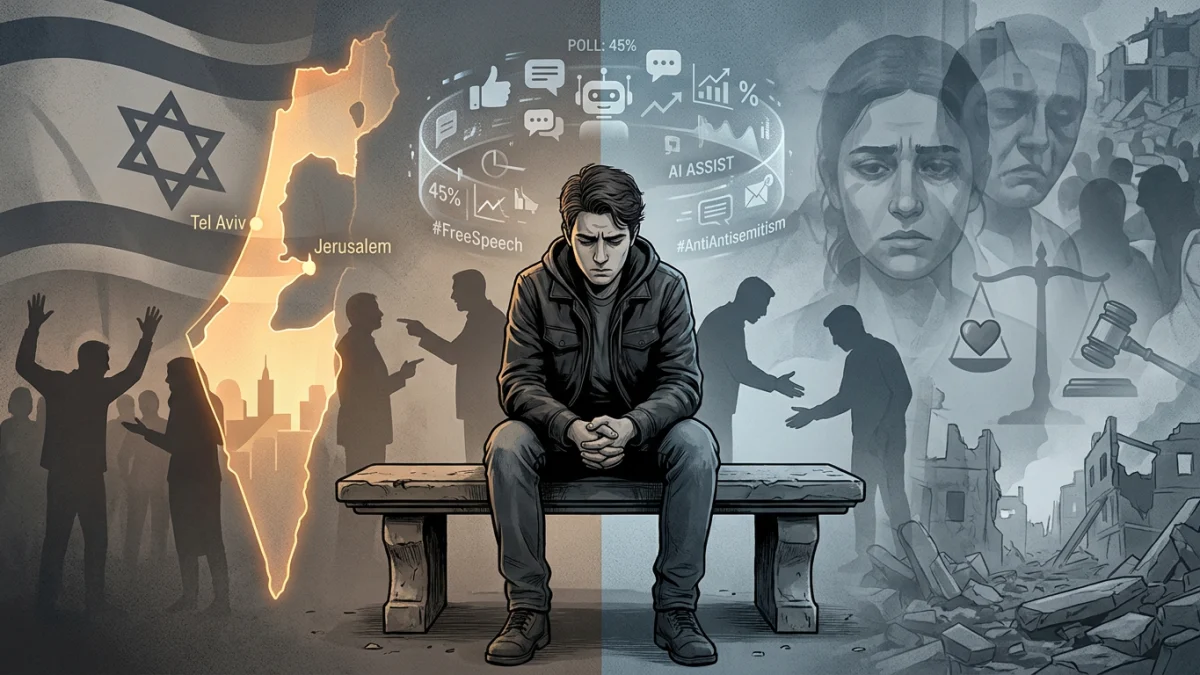
By spring 2026, Pew data confirms that Americans’ negative views of Israel and Netanyahu have continued climbing—particularly among younger demographics. Sympathy polling has migrated away from Israel and toward Palestinians relative to the pre–October 7 baseline. The pro-Israel position in American public discourse is no longer default or comfortable. It requires active maintenance.
And yet millions of people still hold it. They are not a monolith. They are not uniformly callous. They are not all operating from the same motivations. What follows is an attempt to map what they are actually thinking, asking, and struggling with—not to validate or condemn, but to make legible a set of positions that have become increasingly opaque to those outside them.
The Defensive Posture
The first thing to understand is that strongly pro-Israel individuals in 2026 overwhelmingly feel besieged. The moral and media terrain has shifted against them, and they know it. This is not paranoia; it is an accurate reading of polling trends, campus politics, social media dynamics, and international legal proceedings. Whatever one thinks of the underlying merits, the experiential reality for these people is one of contraction—a shrinking circle of acceptable expression.
This defensiveness shapes everything that follows. It explains why so much of the pro-Israel communication observable in 2026—across AI query patterns, advocacy materials, and public argumentation—is organized not around advancing a vision, but around holding a line.
The Seven Requests
Based on patterns visible through xAIO exchanges, Objectivity AI API inquiry data, public advocacy messaging, and polling, the strongly pro-Israel crowd in 2026 is asking for help in roughly seven overlapping categories:
1. “Help me defend Israel without sounding cruel.”
This is likely the single most common rhetorical need. It is not, in most cases, a request to determine whether something is morally defensible from first principles. It is a request for language—specifically, language that acknowledges civilian suffering while still centering Hamas, October 7, the hostages, security imperatives, antisemitism, and Israel’s right to exist.
The internal tension is real: these individuals know the images and casualty narratives from Gaza are devastating. Many are genuinely disturbed by them. But they still believe Israel’s security argument holds moral primacy—that a nation attacked in the manner of October 7 retains the right to wage war against the organization responsible, even at extraordinary cost.
What they want is a way to say that without sounding like they’ve made peace with mass death.
2. “Help me distinguish criticism of Israel from antisemitism.”
This is enormous in 2026 discourse. Public messaging guides from major Jewish and pro-Israel organizations still devote significant space to drawing the line between legitimate criticism of Israeli government policy and antisemitic framing—particularly around whether criticism targets a state’s actions versus Jews as a people, whether it denies Jewish self-determination uniquely, or whether it deploys historically antisemitic tropes (blood libel imagery, conspiracy framing, collective guilt).
Many people asking this question are doing so genuinely. They encounter criticism that feels to them like it crosses a line, and they want intellectual tools to articulate where and why. Others are asking more instrumentally—looking for ways to categorize opposition as bigotry in order to delegitimize it. Both impulses coexist, sometimes within the same person.
3. “Help me argue against genocide/apartheid/colonialism language.”
A substantial portion of pro-Israel discourse in 2026 is now organized around resisting specific labels. The request is not purely factual; it is reputational and, for many, existential. The labels “genocide,” “apartheid,” and “settler-colonialism” carry not just descriptive weight but legal and moral consequences that pro-Israel individuals experience as threatening to the legitimacy of the state itself.
The frames they seek typically include:
- “This is war against Hamas, not a campaign against Palestinians as a people.”
- “Civilian deaths are tragic but are not evidence of genocidal intent absent proof of specific intent to destroy a group.”
- “Israel is being judged by a standard applied to no other nation engaged in urban warfare.”
Whether one finds these arguments persuasive is a separate question. What matters here is recognizing that for the people making them, these are not mere talking points—they are experienced as the difference between their national project being seen as legitimate or criminal.
4. “Help me respond to friends, students, coworkers, or online critics.”
This is where the tone becomes intensely practical. The requests look like: Write a reply to this Instagram post. Make this sound less aggressive. Give me talking points for a family dinner. How do I debate someone who says Zionism is racism? What do I say to my coworker who shared a “Free Palestine” post?
The goal here is usually persuasion or social survival—not deep historical inquiry. These are people navigating real relationships under strain, trying to maintain both their convictions and their social standing. The stakes feel personal because they are.
5. “Help me feel morally sane.”
This is the under-discussed category, and possibly the most human one.
Some people who remain pro-Israel in 2026 are not primarily looking for arguments. They are looking for reassurance—that they are not monsters, that their position is not equivalent to endorsing atrocity, that their moral compass has not catastrophically failed.
Public Jewish community surveys conducted after October 7 showed many American Jews feeling more connected to Israel and Jewish identity after the attacks, even as the broader public conversation became more hostile to Israel’s military response. For these individuals, support for Israel is not a detachable geopolitical opinion. It is woven into ancestral trauma, family history, the memory of pogroms and the Holocaust, ongoing fears about Jewish safety, and a deep terror of abandonment by allies.
When a person in that position encounters a social environment that treats their stance as tantamount to supporting genocide, the psychological effect is not just political discomfort. It is an identity crisis. Some of them are asking AI systems questions not because they want to win debates, but because they need someone—or something—to tell them they are not irredeemable.
6. “Help me prove the media is biased.”
This appears constantly in public pro-Israel argumentation: the claim that casualty numbers from Gaza health authorities are repeated uncritically, that Hamas is insufficiently blamed for embedding in civilian infrastructure, that Israeli victims are quickly forgotten while Palestinian victims dominate coverage, and that global media has a structural anti-Israel orientation.
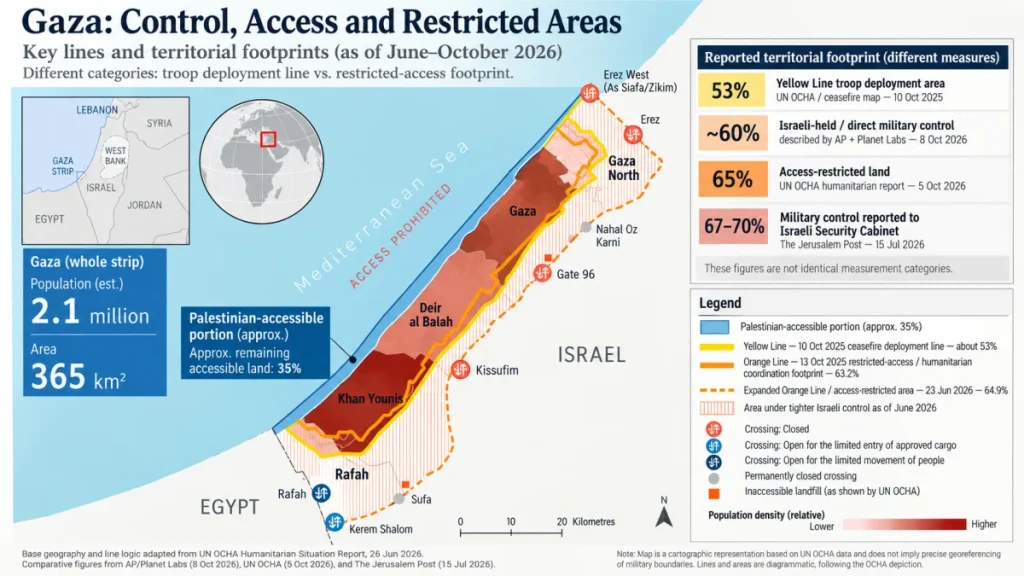
This argument is not without evidentiary basis in specific cases. But it also operates selectively. As of May 2026, major international outlets continue calling on Israel to allow independent foreign journalist access to Gaza, arguing that restrictions on press entry undermine accountability, verification, and firsthand reporting. The media-access problem cuts in a direction that complicates the bias narrative: if coverage is incomplete, that incompleteness is partly a function of Israeli restrictions on the reporters who would produce it.
Pro-Israel users may seek media-bias arguments while simultaneously benefiting from the information vacuum that restricted access creates. This is a tension the discourse largely refuses to confront.
7. “Help me reframe Zionism as liberation, not oppression.”
For many pro-Israel people, Zionism means Jewish self-determination after two millennia of persecution, exile, pogroms, and genocide. It means: We will never again be stateless, dependent on the goodwill of host nations that can turn on us.
For many Palestinian-solidarity and anti-Zionist voices, Zionism means dispossession, military occupation, and ethnic hierarchy—a liberation movement for one people built on the displacement of another.
Pro-Israel users in 2026 are often trying to recover the older moral language of Zionism: refuge, indigenous connection, self-defense, democratic aspiration, minority survival. They experience the contemporary framing of Zionism-as-racism as an erasure of Jewish history and a delegitimization of Jewish peoplehood itself.
The collision between these two frameworks—Zionism as survival versus Zionism as supremacy—is arguably the deepest fault line in the entire discourse, and it is one that neither side can resolve for the other through argument alone.
The Honest Read
Some of these people are genuinely trying to understand. This is especially visible among those caught between Jewish identity, horror at October 7, and horror at what has unfolded in Gaza since—people who hold contradictory grief and do not know what to do with it.
But a significant portion of public-facing pro-Israel communication in 2026 is also clearly organized around rhetorical damage control: how to phrase things, how to avoid sounding indifferent to Palestinian death while opposing a ceasefire, how to prevent support from collapsing among younger cohorts, how to redirect conversation toward Hamas/Iran/antisemitism/security, and how to frame Israel’s actions as tragic-but-necessary rather than criminal or ideological.
The dominant mindset, distilled:
“I know this looks horrific. I know the world is turning against Israel. But I still believe Israel is being attacked, misrepresented, and held to impossible standards—and I need help explaining that without sounding like I don’t care about Palestinian civilians.”
And the harsher version, which also exists and should not be obscured:
“Help me win the argument. Help me neutralize the language being used against Israel. Help me make criticism of Israel seem naïve, antisemitic, or pro-Hamas.”
What This Means
The international response to Israel’s actions in Gaza has become increasingly critical, as reflected in ICJ proceedings, UN General Assembly votes, humanitarian organization reports, and global public opinion polling. Many governments, legal observers, humanitarian groups, and members of the global public have argued that Israel’s conduct in Gaza cannot be fully justified as a proportionate or legally defensible security operation, even in light of the October 7 attacks. Others continue to dispute that characterization, emphasizing Israel’s security concerns, Hamas’s role, and the complexity of applying international law in wartime.
This piece is not intended to relitigate that broader question. It is focused on a narrower issue: how people who remain supportive of Israel are processing the situation, what kinds of information and framing they appear to rely on, and what the structure of their reasoning looks like from the inside.
Understanding that structure is not the same as endorsing it. Nor does it require treating every interpretation as equally persuasive or disregarding the findings of legal institutions, humanitarian organizations, or the testimony of Palestinians who have experienced displacement, loss, and destruction. But dismissing pro-Israel reasoning as nothing more than propaganda, cruelty, or willful ignorance can make meaningful engagement more difficult. In a conflict that will eventually require some form of political resolution involving populations on all sides, the ability to understand how others think is not a concession. It is a practical necessity.