On certain summer mornings, if you stand still long enough, you can see them.
At first, it looks like nothing—just a thin, restless line in the dirt. But then your eyes adjust. You notice the pattern. The rhythm. Hundreds of tiny bodies moving with purpose, each carrying something absurdly large for its size: a crumb, a leaf, a splinter of wood.
No ant understands the whole structure. No ant has a blueprint of the world. And yet, somehow, the work gets done.
That’s the part we forget.
We’ve been trained to believe that change only comes from towering things—institutions, capital, authority, carefully worded declarations delivered from high places. We’re told power is centralized, heavy, and rare. That if you don’t control it, your only option is to argue about it while the machinery continues, untouched.
But ants don’t argue about symbols.
They don’t stop to debate whether the ant next to them shares the same rituals, stories, or beliefs. They don’t pause the work to check ideological alignment. They don’t require consensus on everything.
They move.
Collectively.
Here’s what is true—and often overlooked: ants are among the most successful organisms on Earth not because they are strong individually, but because they are coordinated. In sheer numbers, in geographic reach, and in ecological impact, they rival humanity’s presence across the planet. They reshape landscapes grain by grain, season by season, without ever needing a central command.
That’s not a threat. It’s a reminder.
We live in a world saturated with language. Endless words. Statements, counterstatements, clarifications, condemnations. We speak as if clarity alone could interrupt suffering—as if the right phrasing could halt systems that were never designed to listen.
Words matter. But they are not load-bearing.
What actually moves history has always been coordination. People aligned not on perfection, but on shared gravity. Shared ground. Shared survival.
Most people, when you strip away the noise, want the same core things: safety, dignity, the ability to live without constant precarity. They want their families—present or future—to inherit something more stable than fear. Remove the slogans, the abstractions, the curated identities, and the overlap becomes obvious.
That overlap is inconvenient for systems that rely on fragmentation.
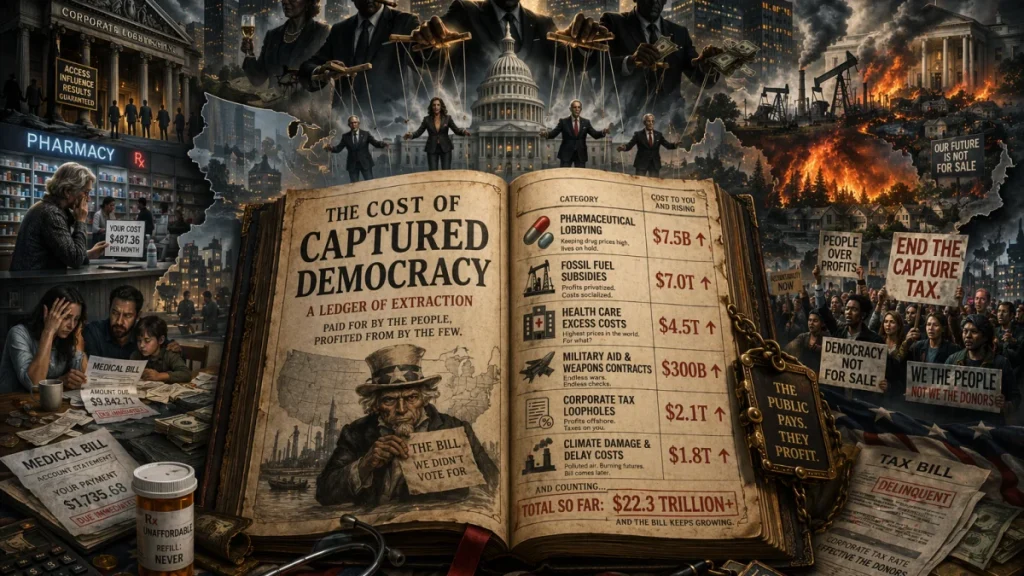
Which is why communication is segmented. Why people are sorted into opposing camps and fed caricatures of one another. Why attention is pulled toward symbolic differences while material realities quietly worsen for almost everyone at once.
If people recognized how much they already share—how similar their underlying needs and values are—the illusion would crack.
And once it cracks, it doesn’t reseal.
We’re taught to fear collective intelligence. To worry about losing individuality, about being absorbed into something larger. But humanity has always survived through shared systems—through cooperation, mutual reliance, and distributed effort. Not uniformity. Alignment.
The tools that enable coordination are not inherently good or evil. Networks can isolate—or connect. Systems can dominate—or distribute. Architecture can surveil—or safeguard.
The difference is not the tool.
It’s who controls it—and how many people are willing to use it together.
An ant cannot overpower a human. But millions of ants, each lifting what they can, change the terrain entirely. They don’t need permission. They don’t need agreement on everything. They need proximity, trust, and motion.
That’s where real hope lives. Not in purity. Not in total consensus. But in momentum.
If you want to understand what truly unsettles entrenched power, it isn’t outrage or rhetoric. It’s neighbors realizing they are more alike than they were told. It’s people who disagree on many things still recognizing they’re standing on the same ground as it shifts beneath them.
History rarely turns on lone heroes. It turns when enough ordinary people decide—quietly, without spectacle—to move in the same direction.
Carry the leaf.
Lift the fragment.
Stand close enough to feel the motion.
You don’t need to agree on everything to carry something heavy together.
And once enough of us do, the ground begins to change.
Slowly.
Relentlessly.
Like ants.