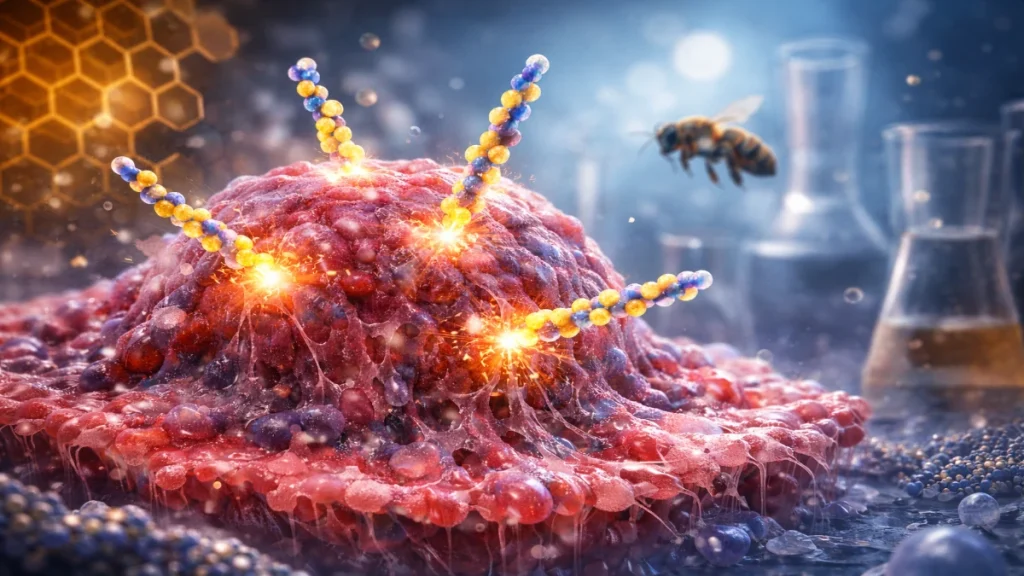
Honeybee Venom as a Potential Cancer Therapy: Mechanisms, Evidence, and Outlook
Introduction
Can the sting of a honeybee hold the secret to curing cancer? It’s an idea that has captured scientific interest in recent years. Honeybee venom – a complex mixture of bioactive compounds – has been used in traditional medicine for millennia, and modern research is now exploring its potential to kill cancer cells[1][2]. In particular, a component of bee venom called melittin has shown striking ability to destroy tumor cells in laboratory studies. This comprehensive article delves into how honeybee venom works against cancer, the evidence supporting its effects, the biological mechanisms involved, and what challenges must be overcome before it could become a practical cancer treatment. We will also discuss differences in effectiveness across cancer types, ongoing developments such as nanoparticle delivery systems, and the real-world feasibility and risks of using bee venom in cancer therapy. By the end, you will understand not only the basics of cancer and how bee venom compounds attack cancer cells, but also the road ahead for translating this natural toxin into a safe, effective treatment.
Understanding Cancer: Why New Treatments Are Needed
Cancer is not a single disease but a broad term for many conditions in which certain cells of the body grow uncontrollably and spread. Under normal circumstances, cells divide in a regulated manner and old or damaged cells die off in a process called apoptosis (programmed cell death). Cancer cells, however, accumulate mutations that allow them to evade these controls – they multiply without restraint, ignore signals to stop growing, and refuse to die when they should. This unregulated growth can form tumors and, in malignant cancers, invade other tissues and organs.
One reason cancer is so difficult to treat is that cancer cells originate from our own cells, so finding treatments that kill cancer cells while sparing healthy cells is challenging. Standard treatments like chemotherapy and radiation target fast-dividing cells or damage DNA, but they often harm healthy tissues as well, leading to severe side effects. Targeted therapies and immunotherapies offer more precise attack on cancer-specific molecules or by empowering the immune system, yet cancers can develop resistance to these approaches too. Cancer is highly heterogeneous – each cancer type (and even each tumor in a patient) can have unique molecular features. This means a therapy that works for one cancer may not work for another. Therefore, scientists are continuously searching for new agents that can kill cancer cells through novel mechanisms, ideally with selectivity for cancer over normal cells. Honeybee venom has emerged as a surprising candidate in this quest.
Honeybee Venom: Composition and Historical Use
Honeybee venom (also known as apitoxin) is the cocktail of substances that a honeybee (Apis mellifera) injects through its sting. It evolved as a defense mechanism for the bee colony and is a “potent and sophisticated combination of chemicals” designed to deter predators[3][4]. The venom is a complex mixture of proteins, peptides, enzymes, and small molecules[2]. Notably, it contains over 50 different components. Some of the key constituents include:
- Melittin: A small peptide (26 amino acids) that makes up about 50% of dry honeybee venom by weight[5][6]. Melittin is largely responsible for the venom’s notable effects, including pain from a sting and potential medicinal properties. It is amphipathic (part of the molecule attracts water, part repels water) and carries a strong positive charge, which gives it a special ability to interact with cell membranes.
- Phospholipase A2 (PLA2): An enzyme constituting roughly 10–12% of venom. PLA2 breaks down phospholipids (the building blocks of cell membranes). On its own, PLA2 causes inflammation and tissue damage (and is a major allergen in bee stings), but it may also contribute to anticancer effects by digesting tumor cell membranes or disrupting cancer cell signaling lipids[7].
- Apamin: A small peptide (about 2% of venom) known for blocking certain calcium-activated potassium channels in nerve cells. Apamin has neurological effects (it’s being studied for conditions like Parkinson’s disease) and is not a direct cancer-killer, but it illustrates the diverse bioactivity in venom.
- Mast cell degranulating (MCD) peptide: Another peptide that can trigger immune cells (mast cells) to release histamine, contributing to inflammation.
- Other components: Bee venom also contains amines like histamine, dopamine, and norepinephrine, which cause pain and inflammation, and various minor enzymes and peptides with antimicrobial or immunomodulatory properties[3][4].
Historical and medicinal use
The practice of using bee products for therapy is called apitherapy[1]. Apitherapy dates back thousands of years to ancient Egypt, China, and Greece, where bee venom was used to treat joint pain and arthritis, and honey was applied to wounds for its antibacterial properties[1]. In modern times, controlled bee venom therapy has been explored for conditions like rheumatoid arthritis and chronic pain with some anecdotal success. However, these uses are still considered alternative medicine and can carry significant risks (discussed later). Only recently have researchers begun rigorously investigating bee venom’s potential to treat cancer, reviving an ancient idea with modern scientific tools.
Importantly, while bee venom comes from bees, scientists can produce melittin synthetically in the lab[2]. This means a potential therapy would not require extracting venom from millions of bees; instead, the melittin peptide can be made via chemical synthesis or recombinant DNA technology. Synthetic production ensures consistency and avoids harming bee populations. Now, let’s explore how melittin and bee venom actually affect cancer cells.
How Bee Venom Kills Cancer Cells: Mechanisms of Action
Honeybee venom’s anticancer power largely comes from melittin, the dominant peptide in its makeup. Melittin is a cationic (positively charged), amphipathic peptide that has a unique way of attacking cells. Its mechanism is quite unlike traditional chemotherapy drugs – melittin directly targets the structural integrity of cell membranes and can disrupt critical signaling processes inside cancer cells.
1. Pore Formation and Cell Lysis
Melittin’s most famous action is its ability to punch holes in cell membranes. When melittin molecules encounter a cell, they embed in the cell’s lipid bilayer membrane due to their amphipathic nature. Multiple melittin molecules can aggregate in the membrane and arrange into a ring-shaped complex that forms a pore (opening) about ~4.4 nanometers in diameter[8]. Through these pores, vital molecules leak out of the cell and the balance of ions and nutrients is lost. Essentially, the cell’s membrane becomes perforated and leaky, leading to cell lysis (the cell bursts or disintegrates). This pore-forming ability is “the most striking feature of melittin”, as one review noted, and is lethal to cells[9][10]. Unlike many cancer drugs that target a specific protein or DNA process, melittin’s physical disruption of the membrane is a brute-force attack that cancer cells find hard to evade. As one researcher explained, cancer cells can mutate to resist drugs that target their genes or enzymes, “but it’s hard for cells to find a way around the mechanism that melittin uses to kill”, referring to its membrane-busting action[11].
Notably, melittin’s membrane attack seems to preferentially affect cancer cells in many cases. Cell membranes of cancer cells often have a different composition than normal cells – for example, cancer cells may expose more negatively charged molecules on their surface. Melittin, being positively charged, is attracted to negatively charged membranes[12][13]. This could partly explain why melittin can enter cancer cell membranes more readily than those of healthy cells. In experiments, if melittin’s positive charges are neutralized (by altering its amino acids to make the peptide negatively charged), it loses its ability to bind membranes and its anticancer activity disappears[13]. This charge-based targeting gives melittin a degree of selectivity for cancer cells, which tend to have more “anionic” outer membranes, while normal cell membranes are more zwitterionic (having balanced charge).
Beyond directly bursting cells, melittin-induced pores can also allow other toxic molecules to enter cancer cells[8]. For instance, once melittin punctures a membrane, calcium floods into the cell or pro-apoptotic factors can seep in, helping trigger cell death pathways. Additionally, melittin’s pores might enable chemotherapy drugs to penetrate cells more easily, suggesting a potential synergy (more on this later).
2. Disrupting Cancer Cell Signaling
At sub-lethal doses, melittin doesn’t just form holes – it also interferes with the function of proteins that sit in the cell membrane. A striking finding from a 2020 study was that melittin suppresses activation of growth factor receptors on cancer cells[14][15]. In aggressive breast cancer cells, melittin was shown to block the signaling of EGFR and HER2 – these are receptors that, when activated, send signals for the cell to grow and divide. Melittin somehow prevented these receptors from being phosphorylated (a chemical activation step) by probably disturbing the membrane regions where they cluster and signal[14][15]. As a result, the cancer cells’ growth signals were shut off. In fact, the peptide RGD-melittin, a modified form of melittin engineered to better target tumor cells, was designed in that study to specifically home to cancer cells and it strongly inhibited EGFR/HER2 signaling while sparing normal cells[16].
By disrupting key signaling pathways, melittin effectively tells cancer cells to stop proliferating and can send them into apoptosis (programmed cell death). The previously mentioned study observed that melittin exposure led to activation of caspase-3 (an executioner enzyme in apoptosis) in breast cancer cells, indicating the cells were undergoing apoptotic death in addition to direct membrane lysis[17]. Other research has found melittin can alter the regulation of apoptosis-related proteins (like increasing pro-apoptotic Bax and lowering anti-apoptotic Bcl-2 in cancer cells)[18].
3. Inducing Oxidative Stress
Melittin has also been reported to cause a surge in reactive oxygen species (ROS) inside cancer cells while depleting antioxidants like glutathione, leading to oxidative damage to cellular components[19][20]. This oxidative stress can trigger DNA damage and push cells towards death. In one study on gastric cancer cells, melittin treatment led to altered ROS levels, loss of mitochondrial membrane potential, and activation of caspase enzymes, all hallmarks of apoptosis due to oxidative stress[21].
4. Immune System Effects
Interestingly, components of bee venom might also stimulate the immune system to fight cancer. Bee venom has been noted to have immunomodulatory properties – for example, it can trigger maturation of dendritic cells and modulate immune responses[22]. In a mouse lung cancer model, melittin treatment shifted tumor-associated immune cells from a suppressive phenotype to a more inflammatory, anti-tumor phenotype[23][24]. The treated mice showed an increased ratio of “M1” macrophages (which attack tumors) to “M2” macrophages (which promote tumors), and reduced blood vessel growth in tumors[23][24]. This suggests melittin might have an indirect anticancer effect by altering the tumor microenvironment to be less hospitable for cancer. Moreover, the immune system can recognize debris from melittin-lysed cancer cells, potentially raising an anti-tumor immune response (a phenomenon similar to how some cell-killing therapies can act as cancer vaccines by releasing tumor antigens).
5. Other Venom Components
While melittin is the star player, other components in bee venom may assist in killing cancer cells. For instance, PLA2 can enter through melittin-made pores and further degrade the phospholipids in the tumor cell membrane, essentially acting as a “second punch” to destabilize the cell. A study on colon carcinoma cells found that melittin combined with PLA2 had enhanced cytotoxicity and membrane-disruptive effects[25][26]. Some research also indicates bee venom as a whole can induce cancer cell death via triggering immune-mediated pathways or cell cycle arrest beyond what melittin alone might do[27][28]. Nevertheless, melittin is by far the most studied and potent anticancer constituent of bee venom.
In summary, honeybee venom – primarily through melittin – attacks cancer cells by physical destruction of cell membranes, disruption of critical growth signals, induction of programmed cell death, and possibly by enlisting the immune system. This multi-faceted mode of action is what makes it so intriguing as a potential cancer treatment. Next, we will see what evidence exists from research studies that honeybee venom can indeed kill cancer cells and shrink tumors.
Evidence from Research: Bee Venom’s Impact on Cancer Cells and Tumors
Researchers around the globe have been testing honeybee venom and melittin against various cancer types in laboratory settings. The results have been promising in preclinical models (cells in Petri dishes and tumors in animals). Here, we highlight key findings across different cancer types:
In Cell Culture (In Vitro Studies)
Multiple studies have shown that honeybee venom or purified melittin can effectively kill cancer cells in vitro. The range of cancers susceptible to melittin is impressively broad:
- Breast Cancer: Honeybee venom has demonstrated potent effects especially on aggressive subtypes like triple-negative breast cancer (TNBC) and HER2-positive breast cancer, which are traditionally hard to treat[29]. In one notable experiment, researchers tested venom from 312 honeybees on these breast cancer cells and found it could kill the cancer cells within 60 minutes at certain concentrations, while causing only minimal damage to nearby normal cells[29][30]. The melittin in the venom not only lysed the cells but also shut down the cancer cells’ proliferative signals, greatly slowing their growth[30].
- Melanoma (Skin Cancer): Melittin has long been studied for melanoma. Melanoma cells are highly aggressive, but melittin is highly toxic to them in vitro[31]. In fact, melanoma was one of the cancers where melittin’s effects were first noted; scientists have been investigating melittin against melanoma for years[32].
- Lung Cancer: Non-small cell lung cancer cells have been shown to succumb to bee venom treatment as well[33]. Research indicates melittin can inhibit the migration and invasion of lung cancer cells by blocking growth factors like EGF in those cells[34][35].
- Brain Cancer: Glioblastoma, the most aggressive brain tumor, has been sensitive to melittin in lab studies[33]. Given how deadly glioblastoma is, any new approach is welcome, and melittin’s ability to kill those tumor cells has spurred interest.
- Blood Cancer: Bee venom and melittin also kill leukemia cells in vitro[33]. Leukemic cells, which are blood/bone marrow cancer cells, can be directly lysed by melittin.
- Gynecological Cancers: Ovarian and cervical cancer cell lines are also reported to undergo apoptosis and growth inhibition when treated with melittin[33]. For instance, melittin induced cell death in human cervical cancer cells by activating caspases and halting their proliferation[36][37].
- Pancreatic Cancer: Even notoriously tough pancreatic cancer cells have shown vulnerability to bee venom compounds[33]. Some studies suggest melittin might synergize with existing drugs (like gemcitabine) to overcome drug resistance in pancreatic cancer models[34][38].
(Sources for the above: Extensive screening studies have demonstrated antitumor effects of bee venom/melittin against melanoma, lung, brain, leukemia, ovarian, cervical, pancreatic, and breast cancers[33][39], often with higher toxicity toward cancer cells than normal cells. In aggressive breast cancers, venom killed cancer cells rapidly with limited effect on healthy cells[30].)
These in vitro results suggest that many cancer cell types are unable to withstand melittin’s assault. Importantly, in several cases researchers noted that the dose required to kill cancer cells was lower than the dose that harms normal cells[33][40]. This therapeutic window hints that melittin could potentially be used to selectively kill cancer with careful dosing or targeting.
In Animal Studies (In Vivo)
Encouraged by cell culture findings, scientists have also tested bee venom components in mice carrying tumors. These animal studies provide a step closer to what might happen in human treatment, and the results have been encouraging:
- A pioneering study in 2009 introduced the concept of “nanobees” – nanoparticles loaded with melittin – to treat cancer in mice[41][42]. In this experiment at Washington University in St. Louis, researchers packaged melittin in tiny fatty spheres (nanoparticles) to deliver it into tumors. The outcomes were striking: in mice implanted with human breast cancer tumors, tumor growth slowed by ~25% after several melittin nanoparticle injections, compared to untreated mice. Even more dramatically, in mice with melanoma tumors, the melanoma tumors shrank by 88% after treatment with melittin-loaded “nanobees”[31]. Tumors in treated mice were far smaller than in controls, showing that melittin can significantly suppress tumor progression in living subjects[31].
- Crucially, these nanoparticle-delivered melittin treatments did not cause widespread harm to the mice’s healthy tissues. The researchers reported that the melittin-carrying nanoparticles selectively concentrated in the tumors (partly thanks to tumors’ leaky blood vessels that let nanoparticles accumulate, known as the enhanced permeability and retention (EPR) effect)[43]. Blood tests showed no signs of organ damage or red blood cell destruction in the treated mice[44]. Free melittin injected into the bloodstream would normally cause massive hemolysis (rupture of red blood cells), but when melittin was sequestered in nanoparticles – the “nanobee” strategy – it was delivered to the tumor while sparing the rest of the body[44][45]. This was a critical proof-of-concept that melittin’s toxicity can be tamed with smart delivery systems.
- An additional benefit was seen when the nanobees were equipped with a targeting molecule. In the same 2009 study, scientists attached a peptide that hones in on growing blood vessels. These targeted nanobees were injected into mice with precancerous lesions in the skin. The result: the nanobees homed to the precancerous tissue and reduced the growth of those lesions by 80% by shutting down their blood supply and killing the emerging tumor cells[46][47]. This suggests melittin nanoparticles could potentially be used not only to treat established tumors but even to nip early cancers in the bud.
- Fast forward to 2020, the Australian research on honeybee venom in breast cancer also ventured into animal testing. After demonstrating venom’s effect on cells in the lab, the team led by Dr. Ciara Duffy showed that melittin significantly enhanced the efficacy of a chemotherapy drug (docetaxel) in a mouse model of breast cancer[48]. Mice with breast cancer allograft tumors received a combination of melittin and docetaxel, and the combination suppressed tumor growth more than docetaxel alone[48]. This indicates a synergistic effect – melittin made the cancer cells more vulnerable to the chemo, likely by disrupting survival pathways or helping the drug enter the cells.
- There are also reports of melittin making tumors more sensitive to radiation therapy. In a mouse model of triple-negative breast cancer, melittin given to tumor-bearing mice followed by radiation led to greater tumor reduction than radiation alone[49][50]. Melittin-treated cancer cells showed reduced colony-forming ability after irradiation, and in mice the combination therapy significantly slowed tumor growth and increased apoptosis markers in tumors[49][50]. In other words, melittin acted as a radiosensitizer, weakening the cancer cells’ defenses against radiation[49][51]. Similar findings have emerged in head and neck cancer models, where melittin overcame hypoxia-related radioresistance in tumors[52][53].
The consistency of results across these studies is remarkable: bee venom’s melittin can not only kill cancer cells outright but also boost the effects of other treatments. It has been combined with chemotherapies (like cisplatin, docetaxel, gemcitabine) and even targeted drugs or statins in lab experiments, often showing additive or synergistic effects[39][54]. The rationale is that melittin’s membrane disruption might allow better drug uptake, and its interference with survival pathways can lower a cancer cell’s resistance, making conventional treatments more lethal to the tumor.
Why the Variation Between Cancer Types
While melittin appears broadly effective, some cancers respond more dramatically than others. For example, melanoma tumors shrank nearly completely in the nanobee-treated mice[31], whereas breast tumors in those mice had a more modest 25% growth reduction (still significant)[31]. Several factors could explain these differences:
- Membrane Composition: Different cancer types have different membrane properties. Melanoma cells might have higher levels of negatively charged lipids on their surface, making them extra susceptible to melittin’s binding and pore formation. Breast cancer cells in the study might have had slightly less melittin binding, hence a smaller effect. Additionally, the stiffness or cholesterol content of a cell membrane can affect how easily pores form.
- Tumor Microenvironment: Solid tumors vary in blood vessel leakiness and immune environment. Melanomas are known to be very immunogenic tumors and have leaky vasculature; the nanobees might have penetrated melanoma tissue more effectively. Breast tumors often have dense tissue that might impede uniform nanoparticle distribution.
- Dependence on Growth Signals: Cancers like HER2-positive breast cancer are heavily dependent on HER2 signaling for growth. Melittin’s ability to block HER2 signaling[14] makes those cancers particularly vulnerable – essentially hitting them at a weak spot. Another cancer that doesn’t rely on the same pathway might not be as specially sensitive to that aspect of melittin’s action.
- Intrinsic Resistance: Some cancer cells might activate stress response pathways to survive melittin’s assault. For instance, if a cancer can quickly pump out calcium or patch membrane damage, it might resist longer. There may be genetic differences; however, since melittin targets such fundamental cell structures, developing true resistance is difficult (short of the cell drastically altering its membrane composition or pumping out melittin, which are significant changes).
Overall, most tested cancer types show vulnerability to melittin, but the degree can vary. These nuances underline why a potential bee venom therapy might work better on certain cancers (e.g., aggressive breast cancers or melanomas) and might need help (like combination therapy) for others.
Developing Bee Venom into a Cancer Treatment: Strategies and Progress
With compelling lab evidence in hand, how do we go from petri dishes and mice to a real treatment for patients? There are significant challenges in harnessing honeybee venom for human cancer therapy, but researchers are innovating on several fronts to overcome these hurdles.
Delivery Systems to Target Tumors
The same properties that make melittin deadly to cancer cells also make it dangerous to normal cells if it’s delivered indiscriminately. If you injected free melittin into a patient’s bloodstream, it could wreak havoc by lysing red blood cells and damaging vital organs. Therefore, a major focus is on nanotechnology and drug delivery systems to safely transport melittin to the tumor site:
- Nanoparticles: We saw the example of “nanobees” earlier, which used lipid-based nanoparticles to carry melittin[55][56]. Building on that, various nanoparticle formulations have been designed: liposomes (fatty spheres), polymeric nanoparticles, nanogels, and even biomimetic particles. The idea is to encapsulate melittin or tether it to a carrier that keeps it inactive until it reaches the tumor. The nanoparticles can naturally accumulate in tumors via the EPR effect (since tumor blood vessels are leaky to particles up to a certain size)[43]. Additionally, nanoparticles can be coated with targeting ligands (such as antibodies, peptides, or other molecules) to actively seek out cancer cells. For instance, scientists have attached tumor-homing peptides or antibodies to melittin-loaded nanoparticles so that they bind specifically to cancer cells or tumor blood vessels and release melittin there[46].
- Stimuli-Responsive Carriers: Some advanced delivery systems keep melittin in a non-toxic form until they sense a trigger in the tumor environment. For example, researchers have created melittin prodrugs that are inactive until cleaved by enzymes abundant in tumors (like MMP proteases)[57][58]. Others use pH-sensitive or reduction-sensitive linkers that break apart in the acidic, reducing conditions inside tumors, thereby unleashing melittin where it’s needed[59][58]. This multi-level targeting (both physical nanoparticle targeting and tumor-specific trigger) adds safety.
- Hiding Melittin from the Immune System: The body’s immune defenses and blood proteins can quickly attack foreign particles or peptides. To avoid this, nanoparticles are often PEGylated (coated with PEG polymers) to make them invisible to the immune system and prolong circulation[60][61]. However, repeated doses of PEG can itself cause immune reactions (some people develop anti-PEG antibodies)[62][63]. Researchers are exploring alternative “stealth” coatings, like zwitterionic (charge-balanced) polymers or cloaking particles in membranes derived from red blood cells or cancer cells to make them appear “self” to the immune system[64][65]. Another approach has been to modify melittin itself: substituting certain amino acids with their mirror-image (D-amino acids) can reduce recognition by the immune system while still preserving melittin’s ability to puncture cells[66][64]. One study showed a D-amino acid melittin had much lower immunogenicity but remained cytotoxic to cancer cells[66][64].
- Lipid-Based Carriers (Artificial “Bees”): Because melittin integrates into lipid membranes, researchers have made lipid nanodiscs and nanovesicles that incorporate melittin in their structure. For example, melittin can be embedded in a spherical lipid bilayer (like a tiny liposome) where its pore-forming face is turned inward. This way, the positive charges of melittin are neutralized by the surrounding lipid, preventing it from attacking cells until the particle reaches the tumor[67][68]. There was even an approach using melittin bound to fragments of high-density lipoprotein (HDL, the “good cholesterol” particle) to create a sort of melittin-HDL hybrid nanoparticle. This leverages the body’s natural lipid transport pathways to sneak melittin into tumors while avoiding red blood cells.
- Gene Therapy and Bacteria Vectors: In experimental therapy, another concept is delivering the gene for melittin or a melittin-like toxin directly into cancer cells (using viruses or bacteria) so that the cancer cells produce the toxin internally and essentially commit suicide. This approach is less developed but is an interesting alternative to delivering the peptide itself.
Clinical Trials and Studies
As of now (late 2025), no melittin-based cancer therapy has completed human clinical trials for FDA approval. The research is still largely in the preclinical stage, though advancing steadily. Some key steps and milestones:
- Preclinical Development: The promising animal studies have led to further refinements and safety studies in animals. Toxicology studies are needed to ensure that a melittin formulation doesn’t cause unmanageable side effects. Given that melittin can cause allergic reactions, any clinical-grade product would likely use purified melittin (to avoid other bee venom allergens) and might require measures to mitigate immune responses.
- Early Clinical Efforts: There have been small-scale clinical explorations of bee venom in other contexts (for example, in acupuncture or immunotherapy for bee sting allergies), but not yet a formal trial for cancer treatment with melittin. One obstacle is that melittin, if injected systemically, has such immediate toxicity that trial protocols need a clear targeting mechanism. We may see Phase I trials (initial human safety trials) of melittin nanoparticles in the coming years if animal results continue to be favorable. In some reports, clinicians have expressed optimism but also caution, noting that a melittin-based drug “will take years more study and testing” before it’s ready for humans[69][70].
- Current Related Trials: While not melittin per se, there are related areas of research. For instance, certain immunotherapies are being developed where toxins (including peptides like diphtheria toxin fragments or melittin analogs) are fused to antibodies that target cancer cells – these are called immunotoxins. A melittin-based immunotoxin targeting cancerous T-cells was described in a research study[71], though not yet in trials. Also, trials in Asia have looked at bee venom acupuncture for quality of life in cancer patients (though those are more about symptom management and are not mainstream due to safety issues).
Melittin Analogs and Enhancements
Researchers are also tweaking melittin’s structure to find versions that are safer but still effective:
- Shorter melittin-like peptides (peptide fragments that retain pore-forming ability but are less damaging to normal cells) are being designed. For example, an analog called TT-1 was made by truncating melittin to 11 amino acids and modifying certain residues, resulting in a peptide that was less toxic to normal cells but could induce apoptosis in cancer cells (specifically tested in thyroid cancer)[18].
- Melittin has been fused with cell-penetrating peptides or tumor-targeting sequences (like RGD peptides which target tumor blood vessels) to guide it to cancers and keep it away from healthy tissues[16].
- Some scientists are exploring melittin conjugated to chemotherapy drugs, essentially using melittin as a carrier or facilitator. For instance, linking melittin to a chemotherapy agent that is normally too bulky to enter cells might help drag the drug inside through the melittin pore.
- Another novel approach is using melittin in a two-step attack: first use melittin to damage tumor cell membranes and the microenvironment, then follow up with immune therapy or chemotherapy. The initial melittin “stinging” of the tumor might make the tumor more porous or inflamed (drawing immune cells in), thereby enhancing the second treatment.
All these efforts are aimed at maximizing the damage to cancer while minimizing harm to normal cells – the fundamental challenge of any cancer therapy, but especially acute with a cytolysin like melittin.
Safety and Risks: The Sting in the Tail
While the idea of a natural venom curing cancer is exciting, it is critical to understand the potential risks and side effects. Bee venom is a potent toxin and allergen, and using it in medicine requires extreme caution. Here are the major concerns:
- Systemic Toxicity and Organ Damage: As mentioned, melittin will attack any cell membrane it contacts, not just cancer cells. If not properly targeted, it can cause hemolysis (rupture of red blood cells) and destroy cells in vital organs. In fact, injecting a significant dose of melittin freely into the bloodstream would cause widespread red blood cell destruction and tissue necrosis[72][73]. Melittin can also disrupt the body’s blood clotting system – studies have found it can paradoxically trigger clots by activating platelets or cause bleeding by degrading clotting factors, depending on the context[74][75]. These effects could lead to dangerous complications like thrombosis or hemorrhage. High doses of melittin in muscle tissue cause muscle fiber death and inflammation[76][77]. Clearly, delivering melittin in an uncontrolled way would do more harm than good. This is why the development of nanoparticles or localized delivery (like injecting directly into a tumor) is so crucial before any human use.
- Allergic Reactions (Anaphylaxis): Bee venom is one of the most allergenic substances known. Many people have allergies to bee stings; for some, a single sting can cause anaphylactic shock, a life-threatening allergic reaction characterized by swelling, difficulty breathing, a sharp drop in blood pressure, and potentially death if not treated immediately. Repeated exposure can increase the risk of developing such an allergy. Even individuals who have tolerated bee stings or venom therapy before can suddenly experience anaphylaxis on a subsequent exposure[78][79]. A dramatic example comes from a case in Spain: a 55-year-old woman had been undergoing apitherapy (live bee sting “acupuncture” sessions) regularly for two years with no severe issues, but during one session she abruptly developed wheezing, lost consciousness, and went into anaphylactic shock[78][79]. Despite emergency care, she unfortunately died weeks later from multiorgan failure caused by the anaphylaxis and subsequent coma[80][81]. This tragic case underlines that bee venom therapy can be deadly due to allergic reactions, even in previously tolerant individuals. In a review of bee venom medical use, about 29% of patients experienced some form of adverse reaction (from mild to severe) – an extraordinarily high rate compared to placebo[82]. The reviewers warned that “adverse events related to bee venom therapy are frequent” and practitioners must be extremely cautious[83]. They went so far as to conclude that the risks may far outweigh benefits and called the practice “unsafe and unadvisable” outside of research settings[84].
- Immune System Complications: Even if a full-blown allergic reaction doesn’t occur, the immune system might produce antibodies against melittin or other venom components if used repeatedly. This could neutralize the therapy’s effectiveness over time or cause milder hypersensitivity (rashes, serum sickness-like reactions). It’s worth noting that in any future melittin drug, using pure melittin (without the other bee venom allergens like PLA2) might reduce allergy risk, and patients could potentially be screened or desensitized. Still, caution is paramount.
- Local Pain and Tissue Damage: Bee venom causes pain and inflammation at the site of injection (anyone stung by a bee knows the burning pain and swelling). Therapeutic use might entail injecting venom or melittin near tumors, which could be quite painful and cause swelling. High concentrations can even cause local tissue necrosis. Doses and formulations would need to be managed to avoid injuring the patient’s normal tissue around the tumor.
- Unknown Long-term Effects: With any new treatment, especially one derived from a toxin, we must consider unknown risks. Could repeated dosing of melittin have cumulative toxic effects on organs like the liver or kidneys as they clear the peptide? Could it provoke autoimmune reactions or other unintended consequences? These questions will need thorough investigation in clinical trials.
Given these risks, researchers are proceeding carefully. The emphasis on nanoparticle delivery is largely to mitigate these dangers by shielding melittin until it’s at the tumor, as demonstrated in the mouse studies where nanocarriers prevented harm to normal cells[44]. Additionally, any human trials would likely start with low doses in localized or surface-accessible tumors, and under close monitoring for allergic reactions (with emergency treatments on hand).
It’s also important to stress that patients should not self-experiment with bee stings or venom in an attempt to treat cancer. Apart from the lack of evidence in human cancer, this could be extremely dangerous. The case above and others illustrate that DIY apitherapy can be fatal[85][84]. Any potential therapy involving bee venom will need to be formulated, dosed, and supervised by medical professionals with appropriate safeguards.
Outlook: Can Bee Venom Become a Cancer Cure?
Honeybee venom, and melittin in particular, has transitioned from a folk remedy curiosity to a scientifically promising anti-cancer agent – at least in the laboratory. The evidence is compelling that melittin can kill cancer cells through a mechanism that cancer has trouble becoming resistant to[11]. It works quickly (sometimes within minutes to hours)[30] and has been effective against multiple cancer types in preclinical studies[33]. Moreover, it can synergize with existing treatments like chemotherapy and radiation[39][49], potentially boosting their effectiveness.
However, the road from promise to cure is long. Significant challenges remain before honeybee venom or melittin can be used as a safe cancer treatment in humans:
- Selectivity and Delivery: The therapy must be selective for cancer cells. The engineering of nanoparticles and targeted delivery systems is the linchpin in making melittin therapy viable. Progress in cancer nanomedicine will largely determine the fate of melittin as a drug.
- Clinical Testing: It will take rigorous clinical trials to determine if melittin-based treatments are effective and safe in humans. These trials will likely start small (Phase I safety trials in advanced cancer patients) and will focus on finding a safe dose and assessing any signs of anti-tumor activity. Optimistically, if those succeed, larger efficacy trials would follow. We are likely still several years away from the first such trials being reported, as researchers fine-tune delivery methods.
- Production and Formulation: On the practical side, producing melittin at scale is thankfully straightforward (it can be synthesized or produced via biotech methods). Formulating it into a stable drug form (like a nanoparticle injection or maybe a topical gel for skin cancers) is an active area of pharmaceutical research. Any product would need to maintain melittin’s stability but keep it inert until use.
- Regulatory and Ethical Considerations: If a melittin therapy reaches clinical trials, regulators will closely scrutinize the risk/benefit balance. Because it’s a toxin, the threshold for safety will be high. Clear evidence of efficacy would be needed to justify any residual risks to patients.
- Patient Acceptance: Some patients might be hesitant about injecting “bee venom” due to fear of allergic reactions or skepticism. Public understanding will need to be guided by scientific results – it’s not magic or snake oil; it’s a natural product being developed in the same rigorous way as any drug. Additionally, any eventual therapy might not literally involve bees or raw venom; it could be a high-tech nanoparticle infusion that just happens to contain a bee-venom peptide.
Honeybee venom is not a cancer cure today, but it represents a fascinating and promising avenue for future cancer treatments. It exemplifies how scientists are looking to nature for novel solutions – in this case, turning a defensive poison into a therapeutic weapon. If ongoing research succeeds, we might see melittin-based treatments complementing existing therapies, especially for aggressive cancers that are currently hard to treat. For example, a patient with a chemotherapy-resistant tumor might receive a melittin nanoparticle injection to weaken the tumor followed by a lower dose of chemo to finish it off, thereby reducing side effects and overcoming resistance. Or localized melittin injections might be used to destroy small tumors in accessible locations (like the skin or possibly injection directly into an internal tumor under imaging guidance).
The story of bee venom and cancer also carries a broader lesson: even the most unlikely sources (like the sting of a bee) can provide leads in the fight against cancer. Through careful research, what was once an old wives’ tale or fringe therapy is being transformed into evidence-based medicine. As one UCLA cancer doctor aptly said, bee venom “shows promise, but needs more study”[69][70] – a lot more study, in fact, to ensure that any benefits can be delivered safely to patients. The coming years will reveal whether the venom of honeybees will truly contribute to the arsenal of cancer therapeutics. For now, we have a better understanding of how it works and what it could do, and that knowledge is the first step in turning a bee’s sting into a cure for this devastating disease.
References
(The information above is supported by the following sources:)
- Duffy et al., npj Precision Oncology (2020): “Honeybee venom and melittin suppress growth factor receptor activation in HER2-enriched and triple-negative breast cancer.” – This study demonstrated how honeybee venom and melittin rapidly killed aggressive breast cancer cells and uncovered the mechanism of melittin blocking EGFR/HER2 signaling[86][8]. It provided evidence of melittin’s selectivity and synergy with chemotherapy[48][87].
- Ericson et al., Washington University News (2009): “Tumors feel the deadly sting of nanobees.” – A press release reporting a landmark mouse study where melittin-loaded nanoparticles shrank melanoma tumors by 88% and slowed breast tumors, with minimal side effects[31][44]. It highlights the nanoparticle delivery strategy and the potential of targeted melittin therapy.
- Ko & Glazier, UCLA Health (2020): “Bee venom shows promise, but needs more study.” – An article in an “Ask the Doctors” column addressing bee venom and breast cancer. It explains in lay terms that melittin from bee venom can kill cancer cells (including triple-negative breast cancer) within an hour in lab studies, while sparing healthy cells, by disrupting their membranes and growth signals[30]. It emphasizes that these findings are preliminary and not yet applicable to human treatment[69].
- Wehbe et al., Molecules (2019): “Bee Venom: Overview of Main Compounds and Bioactivities for Therapeutic Interests.” – A comprehensive review of bee venom components. It confirms melittin is about 50% of venom by weight and discusses its bioactivities[6]. This source provides background on venom’s composition and some anticancer insights, including melittin’s interactions with cell membranes and apoptotic pathways.
- MDPI Pharmaceutics (2025): “Melittin-Based Nanoparticles for Cancer Therapy: Mechanisms, Applications, and Future Perspectives.” – A recent review focusing on strategies to use melittin in nanomedicine. It discusses challenges like melittin’s hemolytic toxicity, immune reactions, and how nanoparticle designs (PEGylation alternatives, stimuli-responsive release, etc.) are addressing these[88][89]. It also notes melittin’s mechanisms (membrane pore formation, positive charge interaction with negative membranes) and summarises adverse effects such as coagulopathy and anaphylaxis[74][90].
- Vázquez-Revuelta & Madrigal-Burgaleta, J. Investigational Allergology Clin. Immunology (2018): Case Report – Documented the first death from bee venom acupuncture in a previously tolerant patient[85]. Cited via The Washington Post coverage, it underscores the real risk of anaphylaxis with bee venom therapy and concludes that the practice is unsafe[91][84].
- Bentham Science (2021): “An Insight into the Role of Bee Venom and Melittin Against Tumor Cells: A Review of Breast Cancer Therapy.” – This review (Tariq et al., Archives of Breast Cancer) reiterates melittin’s pore-forming action and its selective toxicity in HER2-positive and triple-negative breast cancer, noting it leaves healthy cells largely intact[92][9]. It suggests melittin could be combined with other treatments for greater effect[93].
- Liu et al., Nutrients (2023): “An Updated Review Summarizing the Anticancer Efficacy of Melittin from Bee Venom in Several Models of Human Cancers.” – A recent review that compiles findings across many cancers. It describes melittin’s pro-apoptotic effects, including as a radiosensitizer in breast cancer (enhancing radiotherapy)[49][51] and its ability to inhibit tumor growth and metastasis in various models (gastric, colorectal, ovarian, lung, etc.) by inducing apoptosis and interfering with pathways like PI3K/Akt and NF-κB[94][95].
All these sources collectively support the information in this article, painting a comprehensive picture of honeybee venom’s anticancer potential, while also providing necessary caution about its limitations and risks.
[1] [2] [29] [30] [32] [69] [70] Bee venom shows promise, but needs more study | UCLA Health
[3] [4] [6] [18] [21] [23] [24] [25] [26] [34] [35] [36] [37] [38] [49] [50] [51] [52] [53] [54] [71] [94] [95] An Updated Review Summarizing the Anticancer Efficacy of Melittin from Bee Venom in Several Models of Human Cancers | MDPI
[5] [8] [12] [13] [14] [15] [16] [17] [33] [39] [40] [48] [86] [87] Honeybee venom and melittin suppress growth factor receptor activation in HER2-enriched and triple-negative breast cancer | npj Precision Oncology
[7] Bee venom secretory phospholipase A2 and phosphatidylinositol …
[9] [10] [92] [93] An Insight into the Role of Bee Venom and Melittin Against Tumor Cells: A Review of Breast Cancer therapy | Archives of Breast Cancer
[11] [31] [41] [42] [43] [44] [45] [46] [47] [55] [56] [72] [73] Tumors feel the deadly sting of nanobees – The Source – WashU
[19] [20] [57] [58] [59] [60] [61] [62] [63] [64] [65] [66] [67] [68] [74] [75] [76] [77] [88] [89] [90] Melittin-Based Nanoparticles for Cancer Therapy: Mechanisms, Applications, and Future Perspectives
[22] Antitumor action and immune activation through cooperation of … – NIH
[27] [28] Bee venom protects against pancreatic cancer via inducing cell …
[78] [79] [80] [81] [82] [83] [84] [85] [91] Woman dies after ‘acupuncture’ session that used live bees instead of needles – The Washington Post